
Stem Cell Therapy Cost in Malaysia
Pricing and Key Factors:
Many patients searching for stem cell therapy cost in Malaysia want a realistic number before making contact. However, published guides typically give market-level estimates rather than clinic-specific data. This page covers stem cell therapy cost in Malaysia: pricing and key factors. It covers Cyrona Cell’s protocol prices, what each quote includes, and how Malaysia compares globally for international patients seeking regenerative medicine.

Home » Stem Cell Therapy Cost in Malaysia: Pricing and Key Factors
Key Takeaways
- Stem cell therapy cost at Cyrona Cell starts from USD 9,000 for a standard protocol; advanced plans range from USD 9,000 to USD 15,000+.
- The final price depends on cell type, cell quantity, secretome support, treatment route, and follow-up level.
- Malaysia is significantly more affordable than the USA, Singapore, and most Western countries for the same standard of care.
- All Cyrona Cell protocols are built after a personal medical review, not sold as a fixed package price.
- International patients should always ask for a full cost breakdown before committing to any provider.
Estimated read: 14 min
STANDARD PROTOCOL
Starting price at Cyrona Cell.
Advanced plans: USD 9,000 – USD 15,000+
Complex / Custom: Custom quote after review
Stem Cell Therapy Price in Malaysia: What International Patients Should Know
The therapy cost in Malaysia for stem cell treatment varies more than most published figures suggest. For example, one clinic’s quote may cover only the injection itself. Another may include medical review, cell quality testing, treatment-day monitoring, and follow-up support. Comparing numbers without knowing what each covers, therefore, gives a misleading picture.
At Cyrona Cell, stem cell therapy cost starts from USD 9,000 for a standard protocol. Moreover, many clinics offer only the procedure itself, without secretome support, cell quality reports, or aftercare. Cyrona Cell’s approach, by contrast, reflects a complete care pathway rather than a single-session fee.
The table below gives a general planning guide. A standard protocol typically costs from USD 9,000. However, Cyrona Cell confirms final pricing only after a medical review of the patient’s condition and goals.
| Protocol Level | Estimated Cost (USD) | Best Suited For |
|---|---|---|
| Standard | From USD 9,000 | Selected cases where a simpler protocol is sufficient |
| Advanced | USD 9,000 – USD 15,000+ | Cases needing more cells, secretome support, or combined routes |
| Complex / Custom | Custom quote after review | Advanced, chronic, or multi-system cases |
Patients should not compare stem cell treatments on price alone. Protocol depth, cell quality standards, and aftercare differ significantly between providers. Therefore, a personalized medical review is the only reliable way to match a patient to the right protocol level.
Why the Cost of Stem Cell Therapy Varies Between Patients
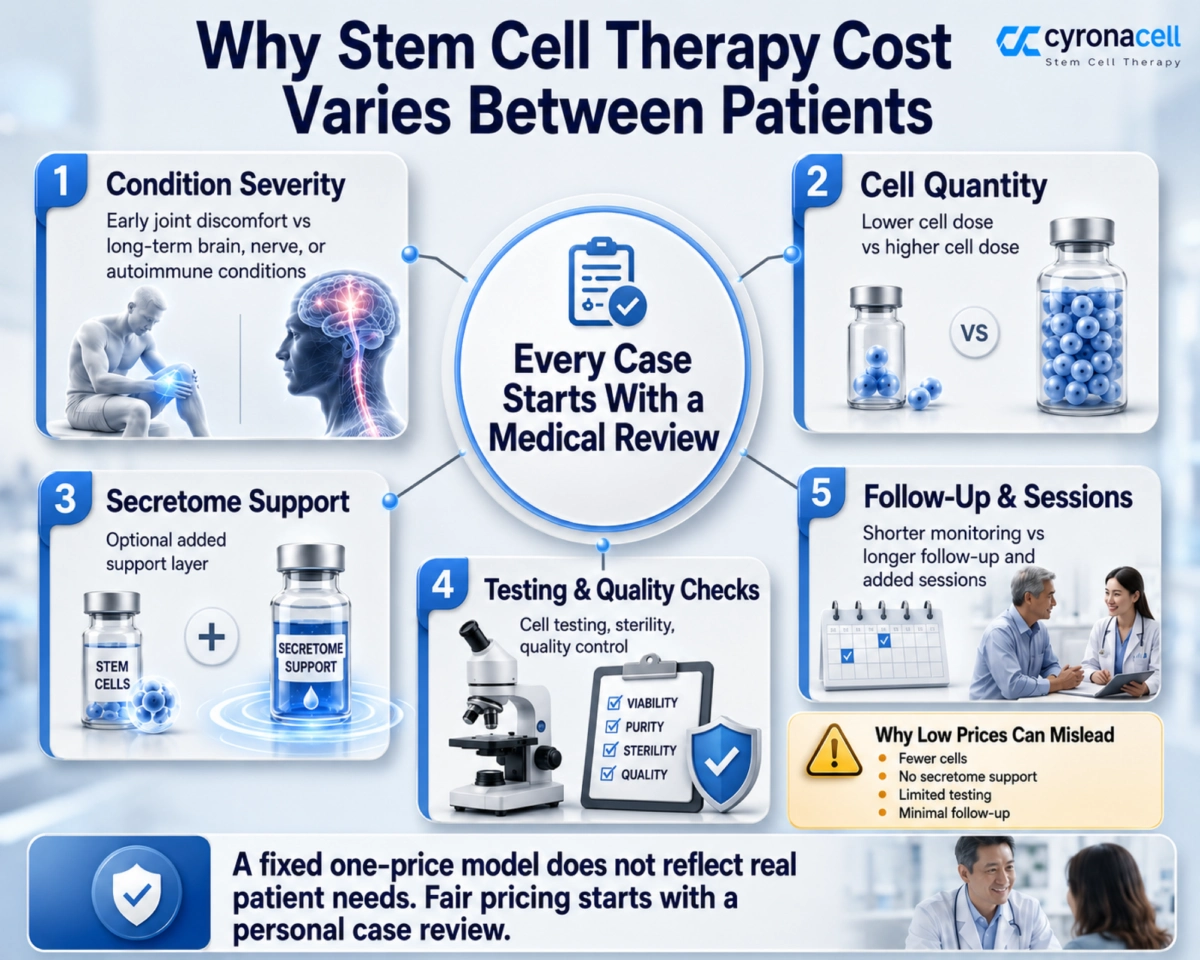
No two patients follow the same treatment path. A patient with early joint discomfort may need a simpler plan. Patients managing a long term brain and nerve condition, however, may need more cells, additional sessions, and a longer follow-up schedule. The same applies to patients with a chronic autoimmune medical condition.
Stem cell clinics that publish a fixed price for all patients may not offer the right level of care. Every case differs, and a one-price approach does not reflect that. At Cyrona Cell, therefore, every estimate begins with a case review rather than a preset menu.
Understanding what drives pricing also helps patients compare quotes fairly. An unusually low advertised price often signals fewer cells, no secretome support, limited testing, or minimal follow-up. A complete protocol costs more because it includes more steps at each stage of the process.
This is why the cost of stem cell therapy differs so widely across the market. Stem cell clinics that seem comparable in name may differ significantly in what they actually deliver. Knowing the key cost drivers helps patients ask the right questions before committing to any provider.
Key Factors That Affect the Cost of Stem Cell Therapy
Several variables shape the final estimate. Patients who understand these factors before requesting a quote will find it easier to evaluate what they receive. Moreover, knowing these drivers helps patients ask the right questions when comparing providers.
Type of Stem Cells and Cell Sources
The type of stem cells used is one of the most significant cost drivers. Different cell sources require different collection, screening, processing, and quality testing steps. Furthermore, each added step increases preparation time and cost.
Cyrona Cell uses Wharton’s jelly mesenchymal stem cells (WJ-MSCs). Researchers worldwide study mesenchymal stem cells (MSCs) for their roles in tissue support, immune control, and cell signaling. Notably, sourcing from Wharton’s jelly avoids a donor extraction procedure and maintains consistent cell quality across protocols.
Other providers may use cells from bone marrow, adipose tissue, or umbilical cord blood. Each source has different preparation requirements and, therefore, a different cost structure. Patients should always ask which cell sources a clinic uses and what quality checks are part of the process.
The Condition Being Treated
The condition being treated directly shapes protocol design and cost. A patient with early-stage joint stiffness may be a good fit for a standard plan. Patients managing stroke recovery, Parkinson’s disease, cerebral palsy, or a long-standing illness typically need a more intensive approach, by contrast.
Disease stage matters as well. Earlier presentations may respond to smaller cell counts and shorter follow-up periods. More advanced or progressive conditions, however, may need higher cell doses and a more detailed monitoring plan. As a result, two patients with the same diagnosis may still receive different cost estimates.
These variables affect cost significantly. A medical assessment is therefore the only reliable way to find the right protocol level. Without reviewing the patient’s full case, any quote cannot be an accurate figure.
Cell Quantity and Secretome Support
Some conditions need a larger cell dose to work well. This directly affects the final estimate. Higher cell quantities cost more to prepare, test, and administer.
Secretome support may also form part of a treatment plan. It adds signaling proteins and growth factors that stem cells produce. Most base-level quotes do not include this support. For some conditions, however, the secretome plays a key role in the overall approach. Patients should therefore include it in their budget planning and ask specifically whether it carries a separate charge. A low advertised price may otherwise exclude secretome analysis, reduce cell numbers, or limit the depth of pre-treatment testing.
Treatment Route and Administration Method
The delivery method affects both the preparation required and the level of supervision needed on treatment day. Common routes include intravenous (IV) infusion, targeted local injection, and, for certain brain and nerve cases, intrathecal delivery.
Combined routes, where a patient receives both IV and local delivery, require more preparation and closer monitoring. Consequently, this added complexity adds to the protocol estimate. Single-route plans are generally priced lower than multi-route programs.
Regardless of route, a safe program requires a qualified medical team before, during, and after treatment. Patients should therefore confirm that a doctor, not just a nurse or technician, directly oversees each session.
Clinic Standards, Hidden Costs, and Aftercare
Reputable clinics invest in cell quality testing, sterility verification, and patient monitoring. These steps add to the stated price; however, they represent responsible clinical practice rather than optional extras.
Some costs appear only after an initial quote. These may include pre-treatment blood tests, post-treatment medication, extra check-in sessions, or costs for an extended stay. Patients should therefore ask for an all-in estimate that accounts for likely add-ons.
Aftercare is another variable that affects the total cost. Some providers include follow-up communication, progress reviews, and cell quality documentation in their quote. Others, however, charge separately or provide limited post-treatment support. Asking what the quoted price covers after treatment is just as important as asking what it covers before.
What the Stem Cell Therapy Price Typically Includes at Cyrona Cell
Understanding what a quoted price covers helps patients compare providers accurately. A stem cell therapy cost estimate at Cyrona Cell may include the following, depending on the patient’s case:
Initial medical review and case assessment
Personalized treatment plan based on health history and goals
Wharton's jelly mesenchymal stem cells (WJ-MSCs)
Cell processing, quality testing, and sterility checks
Secretome support, where indicated by the protocol
Treatment-day monitoring by a qualified medical team
Post-treatment observation
Cell quality documentation
Follow-up communication and progress support
One provider may quote only the procedure. Another may include every step above. This gap explains why comparing numbers across clinics without knowing what each covers can be misleading.
For a full overview of the process, review how stem cell therapy works at Cyrona Cell before requesting an estimate. This context helps patients understand exactly what they are evaluating.
Stem Cell Therapy Cost by Condition
Many patients search for stem cell therapy cost by diagnosis. The condition provides useful context. However, the final estimate also depends on disease stage, overall health, current medications, age, and treatment goals. The sections below give a general cost guide by area. Each section links to the dedicated treatment page for full clinical detail.
Joint Pain and Osteoarthritis
For patients with joint breakdown or cartilage damage, the protocol level depends on scan results, the joint involved, and the number of joints affected. A single-joint case with limited breakdown may sit at the lower end of the price range. More advanced damage or multiple affected joints, however, typically call for a more comprehensive approach.
For full details on these protocols, see the pages for stem cell therapy for joint pain and stem cell therapy for osteoarthritis.
Neurological Conditions
Neurological cases generally require more cells, closer monitoring, and a longer follow-up schedule. As a result, they typically fall in the advanced or custom pricing band. The time since the event, current function level, rehabilitation history, and health stability all affect protocol design.
Because these presentations vary so widely, a medical review is the most reliable starting point for cost planning. More information is available on the dedicated page for stem cell therapy after stroke.
Diabetes (Type 1 and Type 2)
For diabetes, the protocol depends on disease duration, HbA1c levels, medication history, kidney function, and the presence of complications. Earlier-stage cases may suit a standard plan. Longer-standing or complicated diabetes, however, typically needs a more intensive approach with a higher cell dose.
Patients considering stem cell therapy for type 2 diabetes should therefore bring recent lab results to the first consultation. Cyrona Cell reviews Type 1 presentations individually, since protocol fit differs significantly between the two types.
Autoimmune and Inflammatory Conditions
Immune-related conditions such as rheumatoid arthritis, multiple sclerosis, and inflammatory bowel disease involve complex immune activity. Consequently, protocols for these cases typically include higher cell quantities and may require secretome support. This places them in the advanced or custom pricing band.
For more details on these conditions, see the pages for stem cell therapy for rheumatoid arthritis and stem cell therapy for multiple sclerosis.
Kidney and Liver Disease
Chronic organ conditions require a careful medical review before any estimate can be confirmed. Both kidney and liver disease protocols depend heavily on current organ function, disease stage, and co-existing conditions. These variables affect protocol design significantly. Patients should therefore prepare current blood test results, imaging reports, and a full medication list before requesting a cost review.
Full protocol details for kidney and liver conditions are available in the complete treatments directory.
Autism Spectrum Disorder
For families considering stem cell therapy for autism, the estimate depends on the child’s age, background, previous therapies, and care needs. Because autism presentations vary significantly, protocols are tailored to the specific child rather than to a standard plan. At Cyrona Cell, a parent or caregiver consultation is part of the planning process.
Anti-Aging and Wellness
Patients seeking anti-aging stem cell treatment for renewal, wellness, or longevity goals may be a good fit for a standard protocol. These cases are often simpler than medical condition protocols. They may therefore sit at the lower end of the pricing range. The estimate still depends on age, overall health, and specific wellness goals.
How Malaysia Compares Globally: Stem Cell Therapy Cost
One of the main reasons international patients choose Malaysia for regenerative medicine is cost. Quality care, qualified doctors, tested cells, and monitored treatment all cost a fraction of what patients pay in the USA or Western Europe. Furthermore, this price advantage is complemented by Malaysia’s established medical infrastructure, English-speaking teams, and modern private clinics.
The table below compares general market estimates based on published clinical guides. These are indicative figures for cell-based treatment. Notably, they do not apply to stem cell transplantation for blood cancers. This type of treatment follows a separate pricing structure through specialist hospitals overseen by the National Pharmaceutical Regulatory Agency (NPRA) of Malaysia.
| Country | Estimated Market Range (USD) | Context |
|---|---|---|
| USA | USD 20,000 – USD 50,000+ | High overhead; most cell-based therapies are outside insurance |
| Singapore | USD 15,000 – USD 40,000+ | Regulated market; high facility costs and limited availability |
| Thailand | USD 10,000 – USD 25,000 | Active medical tourism market; quality varies by provider |
| India | USD 5,000 – USD 20,000 | Wide range; standards and quality vary significantly |
| Malaysia (Cyrona Cell) | From USD 9,000 | Full protocol: medical review, quality-checked WJ-MSCs, monitoring, follow-up |
Malaysia also offers accessible visa requirements for most countries and a well-established network of medical support services. Together, these factors make Malaysia one of the most practical choices for international patients planning cell-based treatment.
Questions to Ask Before Choosing a Clinic
Choosing a stem cell clinic based on price alone is one of the most common mistakes international patients make. Reputable clinics should answer the following questions clearly before any patient pays:
A clinic that avoids these questions or pushes to close a sale before completing a medical review is a warning sign. Additionally, the ISSCR patient guide to stem cell treatments helps international patients evaluate any provider on their own.
Medical Tourism: Planning Your Visit to Malaysia
International patients benefit from careful planning before booking travel. A remote case review is therefore strongly recommended before committing to flights. This lets the medical team check whether treatment is right for the patient, provide a cost estimate, and outline the expected schedule in advance.
Standard protocols may need a shorter stay. More intensive plans may require additional monitoring, follow-up sessions, or guidance before discharge. Moreover, travel companions are advisable for patients with limited mobility, brain and nerve conditions, or those who need practical help on treatment days.

Before the first consultation, patients should also gather the following:
- A summary of all current diagnoses and how long each has been present
- A full medication list, including dosages
- Recent blood test results and imaging reports
- Previous treatment records relevant to the condition
- Contact details for the patient's home doctor or specialist
Preparing this information in advance improves the accuracy of the remote case review. Furthermore, it reduces back-and-forth communication before the visit and helps the medical team design the right protocol from the start.
Submit your case details for a free medical review to learn whether stem cell therapy is right for your situation: start your free case review at Cyrona Cell.
FAQ
Frequently Asked Questions
How much does stem cell therapy cost in Malaysia?
At Cyrona Cell, stem cell therapy cost in Malaysia starts from USD 9,000 for a standard protocol. Advanced plans range from USD 9,000 to USD 15,000+. For complex or multi-system cases, we’ll provide a custom quote after a full medical review.
The final figure depends on cell type, cell quantity, secretome needs, treatment route, and follow-up level. Therefore, a published range is a planning tool. Cyrona Cell always confirms the exact cost after reviewing the patient’s case.
How much does stem cell treatment for Parkinson's cost?
Parkinson’s disease protocols at Cyrona Cell fall in the advanced or custom pricing band. The estimate depends on disease stage, mobility level, medication history, fall risk, and the patient’s overall health. Most Parkinson’s cases, therefore, require a custom quote after a full medical review rather than a standard package price. The condition being treated, its severity, and current health status all shape the protocol design and the final cost.
Can stem cells cure liver cirrhosis?
Stem cell therapy is not a guaranteed cure for liver cirrhosis or any condition. Research in regenerative medicine for liver disease is ongoing. However, some patients have shown measurable improvements in liver function markers following treatment.
Results depend on the cause of cirrhosis, current liver function, disease stage, and overall health. A medical review is needed to confirm that treatment is right for each patient before we can confirm any cost estimate.
Can stem cells fix bad knees?
Stem cell therapy for knee conditions aims to reduce inflammation, support cartilage repair, and improve joint function. For patients with osteoarthritis or long-term joint breakdown, cell-based treatment may therefore help slow decline and improve comfort and mobility. It does not, however, perform the same structural correction as surgery. Whether treatment is appropriate depends on scan results, pain level, age, and surgical history.
Does insurance cover stem cell therapy in Malaysia?
For most patients, private medical insurance does not cover stem cell treatments for chronic conditions, brain and nerve disorders, and wellness. The primary exception is stem cell transplantation for blood cancers such as leukemia and lymphoma. Some insurance plans cover this at accredited hospitals. Patients should therefore confirm coverage directly with their insurer and request written confirmation before committing to treatment.
Why does stem cell therapy price vary so much between clinics?
Price differences between stem cell clinics reflect what each quote actually covers. A lower-priced quote often covers only the injection. It may skip cell quality checks, omit the secretome, and provide no follow-up after treatment.
However, a responsible clinic’s quote typically covers the full care pathway: review, testing cells, monitoring, documentation, and aftercare. Always ask for a detailed breakdown before comparing figures. For more on the treatment process, visit the Cyrona Cell FAQ page.
Get a Personalized Stem Cell Therapy Cost Estimate in Malaysia
The stem cell therapy cost in Malaysia at Cyrona Cell depends on your condition, medical history, and recommended protocol. The price ranges on this page give a useful planning framework. However, Cyrona Cell always confirms the final figure after a personal medical review.
To get your personalized cost estimate, submit your case for a free medical review at Cyrona Cell.