





Stem Cell Injections For Degenerative Disc Disease

A modern, minimally invasive option for long-term back support

Living with degenerative disc disease can feel like a daily battle, especially when sitting, bending, or even sleeping triggers pain. For many people, stem cell injections for degenerative disc disease sound like a hopeful next step after common care has not brought enough relief. This page explains the basics in simple language, so you can understand what this option is, what it is not, and how to decide if it fits your goals.

While there is no guaranteed cure, carefully planned cell-based programmes aim to support the spine, improve comfort, and help you return to life with more confidence. Our focus is on safe, science-based regenerative medicine, not miracle promises.

A modern minimally invasive option for long-term back support

Understanding Degenerative Disc Disease and Why the Spine Needs Support

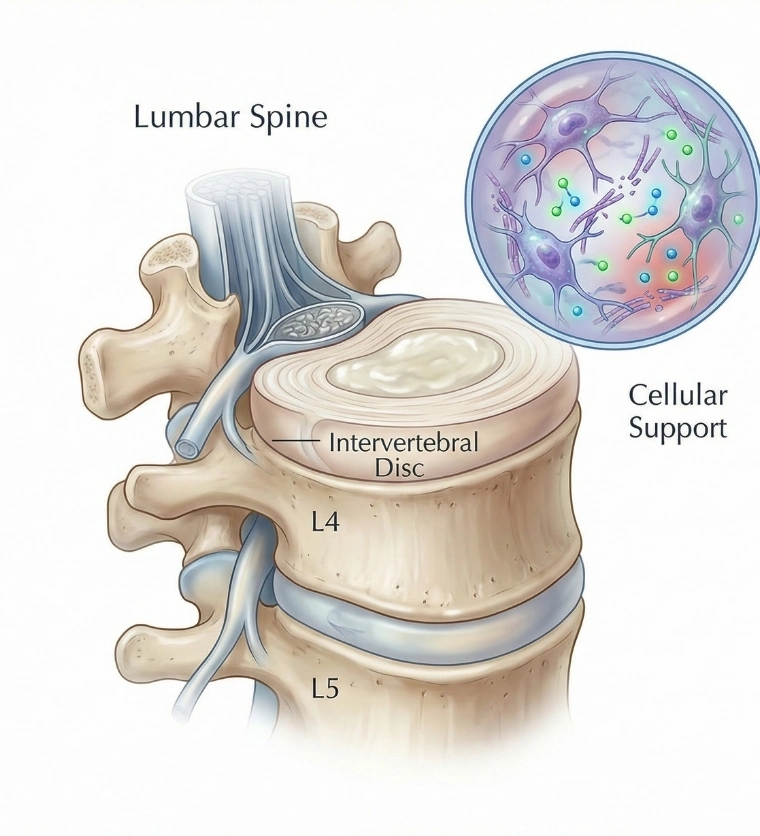
Degenerative disc disease ddd happens when spinal discs lose strength and hydration over time. These discs act like cushions between the bones of your spine. When disc degeneration progresses, the intervertebral disc can flatten, develop small tears, and irritate nearby nerves.

As a result, you may feel stiffness, aching, or sharp flares that limit work, exercise, and family time. Even more, the body can stay in a stressed state, which may keep pain signals active.

Standard care can help, especially early on. However, many treatments focus on symptom control rather than disc regeneration. Because of that, some patients explore advanced options designed to support damaged tissues and improve the disc environment.

Understanding Degenerative Disc Disease and Why the Spine Needs Support

What Is Stem Cell Treatment for Disc Degeneration?

Stem cell treatment is a type of regenerative medicine that uses healing cells and signals to support repair. In spine care, the goal is not to “swap in a brand-new disc.” Instead, the goal is to support disc health, calm irritation, and promote a better healing environment.

Many programmes use adult stem cells. These cells can come from sources such as bone marrow or other approved tissue sources, depending on the medical plan. In addition, some protocols may combine cells with supportive elements that help the body’s repair process.

Because this approach aims to address biology, it may be considered before major surgical interventions for the right patient. Still, it is not for everyone, and careful screening matters.

What Is Stem Cell Treatment for Disc Degeneration
Adult stem cell therapy for disc degeneration and spine repair support
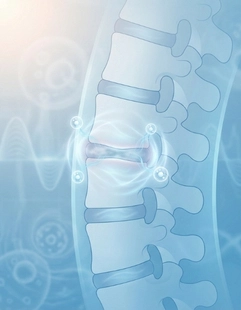
Stem cell treatment supporting disc health in degenerative disc disease

How Do Stem Cell Injections Work in the Spine?

People often ask what actually happens after stem cell injections. In simple terms, these cells can act like support teams. They may release growth factors and other helpful signals.

These signals can help the body:

  • reduce inflammation around painful areas
  • support the local repair response inside spinal discs
  • improve comfort by reducing pain triggers over time
  • encourage healthier tissue behaviour that supports pain relief

Also, many patients continue physical therapy during recovery. That combination often supports better movement, stronger muscles, and steadier progress.

Importantly, outcomes vary. Therefore, an honest clinic will discuss realistic goals, likely timelines, and what success can look like for your specific case.

How Do Stem Cell Injections Work in the Spine

Can Stem Cell Therapy Cure Degenerative Disc Disease?

Many people hope for a complete cure. Right now, no treatment can promise to fully reverse every part of disc degeneration for every person.

However, the aim can still be meaningful. A well-designed plan may focus on reducing pain, improving function, and helping you avoid or delay bigger procedures when appropriate. In other words, the priority is quality of life and long-term stability, not hype.

Because degenerative disc disease ddd can have many drivers, your plan may also include posture work, sleep support, stress management, and guided exercise. That full approach often helps more than any single step alone.

Can Stem Cell Therapy Cure Degenerative Disc Disease

Who May Be a Good Candidate for Stem Cell Therapy?

Not every person with back pain is a candidate for stem cell therapy. Before any treatment is suggested, the medical team reviews each case in detail, including:

  • Your scan findings and suspected pain source
  • Whether one or more intervertebral disc levels match your symptoms
  • Your history with conservative care, including physical therapy
  • Your overall health, medications, and risk factors
  • Whether the pain is more disc-related or caused by other structures

Often, people with early to moderate disc changes may do better than people with severe collapse or major instability. Also, if you need urgent surgery for nerve weakness, this approach may not fit your situation.

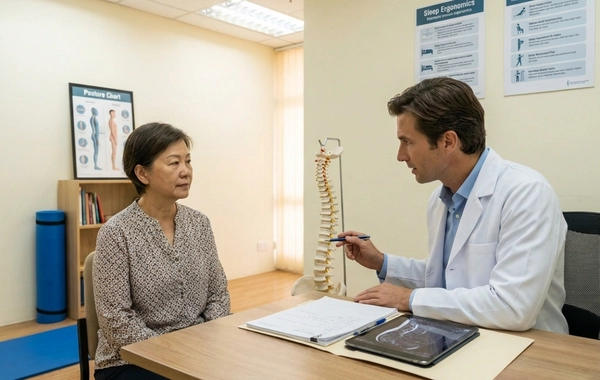
Medical evaluation to identify suitable candidates for stem cell therapy for degenerative disc disease

Cost of Stem Cell Therapy for Degenerative Disc Disease at Cyrona Cell

Every degenerative disc disease patient has a different pattern of spinal involvement and pain. The team at Cyrona Cell builds each treatment plan after a full medical review, so the cost reflects each person’s affected spinal levels, disc degeneration grade, nerve involvement, surgical history, and recommended cell amount.

Stem cell therapy at Cyrona Cell starts from USD 9,000. Most standard to advanced plans range from USD 9,000 to USD 15,000 and above. Because degenerative disc disease can range from a single mildly degenerated disc causing axial back pain to multilevel involvement with nerve root compression and prior spinal surgery, the team provides a personal cost estimate after reviewing each case.

A typical plan may include:

Patients and families choose Cyrona Cell because the team works with the full picture of each patient’s spinal condition and pain history, not a fixed package. All costs are explained after the medical review, so patients and families can plan ahead with confidence before making any decision. For a full breakdown of how stem cell therapy is priced in Malaysia, what each protocol includes, and how Malaysia compares with other countries, visit the stem cell therapy cost guide for Malaysia.

Prices are general estimates. The final cost varies based on spinal levels affected, disc degeneration grade, nerve involvement, surgical history, age and overall health, cell amount required, secretome needs, treatment route, and follow-up requirements, such as facet joint disease, spinal stenosis, or obesity.

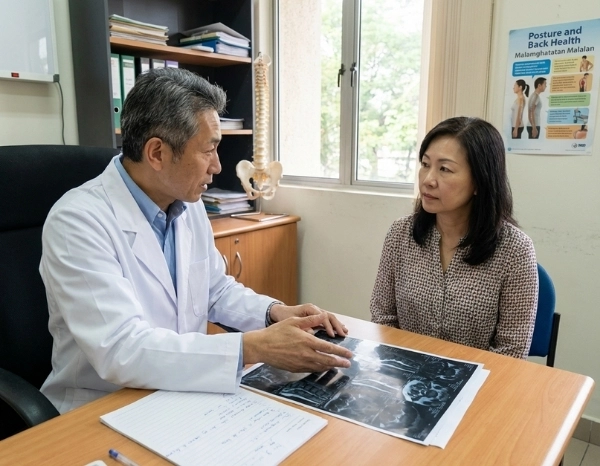
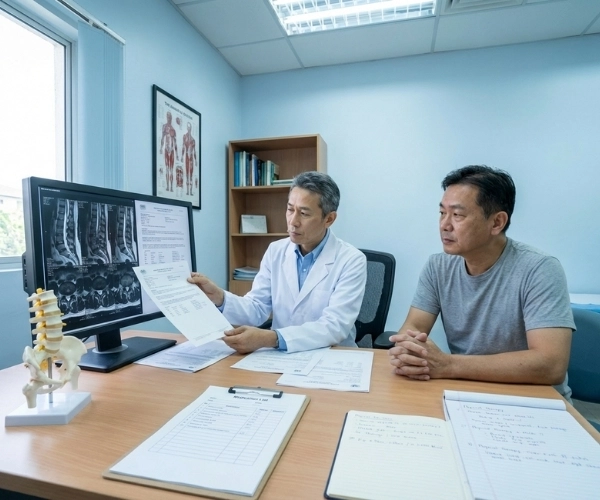
Doctor reviewing spinal scans before stem cell therapy for degenerative disc disease
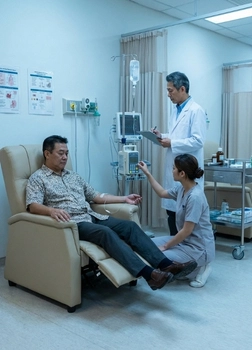
IV stem cell administration as a minimally invasive treatment for disc related back pain

What to Expect During Treatment at Cyrona Cell

Cyrona Cell follows a clear, minimally invasive pathway so patients know what to expect.

Medical evaluation

You share recent reports, scans, and medication lists. The doctor explains how therapy works, reviews possible benefits and limits, and agrees with you on realistic aims.

Stem cell preparation

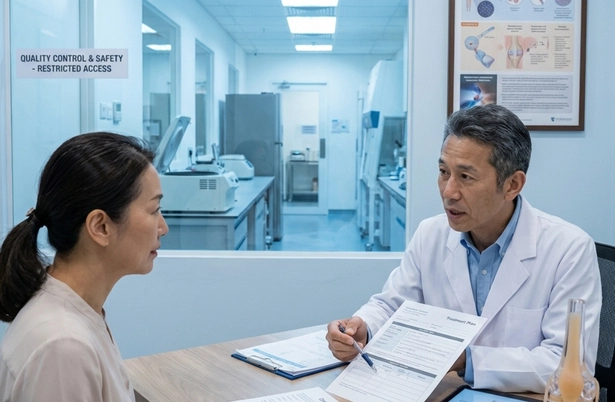
In a controlled lab, specialists prepare and test each batch under strict quality standards. They check strength, purity, and identity before release to the clinic.

Administration

Doctors give the cells slowly through a vein using an IV drip. Most people relax in a treatment chair. This method is designed to be comfortable and minimally invasive, without spine surgery.

Monitoring and follow-up

After infusions, the team tracks changes in pain, sleep, activity, and daily function. They may adjust lifestyle advice or the overall plan so all parts of care work smoothly together over the long term.

Human-Focused Research and Clinical Experience

Many readers want to know what human data suggests. Research is still growing, and studies vary in size and design. Still, a few human reports help explain why intradiscal and supportive approaches are being explored.

Mesoblast Ltd., Australia

Full 24-Month Trial Results for Chronic Low Back Pain (Presented at Spine Intervention Society Annual Meeting)

In a 100-patient randomized, placebo-controlled Phase 2 trial for chronic low back pain linked to degenerative disc disease, the company reported sustained improvements in pain and function over 24 months after a single intra-disc injection in certain dose groups, with the procedure described as well tolerated.

1

General Hospital of Armed Police Force, China

Human Umbilical Cord Mesenchymal Stem Cell Transplantation for the Treatment of Chronic Discogenic Low Back Pain

A small case report described two patients with chronic discogenic low back pain who received human umbilical cord tissue-derived mesenchymal stem cells, with pain and function scores improving during a two-year follow-up. The authors also noted the key limitation: only two patients, so stronger human trials are still needed.

You may also see high-profile stories in sports. For example, reports said Rafael Nadal planned stem cell treatment for back pain, and coverage around Peyton Manning discussed stem cell procedures for a neck issue. These stories can raise awareness, yet they do not replace clinical evidence for your specific diagnosis.

1

Why Choose Cyrona Cell Malaysia

Cyrona Cell in Kuala Lumpur brings together science, safety, and personal care. Stem cell therapy here is not a quick fix. It is a structured programme designed and overseen by doctors who understand both the promise and limits of cell-based care.

Our team explains clearly where therapy may add value and where it cannot replace standard spine care. This open approach helps you make decisions based on facts, not hype.

Cyrona Cell also offers exosome therapy as an added value service. Exosomes are tiny messenger packets released by stem cells. They carry helpful signals that may further support repair and calm inflammation. Used together, stem cell and exosome-based approaches can strengthen the supportive plan your main therapies offer.

Cyrona Cell Malaysia clinic for stem cell therapy for degenerative disc disease
How it works

Your Patient Journey in Three Simple Steps

Sharing medical reports for stem cell therapy evaluation for degenerative disc disease

Share your medical reports

Contact Cyrona Cell by form, email, or WhatsApp and send recent test results, scan reports, and a list of current medicines. The team checks whether therapy looks suitable and safe.
01
Receiving doctor guidance on stem cell treatment options for disc related back pain

Receive clear feedback

We explain the doctor’s suggestions in simple language, including possible risks, benefits, and realistic goals. You can ask as many questions as you need.

02
In person consultation at Cyrona Cell Malaysia for degenerative disc disease stem cell therapy

Decide after an in-person consultation

If you wish to continue, you visit the clinic in Kuala Lumpur, Malaysia. You meet the doctor, review options face to face, and only then decide whether to proceed.
03

Patient Journey for International Patients

Enquire & Share Medical Information

Submit your enquiry and be assigned a dedicated Patient Liaison who will assist you with medical records and tests for review.

Personalised Treatment Planning

Your Liaison will forward your reports to our doctors, who will create a personalised treatment plan. Further tests may be advised before proceeding.

Confirm Dates & Secure Your Treatment

Once you agree to the plan, inform your Liaison about your preferred dates. They will secure your treatment slot and coordinate travel details. A deposit is required for confirmation.

Travel & Arrival Support

Your Liaison will assist with visa guidance, flight bookings, and Malaysia Digital Arrival Card registration. Upon arrival, your airport transfer will be arranged.

Treatment & Care in Malaysia

Your Liaison will meet you at the hotel, assist with check-in, and coordinate transport to the treatment facility. They will guide you through treatment and recovery for a smooth experience.

Take the Next Step with Cyrona Cell Malaysia

If you live with disc-related back pain and want to know whether a structured cell-based programme could help, the best next step is a conversation with the Cyrona Cell team. There is no pressure to start. You receive clear information so you can decide with confidence.

You can reach us by enquiry form, email, or WhatsApp and send basic details about symptoms, imaging, current care, and daily limits. Our medical team reviews your case, then the coordinator explains what else is needed and what a possible plan may look like, including expected recovery times and what to do during follow-up care.

From there, you can decide whether stem cell injections for degenerative disc disease match your needs, values, and goals.

Get Your Free Estimate

FAQ

Most Popular Questions

At this time, stem cells are not a proven cure for disc degeneration. However, stem cell injections may support disc regeneration in some patients by improving the disc environment, supporting damaged tissues, and helping reduce inflammation over time. Many plans also include physical therapy and other anti inflammatory strategies to support reducing pain and better movement.

The cost depends on the type of stem cell treatment, the total number of sessions, whether PRP is added, and the complexity of your case. Because treatment plans vary, the clinic typically confirms pricing after reviewing scans and deciding if you are a candidate for stem cell therapy.

A candidate for stem cell therapy often has disc-related pain linked to one or more spinal discs, has tried conservative care, and does not need urgent surgical interventions. Your doctor will also check overall health, pain triggers, and whether the goal is pain relief, function improvement, or both. In addition, they will explain realistic timelines and recovery times so you know what to expect.

cyrona-cell-stem-cell-injections-for-degenerative-disc-disease

Booklet

Download our booklet for clear, practical insights and helpful guidance you can use right away.

Download our booklet