







Stem Cell Therapy For Traumatic Brain Injury
Support Healing, Skills, and Quality of Life With Modern Cell Care
Families often ask whether Stem Cell Therapy For Traumatic Brain Injury can offer added support beyond standard rehab and medicines. In this guide, we explain what science suggests about stem cell therapy for traumatic brain injury, what realistic goals look like, and how a structured care plan may help people regain daily skills over time. This page follows the same Cyrona Cell patient-education layout used across our neuro care guides.
Traumatic brain injuries can affect thinking, mood, movement, and energy. Because symptoms vary, the best plans stay personal, clear, and safety-first.
Home » Treatments » Stem Cell Therapy For Traumatic Brain Injury
Understanding Traumatic Brain Injury and Why the Brain Needs Support
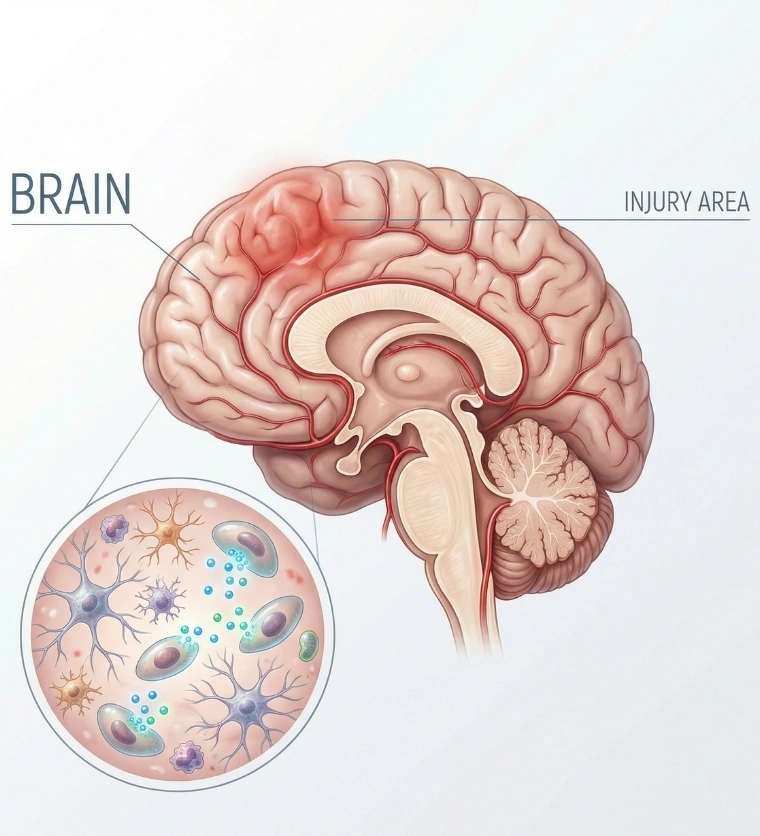
A traumatic brain injury can happen after a fall, car crash, sports impact, or other sudden trauma. The first injury can harm brain tissue right away. Then, in the days and weeks after, swelling and ongoing inflammation may add stress to brain cells and the areas around the tissue damaged.
As a result, some people develop memory issues, poor focus, sleep problems, headaches, or motor deficits such as weakness, poor balance, or stiff muscles. However, many patients also face “hidden” struggles, like mood swings and slower thinking, which can affect work and family life.
Standard rehab can improve function, yet many people still live with long term neurological challenges. That is why some patients explore supportive regenerative options along with neurologist care and therapy.
What Is Stem Cell Therapy for Traumatic Brain Injury?
At Cyrona Cell, stem cell treatment aims to support the brain’s healing environment rather than promise a “quick fix.” In simple terms, stem cells act like support teams. They may help calm harmful inflammation and support repair signals in damaged tissue.
Many clinics use mesenchymal stem cells because they can release helpful growth factors and immune-balancing signals. Sources can include donated umbilical cord tissue or, in some settings, bone marrow. The goal is not to replace every lost neuron. Instead, the therapy aims to improve the conditions around the brain so rehab can work better.
When people ask about the effects of stem cell therapy, the most honest answer is this: results can differ, and good clinics focus on safety, careful selection, and realistic goals.
How Do Stem Cells Work in the Brain?
After administration, stem cells can support healing in several ways at once. First, they may help reduce ongoing inflammation that harms recovery. Next, they may release growth factors that support blood flow and cell survival in stressed brain tissue.
Researchers also study how certain cells may help repair the “neighborhood” around an injury site. In addition, some cells can send signals that support nerve connections, which may help improve brain functions such as attention or coordination over time.
You may also read that cells can “differentiate into neurons.” Scientists continue to study this topic, and many experts believe the bigger benefit comes from signaling and immune support rather than large-scale replacement of brain cells. Still, the core idea stays the same: stem cells can improve the healing environment, which may help function when combined with rehab, sleep, nutrition, and brain training.
Can Stem Cell Therapy Cure Traumatic Brain Injury?
People often hope for a full cure, especially after life changes fast. Right now, no therapy can guarantee a complete reversal for every patient with traumatic brain injury tbi. Even so, supportive care can make a real difference.
A realistic plan focuses on goals such as better daily independence, steadier mood, clearer thinking, and improved movement. In many cases, patients also want fewer setbacks, better sleep, and more stable brain function during demanding tasks.
Because progress often happens step by step, clinics should avoid hype. Instead, they should explain what is known, what remains uncertain, and how they track outcomes over time.
Who May Benefit from Stem Cell Therapy?
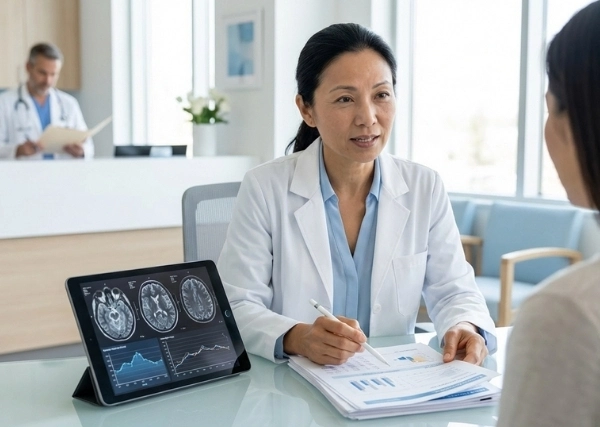
Not everyone fits the same plan, so careful screening matters. Before therapy, the medical team reviews history, current symptoms, scans (when available), and the rehab path so far.
Often, people who continue to have problems months after injury ask about added support. Some patients deal with stiffness, weakness, or fine motor deficits. Others struggle with memory, fatigue, or emotional control. Because each pattern differs, the team looks at overall health, risk factors, and safety concerns first.
Also, patients should understand possible side effects. Many reports describe short-term issues such as headache, mild fever, or soreness at an injection site, although risks vary by method and patient health. A trustworthy clinic explains risks clearly and coordinates with the patient’s primary doctor.
Cost of Stem Cell Therapy for Traumatic Brain Injury at Cyrona Cell
Every traumatic brain injury is different. The team at Cyrona Cell builds each treatment plan after a full medical review, so the cost reflects each person’s injury severity, time since the event, current cognitive and physical deficits, rehabilitation history, and recommended cell amount.
Stem cell therapy at Cyrona Cell starts from USD 9,000. Most standard to advanced plans range from USD 9,000 to USD 15,000 and above. Because TBI presentations range from persistent cognitive difficulties to physical deficits, speech and behavioural changes, and varying levels of daily independence, the team provides a personal cost estimate after reviewing each case.
A typical plan may include:
- Medical review and full case assessment
- TBI recovery protocol planning, injury severity, time since event, cognitive and physical deficit profile, and rehabilitation history
- Cognitive, physical, and behavioural function assessment
- Wharton's jelly mesenchymal stem cells (MSCs)
- Secretome support, where recommended
- Cell processing and quality checks
- Safety and sterility verification
- Treatment-day monitoring
- Post-treatment observation and neurological response assessment
- Follow-up communication and cognitive recovery progress review
- Cell quality documentation
Patients and families choose Cyrona Cell because the team works with the full picture of each patient’s injury history and current function, not a fixed package. All costs are explained after the medical review, so patients and families can plan ahead with confidence before making any decision. For a full breakdown of how stem cell therapy is priced in Malaysia, what each protocol includes, and how Malaysia compares with other countries, visit the stem cell therapy cost guide for Malaysia.
Prices are general estimates. The final cost varies based on injury severity and type, time since the event, current cognitive and physical deficits, rehabilitation stage and history, age and overall health, cell amount required, secretome needs, treatment route, and follow-up requirements, such as epilepsy, depression, or sleep disorders.
What to Expect During Treatment at Cyrona Cell
Cyrona Cell follows a clear, minimally invasive pathway so patients and families know what to expect.
Medical evaluation
You share recent reports, scan notes, and a list of current medicines. The doctor explains how therapy works, reviews possible benefits and limits, and agrees with you on realistic aims.
Stem cell preparation
In a controlled lab, specialists prepare and test each batch under strict quality standards. They check strength, purity, and identity before release to the clinic.
Administration
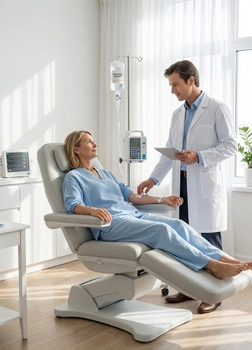
Doctors give the cells slowly through a vein using an IV drip. Most people relax in a treatment chair. This method is designed to be comfortable and minimally invasive, without brain surgery.
Monitoring and follow-up
After infusions, the team tracks changes in thinking, mood, sleep, movement, and daily function. Then, they may adjust lifestyle advice or the overall plan so all parts of care work smoothly together.
Human-Focused Research and Clinical Experience
Many readers want human data, not animal studies. Two clinical reports often discussed in this space show early signals on safety and function, while also highlighting the need for larger clinical trials.
General Hospital of Chinese People’s Armed Police Forces, China
Umbilical cord mesenchymal stem cell transplantation significantly improves neurological function in patients with sequelae of traumatic brain injury
In this study, researchers assigned 40 people with ongoing problems after TBI to a treatment group or a control group. The treatment group received multiple transplants via lumbar puncture. At six months, the treatment group showed improvements on function scales that include movement, balance, self-care, mobility, and communication. Importantly, the authors also called for larger, multi-center trials to confirm results and define best candidates.
1
University of Health Sciences, Turkey
Safety and efficiency of Wharton’s Jelly-derived mesenchymal stem cell administration in patients with traumatic brain injury: First results of a phase I study
This phase I report followed six young adults with TBI who received Wharton’s Jelly-derived cells through intrathecal, intramuscular, and intravenous routes at defined target doses. The team reported only early, short-lived issues such as mild fever, headache, and muscle pain that resolved within 24 hours, and they reported no other safety issues during one-year follow-up. They also observed improvements in measures of spasticity, strength, and independence scores, although the small size means we still need larger studies to confirm the benefit.
1
Why Choose Cyrona Cell Malaysia
Cyrona Cell in Kuala Lumpur brings together science, safety, and personal care. Stem cell therapy here is not a quick fix. It is a structured programme designed and overseen by doctors who understand both the promise and limits of cell-based care.
Our team explains clearly where stem cell therapy may add value and where it cannot replace standard treatment. This open approach helps you make decisions based on facts, not hype.
Cyrona Cell also offers exosome therapy as an added value service. Exosomes are tiny messenger packets released by stem cells. They carry helpful signals that may further support repair and calm inflammation. Used together, stem cell and exosome-based approaches can strengthen the supportive plan your main therapies offer.
How it works
Your Patient Journey in Three Simple Steps
Share your medical reports
Contact Cyrona Cell by form, email, or WhatsApp and send recent test results, scan reports, and a list of current medicines. The team checks whether therapy looks suitable and safe.

Receive clear feedback
We explain the doctor’s suggestions in simple language, including possible risks, benefits, and realistic goals. You can ask as many questions as you need.

Decide after an in-person consultation
If you wish to continue, you visit the clinic in Kuala Lumpur, Malaysia. You meet the doctor, review options face to face, and only then decide whether to proceed.
Patient Journey for International Patients
Enquire & Share Medical Information
Submit your enquiry and be assigned a dedicated Patient Liaison who will assist you with medical records and tests for review.
Personalised Treatment Planning
Your Liaison will forward your reports to our doctors, who will create a personalised treatment plan. Further tests may be advised before proceeding.
Confirm Dates & Secure Your Treatment
Once you agree to the plan, inform your Liaison about your preferred dates. They will secure your treatment slot and coordinate travel details. A deposit is required for confirmation.
Travel & Arrival Support
Your Liaison will assist with visa guidance, flight bookings, and Malaysia Digital Arrival Card registration. Upon arrival, your airport transfer will be arranged.
Treatment & Care in Malaysia
Your Liaison will meet you at the hotel, assist with check-in, and coordinate transport to the treatment facility. They will guide you through treatment and recovery for a smooth experience.
Take the Next Step with Cyrona Cell Malaysia
If you or your family member lives with ongoing symptoms after head trauma and you want to explore supportive regenerative options, the best next step is a conversation with the Cyrona Cell team. There is no pressure to start. You receive clear information so you can decide with confidence.
You can reach us by enquiry form, email, or WhatsApp and send basic details about diagnosis, current care, and daily function. Our medical team reviews your case, then the coordinator explains what else is needed and what a possible plan may look like.
From there, you and your family can decide whether a structured programme that includes stem cell therapy for traumatic brain injury fits your needs, values, and goals.
Get Your Free Estimate
FAQ
Most Popular Questions
Can stem cells help traumatic brain injury?
They may help some patients as part of a wider plan. In human studies, clinicians have reported improvements in function scores and daily skills after stem cell treatment, although results vary and larger clinical trials must confirm who benefits most. In simple terms, mesenchymal stem cells may support healing by releasing growth factors, calming inflammation, and supporting recovery in damaged tissue while rehab rebuilds skills.
Can people fully recover from TBI?
Some people recover very well, especially with early care and strong rehab. However, others still face long term neurological issues, such as fatigue, memory problems, or movement limits, even after the brain stabilizes. Because the injury can affect many brain cells and networks, recovery often happens in stages, and patients may need ongoing therapy, lifestyle support, and careful follow-up.
What risks should I know about before stem cell treatment for TBI?
Risk depends on the cell source, the delivery method, and the patient’s health. Some reports describe short-term side effects such as headache, mild fever, or soreness, and clinics should discuss infection risk and monitoring steps as well. A good team explains what to watch for, coordinates with your doctors, and tracks progress so you can make safe decisions.