




Stem Cell For Joint Pain
A modern option that may support sore, worn joints and help you move with more ease
Stem Cell For Joint Pain is a phrase many people type when daily aches start limiting work, sleep, or exercise. If you feel stuck, you may wonder whether stem cell for joint pain could help when basic care no longer feels like enough.
Joint pain often starts with small wear that adds up. Over time, swelling and stress can irritate nerves, stiffen movement, and reduce confidence. Because of that, many people look beyond quick fixes and start asking about regenerative options that aim to support repair, not only symptoms.
This article explains how stem cells may help, who may fit this approach, and how a careful clinic pathway can keep safety at the centre.
Home » Treatments » Stem Cell For Joint Pain
Understanding Joint Pain and Why Your Joints Need Support
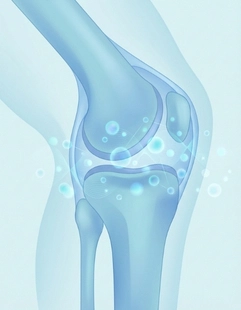
Your joints move smoothly when cartilage stays healthy and the surrounding tissue stays calm. However, injury, age, and repeated strain can harm damaged tissues in and around the joint. As a result, you may develop swelling, heat, grinding, or sharp pain.
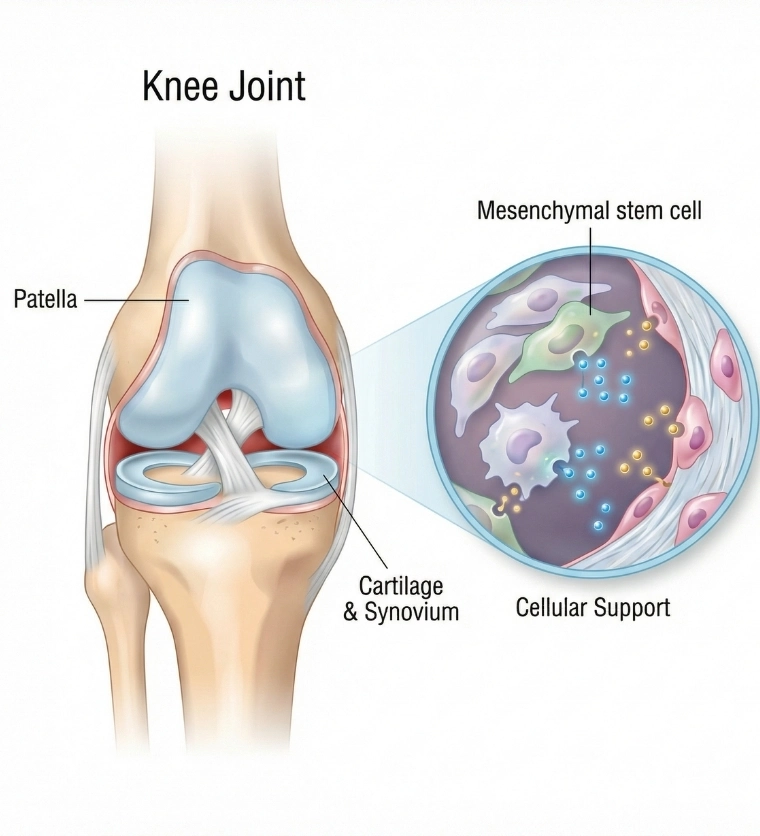
A common example is knee osteoarthritis, where the joint lining stays irritated and damaged cartilage thins. Meanwhile, the soft structures around the knee can weaken too, including the tendon ligament support that helps keep the joint stable.
Many people start with rest, weight control, and physical therapy. These steps often help, so they remain the foundation. Yet some people still need more help with daily function and comfort.
Doctors may also suggest anti inflammatory drugs or injections. For some patients, a steroidal anti inflammatory shot can reduce swelling for a short time. Still, these options usually do not rebuild tissue, so symptoms can return.
What Is Stem Cell Therapy for Joint Pain?
Stem cell care for joint problems focuses on support and repair. In simple terms, doctors use a type of cells that can release helpful signals where the joint needs support.
Many clinics use mesenchymal stem cells mscs because these cells can calm inflammation and support repair signals. Providers may source them in different ways, including bone marrow or carefully prepared donated tissue, depending on local rules and the clinic’s medical standards.
You may also see the phrase derived mesenchymal stem cells. That wording often points to how a lab prepares and expands cells under strict controls before a doctor uses them.
When done with proper screening and medical oversight, stem cell therapy aims to support comfort and function, especially when standard care has not met your goals.
How Do Stem Cells Work in the Joint?
People often ask about the effect of stem cell care. Instead of acting like a pain pill, stem cells work more like a support team. They can release signals that may:
- Calm ongoing irritation inside the joint
- Support the local repair environment
- Encourage healthier movement patterns by reducing pain
- Help the body manage stress in the area over time
This supportive role connects to regenerative medicine, which focuses on helping the body repair itself where possible. In joint care, doctors often place cells directly into the problem area using stem cell injections.
Some patients also compare stem cell care with platelet rich plasma. PRP uses parts of your own blood to deliver growth factors. Stem cells and PRP differ, but some clinics may discuss both as options, depending on your case.
Can Stem Cell Therapy Cure Joint Pain?
It helps to be clear and realistic. Stem cells do not “cure” every cause of joint pain. For example, severe arthritis, major deformity, or advanced tissue loss may still need surgery.
However, in selected patients, stem cell care may support comfort, movement, and day to day function. The goal often centers on pain relief, better stamina, and improved quality of life, not miracle claims.
A good clinic should explain limits up front, review your scans, and set goals you can measure, such as walking distance, stair comfort, and sleep quality.
Who May Benefit from Stem Cell Therapy?
Not everyone fits this approach. Before any plan, a medical team should review:
- Your diagnosis and symptom pattern
- Imaging results, such as X ray or MRI
- Past response to exercise, injections, and medicines
- Other health issues that may raise risk
Often, people with mild to moderate arthritis, early cartilage wear, or stubborn inflammation after injury may benefit most. Also, people who want to delay surgery sometimes explore whether they can be treated with stem cell care as part of a wider plan.
Still, safety comes first. A responsible provider should rule out active infection, unstable medical problems, or unrealistic expectations.
Cost of Stem Cell Therapy for Joint Pain at Cyrona Cell
Every joint pain patient presents with a different pain pattern, affected joints, and underlying cause. The team at Cyrona Cell builds each treatment plan after a full medical review, so the cost reflects each person’s pain source, joints involved, imaging findings, previous treatments, and recommended cell amount.
Stem cell therapy at Cyrona Cell starts from USD 9,000. Most standard to advanced plans range from USD 9,000 to USD 15,000 and above. Because joint pain ranges from inflammatory conditions affecting multiple joints to localised mechanical pain in a single joint, and because previous treatments, imaging findings, and overall joint health all affect the protocol, the team provides a personal cost estimate after reviewing each case.
A typical plan may include:
- Medical review and full case assessment
- Joint pain protocol planning, pain source, joints involved, imaging findings, and previous injection or surgical history
- Joint function, pain level, and mobility assessment
- Wharton's jelly mesenchymal stem cells (MSCs)
- Secretome support, where recommended
- Cell processing and quality checks
- Safety and sterility verification
- Treatment-day monitoring
- Post-treatment observation including pain response and joint function
- Follow-up communication and pain level, mobility, and quality of life review
- Cell quality documentation
Patients and families choose Cyrona Cell because the team works with the full picture of each patient’s joint health and pain history, not a fixed package. All costs are explained after the medical review, so patients and families can plan ahead with confidence before making any decision. For a full breakdown of how stem cell therapy is priced in Malaysia, what each protocol includes, and how Malaysia compares with other countries, visit the stem cell therapy cost guide for Malaysia.
Prices are general estimates. The final cost varies based on pain source and type, joints involved, imaging findings, previous treatments, age and overall health, cell amount required, secretome needs, treatment route, and follow-up requirements, such as osteoporosis, autoimmune disease, or obesity.
What to Expect During Treatment at Cyrona Cell
Cyrona Cell follows a clear, minimally invasive pathway so you know what to expect.
Medical evaluation
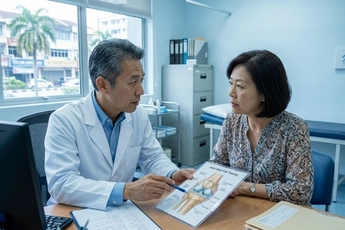
You share recent reports, scans, and medication lists. The doctor explains how therapy works, reviews possible benefits and limits, and agrees with you on realistic aims.
Stem cell preparation
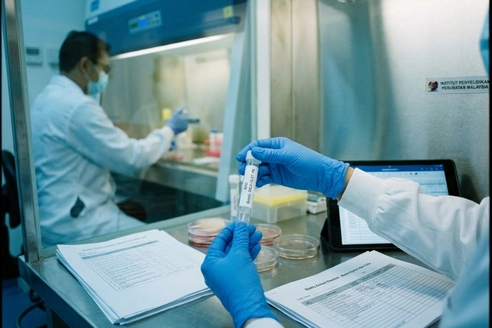
In a controlled lab, specialists prepare and test each batch under strict quality standards. They check strength, purity, and identity before release to the clinic.
Administration
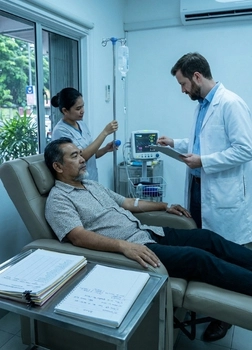
Doctors give the cells slowly through a vein using an IV drip. Most people relax in a treatment chair. This method is designed to be comfortable and minimally invasive, without surgery.
Monitoring and follow-up
After infusions, the team tracks changes in comfort, sleep, walking, and daily function. They may adjust lifestyle advice or the overall plan so all parts of care work smoothly together over the long term.
Human-Focused Research and Clinical Experience
Many people want to see what human studies show, especially for worn joints like the knee. While research continues, early clinical work in people gives useful safety and outcome signals, especially for osteoarthritis.
You may also read media reports of elite athletes trying biologic options. For example, outlets reported that Cristiano Ronaldo explored stem cell treatment during an injury recovery period, and Rafael Nadal’s team discussed stem cell treatment for back joint pain. These stories can feel encouraging, but they do not replace clinical evidence for the average patient.
Army Medical University, China
Repeated intra-articular injections of umbilical cord-derived mesenchymal stem cells for knee osteoarthritis: a phase I, single-arm study
This phase I human study followed patients with knee osteoarthritis who received repeated joint injections of umbilical cord derived MSCs. The authors focused on safety and tracked pain and function scores over a short follow up period. They reported mainly temporary side effects, plus improvements in pain and function measures in this small group.
1
Erciyes University, Turkey
Assessment of clinical, biochemical, and radiological outcomes following intra-articular injection of Wharton jelly-derived mesenchymal stromal cells in patients with knee osteoarthritis: A prospective clinical study
This prospective human study included patients with knee osteoarthritis who did not improve with conservative care. The team evaluated clinical outcomes and other measures before and after joint injection of Wharton jelly derived cells from the human umbilical cord. The paper reports changes in patient outcomes over time, helping explain why researchers keep exploring this option for joint symptoms.
1
Why Choose Cyrona Cell Malaysia
Cyrona Cell in Kuala Lumpur brings together science, safety, and personal care. Stem cell therapy here is not a quick fix. It is a structured programme designed and overseen by doctors who understand both the promise and limits of cell-based care.
Our team explains clearly where therapy may add value and where it cannot replace standard treatment. This open approach helps you make decisions based on facts, not hype.
Cyrona Cell also offers exosome therapy as an added value service. Exosomes are tiny messenger packets released by stem cells. They carry helpful signals that may further support repair and calm inflammation. Used together, stem cell and exosome-based approaches can strengthen the supportive plan your main therapies offer.
How it works
Your Patient Journey in Three Simple Steps
Share your medical reports
Contact Cyrona Cell by form, email, or WhatsApp and send recent test results, scan reports, and a list of current medicines. The team checks whether therapy looks suitable and safe.
Receive clear feedback
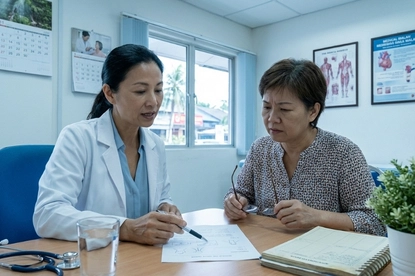
We explain the doctor’s suggestions in simple language, including possible risks, benefits, and realistic goals. You can ask as many questions as you need.

Decide after an in-person consultation
If you wish to continue, you visit the clinic in Kuala Lumpur, Malaysia. You meet the doctor, review options face to face, and only then decide whether to proceed.
Patient Journey for International Patients
Enquire & Share Medical Information
Submit your enquiry and be assigned a dedicated Patient Liaison who will assist you with medical records and tests for review.
Personalised Treatment Planning
Your Liaison will forward your reports to our doctors, who will create a personalised treatment plan. Further tests may be advised before proceeding.
Confirm Dates & Secure Your Treatment
Once you agree to the plan, inform your Liaison about your preferred dates. They will secure your treatment slot and coordinate travel details. A deposit is required for confirmation.
Travel & Arrival Support
Your Liaison will assist with visa guidance, flight bookings, and Malaysia Digital Arrival Card registration. Upon arrival, your airport transfer will be arranged.
Treatment & Care in Malaysia
Your Liaison will meet you at the hotel, assist with check-in, and coordinate transport to the treatment facility. They will guide you through treatment and recovery for a smooth experience.
Take the Next Step with Cyrona Cell Malaysia
If you live with long-term joint pain and want to know whether a structured stem cell and exosome programme could help, the best next step is a conversation with the Cyrona Cell team. There is no pressure to start. You receive clear information so you can decide with confidence.
You can reach us by enquiry form, email, or WhatsApp and send basic details about your diagnosis, scans, current care, and daily limits. Our medical team reviews your case, then the coordinator explains what else is needed and what a possible plan may look like.
From there, you can decide whether our options fit your needs, values, and goals, including whether stem cell for joint pain belongs in your plan.
Get Your Free Estimate
FAQ
Most Popular Questions
Do stem cells work for joint pain?
In selected patients, stem cells may support comfort and function, especially when knee osteoarthritis or soft tissue strain keeps flaring. Most plans aim to calm irritation, support repair signals, and improve movement habits alongside physical therapy. Results vary, so your doctor should review scans and set clear goals.
How much does stem cell therapy cost for joints?
Cost depends on the cell source, the total dose, the number of sessions, and the testing and follow up included. After the doctor reviews your reports, the clinic can explain the full plan in writing so you can compare options safely.
Is stem cell treatment safe for joints?
Safety depends on patient selection, screening, cell handling, and medical oversight. Human studies in knee osteoarthritis often report mostly temporary side effects, yet long term data still grows. Ask about lab standards, infection controls, and follow up care before you decide.