





Home » wjMSC Therapy For Crohn’s Disease
wjMSC Therapy For Crohn’s Disease
A practical, science-led guide to what this supportive approach may and may not do for gut healing
At Cyrona Cell Malaysia, many people ask whether wjMSC Therapy For Crohn’s Disease can offer added support when standard care has not brought enough relief. Crohn’s can drive ongoing intestine inflammation, pain, and fatigue that disrupt work, sleep, and family life. Because symptoms can flare without warning, many patients also worry about long term control and day-to-day confidence.
While there is no single option that fits everyone diagnosed with Crohn’s, carefully planned programmes in Kuala Lumpur, Malaysia aim to support the body’s repair signals, calm harmful inflammation, and improve quality of life. Our focus stays on science-led regenerative medicine, not miracle promises, and we always encourage shared decisions with your gastroenterology team and broader health care providers.
Understanding Crohn’s Disease and Why the Gut Needs Support
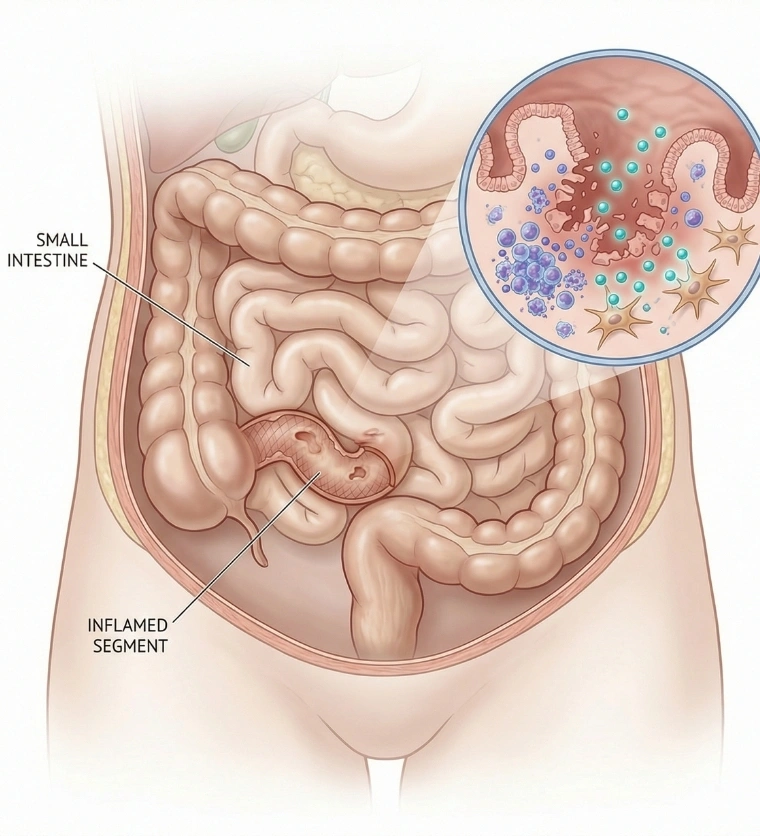
Crohn’s belongs to inflammatory bowel disease and can affect any part of the gastrointestinal tract, from mouth to anus. In many people, the immune system stays overactive and sends immune cells into the gut wall even when there is no infection to fight. As a result, swelling and sores can form, and the gut can struggle to absorb nutrients well.
Over time, uncontrolled disease activity may lead to complications such as fistulas strictures. A fistula is an abnormal tunnel that can form between the intestine and nearby tissue. A stricture is a narrowed area that can slow or block food movement. Both can raise the risk of surgery and can strongly affect confidence and daily comfort.
Medicines like steroids, immunomodulators, and biologics can help many people. However, some patients still face flares, side effects, or limited response. Because of this, some people explore advanced supportive approaches that aim to shift inflammation patterns and support tissue repair.
What Is wjMSC Support for Crohn’s?
At Cyrona Cell, we use carefully sourced options that fit within modern clinical applications of regenerative medicine. In simple words, a mesenchymal stromal cell can act like a “support team” that sends calming and repair signals. These signals can link to anti inflammatory properties that may help reduce harmful immune activity.
wjMSC options come from human umbilical cord tissue, often described as Wharton’s jelly, which many people casually call jelly mesenchymal tissue. In practice, clinicians focus on quality checks, identity, and safety screening, because consistency matters in real clinical trials.
In addition to whole-cell signalling, researchers also study msc derived extracellular vesicles. These are tiny packages released by stromal cells that carry instructions. You may also see the wording extracellular vesicle ev or stromal cell derived vesicles. Importantly, this science is still developing, so the best approach stays honest: focus on what human data suggests, and avoid hype.
How Do wjMSC Signals Work in the Gut?
People often ask what this approach actually does inside the body. The goal is usually not to “build a brand-new intestine.” Instead, many protocols aim to reduce harmful signalling and help the gut lining recover.
Depending on the programme design, clinicians may aim to:
- Calm overactive immune signalling that drives gut inflammation
- Support repair around ulcers and irritated tissue
- Support local healing in hard-to-treat areas such as perianal fistulas
- Improve tissue micro-environments that involve endothelial cells and blood flow
At the cellular level, inflammation can involve reactive oxygen species, which may worsen tissue stress. Some laboratory protocols use controls like phosphate buffered saline during preparation steps, and researchers also discuss injury patterns like ischemia reperfusion injury when they explain how tissues get stressed and then re-oxygenated. Even so, your care plan should stay grounded in human-focused safety and outcomes, not lab-only concepts.
Delivery method also matters. Some programmes use intravenous injection for systemic support, while others use targeted local delivery when the clinical need is local. Either way, results vary, so doctors look at the full picture before suggesting a plan.
Can This Approach Cure Crohn’s Disease?
It is important to be direct: there is no proven cure for Crohn’s today. Even when people achieve deep remission, Crohn’s can return later, so long term planning matters.
In real-world care, the most realistic goals for advanced supportive programmes often include:
- Reducing flare frequency
- Lowering symptom burden
- Supporting fistula healing in selected cases
- Improving quality of life and daily function
- Helping some patients reduce reliance on repeated steroids when medically appropriate
So, rather than chasing a one-time promise, the smarter approach is to treat this as structured support that fits beside standard gastroenterology care.
Who May Benefit from Advanced Stromal Support?
Not every person with Crohn’s is a good fit. Before we treat patients, our medical team reviews the case and checks whether the plan is reasonable and safe.
We commonly review:
- How long you have had Crohn’s and how often you flare
- Current medicines and response history
- Imaging and scopes, plus lab markers of inflammation
- Whether you have fistulas, abscess history, or narrowing
- Overall health, including infection risk and nutrition status
Often, people with complex fistulas or severe, therapy-resistant disease ask about advanced options. In contrast, people with mild disease may do best by optimizing standard care first. Either way, we aim for clear, honest guidance.
What to Expect During Treatment at Cyrona Cell
Cyrona Cell follows a clear, minimally invasive pathway so you know what will happen and why.
Medical evaluation
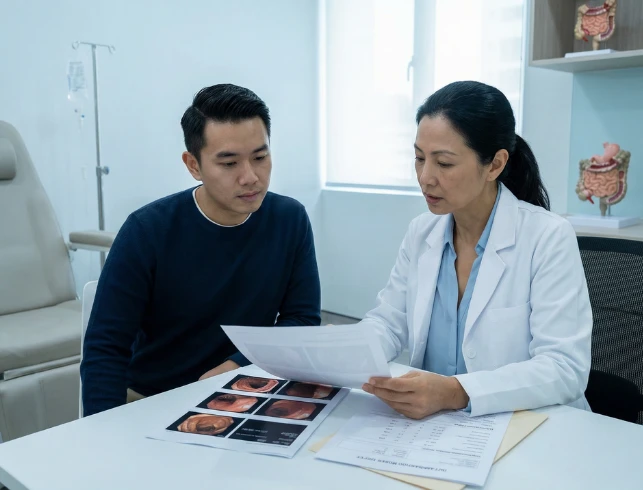
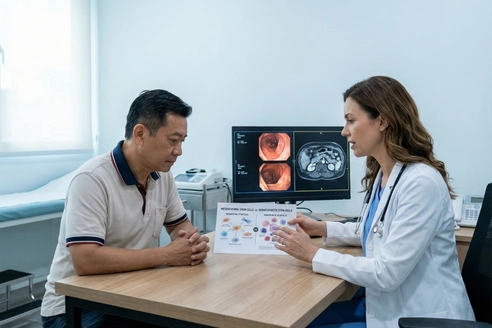
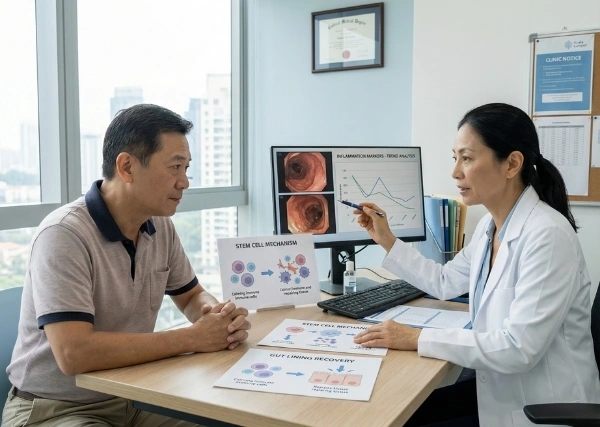
You share recent reports, scan results, and medication lists. The doctor explains the supportive goal, reviews limits, and discusses safety concerns in plain language.
Preparation and quality checks
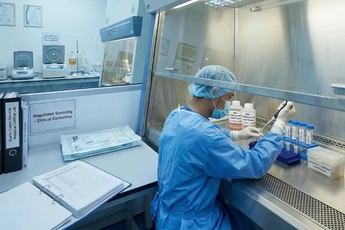
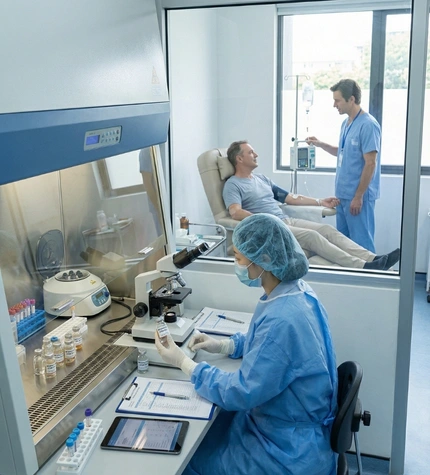
Specialists prepare and test each batch under strict standards. They check identity, purity, and suitability before use.
Administration
Depending on the programme, doctors may deliver supportive products through a vein by IV drip or by local application for specific conditions. The plan depends on the clinical need and the approach supported by human clinical trials.
Monitoring and follow-up
After the programme, we track symptom changes, stool pattern, energy, and comfort. We also encourage coordinated follow-up with your gastroenterologist so your wider plan stays aligned.
Human-focused research and clinical experience
People understandably want proof from humans, not animals. We do not rely on animal outcomes for decision-making. You may see early lab language like “mouse model” in the wider science world, but patient choices should stay anchored to human clinical trials.
University of Nottingham, United Kingdom
ASTIC / ASTIClite immune-reset transplantation trials (Crohn’s)
Work linked to the University of Nottingham helped the field understand high-intensity “immune reset” transplantation-style approaches for severe, treatment-resistant Crohn’s, including safety limits and why careful selection matters. In a later reduced-intensity trial, researchers reported meaningful risks alongside signals of reduced endoscopic activity, which is why specialists treat this category as complex and not a casual option.
1
KU Leuven, Belgium
Expanded Allogeneic wjMSC Therapy for Complex Perianal Fistulas in Crohn’s Disease (ADMIRE-CD Trial)
A major phase 3 randomised controlled trial evaluated a locally delivered stromal product for complex perianal fistulas in adults with Crohn’s, and it reported higher combined remission at week 24 versus placebo after standard fistula preparation. This human evidence supports the idea that targeted stromal programmes may help selected fistula cases, although outcomes still vary and follow-up remains important for long term durability.
1
Why Choose Cyrona Cell Malaysia
Cyrona Cell in Kuala Lumpur brings together science, safety, and personal care. wjMSC-focused support here is not a quick fix. It is a structured programme designed and overseen by doctors who understand both the promise and limits of regenerative care.
Our team explains clearly where this approach may add value and where it cannot replace standard treatment. This open approach helps you make decisions based on facts, not hype.
Cyrona Cell also offers exosome support as an added-value service. Exosomes are tiny messenger packets released by stromal cells. They carry helpful signals that may further support repair and calm inflammation. Used together, stromal programmes and vesicle-based support can strengthen the supportive plan your main therapies already provide.
How it works
Your Patient Journey in Three Simple Steps
Share your medical reports
Contact Cyrona Cell by form, email, or WhatsApp and send recent test results, scan reports, and a list of current medicines. The team checks whether therapy looks suitable and safe.

Receive clear feedback
We explain the doctor’s suggestions in simple language, including possible risks, benefits, and realistic goals. You can ask as many questions as you need.

Decide after an in-person consultation
If you wish to continue, you visit the clinic in Kuala Lumpur, Malaysia. You meet the doctor, review options face to face, and only then decide whether to proceed.
Patient Journey for International Patients
Enquire & Share Medical Information
Submit your enquiry and be assigned a dedicated Patient Liaison who will assist you with medical records and tests for review.
Personalised Treatment Planning
Your Liaison will forward your reports to our doctors, who will create a personalised treatment plan. Further tests may be advised before proceeding.
Confirm Dates & Secure Your Treatment
Once you agree to the plan, inform your Liaison about your preferred dates. They will secure your treatment slot and coordinate travel details. A deposit is required for confirmation.
Travel & Arrival Support
Your Liaison will assist with visa guidance, flight bookings, and Malaysia Digital Arrival Card registration. Upon arrival, your airport transfer will be arranged.
Treatment & Care in Malaysia
Your Liaison will meet you at the hotel, assist with check-in, and coordinate transport to the treatment facility. They will guide you through treatment and recovery for a smooth experience.
Take the Next Step with Cyrona Cell Malaysia
If you live with Crohn’s and want to know whether a structured wjMSC and exosome programme could help, the best next step is a conversation with the Cyrona Cell team. There is no pressure to start. You receive clear information so you can decide with confidence.
You can reach us by enquiry form, email, or WhatsApp and send basic details about your diagnosis, current care, and daily function. Our medical team reviews your case, then the coordinator explains what else is needed and what a possible plan may look like.
From there, you and your family can decide whether our supportive options fit your needs, values, and goals.
Get Your Free Estimate
FAQ
Most Popular Questions
How much is wjMSC support for Crohn’s?
Costs vary because the plan depends on your condition, the delivery method, and how many sessions your doctor recommends. For example, a programme designed to support fistulas may differ from one aimed at broader immune regulation. After we review your records, we explain what is included, what follow-up involves, and how this fits your health care budget and long term planning.
Is wjMSC support for Crohn safe?
Safety depends on the exact method, product source, screening, and your personal risk profile. Some high-intensity hospital transplantation-style approaches can carry serious risks and require specialist hospital teams. In contrast, targeted stromal programmes used in human clinical trials for fistulas have shown acceptable safety profiles in selected patients. The safest path starts with proper screening and realistic expectations.
Can wjMSC programmes help perianal fistulas in Crohn’s?
In some treatment-refractory cases, stromal cell programmes evaluated in clinical trials improved closure outcomes compared with placebo after standard fistula preparation. Still, results vary. Also, ongoing care matters because Crohn’s can relapse, and fistulas can return if underlying inflammation remains active.