












wjMSC Therapy For Hypoxic Brain Injury-brain recovery with modern wjMSC care
Hope-for-safer-brain-recovery-with-modern-cell-care

wjMSC Therapy For Hypoxic Brain Injury

Hope for safer brain recovery with modern wjMSC care

Many families ask whether wjmsc therapy for hypoxic brain injury can add support after the brain has been harmed by low oxygen. This may happen after birth distress, a near drowning, a cardiac arrest, or serious breathing failure. Recovery can feel uneven, because brain networks need time to settle and relearn skills. Standard hospital care and rehabilitation still guide the plan, yet some patients look for extra options to support healing.

At Cyrona Cell Malaysia in Kuala Lumpur, we provide science-based regenerative care, not miracle claims. We offer wjMSC-based support using screened donor sources such as umbilical cord tissue. Because every case is different, we start with a medical review, clear goals, and a plan that fits alongside your rehab team.

Understanding Hypoxic Brain Injury and Why the Brain Needs Support
Hypoxic Brain Injury and Why the Brain Needs Support

Understanding Hypoxic Brain Injury and Why the Brain Needs Support

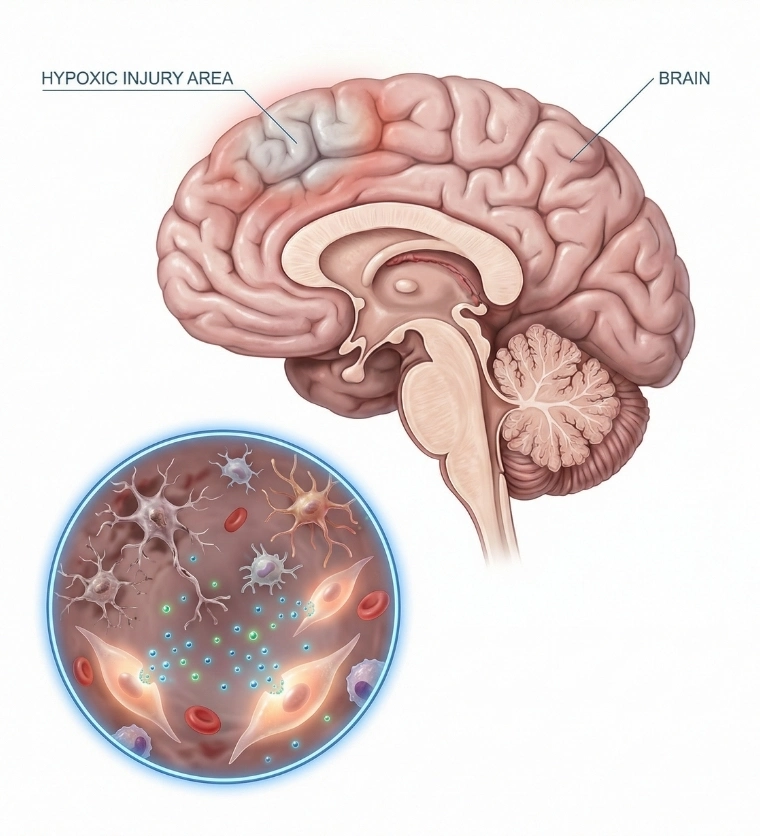
Hypoxic brain injury happens when the brain gets too little oxygen or too little blood flow for long enough to cause harm. In newborns, doctors often call it hypoxic ischemic encephalopathy, or HIE. The injury can affect attention, speech, memory, balance, and motor function. Some children later show stiffness or movement patterns linked with cerebral palsy. Because many skills depend on timing and practice, early rehabilitation remains essential.

After oxygen loss, swelling and immune activity can stay high for weeks. This ongoing stress can slow progress and may worsen brain damage over time. Doctors use supportive care, yet an effective treatment that truly repairs tissue remains limited for many patients. Because of that, many teams now focus on human-focused studies that explore how wjMSC signals may help the brain recover.

One key challenge is the blood brain barrier. This barrier helps protect the brain, yet it can also limit what reaches injured areas. When injury disrupts the barrier, inflammation can rise and blood vessel function can change. Therefore, approaches that support vessel health, immune balance, and oxygen delivery may matter during recovery.

What Is wjMSC Care for Hypoxic Brain Recovery

wjMSC support uses living cells from Wharton’s jelly, a soft tissue within the umbilical cord. Clinics choose these cells because they can release helpful signals that guide repair, while also supporting immune balance. Instead of aiming to “replace” brain tissue, the goal is to improve the healing environment around injured areas.

This approach is different from using bone marrow mscs or a cord blood cell source. Each source has its own profile, handling needs, and signal patterns. In many protocols, wjMSC are prepared under controlled lab standards and then given through an IV infusion. This route avoids brain surgery, so it is often considered a less invasive option.

Because results vary, we focus on realistic goals: better daily function, steadier movement, and improved participation in therapy. In addition, we track safety closely and plan follow-up reviews.

Umbilical cord–derived wjMSC are used with careful monitoring and realistic goals for recovery
What Is wjMSC Therapy for Hypoxic Brain Recovery
wjMSC therapy for hypoxic brain injury supports the brain environment while rehabilitation continues

How Do wjMSC Work in the Brain?

After infusion, the cells release growth factors and tiny messenger packets that help guide repair. These signals can support healthier circulation, which may improve oxygen and nutrient delivery. As a result, better blood flow can help the brain sustain therapy and learning.

Researchers also study how these signals may calm overactive immune responses. When immune activity stays too high, it can drive swelling and pain and may prolong recovery. wjMSC signals may help create reduced inflammation by shifting immune balance toward repair. In many discussions, teams describe these actions as anti inflammatory effects.

Another important area is vessel stability and barrier recovery. When the blood brain barrier is stressed, fluid balance can change and irritation can rise. Supportive signals may help strengthen vessel lining, which can protect fragile brain tissue during rehabilitation.

Finally, these signals may promote neuroprotective effects. That term means “helping protect surviving brain cells from further harm.” When protection improves, therapy practice can become more productive, and some patients may show improved neurological progress over time.

How Do wjMSC Work in the Hypoxic Brain Injury

Can wjMSC Support Help After Hypoxic Injury

There is no guaranteed cure for hypoxic brain injury, especially when damage is widespread or long-standing. Still, supportive wjMSC care may help improve the recovery environment and reduce setbacks. The realistic aim is not perfection. Instead, it is steady gains that support independence, comfort, and participation in daily life.

Many families focus on practical outcomes. For example, they may hope for clearer attention, better sleep, improved sitting balance, or steadier walking with support. Because brain recovery often depends on repetition, anything that helps the body tolerate therapy may help progress.

However, this remains a developing field. Even so, human clinical work suggests careful dosing, timing, and monitoring matter. Therefore, it is important to choose a team that communicates clearly and avoids overpromising.

Can wjMSC Therapy Help After Hypoxic Injury

Who May Benefit from wjMSC Support?

Not every patient is a good fit. Before any plan, a doctor reviews the cause of injury, current symptoms, scan results, and medical history. We also check heart and lung status, because stable health supports safe infusion care.

Children with HIE may face feeding issues, seizures, or later movement limits. Adults after resuscitation may struggle with memory, fatigue, or movement control. Earlier intervention can sometimes help because the brain may be more adaptable. Still, later support can also be considered when goals are realistic and safety checks are strong.

Some families ask about different sources, including bone marrow mscs and cord blood cell products. We explain the differences in sourcing, lab handling, and expected signal patterns. In many plans, we use donor umbilical cord tissue as a practical option that supports consistent preparation and screening.

Who May Benefit from wjMSC Therapy
Minimally invasive wjMSC therapy for hypoxic brain injury
Doctor-led wjMSC treatment with monitoring for hypoxic brain recovery

What to Expect During Treatment at Cyrona Cell

Cyrona Cell follows a clear, minimally invasive pathway so patients know what to expect. We keep the process organised, and we coordinate with your current doctors when possible. Here is the usual flow for treatment and follow-up at our clinic.

Medical evaluation

You share recent reports, scan results, and medicine lists. The doctor explains how wjMSC support may work, reviews benefits and limits, and agrees on realistic goals. Also, we discuss timing with rehabilitation, since practice supports brain rewiring. If needed, we request more tests before scheduling.

wjMSC preparation

In a controlled lab, specialists prepare each batch under strict standards. They check identity, purity, and sterility, then confirm the product meets release criteria. Because the source is donated umbilical cord tissue, collection happens after healthy births with consent only.

Administration

Doctors give the cells slowly through a vein using an IV drip. Most people rest in a chair while staff track pulse, oxygen, and blood pressure. This method avoids neurosurgery. Some studies explore other routes, yet IV delivery remains a common approach.

Monitoring and follow-up

After infusions, we track sleep, mood, speech, movement, and daily tasks. We also watch for side effects and adjust supportive care when needed. Follow-up includes rehabilitation updates and repeat assessments over months. Because progress can be gradual, families keep notes and share them in reviews.

Human-Focused Research and Clinical Experience

Families often want human evidence, not theory. Research is still early, yet teams have published results in people with hypoxic ischemic encephalopathy. Below are two studies that help explain why derived mesenchymal approaches from umbilical cord tissue attract interest, while also showing the need for larger trials.

Duke University School of Medicine, United States

A Pilot Phase I Trial of Allogeneic Umbilical Cord Tissue-Derived wjMSC in Neonates With Hypoxic-Ischemic Encephalopathy

In a phase I clinical trial, infants with moderate to severe HIE received standard cooling care plus one or two IV doses of cord tissue–derived cells. The main goal was safety, and the team reported the infusions were tolerated in this small group, while also noting that immune monitoring is important as research continues. Clinical trial design like this helps clarify safe dosing steps before larger studies focus on outcomes such as function and development.

1

The First Hospital of Hebei Medical University, China

Therapeutic Effects of Human Umbilical Cord wjMSC Transplantation on Hypoxic Ischemic Encephalopathy

In this controlled human study, patients received standard care or standard care plus IV infusions of cultured cord tissue–derived cells. Over follow-up, the treated group showed better scores in several areas compared with controls, and the authors reported no major safety concerns during the observation period. While more work is still needed, results like these support continued study into whether these signals can support recovery, including motor function and daily living abilities.

1

Why Choose Cyrona Cell Malaysia

Cyrona Cell in Kuala Lumpur brings together science, safety, and personal care. wjMSC care here is not a quick fix. It is a structured programme designed and overseen by doctors who understand both the promise and limits of cell-based support.

Our team explains clearly where wjMSC care may add value and where it cannot replace standard treatment. This open approach helps you make decisions based on facts, not hype.

Cyrona Cell also offers exosome therapy as an added value service. Exosomes are tiny messenger packets released by wjMSC. They carry helpful signals that may further support repair and calm immune activity. Used together, wjMSC and exosome-based approaches can strengthen the supportive plan your main therapies offer for hypoxic brain injury recovery.

Doctor-led wjMSC and exosome therapy for hypoxic brain injury focused on safety and realistic care
How it works

Your Patient Journey in Three Simple Steps

Send reports so doctors can review wjMSC therapy safety for hypoxic brain injury

Share your medical reports

Contact Cyrona Cell by form, email, or WhatsApp and send recent test results, scan reports, and a list of current medicines. The team checks whether wjMSC support looks suitable and safe for hypoxic brain injury support.

01
Get clear guidance on wjMSC treatment risks benefits and realistic goals

Receive clear feedback

We explain the doctor’s suggestions in simple language, including possible risks, benefits, and realistic goals. You can ask as many questions as you need.

02
Meet your doctor in Kuala Lumpur and decide on hypoxic brain injury care with confidence

Decide after an in-person consultation

If you wish to continue, you visit the clinic in Kuala Lumpur, Malaysia. You meet the doctor, review options face to face, and only then decide whether to proceed.
03

Take the Next Step with Cyrona Cell Malaysia

If you care for someone with hypoxic brain injury and want to know whether a structured wjMSC and exosome programme could help, the best next step is a conversation with the Cyrona Cell team. There is no pressure to start. You receive clear information so you can decide with confidence.

You can reach us by enquiry form, email, or WhatsApp and send basic details about the injury history, current care, and daily function. Our medical team reviews your case, then the coordinator explains what else is needed and what a possible plan may look like.

From there, you and your family can decide whether our wjMSC support options for hypoxic brain injury in Malaysia fit your needs, values, and goals.

Get Your Free Estimate

FAQ

Most Popular Questions

wjMSC support may send signals that help protect vulnerable tissue and support healing conditions. For example, research discusses neuroprotective effects, healthier blood flow, and reduced inflammation that may help the brain respond better to rehabilitation. While outcomes differ by person and injury level, the goal is often improved neurological progress and better tolerance for therapy practice.

If changes happen, they often appear gradually. Some families report steadier motor function, calmer sleep patterns, or better participation in daily routines. Because there is no single effective treatment for every person, we track progress with clear goals and repeat assessments. Also, we monitor for short-term side effects, since safety matters in every clinical trial pathway.

Doctors review the injury history, current stability, and rehabilitation plan. They also consider risks such as infection exposure and immune sensitivity. In addition, they review barriers to recovery, including circulation needs and the blood brain barrier environment. This careful screening supports safer planning and clearer expectations for families.

cyrona-cell-wjmsc-therapy-for-hypoxic-brain-injury booklet

Booklet

Download our booklet for clear, practical insights and helpful guidance you can use right away.

Download our booklet