









Home » wjMSC Therapy For Kidney Disease
wjMSC Therapy For Kidney Disease
A science-based support option to help protect kidney health and daily quality of life
Kidney problems often build up quietly. You may feel tired, notice ankle swelling, or see changes in urine long before you feel seriously unwell. If you live with chronic kidney disease, you might also worry about stage renal disease esrd and what comes next. Many patients now ask about wjmsc therapy for kidney disease as an added support option alongside standard medical care.
At Cyrona Cell Malaysia, our goal is simple: support your kidney health with a careful, doctor-led plan in Kuala Lumpur. We focus on safety, realistic expectations, and clear communication. We do not promise miracles. Instead, we aim to help patients improve renal function markers where possible, reduce day-to-day burden, and support comfort and stamina over time.
Understanding Kidney Disease and Why the Kidneys Need Support
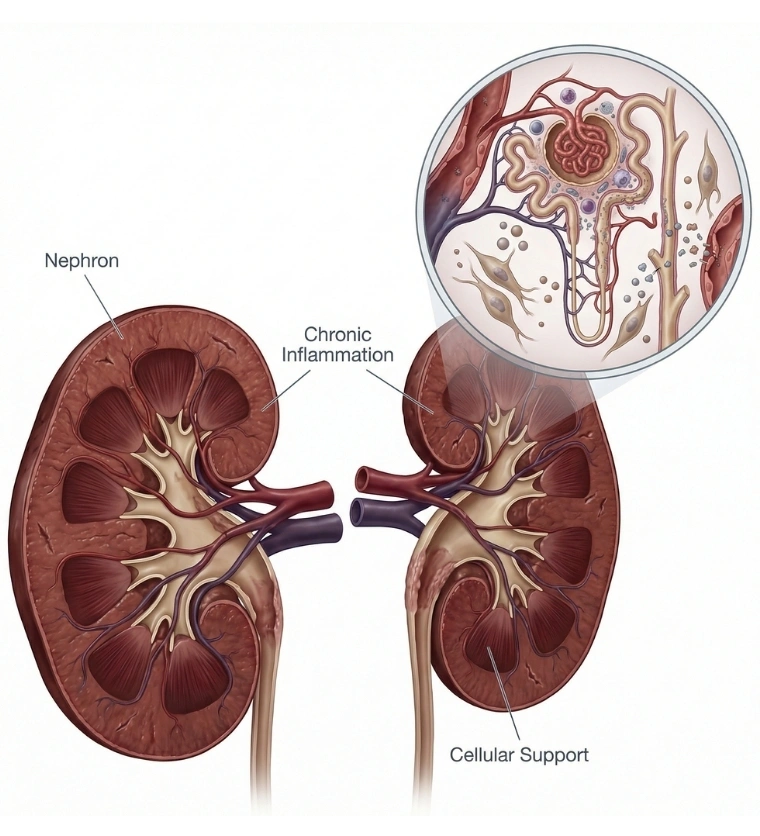
Your kidneys filter waste, balance fluids, and help control blood pressure. When kidney tissue gets damaged, the body struggles to stay stable. Over time, scarring can increase, and the kidneys may lose working renal cells. As a result, you can feel weaker, your appetite may drop, and you may retain fluid.
Many kidney diseases progress because of diabetes, high blood pressure, autoimmune conditions, infections, or long-term inflammation. In many cases, the body also develops renal fibrosis, which means more scarring inside kidney tissue. That scarring can raise the risk of kidney injury and faster decline.
Standard care helps a lot. For example, your doctor may adjust diet, manage blood pressure, and treat diabetes. However, standard care does not always rebuild tissue. Because of that, some patients explore supportive regenerative programmes aimed at kidney repair and renal protective effects.
What Is wjMSC-Based Support for Renal Conditions?
wjMSC programmes use carefully prepared MSC products that come from Wharton’s jelly sources. In simple terms, the aim is to support healing signals in the body, not to act like a fast drug. These programmes may help create a calmer internal environment, which can support the kidneys over time.
Different types of mscs exist, and clinics may discuss how sources differ. For example, some research often compares options such as bone marrow mesenchymal stem cells in academic settings. However, for advertising compliance and patient clarity here, we focus on wjMSC wording and practical patient care rather than lab labels.
After administration, the MSC product may release signals that can support immune balance and blood vessel health. In addition, the outer cell surface features of MSC products may influence how they communicate with the immune system. That communication may matter for inflammation control, which is often linked to kidney decline.
How Can wjMSC Programmes Support Kidney Health?
Patients often ask what these programmes actually do. While results vary, the most discussed benefit is support, not replacement of medical care. In many cases, the intended effects include:
- Helping calm long-term inflammation that can worsen kidney diseases
- Supporting healthier blood flow to kidney tissue
- Supporting protective signalling that may help reduce stress on renal cells
- Encouraging a better internal setting for kidney repair
Clinics usually deliver these programmes through intravenous injections. This approach allows systemic distribution and is often used in published human case reports. In addition, doctors may track labs, blood pressure, symptoms, and overall wellbeing to see whether the plan appears helpful.
Researchers also study how MSC products may influence gene expressions linked to inflammation and scarring. That area remains active, and it still needs larger human studies. Still, these mechanisms help explain why clinicians continue to explore supportive MSC programmes for renal care.
Can This Approach Cure Kidney Disease?
A cure is not guaranteed. Kidney disease is complex, and the cause can keep damaging kidney tissue even after supportive care. So, the realistic goal is to support stability: protect remaining kidney function, reduce inflammatory stress, and slow decline when possible.
If you already live with advanced disease, you may worry about dialysis or transplant planning. A supportive programme cannot replace those decisions. However, some patients still explore additional support to help with fatigue, appetite, sleep quality, and daily function, while staying under nephrologist guidance.
Who May Be a Fit for Kidney Support Programmes?
Not everyone is a good match. A careful review protects your safety and your expectations. Doctors typically look at:
- Diagnosis and stage, including risk of stage renal disease esrd
- Recent kidney labs and trend direction to assess attempts to improve renal function
- Current medications and any immune issues
- Blood pressure control and diabetes status
- Other risks such as infections, clotting issues, or unstable heart disease
Doctors may also review recent results from peripheral blood tests and other key markers. Then, they can discuss likely benefits, limits, and how follow-up will work.
Often, people in early to moderate stages may benefit most, because there may be more kidney function left to protect. Even so, every case differs, so a medical review matters.
What to Expect During Treatment at Cyrona Cell
Cyrona Cell Malaysia follows a clear, minimally invasive pathway, so you know what to expect.
Medical evaluation
You share recent reports and your medication list. The doctor explains the plan in simple words, reviews safety limits, and sets realistic aims.
Programme planning and preparation
Our team designs a schedule based on your condition and goals. We focus on quality controls, safety checks, and consistent monitoring.
Administration
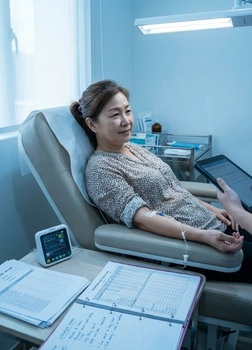
Doctors deliver the plan through intravenous injections using an IV drip. Most patients relax in a chair during the session.
Monitoring and follow-up
After sessions, we track symptoms and lab markers. We also share practical guidance that supports kidney health, such as hydration habits, salt control, and lifestyle steps.
As with many medical options, side effects can occur. For example, some people report short-term fatigue or mild fever. More serious issues appear uncommon in reported case experiences, yet your doctor will still explain warning signs and safety steps.
Human-Focused Research and Clinical Experience
Many patients want human data, not animal models. While research is still developing, two published human case reports help explain why clinicians keep studying MSC programmes for kidney care.
R3 Medical Research LLC, United States
Case Report on Wharton’s Jelly MSCs and Exosomes for Diabetic Kidney Failure
This 2024 human case report described an older patient with advanced kidney disease linked to diabetes. The authors reported delivery through an IV approach and discussed follow-up lab trends over several months. They reported the infusion was tolerated without immediate safety concerns in that single case, while also noting the limits of case reports compared with larger trials. At the same time, the report highlights why researchers continue to explore supportive options that may offer renal protective effects and help improve renal function markers for some patients.
1
SCI, Panama
Case Report on Umbilical Cord MSC Use in IgA Nephropathy After Acute Renal Failure
This 2022 human case report described a patient with IgA nephropathy after acute renal failure who received IV administration and was monitored for about six months. The report described improvement in measured kidney markers in that single patient, while also explaining that spontaneous remission can occur and larger studies are needed. The authors discussed inflammation control and recovery signals, which relates to broader efforts to reduce scarring such as renal fibrosis and to support kidney repair in carefully selected patients.
1
Why Choose Cyrona Cell Malaysia
Cyrona Cell in Kuala Lumpur brings together science, safety, and personal care. wjMSC Therapy here is not a quick fix. It is a structured programme designed and overseen by doctors who understand both the promise and limits of MSC-based care.
Our team explains clearly where supportive regenerative programmes may add value and where they cannot replace standard treatment. This open approach helps you make decisions based on facts, not hype.
Cyrona Cell also offers exosome support as an added value service. Exosomes are tiny messenger packets released by MSC sources. They carry helpful signals that may further support repair and calm inflammation. Used together, wjMSC and exosome-based approaches can strengthen the supportive plan your main therapies offer.
How it works
Your Patient Journey in Three Simple Steps
Share your medical reports
Contact Cyrona Cell by form, email, or WhatsApp and send recent test results, scan reports, and a list of current medicines. The team checks whether therapy looks suitable and safe.

Receive clear feedback
We explain the doctor’s suggestions in simple language, including possible risks, benefits, and realistic goals. You can ask as many questions as you need.

Decide after an in-person consultation
If you wish to continue, you visit the clinic in Kuala Lumpur, Malaysia. You meet the doctor, review options face to face, and only then decide whether to proceed.

Patient Journey for International Patients
Enquire & Share Medical Information
Submit your enquiry and be assigned a dedicated Patient Liaison who will assist you with medical records and tests for review.
Personalised Treatment Planning
Your Liaison will forward your reports to our doctors, who will create a personalised treatment plan. Further tests may be advised before proceeding.
Confirm Dates & Secure Your Treatment
Once you agree to the plan, inform your Liaison about your preferred dates. They will secure your treatment slot and coordinate travel details. A deposit is required for confirmation.
Travel & Arrival Support
Your Liaison will assist with visa guidance, flight bookings, and Malaysia Digital Arrival Card registration. Upon arrival, your airport transfer will be arranged.
Treatment & Care in Malaysia
Your Liaison will meet you at the hotel, assist with check-in, and coordinate transport to the treatment facility. They will guide you through treatment and recovery for a smooth experience.
Take the Next Step with Cyrona Cell Malaysia
If you are living with kidney problems and want to know whether a structured wjMSC and exosome programme could help, the best next step is a conversation with the Cyrona Cell team. There is no pressure to start. You receive clear information so you can decide with confidence.
You can reach us by enquiry form, email, or WhatsApp and send basic details about diagnosis, current care, and daily function. Our medical team reviews your case, then the coordinator explains what else is needed and what a possible plan may look like.
From there, you and your family can decide whether wjmsc therapy for kidney disease fits your needs, values, and goals.
Get Your Free Estimate
FAQ
Most Popular Questions
Can wjMSC programmes support kidney repair?
They cannot promise full repair, especially in late disease. However, wjMSC programmes may support the kidney environment by releasing signals that may reduce inflammatory stress and support blood flow. In addition, some plans aim to protect renal cells, reduce risk of kidney injury, and support comfort as part of an overall care plan.
Can chronic kidney disease be reversed with wjMSC support?
Chronic kidney disease is usually long-term, so full reversal is not guaranteed. Still, some patients explore support programmes to help improve renal function trends, support renal protective effects, and manage daily symptoms. Your doctor should also review disease stage, risk of stage renal disease esrd, and whether the plan fits your case.
How is wjMSC support delivered, and what monitoring is used?
Many clinics use IV delivery, including intravenous injections, because it allows broad distribution. Doctors often monitor kidney labs, blood pressure, and symptom changes. They may also track general health signals and, when needed, review blood markers from peripheral blood as part of safe follow-up.