Quick Read SummaryResearch Findings
Clinical trial studies report some improvement in muscle tone, balance, and walking ability. Researchers study different stem cell types, including umbilical cord blood and bone marrow. Small groups and varied methods cause inconsistent results, so further research is needed.
Key Points for Families
Estimated read: 6 min
Keywords: can stem cell therapy improve movement in children with cerebral palsy, stem cell therapy, cerebral palsy, clinical trial, motor improvement, muscle control, umbilical cord blood, bone marrow stem cells, mobility recovery, long term safety
Can Stem Cell Therapy Improve Movement in Children with Cerebral Palsy? Learn what clinical trials say about mobility, muscle control, and recovery.
stem-cell-therapy-movement-children-cerebral-palsy
|
What current research says about mobility, muscle control, and recovery
Parents often search for new options to help their child move better. Many ask, Can Stem Cell Therapy Improve Movement in Children with Cerebral Palsy? This question matters because movement problems affect daily life, independence, and confidence.
In this article, we explain what researchers know, what clinical trial results show, and what doctors still study. We use clear language so families can understand this type of treatment and make informed choices.
Understanding Cerebral Palsy
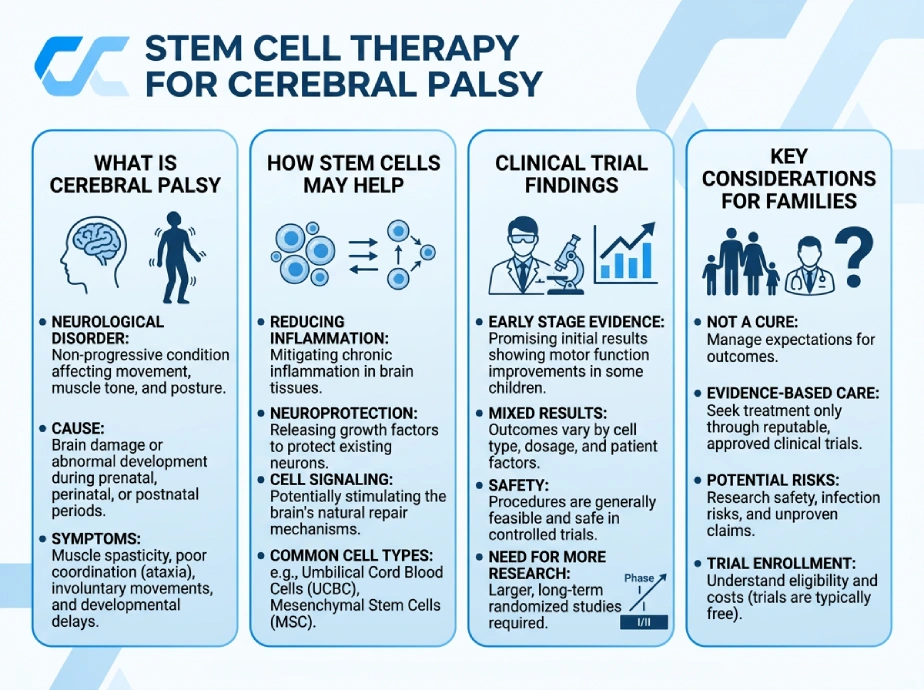
Cerebral palsy affects movement, muscle tone, and coordination. Brain injury before, during, or shortly after birth often causes it. The injury affects how the brain controls muscles.
Children with cerebral palsy may experience stiff muscles, weak muscles, balance issues, or trouble walking. Doctors use physical therapy, occupational therapy, medications, and sometimes surgery to improve mobility.
However, researchers now study stem cell therapy as another possible option.
What Is Stem Cell Therapy?
Stem cell therapy uses special cells that can support repair inside the body. Scientists believe certain types of stem cells may help reduce inflammation and support healing in damaged tissues.
In cerebral palsy research, doctors focus on how these cells may support brain areas that control movement. Researchers test different types of stem cells, including cells from umbilical cord blood and bone marrow.
Although this type of treatment shows promise, experts still study how well it works.
What Clinical Trials Show
Several clinical trial studies examine stem cell therapy for children with cerebral palsy. Some results show improved muscle tone, better balance, and small gains in walking ability.
For example, some children showed better motor scores after treatment. In addition, therapists reported improved coordination in certain cases.
However, studies often include small groups. Researchers also use different cell doses and methods. Because of this, results vary.
Therefore, doctors continue research to measure safety, consistency, and long term results.

| Aspect | Details |
|---|---|
| Purpose of Stem Cell Therapy | To support brain repair, reduce inflammation, and improve motor function |
| Types of Stem Cells Used | Umbilical cord blood, bone marrow stem cells |
| Reported Benefits | Improved muscle tone, balance, coordination, and small gains in walking ability |
| Scientific Evidence | Promising but limited, small clinical trials with varying methods |
| Limitations | Inconsistent results, lack of long term data, not a cure |
| Risks | Mild side effects such as fever or headache, unknown long term safety |
| Current Recommendation | Only consider regulated clinical trials under medical supervision |
| Role of Physical Therapy | Remains the primary and most effective treatment for improving mobility |
How Stem Cells May Help Movement
Researchers believe stem cells may:
• Reduce inflammation in the brain
• Support repair in damaged tissues
• Improve communication between brain cells
• Encourage new connections in motor pathways
These actions may help improve movement control. Still, researchers must confirm how strong and lasting these effects are.
Risks and Safety Considerations
Every medical procedure carries risks. Some children report mild fever or headache after stem cell therapy. Doctors monitor patients closely during regulated clinical trial programs.
However, families must avoid unregulated clinics. Always ask about safety standards, doctor credentials, and research approval.
In addition, parents should discuss realistic goals. Stem cell therapy does not cure cerebral palsy. Instead, it may support improvement when combined with therapy and rehabilitation.
What Families Should Consider
Before choosing this type of treatment, families should:
• Review scientific evidence carefully
• Confirm participation in an approved clinical trial
• Ask about types of stem cells used
• Understand costs and follow up plans
• Discuss expectations with specialists
Because cerebral palsy affects each child differently, results also vary. Therefore, families must base decisions on facts, not promises.
What Research Means for Families Today
Research continues to grow. Scientists improve study design and patient tracking. As a result, future data may offer clearer answers.
Right now, doctors cannot guarantee major mobility changes. However, early research shows potential in selected cases.
When families ask, Can Stem Cell Therapy Improve Movement in Children with Cerebral Palsy? the honest answer includes both hope and caution. Stem cell therapy shows encouraging signs in clinical trial settings, yet experts still study safety, best cell types, and long term benefits. Families should work closely with medical professionals before choosing this type of treatment.
FAQ
Can stem cells help with cerebral palsy?
Yes, some clinical trial research shows that stem cell therapy may support motor improvement in children with cerebral palsy. Researchers study how different types of stem cells may reduce inflammation and support repair in damaged tissues. However, doctors still classify it as an emerging type of treatment.
What are the negative effects of stem cell therapy?
Most regulated studies report mild side effects such as fever or headache. However, risks increase in unregulated settings. Therefore, families should only consider approved clinical trial programs and discuss safety with doctors.
Which therapy is best for cerebral palsy?
Physical therapy remains the main treatment for improving movement in cerebral palsy. Stem cell therapy may support progress in some cases, but it should complement standard rehabilitation, not replace it.
How long does stem cell treatment take to work?
Results vary. Some families report changes within months, especially when combined with therapy. However, researchers still study how long improvements last and which type of treatment offers the strongest results.