Key Takeaways
- Mesenchymal stem cell (MSC) therapy has been tested in small human trials for chronic lung inflammation, but none show it reverses lung scarring.
- A 2013 randomized trial of 62 people with chronic obstructive pulmonary disease (COPD) found no lung function gain from infused MSCs.
- A 2020 randomized trial in 20 people with fast-declining pulmonary fibrosis reported better walking distance than placebo, with no change in computed tomography (CT) scar score.
- Malaysia’s National Pharmaceutical Regulatory Agency (NPRA) places cell products that act systemically in allogeneic use in the higher-risk Class II.
- Antifibrotic medicines, oxygen therapy, and pulmonary rehabilitation remain the base of care.
Estimated read: 7 min
People with chronic lung disease often ask whether MSC therapy can calm inflammation and soften lung scarring. Early human studies suggest patients tolerate the cells, but no trial shows they remove existing scar. This guide covers the evidence, the risks, and what to check in Malaysia.

What is MSC therapy for lung disease?
MSC therapy is a treatment that delivers mesenchymal stromal cells into the bloodstream. Researchers study it as a form of regenerative medicine. In lung disease, researchers aim for the cells to reduce inflammation, not to build new lung.
Laboratories grow these cells before infusion. Most lung studies use cells that papers list as mesenchymal stem cells MSCs, one of several types of stem cells. Unlike a transplant, the infusion does not replace the lung itself.
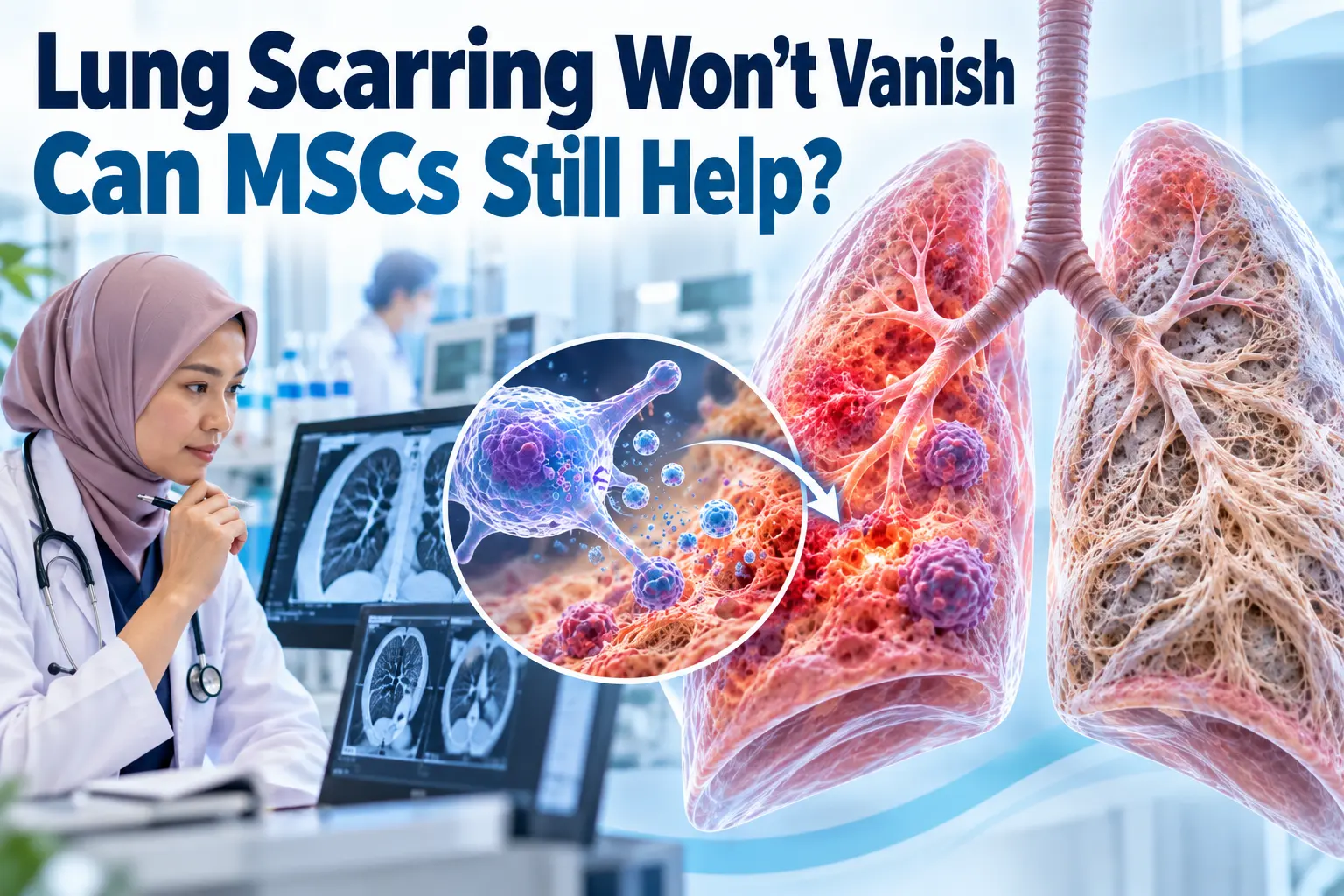
Can MSC therapy help chronic lung inflammation and scarring?
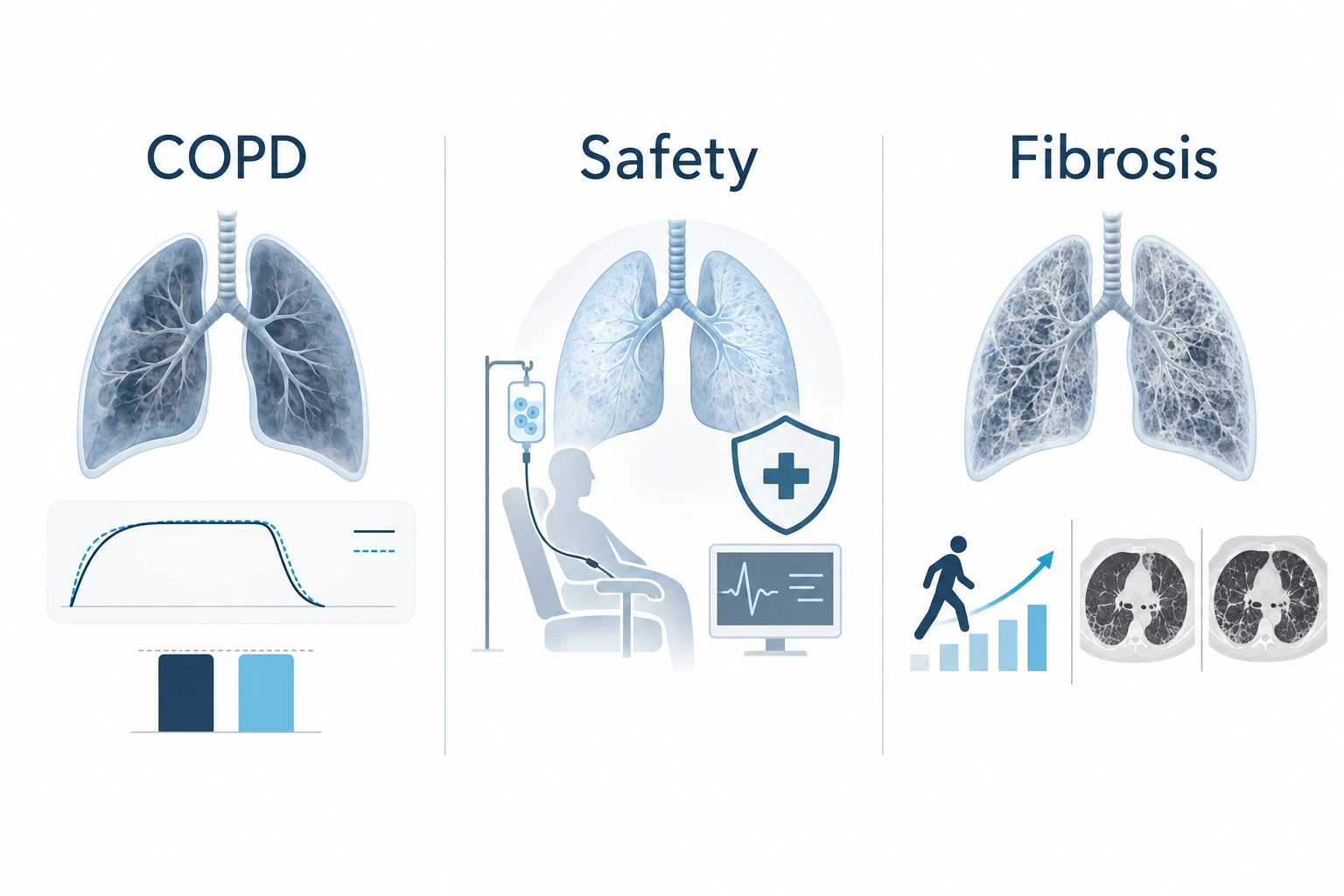
Human studies suggest MSC therapy may help reduce inflammation, but none shows it removes established scar tissue. A 62-patient randomized trial of MSCs in chronic obstructive pulmonary disease (COPD) gave four monthly infusions. Lung function did not improve, the authors reported in Chest in 2013.
However, the report found that blood inflammation markers fell after infusion in people who started with high levels. The authors chose this comparison after seeing the data. That result is a lead, not proof of benefit.

Researchers measure benefit in several ways, including walking distance, lung function tests, CT scans, and quality of life questionnaires. Still, trials that use different measures are hard to compare, which is one reason no summary success figure exists. Furthermore, differences in trial design and patient groups add further uncertainty.
In contrast, the evidence in idiopathic pulmonary fibrosis is thinner. The 2020 randomized trial in fast-declining fibrosis gave cells or placebo to 20 people. Researchers reported better walking distance and gas transfer with cells, yet computed tomography (CT) scar scores did not differ.
Which clinical trials have tested MSCs in lung disease?
Three small clinical trials show the range of human evidence, and all gave donor cells intravenously. The table lists each trial’s design, size, and main finding.
| Trial | Condition and design | Main finding |
|---|---|---|
| Weiss et al., Chest, 2013 | COPD; randomized, double-blind; 62 patients | Well tolerated; no difference in lung function from placebo |
| Glassberg et al., Chest, 2017 (AETHER) | Pulmonary fibrosis; phase 1 dose escalation; 9 patients | Met its safety goal; authors say the data are not proof of efficacy |
| Averyanov et al., Stem Cells Translational Medicine, 2020 | Fast-declining fibrosis; randomized, open-label; 20 patients | Better walking distance and gas transfer than placebo; no change in CT scar score |
Most of these trials were small and short, so none can show whether cells slow disease progression. Cyrona Cell’s earlier COPD and pulmonary fibrosis trial review covers the COPD data in more detail.
How might MSCs act on inflammation and scar tissue?
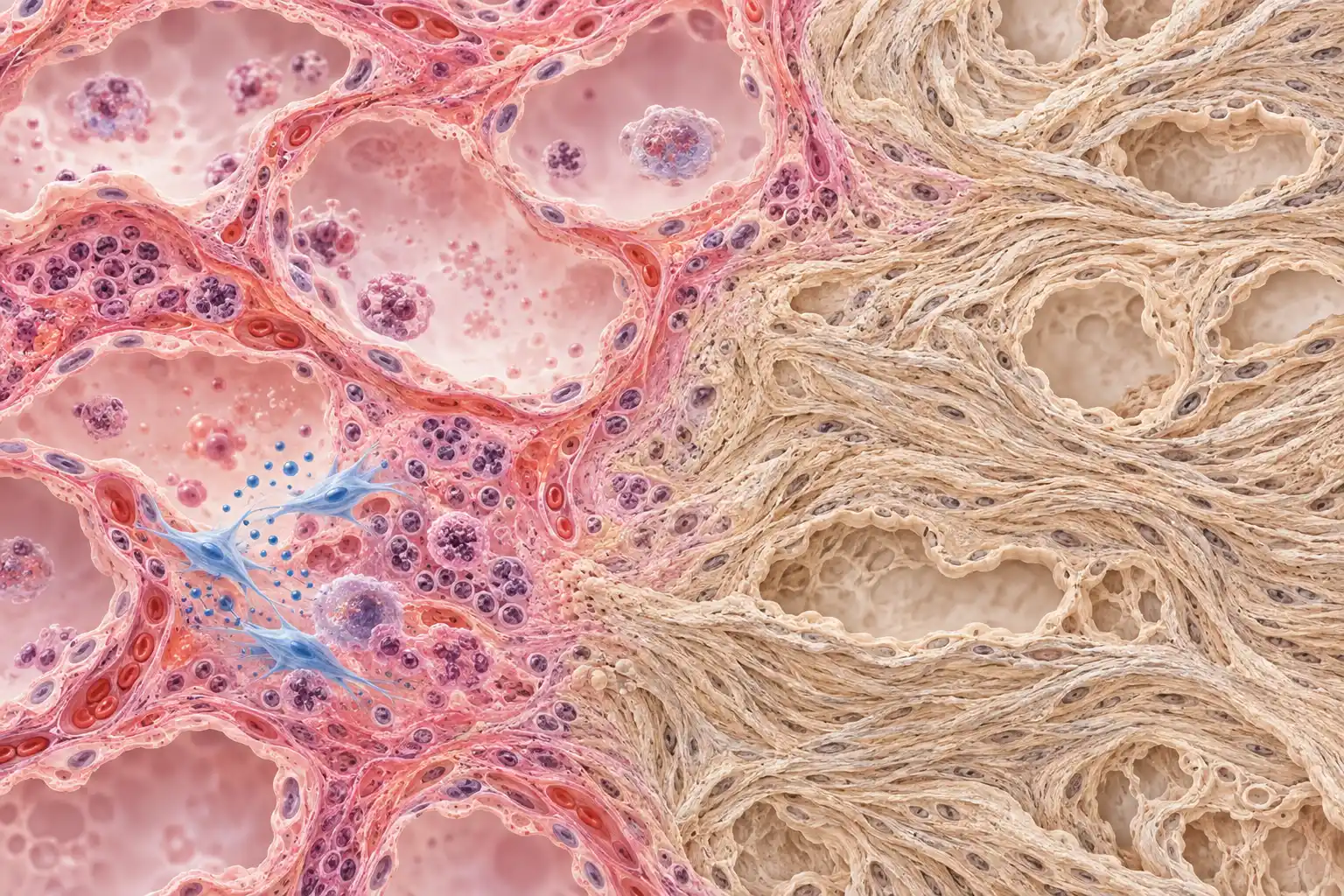
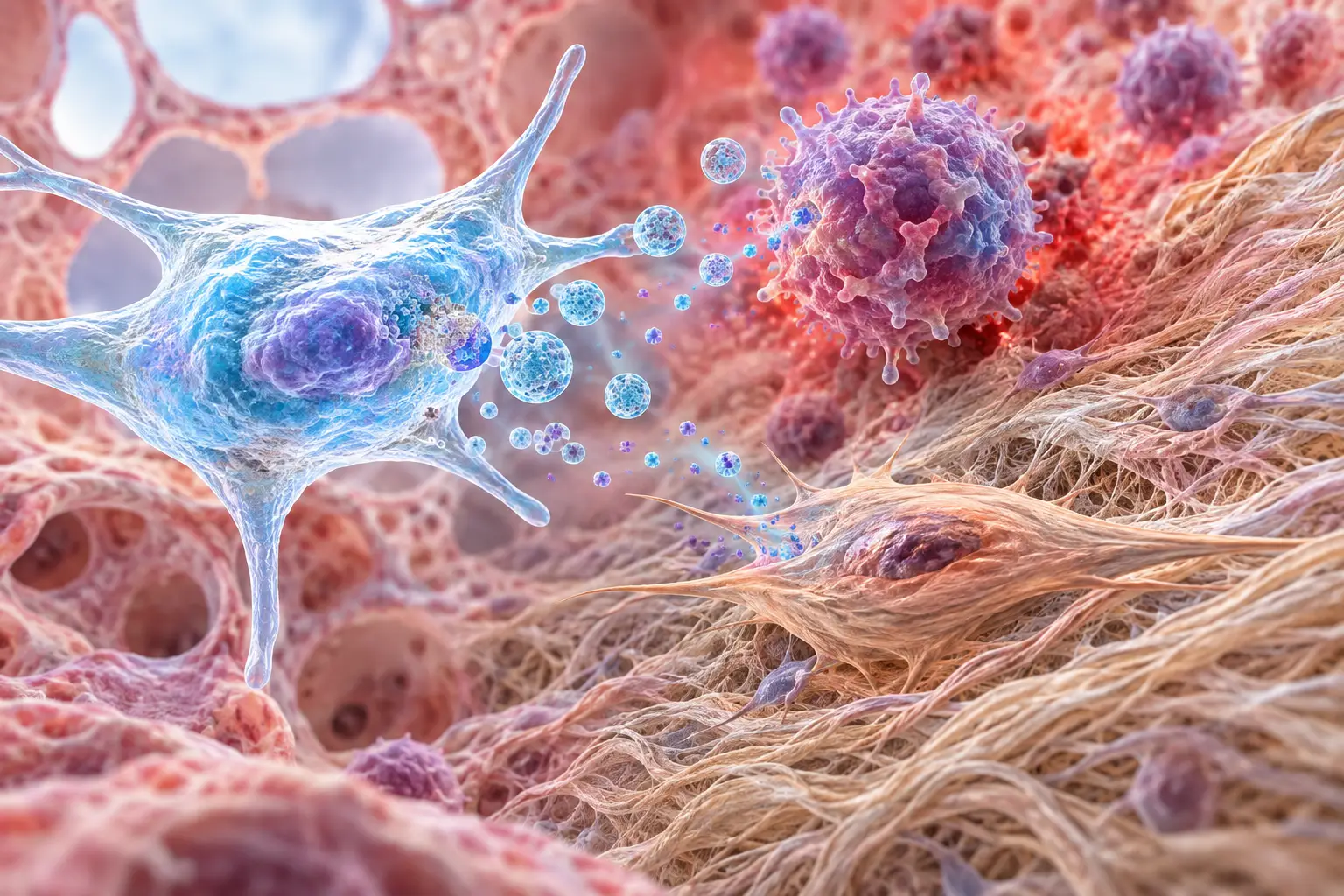
Researchers propose that MSCs act mainly by releasing signals, not by becoming lung tissue. These signals include growth factors and anti-inflammatory proteins. In addition, the 2020 trial authors suggest they may dampen fibroblasts, the cells that lay down scar collagen.
For instance, the 2013 COPD trial report cites rodent studies in which MSC treatment lowered lung inflammation. Even so, an effort to reduce inflammation does not automatically repair scar tissue. Treatments slow fibrosis but cannot remove scars, the American Lung Association says in a 2024 blog on fibrosis research.

Where do MSCs come from, and does the cell source matter?
Bone marrow and fat tissue are the main sources of MSCs, with placenta and umbilical cord as other options. Malaysia’s National Pharmaceutical Regulatory Agency (NPRA) lists these tissues in its cell therapy guidance. Each source gives cells with slightly different properties in the laboratory.
- Bone marrow: used in the 2013 COPD trial and the 2020 fibrosis trial.
- Umbilical cord, including Wharton’s jelly: Cyrona Cell states that its program uses this tissue.
- Trial results from one cell source may not carry over to another.
- Ask any provider which tissue its cells come from and how often its lab grew them.
Cell source also shapes how laboratories make and test the product. For example, donor age, culture time, and the number of growth cycles can change how cells behave in the laboratory. Because trial products differ, readers should not apply results from one product to another without evidence.

What are the risks and unknowns of MSC therapy?
Short-term risks of MSC therapy in lung trials were mostly mild, but long-term effects remain unknown. The 2013 COPD trial found no infusion toxicity and no deaths linked to the cells.
- Side effects: the 2020 fibrosis trial reported transient fever and chills more often with cells.
- Serious events: one participant on cells had a stroke that the authors did not link to treatment.
- Fibrosis concern: the authors note cells could theoretically add to scarring, though CT scans did not show it.
- Open questions: the right dose, schedule, cell source, and patient group remain unsettled.
The American Lung Association says long-term effects in lung disease are unknown in its advisory on stem cell therapy. It also cautions against unauthorized programs that lack independent evidence.

How does MSC therapy fit with standard lung care?
MSC therapy sits outside standard care for idiopathic pulmonary fibrosis, which includes medicines, pulmonary rehabilitation, and oxygen therapy. The National Heart, Lung, and Blood Institute (NHLBI) says in its pulmonary fibrosis treatment overview that no cure exists. Treatments aim to slow lung damage and improve quality of life.
Researchers have also tested MSCs in failing transplanted lungs. The lung transplant stem cell results differ between a six-patient study and a larger randomized trial. Ultimately, a lung specialist can judge how each medical condition and medicine list fits any new treatment option.
Curious how a lung disease inquiry starts? Cyrona Cell’s stem cell therapy for lungs page outlines the steps and the reports to share.

What should patients in Malaysia check before MSC therapy?
Patients should ask any provider for written proof of how regulators classify its cell product before starting MSC therapy. The NPRA published the second edition of its cell therapy registration guidance in September 2025. It places cell products that labs alter, or that act systemically in donor-derived use, in higher-risk Class II.
Before any visit, ask these questions in writing:
- Which NPRA registration, or ethics-reviewed trial, covers this exact cell product?
- Is there a published clinical study for my exact diagnosis, and which cell source did it use?
- How does the provider test each batch before use? Cyrona Cell’s article on cell quality testing explains one common check, the potency assay.
- Who is the treating doctor at the partner facility, and what are the written side effects, follow-up plan, and total cost?
Cyrona Cell connects interested patients with partner facilities in Kuala Lumpur, where the treating doctors give treatment. The How It Works page shows each step from inquiry to treatment in a patient journey for international patients.
Lung Scarring and MSC Therapy FAQ
Is it possible to reverse lung scarring?
No trial has shown that any treatment, including MSC therapy, reverses established lung scarring. The American Lung Association says current treatments slow pulmonary fibrosis but cannot remove scarring that already occurred (2024). Researchers are testing new approaches in clinical trials.
What is the success rate of mesenchymal stem cell therapy?
Researchers have not established a success rate for MSC therapy in lung disease. Published trials are small and measure different outcomes. The 2013 COPD trial found no difference in lung function from placebo.
Can stem cell therapy heal lungs?
No trial has shown that stem cell therapy heals lungs or restores lost lung tissue. Trials suggest cells may release signals that reduce inflammation, yet scarring changes remain unclear. Pulmonary rehabilitation and oxygen therapy are listed treatments in the NHLBI guidance for pulmonary fibrosis.
Can lungs heal from inflammation?
The American Lung Association reports that lungs can heal after short-term injury (2024). Chronic inflammation, however, continues to damage tissue and can lead to fibrosis. MSC therapy aims to reduce inflammation, and trials have not shown it repairs established scarring.
Ask the Cyrona Cell Team About MSC Therapy for Lung Disease in Malaysia
Do you or a family member live with chronic lung inflammation or scarring? The Cyrona Cell team can explain how partner facilities in Kuala Lumpur arrange treatment. Share your medical reports so the team can say whether MSC therapy may be suitable, via WhatsApp or email. This article is for information only and does not replace advice from your own doctor.