
Key Takeaways
- Mesenchymal stem cells (MSCs) have been tested in small rheumatoid arthritis (RA) trials, but no trial shows they stop the disease for good.
- A 2019 study of 64 people with RA reported lower disease scores at one and three years after umbilical cord cell infusion.
- A 2017 placebo-controlled trial of 53 people with hard-to-treat RA found most people handled the cells well, with only early signs of benefit.
- Reported side effects were mostly mild, but a 2025 review names blood clots during infusion as the main safety concern.
- Malaysia’s drug regulator places donor cells that act on the whole body in higher-risk Class II (second edition of its guidance, September 2025).
Estimated read: 8 min
Mesenchymal stem cells for RA: can they calm inflammation? Small trials suggest most people handle the cells well, but no trial shows they stop RA. This guide reviews three trials, the risks, and what to check in Malaysia.

What are mesenchymal stem cells (MSCs) and RA?
Mesenchymal stem cells are adult cells from bone marrow, fat, or umbilical cord tissue that release immune-calming signals. In RA research, laboratories grow these cells and infuse them into the vein. Researchers hope the cells ease joint inflammation without switching off the whole immune system.
Most RA papers study cells that they label mesenchymal stem cells MSCs, and these MSC therapies differ by donor, tissue, and dose. Therefore, results from one product may not carry over to another.
In 2019, 18 million people lived with RA, the World Health Organization (WHO) reports in its fact sheet on rheumatoid arthritis. RA is a chronic autoimmune disorder that inflames the joint lining and can erode cartilage and bone. Like other autoimmune diseases, RA is not curable, WHO states, although some people reach remission.

How is rheumatoid arthritis treated today?
The WHO fact sheet lists four types of medicine for standard rheumatoid arthritis RA treatment.
- Pain relievers that also ease swelling
- Steroids, which dampen inflammation
- Disease-modifying drugs, called DMARDs, that slow the disease itself
- Biologics, which target specific immune signals
These medicines ease RA symptoms such as joint pain, and early care can bring remission in some people, WHO says. However, some people see little benefit from medicines. For example, the 2017 trial below enrolled people whose RA had failed at least two biologics.
Researchers therefore study other treatment approaches, including cell therapy. Cyrona Cell describes its umbilical cord approach on its stem cell therapy for rheumatoid arthritis page. Nobody should stop or change medicines without their own doctor’s advice.

What do trials say about mesenchymal stem cells for RA?
Small trials suggest mesenchymal stem cells may lower RA disease activity, but none shows lasting disease control. A 2019 study of umbilical cord cells followed 64 people with RA and reported lower disease scores after one and three years. The study had no comparison group so the scores may reflect other factors.
In contrast, a 2017 placebo-controlled trial in hard-to-treat RA gave 53 people either cells or a placebo. Most people handled the cells well, and signs of benefit were early. Participants had failed at least two biologics.
Studies have shown only that disease scores were lower after infusion in two small groups (Wang & Ghoryani, 2019). Neither study had a comparison group, so the cells may not explain the change. Only the 2017 trial used a placebo group.

How do the three main trials compare?
The three main trials differ in size, cell source, and follow-up time.
| Study | Who took part | What happened | What it means |
|---|---|---|---|
| 2019, Drug Design, Development and Therapy (Wang et al.) | 64 people with RA, followed for 3 years. No comparison group. | Umbilical cord cells were given intravenously. Disease scores and daily-function scores were lower at 1 and 3 years. About 4% had flu-like symptoms during the infusion (Wang, 2019). | Encouraging, but without a comparison group, it cannot show that the cells caused the change. |
| 2017, Annals of the Rheumatic Diseases (Álvaro-Gracia et al.) | 53 people with hard-to-treat RA, followed for 24 weeks. Some got a placebo (a dummy infusion). | They gave donor fat-derived cells in three infusions at different doses. Most people handled them well. Response rates were lower at month 3 than at month 1 (Álvaro-Gracia, 2017). | Early hints of benefit, but the groups were small, and the follow-up was short. |
| 2019, Biomedicine & Pharmacotherapy (Ghoryani et al.) | 9 people with hard-to-treat RA, followed for 12 months. No comparison group. | They gave their own bone marrow cells intravenously. Disease scores were lower at months 1 and 12. The authors reported no complications. | Too small to draw firm conclusions. |
A 2025 systematic review of MSC sources notes that trials include few patients and often follow them for six months or less. Because the trials used different cells, doses, and measures, you cannot compare each clinical response directly. Therefore, no trial can yet show whether the cells change long-term joint damage.
A Cyrona Cell human trial review for rheumatoid arthritis covers the 2019 cohort in more detail.
How might mesenchymal stem cells calm the immune response in RA?
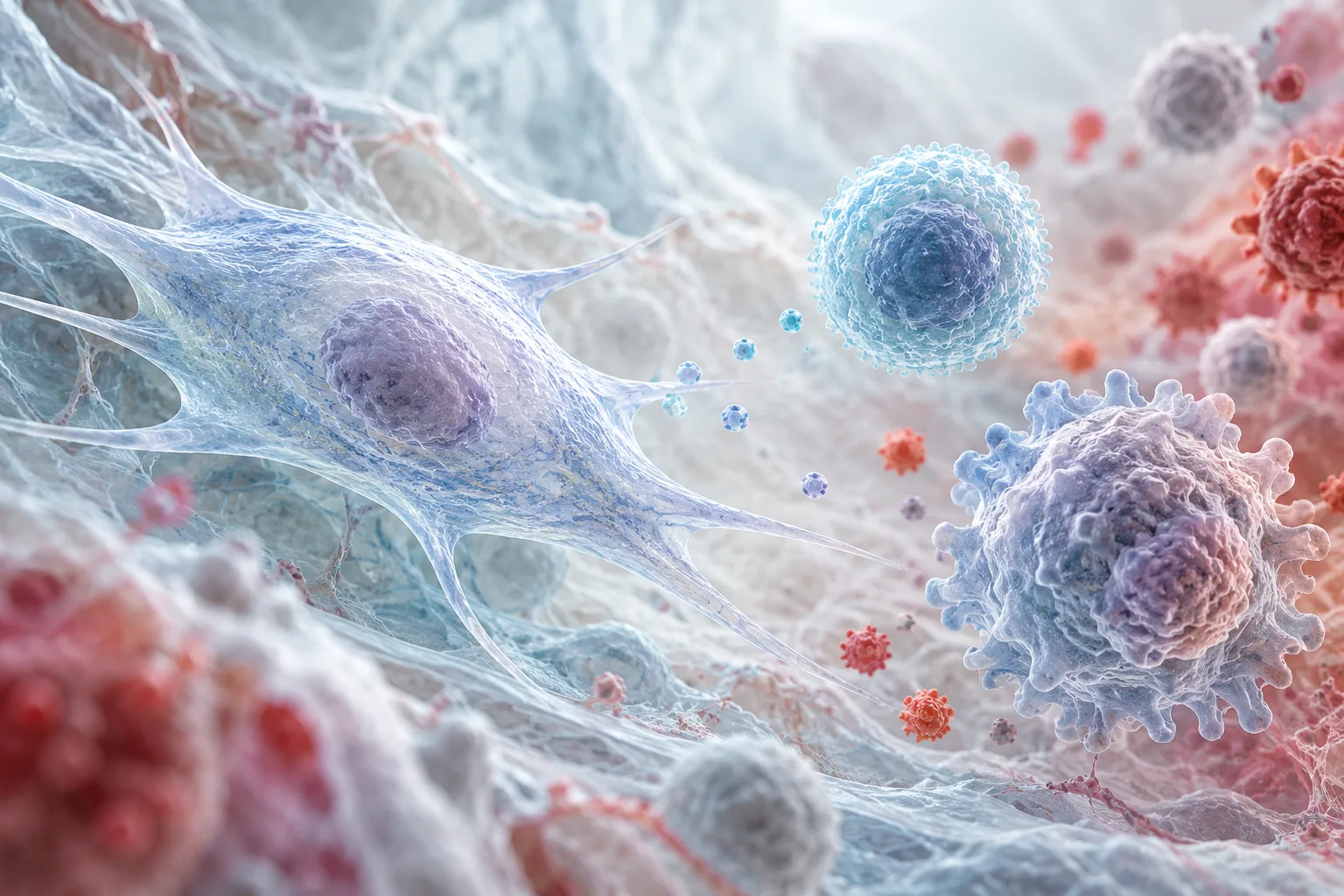
Researchers propose that MSCs calm the immune response by releasing signals that rebalance T cells and macrophages. The 2025 review by Wu and colleagues says the cells may boost calming immune cells called regulatory T cells.
The same review says the cells may also lower Th17 cells, which drive inflammation. It describes cell signals that push macrophages, a type of immune cell, toward a calming state.
These anti inflammatory properties come mainly from laboratory work. Still, the 2019 trial of nine people reported more regulatory T cells at month 1.
RA wears away cartilage and bone. The abstracts of the three trials report disease scores and symptoms, not repair of damaged tissues. Repair therefore remains a laboratory idea, not a trial result.
Wondering how an RA enquiry works for international patients? Cyrona Cell answers common questions on patient journey, records, and travel.
Does cell source matter: bone marrow, fat, or human umbilical cord?
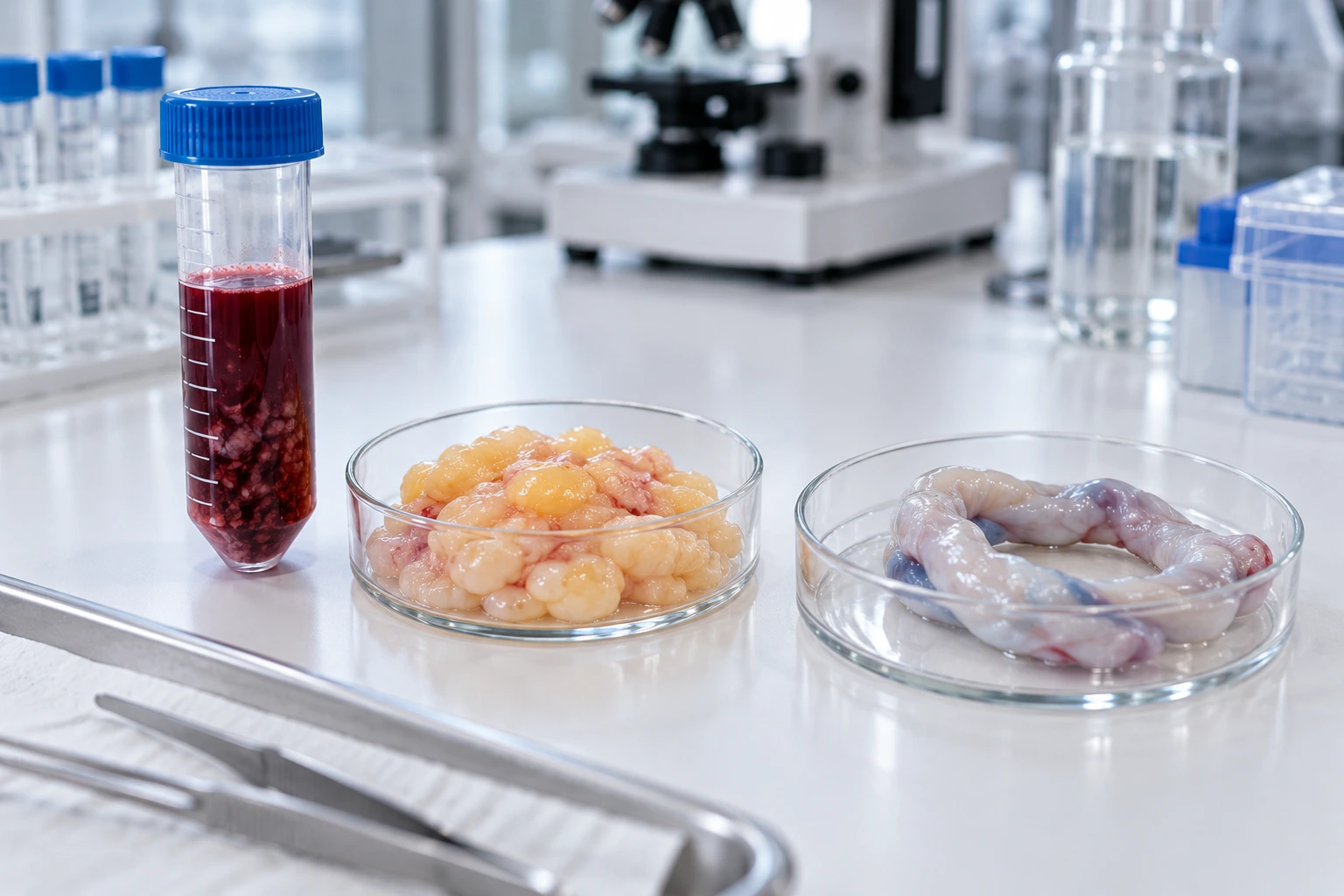
Cell source matters because bone marrow, fat, and human umbilical cord tissue each yield cells with different traits. The 2025 systematic review reports that results differ by source, culture conditions, and cell subtype.
- Bone marrow cells have strong immune-calming ability, but they require an invasive harvest, and yields fall with donor age.
- The review reports that fat-derived cells show more stable effects and better survival in low-oxygen joints.
- Umbilical cord cells grow faster, cause less immune reaction, and come from donated tissue, the review reports.
Each source has its own traits and trade-offs, and the three trials above used three different sources. Readers can compare cord cells with other cell sources in an article on umbilical cord MSCs and gut inflammation.

What are the risks and unknowns of MSC therapies?
Reported side effects of MSC therapies in RA trials were mostly mild. However, the trials were too small to rule out rare adverse effects. Follow-up in the three trials above ranged from 24 weeks to three years.
- 2019 cohort of 64 people: flu-like symptoms in about 4% during infusion (Wang et al.).
- 2017 randomized trial: most events were mild to moderate, with one serious event, a small stroke (Álvaro-Gracia et al.).
- 2019 trial of nine people (no comparison group): no adverse events, though too few people to detect rare ones (Ghoryani et al.).
- The 2025 review names blood clots during intravenous infusion as the main safety concern (Wu et al.).
Unknowns remain about dose, schedule, and durability. The 2025 review reports that benefit may fade after about three months, which could mean repeat infusions. Therefore, larger controlled trials with longer follow-up are needed to answer these questions.
What should patients in Malaysia check before cell therapy for RA?
Before starting treatment, patients should ask any provider for written proof of how regulators classify the cell product.
Malaysia’s National Pharmaceutical Regulatory Agency (NPRA) published the second edition of its cell therapy registration guidance in September 2025. The guidance puts cells that labs alter in higher-risk Class II, as it does for donor cells that act on the whole body.
Ask these questions in writing before any visit:
- Which NPRA registration or ethics-reviewed trial covers this exact cell product?
- Which published RA study used this cell source, and how many people did it include?
- Check how the lab tests each batch before treatment. One common check, the potency assay, is described in a Wharton’s jelly MSC quality-testing article.
- Who is the treating doctor at the partner facility, and what are the written adverse effects, follow-up plan, and total cost?
- How will my own doctor receive my disease scores and follow-up results?
These questions apply to any provider, including the partner facilities in Kuala Lumpur that Cyrona Cell works with. Cyrona Cell states that its program uses cells from umbilical cord tissue. This article does not rank cell sources.
Mesenchymal Stem Cells and RA FAQ
Can stem cells reverse rheumatoid arthritis?
No trial has shown that stem cells reverse the disease. WHO states that RA is not curable, and the trials above reported lower disease scores rather than repaired joints. Researchers still need larger controlled studies.
How long does it take for mesenchymal stem cells to work?
No standard timeline shows how long mesenchymal stem cells take to work, because trials measured responses at different points. The 2017 trial measured responses at months 1 and 3, and a 2019 trial followed people for 12 months. A 2025 review says benefit may fade after about three months.
What is the most promising treatment for rheumatoid arthritis?
The most established treatment for rheumatoid arthritis is early medicine from four classes, according to the WHO fact sheet. Researchers also test MSCs as an add-on to current treatment options. However, those trials remain small, and most had no comparison group.
Can stem cells reduce inflammation?
Disease scores were lower after treatment in some small trials, but no trial shows lasting control of inflammation. In the 2019 study, 64 people had lower inflammation markers and disease scores after one and three years. Without a comparison group, those results may reflect other factors.
Talk With the Cyrona Cell Team About Mesenchymal Stem Cells for RA in Malaysia
Do you or a family member live with RA and want to understand cell therapy? The Cyrona Cell team can explain how partner facilities in Kuala Lumpur arrange treatment. Share your medical reports by WhatsApp or email so the team can say whether it may be suitable. This article is for information only and does not replace advice from your own doctor.