Key Takeaways
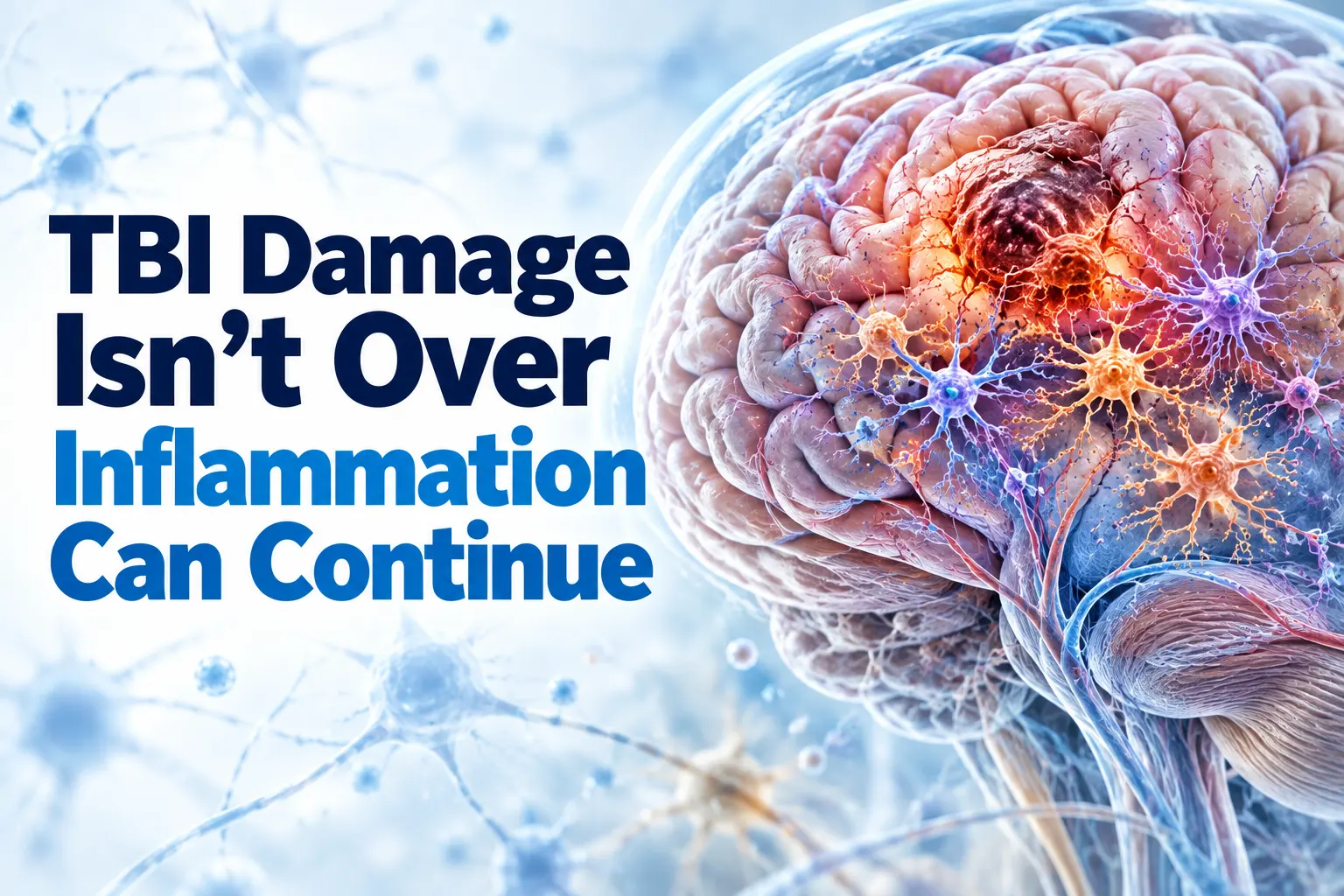
- A traumatic brain injury triggers a wave of inflammation. This can persist for months or years, not just the initial impact.
- This ongoing inflammation, not only the original injury, drives much of the long-term damage seen after TBI.
- Regenerative medicine mainly aims to calm this inflammation and support the brain’s own repair signals.
- A phase 2 trial of one stem cell therapy showed real motor improvement, alongside a favorable safety record.
- Getting enough cells to survive and reach the brain remains the field’s biggest unsolved challenge.
Estimated read: 8 minutes
TBI inflammation often outlasts the original injury by months or years. This is exactly where regenerative medicine may fit into the picture.
This does not replace standard care. Instead, it targets this ongoing response directly.
What Happens to the Brain After a Traumatic Injury
A traumatic brain injury (TBI) causes damage in two distinct stages. The first stage happens immediately, from the direct mechanical force of the injury itself.
The second stage unfolds differently. It develops over hours, days, and sometimes years afterward. Doctors call this secondary injury.
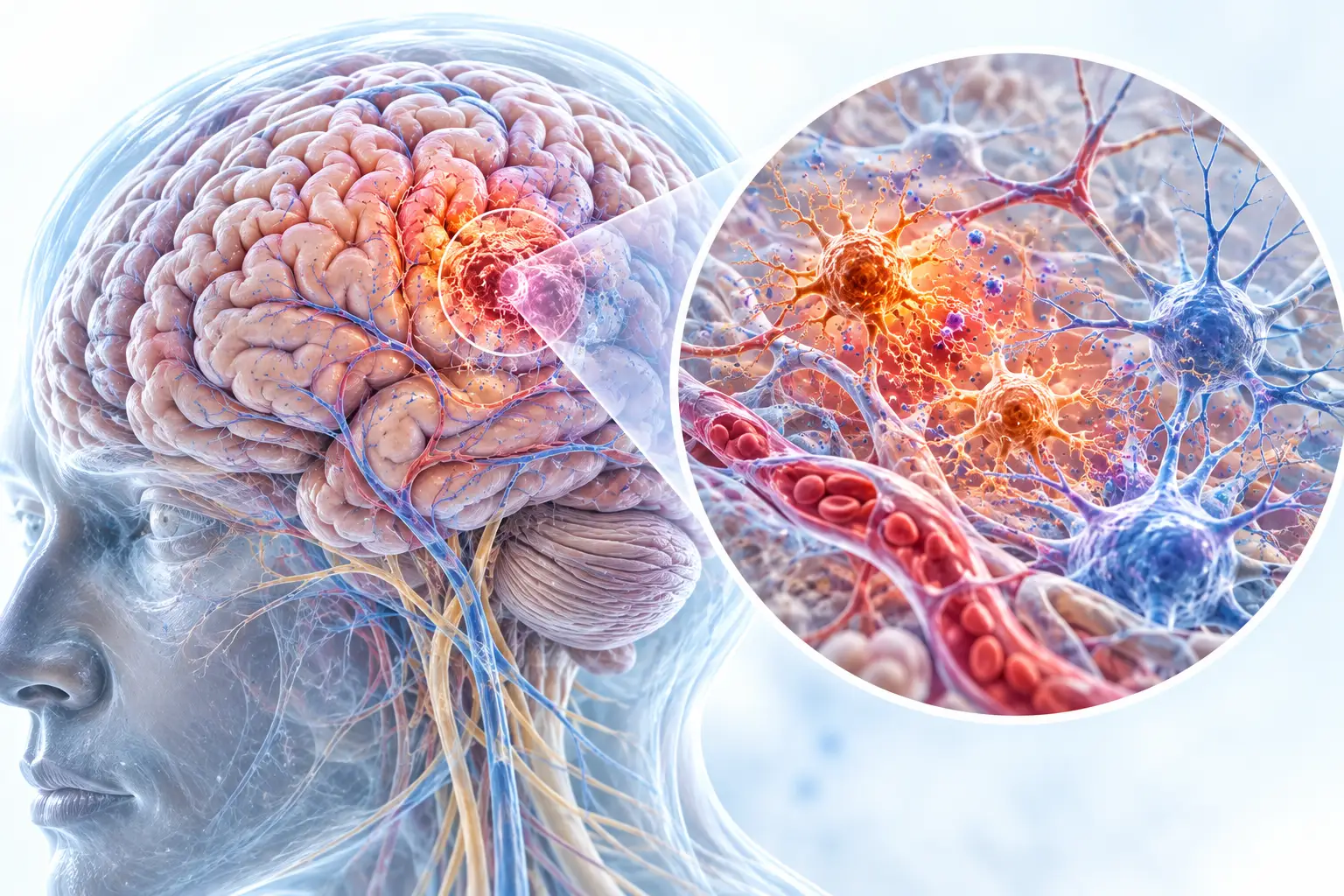
Secondary injury involves swelling and disrupted blood flow. It also involves a cascade of immune response activity around the damaged tissue. Instead, this activity does not stay contained to the original injury site.
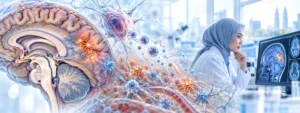
Immune cells called microglia normally help clear debris after an injury. In TBI, though, they often remain active far longer than needed.
When that happens, the same cells that should help instead start contributing to further damage. Astrocytes, another support cell in the brain, can behave similarly once the response drags on too long.
In fact, this secondary phase is where much of the lasting damage actually happens. As a result, researchers now focus heavily on this window. It may offer a real chance to limit long-term harm.
Why TBI Inflammation Often Does Not Resolve on Its Own
Brain inflammation after injury does not always fade on its own. In many cases, it can persist for months or even years after the original trauma.
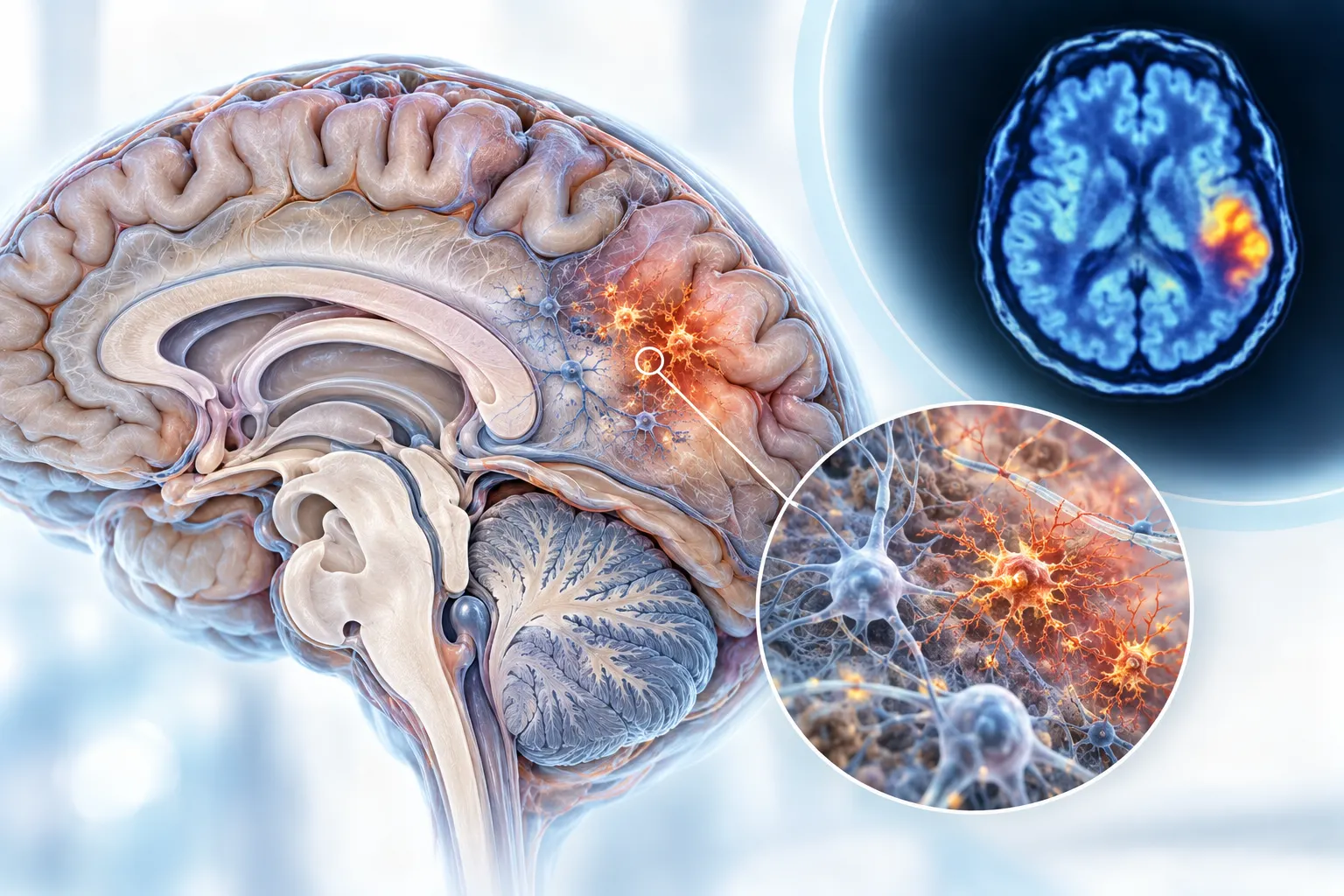
Notably, brain scans directly support this finding. PET imaging studies have detected active immune cells in the brain long after the original injury.
One review found signs of this activity more than a decade later in some patients. This comes from a review of brain inflammation and cell-based therapy after traumatic brain injury. Researchers link prolonged activation like this to worse long-term outcomes, not better ones.
Researchers have even used PET scans to detect this activity in retired athletes. These athletes had a history of head injuries, years after their playing days ended. This suggests this window can stay open far longer than most people assume.
This gap in managing TBI inflammation is precisely what this type of treatment hopes to address. Standard care manages symptoms well and helps prevent further harm.
Even so, this pattern is reshaping how doctors think about treatment of traumatic brain injury going forward.
However, standard care does not directly target the inflammation driving ongoing damage. This is where a different kind of approach may add real value.
How Regenerative Medicine Aims to Calm This Response
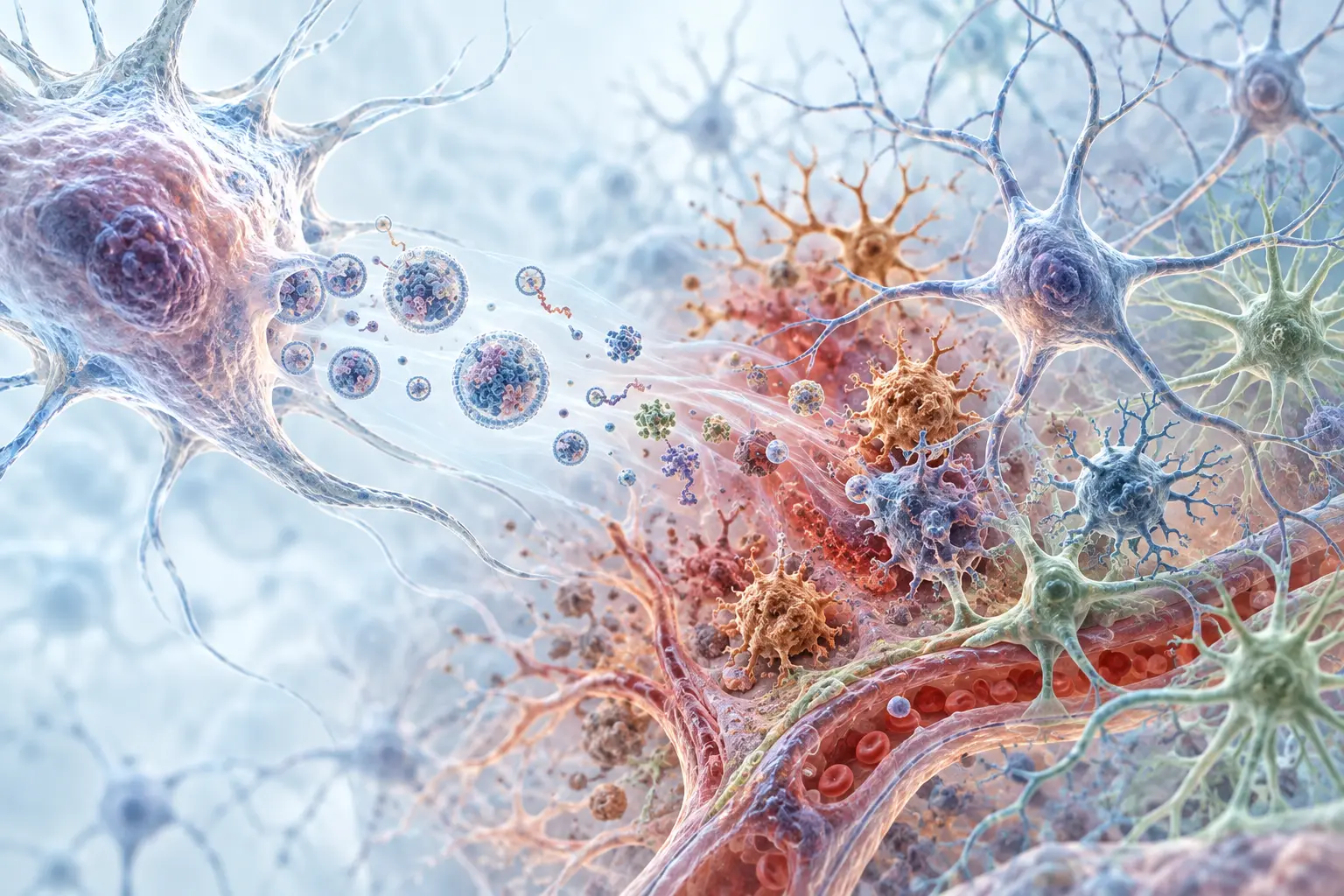
This approach mainly works by releasing signals that calm inflammation. These signals also support the brain’s own repair process. However, it does not typically replace lost brain cells directly.
Cells used in this approach release growth factors. These include brain derived neurotrophic factor (BDNF) and vascular endothelial growth factor (VEGF).
These neurotrophic factors support neuron survival. They may also help restore healthy blood flow to stressed tissue. Both effects matter for recovery, not just one alone.
Cells also release extracellular vesicles. These are tiny packages that carry the same signals to nearby tissue. This packaging may help signals reach cells the parent cell never physically touches.
Together, these signals aim to shift the immune response away from prolonged, damaging inflammation. The goal is support and modulation. Rather, it is not replacement of lost tissue.
Researchers describe this overall strategy as calming the immune system, not shutting it down. Rather than blocking the immune system entirely, the aim is to nudge it back toward a healthier, more balanced state. This distinction matters, since a fully suppressed immune system also carries its own risks.
The Cell Types Being Studied for TBI
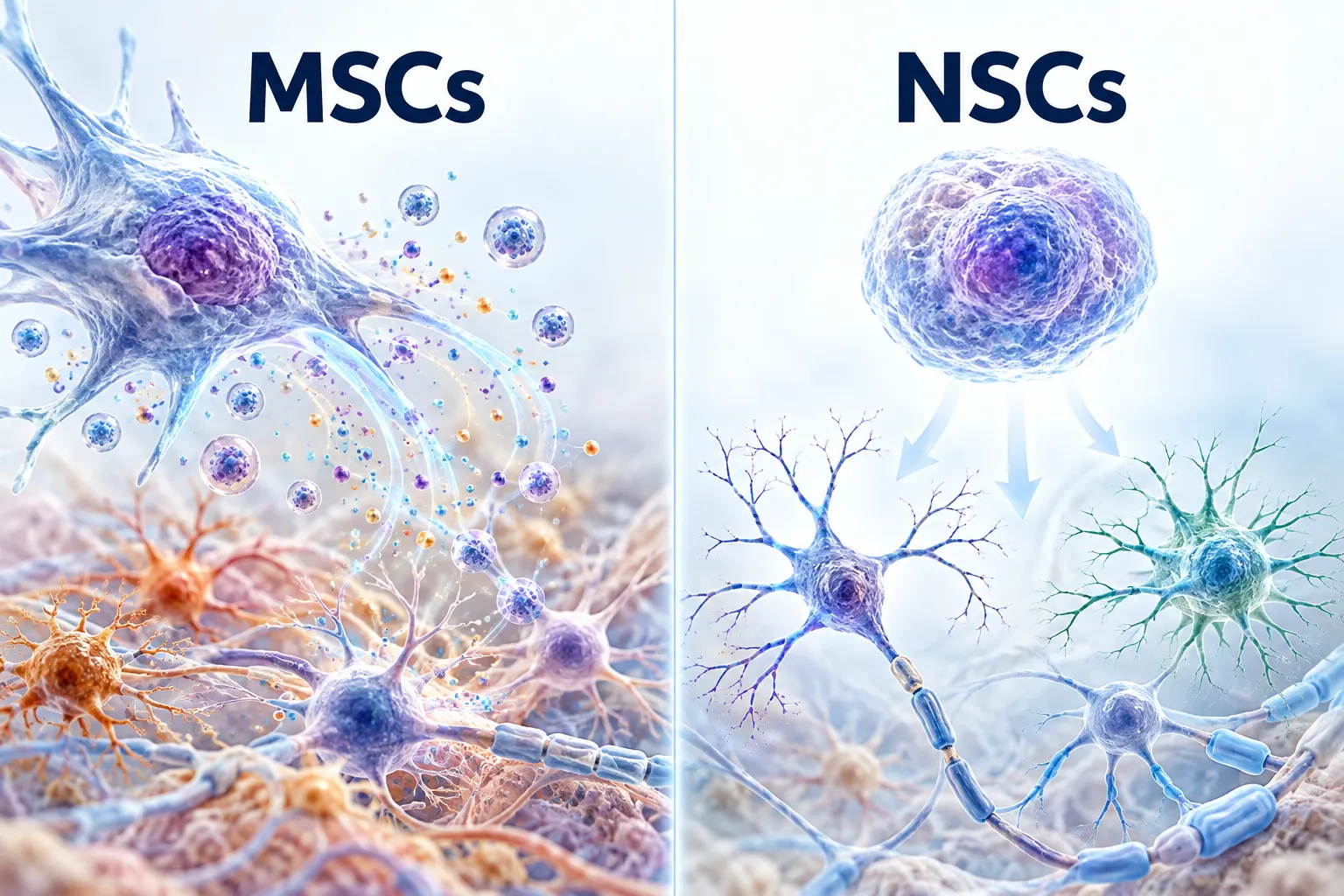
Researchers mainly study two broad cell categories for therapy for TBI. These are mesenchymal stem cells (MSCs) and neural stem cells (NSCs).
A derived mesenchymal stem cell product often comes from bone marrow, fat tissue, or umbilical cords. These cells mainly work through signaling.
They rarely become new brain cells themselves. Instead, their main value lies in the chemical signals they release nearby.
Neural stem cells behave differently. They are more closely related to actual brain tissue.
In lab studies, they can develop into neurons or supporting cells. This ability to become other cell types is exactly what makes them so appealing in theory.
Even so, human evidence for this pathway remains limited. Most current human research still focuses on mesenchymal stem cells instead. This is partly because MSCs are easier to source and expand outside the body, which makes large trials more practical.
This same cell-type distinction comes up in other conditions too. A similar comparison applies to stem cell delivery in spinal cord injury. There, too, the specific cell type shapes what treatment can achieve, not just the delivery method.
What Clinical Trials Have Actually Found
Human evidence for TBI cell therapy remains limited, but it is not empty. One notable phase 2 trial tested a bone marrow-derived stem cell product. Patients in the trial had chronic motor deficits after TBI, meaning their symptoms had already stabilized without further improvement.
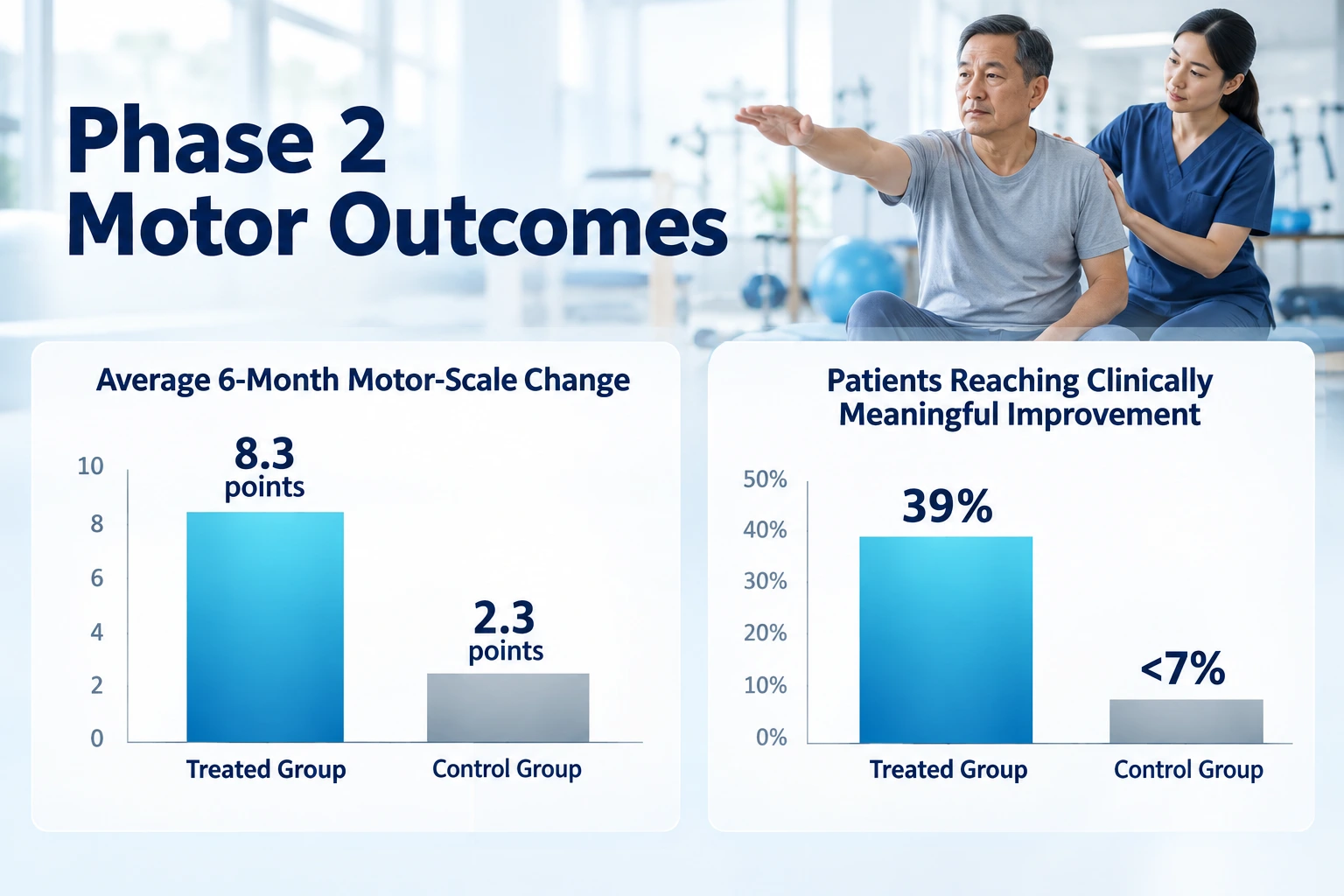
At six months, treated patients improved by an average of 8.3 points on a standard motor scale. The control group improved by only 2.3 points. This comes from this phase 2 trial of stem cell therapy for chronic traumatic brain injury.
Roughly 39% of treated patients reached a clinically meaningful improvement. Fewer than 7% of the control group reached that same benchmark.
Importantly, the trial also reported no significant difference in serious side effects between groups. This supports the therapy’s overall safety profile.
Clinical trials like this one remain few, though. A systematic review of the wider field still points to inconsistent results across smaller studies. Larger, better-designed trials would help settle this.
Trial size also varies widely across this field. Some studies enroll only a handful of patients. As a result, it becomes harder to separate a real effect from natural variation between individuals.
This mechanism echoes what researchers study in spinal cord injury too. Both are central nervous system conditions where inflammation plays a major role in long-term outcomes.
The Biggest Challenge: Getting Cells to Survive and Reach the Brain
Even a promising cell product helps only if enough cells reach the injury. This remains the field’s central, unsolved problem, shaping every discussion of TBI inflammation and how to treat it. Solving it would likely benefit far more than just TBI research alone.
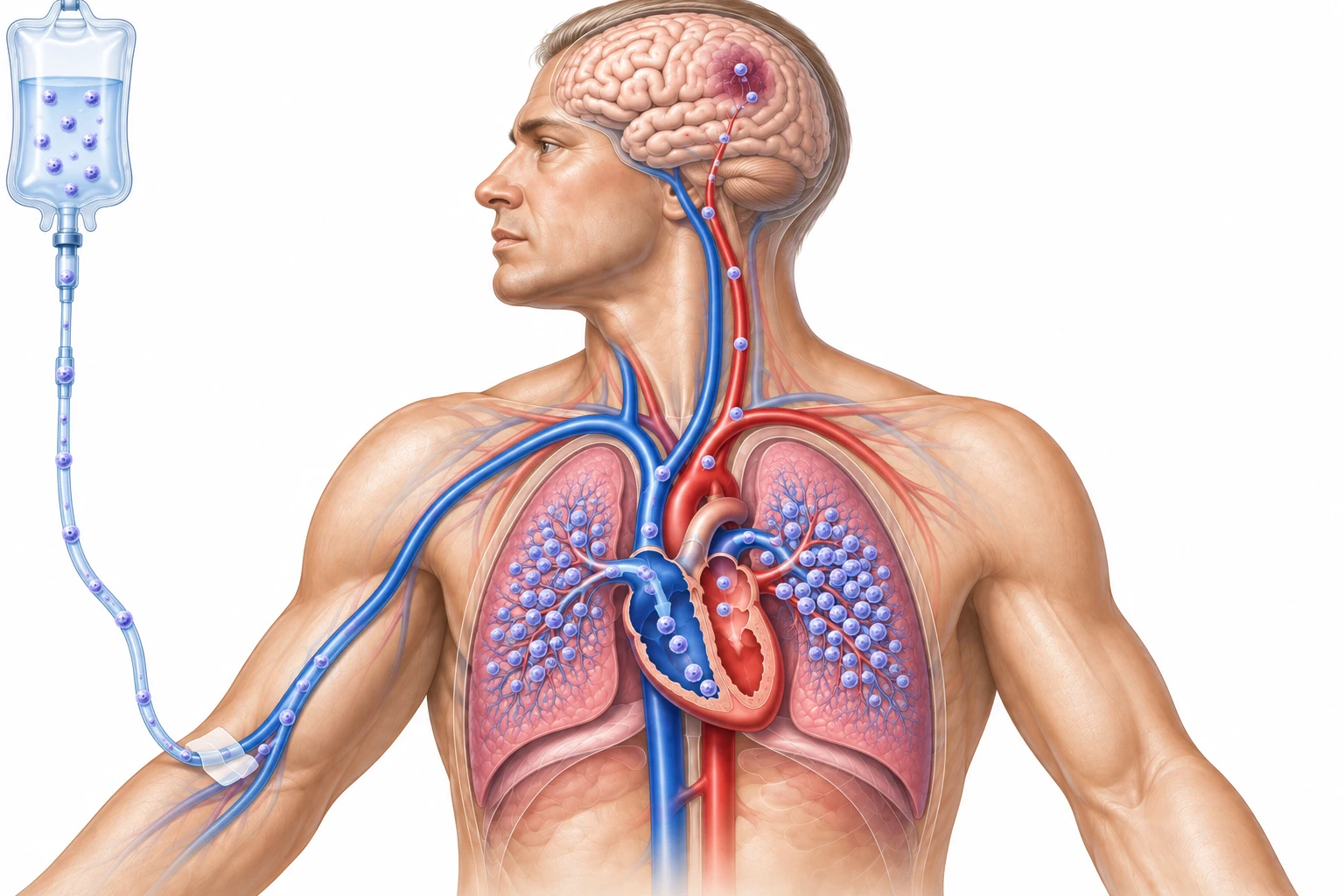
One early study tested intravenous stem cell treatment for brain injury. Fewer than 4% of infused cells ever reached the brain’s circulation. Most became trapped in the lungs first.
As a result, few cells survive long enough at the injury site to matter. A simple IV infusion alone rarely delivers enough cells to the site that needs them.
This is one reason researchers increasingly favor more direct delivery methods. These methods add procedural risk. Even so, they may improve how many cells actually reach the target tissue.
Researchers continue to test intra-arterial injection and direct implantation as alternatives to a simple IV line. Each option trades some safety margin for a better chance of meaningful cell delivery. Neither approach has fully solved the underlying problem yet.
How Cyrona Cell Approaches This Decision
Cyrona Cell’s own overview of stem cell therapy for traumatic brain injury covers this evaluation process in more detail. A companion article looks specifically at stem cell therapy for TBI and cognitive or motor recovery.
Patients who explore this option typically do so after standard rehabilitation has plateaued. In other words, this is generally a later-stage conversation, not a first-line treatment decision. A doctor should review recent imaging and a full injury history before discussing candidacy in any detail.
Timing and inflammation also interact in other brain conditions Cyrona Cell treats. A related pattern appears in stem cell therapy for stroke: acute vs chronic cases. There too, the injury’s age shapes what treatment can achieve.
Considering cell-based treatment for a traumatic brain injury? Message the Cyrona Cell team on WhatsApp to discuss the injury history and current goals.
Frequently Asked Questions
Can stem cell therapy treat traumatic brain injury?
Researchers are actively studying stem cell therapy for TBI. Some trials show real promise, particularly for motor function, though results vary between studies.
However, no current treatment offers a guaranteed outcome or a cure. Any therapy should support standard medical care, not replace it.
What is the biggest problem with regenerative medicine?
Getting enough cells to survive and reach the target tissue remains the field’s biggest unsolved problem. The body filters out or kills many cells before they ever reach an injury site.
This limits how much benefit any single treatment can actually deliver. This also explains why researchers keep testing different delivery methods instead of settling on one approach.
Do brain cells regenerate after TBI?
The adult brain has limited ability to grow entirely new neurons. Most recovery after TBI comes from the brain rewiring existing connections instead.
This process is not the same as replacing lost cells outright. Because of this, rehabilitation remains central to recovery, alongside any treatment a patient considers.
Does brain inflammation heal?
Sometimes, but not always. Mild cases often resolve within weeks, with no lasting trace on imaging.
In more severe injuries, however, inflammation can persist for years. This is linked to worse long-term outcomes. That link is part of why researchers are studying ways to help calm it.
Talk to a Doctor About Your Options
Every case of TBI inflammation looks different, and the right approach depends on details a blog post cannot capture. Submit your case for a free medical review and get a doctor’s honest assessment of your options.