
Key Takeaways
- Doctors can deliver stem cells for spinal cord injury through several routes, each with different reach and risk.
- Intravenous delivery is the least invasive route, but few cells actually reach the injury site.
- Intrathecal delivery is the most studied route in human trials, and a recent review links it to better outcomes.
- Direct injection into the spinal cord places cells right at the injury, but requires more invasive surgery.
- The right route depends on injury timing, severity, and the specific cell type used, not one default choice.
Estimated read: 8 minutes
Stem cell delivery is a key decision in any therapy for spinal cord injury. Doctors and researchers use several different delivery routes. The choice shapes both safety and potential benefit.
What Determines a Stem Cell Delivery Route
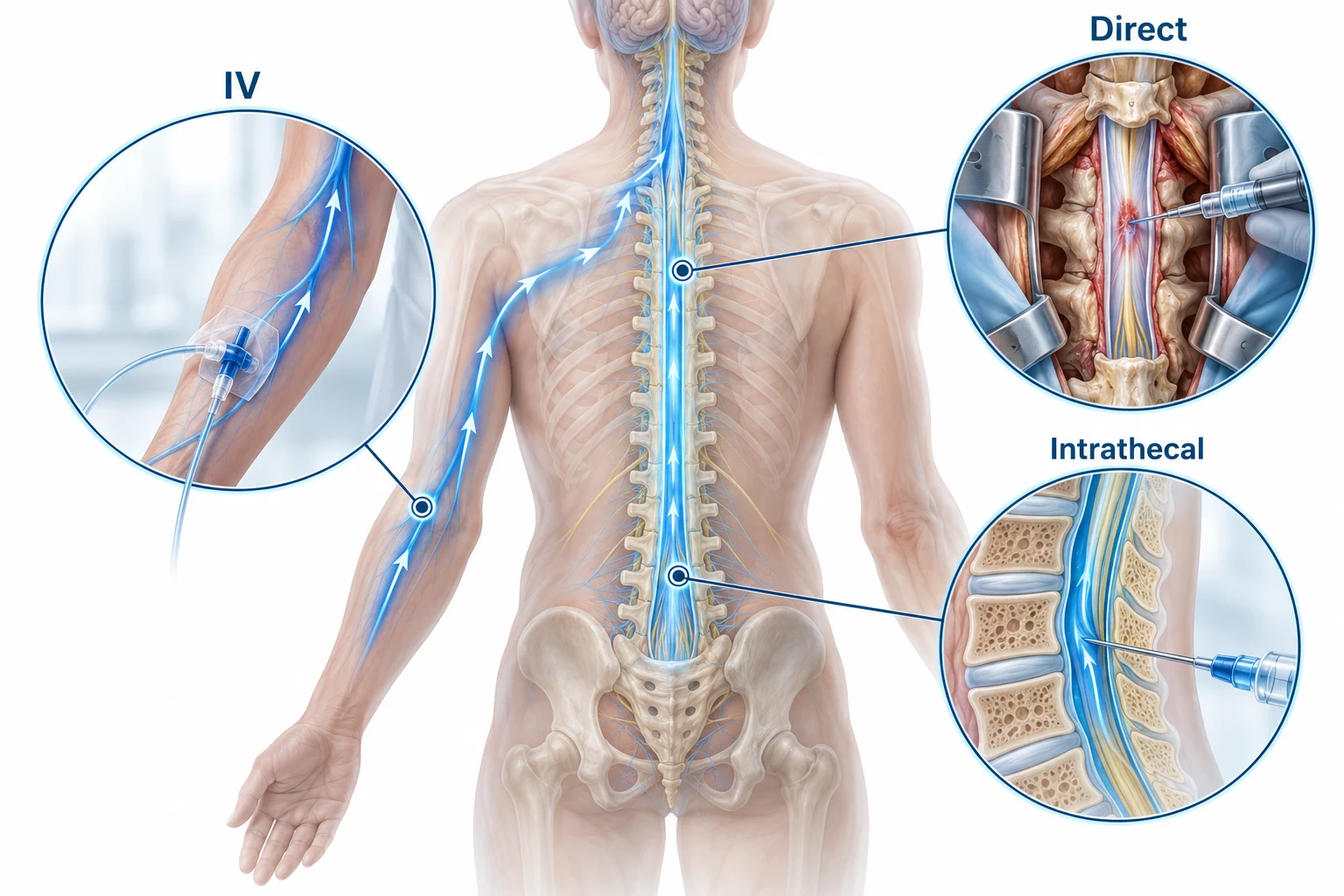
A delivery route is simply how cells travel from the lab into the patient’s body. For spinal cord injury, three routes come up most often. Specifically, these are intravenous, intrathecal, and intramedullary injection.
Each route sends cells to a different starting point. As a result, the number of cells that actually reach the damaged tissue can vary widely. Researchers also study a few less common routes, though these appear far less often in human trials.
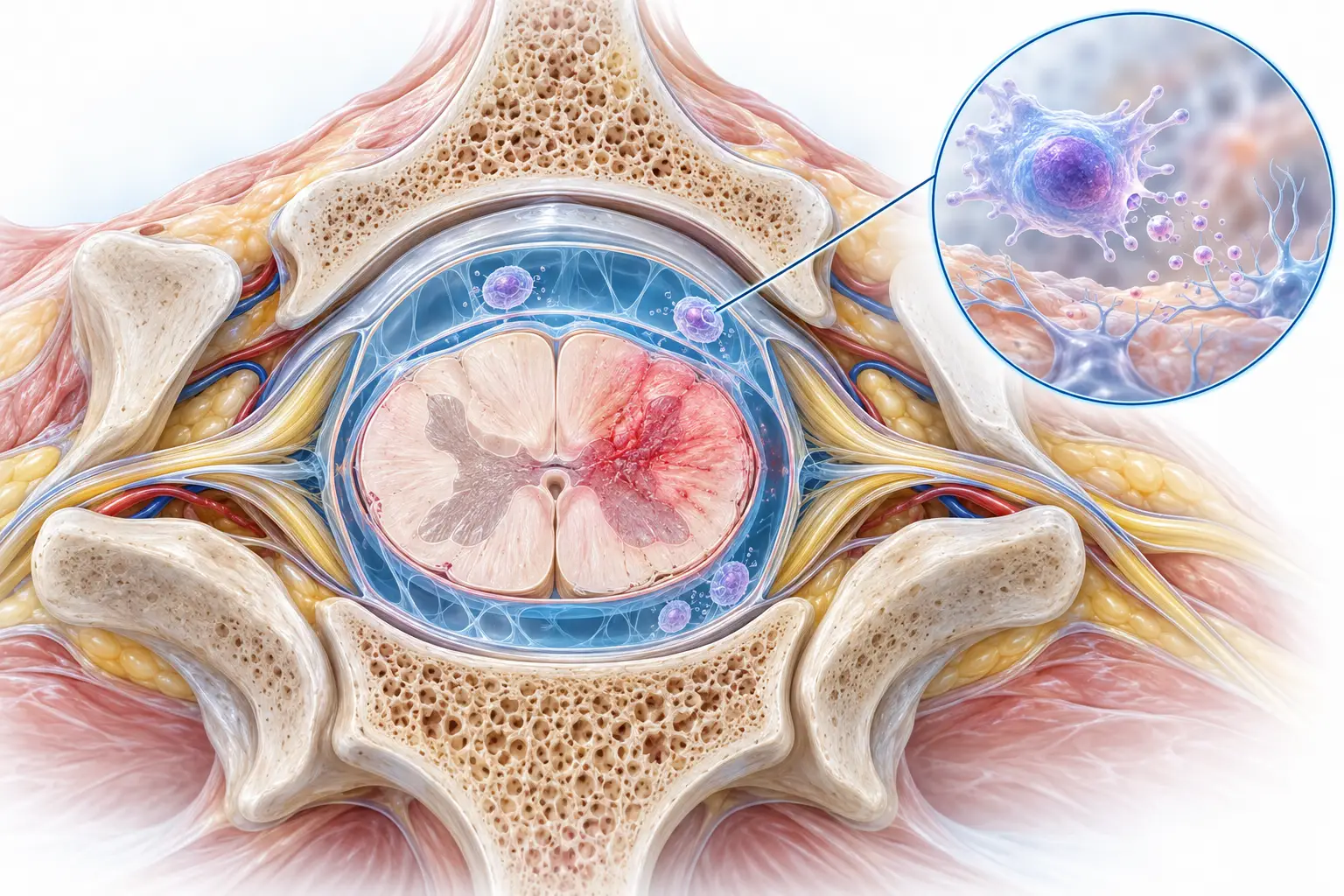
The route matters because spinal cord tissue sits behind a protective barrier. Getting cells past that barrier, without adding new trauma, is the central challenge behind every option on this list.
Why the Spinal Cord Is Hard to Reach
Most stem cells used in cell therapy for spinal cord injury do not turn into new nerve cells themselves. Instead, they often act more like a support cell population. They release signals that calm inflammation and support the remaining tissue.
Researchers still debate the full effects of stem cells once they reach the injury site. Even so, most agree the surrounding barrier makes delivery itself a major hurdle.
This is one reason therapy for SCI continues to test several delivery approaches, rather than settling on just one. In practice, ongoing trials often test more than one route side by side.

Intravenous Delivery: Reach Without Precision
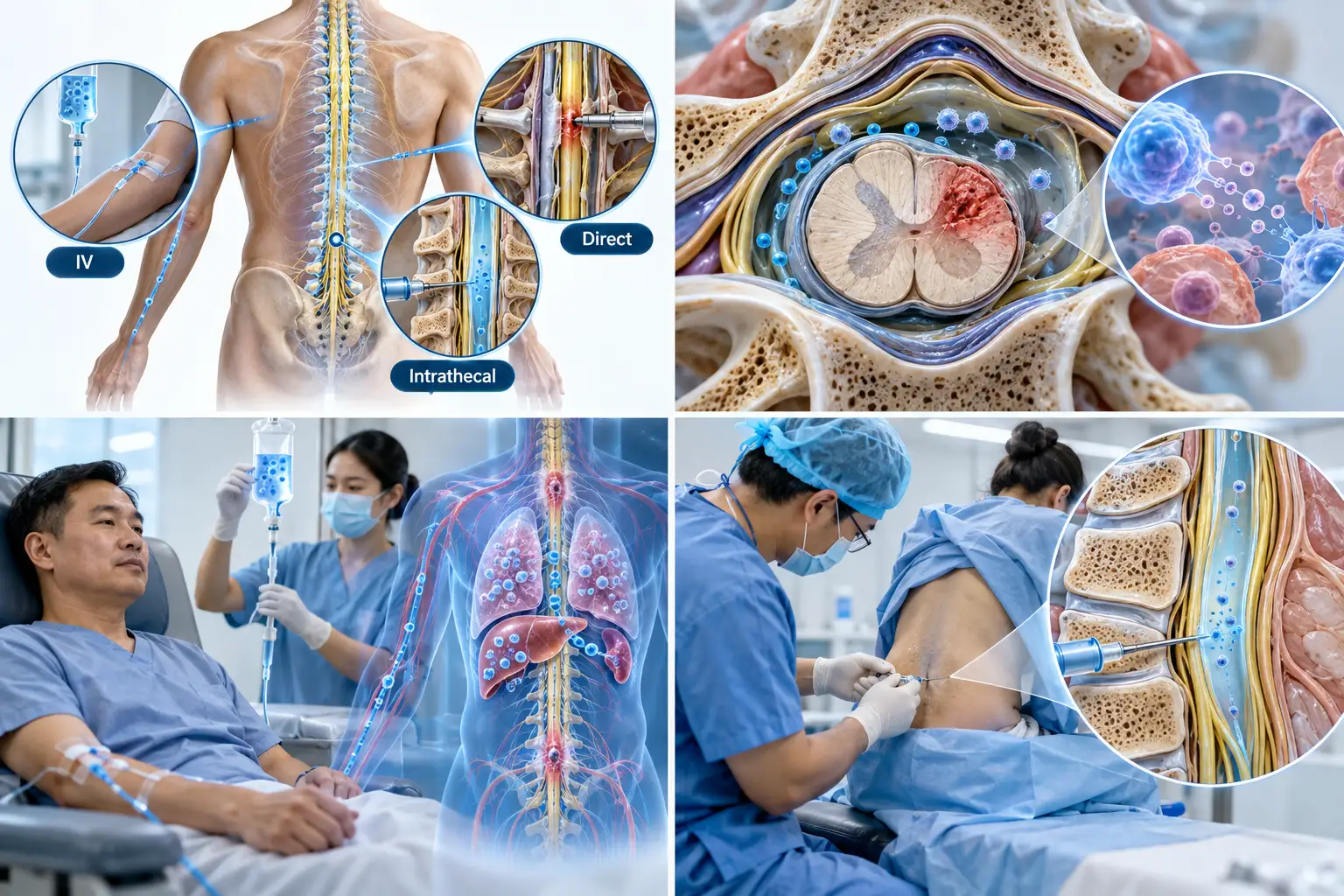
Intravenous, or IV, delivery sends cells into a vein. From there, the bloodstream carries them throughout the body. This is the least invasive route, and it requires no surgery or specialized imaging.
However, most cells never reach the spinal cord. Instead, the lungs, liver, and spleen filter out a large share before the cells travel further. Immune cells in these organs also clear a portion of the dose quickly.
Because of this filtering effect, IV delivery generally reaches injured tissue in smaller numbers than other routes. Even so, some researchers continue to favor this route.
It carries the lowest procedural risk. It also suits patients who cannot tolerate a more invasive option.
This trade-off appears across other conditions too, not only spinal cord injury. Any treatment that targets the central nervous system faces the same basic problem. Getting enough cells past the bloodstream and into the right tissue remains genuinely difficult.
Intrathecal Delivery: The Most Studied Route in Human Trials
Intrathecal delivery injects cells directly into the spinal fluid around the spinal cord. This route falls between the other two in terms of invasiveness. It avoids surgery on the cord itself.
Yet it still places cells much closer to the injury than an IV line does. This balance may explain why intrathecal delivery has become the most common choice in published human studies.
A systematic review looked at trials for treating spinal cord injuries. Most of the trials reviewed used the intrathecal route. Far fewer used intravenous or direct injection.
A systematic review linked intrathecal delivery to better motor and sensory scores. This finding comes from a systematic review of mesenchymal stem cell trials in traumatic spinal cord injury. The same review also linked intrathecal delivery to fewer side effects than the other routes studied.
One phase 1 trial tested this route directly. Researchers gave intrathecal injections of adipose-derived cells to ten patients with traumatic spinal cord injury (SCI). Seven of the ten patients showed an improved injury grade at final follow-up.
Notably, this phase 1 trial of intrathecal stem cell delivery reported no serious adverse events. Headache and muscle soreness were the most common side effects. Both resolved on their own within a short time.
Studies have shown that cells delivered this way do not always stay at the injury site. Even so, they may still help through paracrine signals. These are chemical messages sent to nearby tissue, rather than a direct replacement of damaged neurons.
Direct Spinal Cord Injection: Precision With More Risk
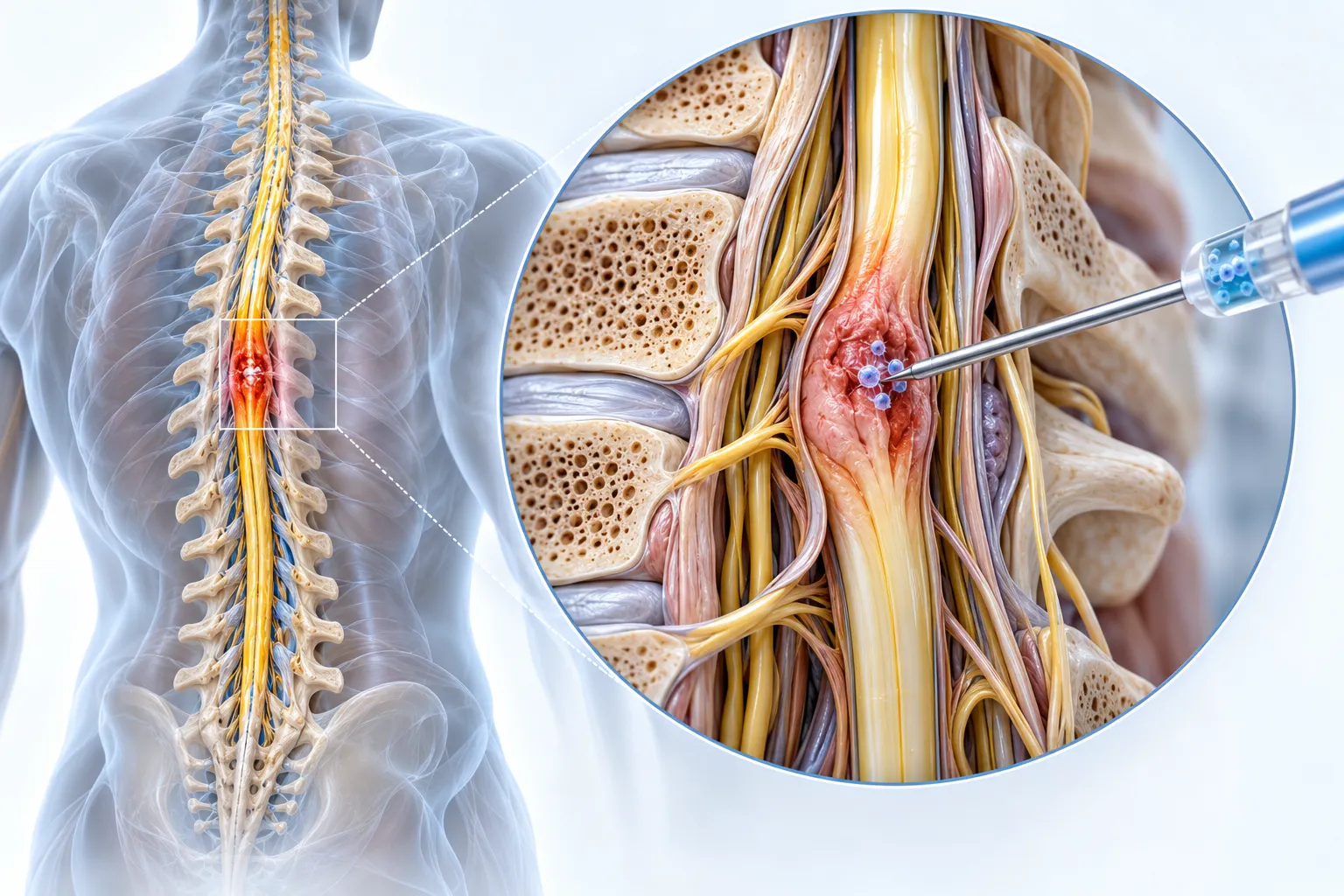
Doctors also call this route intramedullary, or intraspinal, delivery. It injects cells directly into spinal cord tissue at the injury site. This gives doctors the most direct access to damaged tissue of any option available today.
Animal studies have compared routes head to head. In one such study, cells injected directly into the cord survived far longer at the injury site.
Cells given through the intrathecal route did not survive nearly as long. Based on cell survival alone, this suggests direct injection may support more direct spinal cord repair.
However, this precision comes with a real cost. Direct injection requires surgery on the spinal cord itself. This carries a real risk of causing new damage during the procedure.
Because of this risk, doctors generally reserve this approach for carefully selected cases. Unlike intravenous delivery, it is not a routine, first-choice option. Instead, teams typically consider it only after weighing the potential benefit against this added surgical risk.

How Researchers Compare Routes and Measure Success
Researchers track several measures to judge whether a delivery route works. These include standardized injury grading scales, such as the ASIA Impairment Scale. They also include sensory testing and imaging of the injured spinal cord over time.
For example, ASIA grade A means no motor or sensory function below the injury. Grades C and D mean some of that function has returned. A patient might move from grade A up to grade C or D over time.
Therefore, this kind of grade change is one of the clearest signals researchers look for across delivery routes.
Clinical studies also track function improvement in daily activities, not only laboratory measurements. A treatment that changes a scan but not daily function offers limited real-world value to patients.
Timing also plays an important role. Researchers pay close attention to secondary injury. This is the wave of inflammation and cell death that follows the original trauma over hours and days.
Some routes may help most when used early, before secondary injury fully develops. However, this remains an active research question, not a settled fact. Larger trials would help confirm whether early timing consistently changes outcomes across different delivery routes and cell types.

Which Route Might Suit Which Patient
No single stem cell delivery route works best for every patient. Instead, the right choice depends on injury timing, injury severity, and which types of stem cells a clinic uses.
A neural stem cell product may behave differently than a mesenchymal stem cell. Clinics often draw the latter from bone marrow or umbilical cord tissue. Each cell type has its own survival profile and its own typical delivery route.
Clinics also weigh practical cell transplantation logistics. Some routes require an operating theater and a specialist surgical team to perform the procedure safely. Others require only a short outpatient procedure, which can also affect cost and recovery time.
For international patients traveling for treatment, this practical difference matters almost as much as the clinical evidence. A less invasive route often means a shorter hospital stay. In turn, that usually allows a faster return to a hotel or home country.
Unlike a peripheral nervous system injury, spinal cord tissue has limited natural repair capacity. A peripheral nerve injury sometimes heals on its own over time. This is one reason researchers keep testing multiple routes, rather than settling on a single default.
How Cyrona Cell Approaches This Decision
Cyrona Cell’s own overview of stem cell therapy for spinal cord injury explains how a case gets evaluated. Doctors complete this evaluation before choosing any delivery route.
A companion article on stem cell therapy after spinal cord injury: what to expect covers the broader treatment journey. It looks beyond delivery method alone.
A related look at WJMSC therapy for spinal cord injury outlines the specific cell type Cyrona Cell uses. It explains how that choice fits into the clinic’s own protocol.
Timing since injury also shapes outcomes in other conditions Cyrona Cell treats. A similar pattern appears in stem cell therapy for stroke: acute vs chronic cases. There too, the stage of recovery shapes what a treatment plan can achieve.
Considering stem cell therapy for a spinal cord injury? Message the Cyrona Cell team on WhatsApp to discuss your injury history and current goals.
Frequently Asked Questions
What is the best delivery method for stem cell therapy in spinal cord injury?
No single method works equally well for every patient. Intrathecal delivery is the most studied route. Reviews of human trials show a favorable safety and outcome pattern.
Even so, the right choice still depends on the patient’s specific injury and treatment goals. A doctor should therefore weigh these factors before recommending any single route.
Is intrathecal stem cell therapy safe for spinal cord injury?
Published trials report a generally favorable safety profile for intrathecal delivery. Common side effects include headache and muscle soreness, and both are usually temporary.
Serious adverse events have been uncommon in the trials reviewed so far. However, sample sizes in these early trials remain small, so ongoing safety monitoring still matters.
How soon after a spinal cord injury can someone consider stem cell therapy?
Timing varies by clinic and by injury type. Some trials enroll patients within months of injury, while others accept patients years after the original trauma.
A doctor needs current imaging and a full injury history before advising a patient on realistic timing. The doctor should complete this assessment first, before discussing any treatment plan in real detail.
Can stem cells reverse spinal cord damage?
No current stem cell treatment completely reverses spinal cord damage. Research so far points to modest gains in sensation, movement, or function for some patients. Overall, these gains tend to be incremental rather than dramatic.
These gains come alongside a generally favorable safety record. Still, results vary widely between individuals, so no clinic should promise a specific outcome in advance.

Talk to a Doctor About Your Options
Every spinal cord injury is different. The right approach to stem cell delivery depends on details a blog post cannot capture. Submit your case for a free medical review and get a doctor’s honest assessment of your options.