Key Takeaways
- A phase 3 trial led by the University of Wisconsin-Madison kept 15 of 20 treated recipients off anti-rejection drugs for over two years.
- The therapy uses blood-forming stem cells from the same sibling who donates the kidney.
- None of the 20 treated recipients developed graft-versus-host disease.
- Only closely matched siblings qualified, and the treatment remains investigational.
- UCLA and UW Health are testing related approaches in other transplant groups.
Estimated read: 7 min
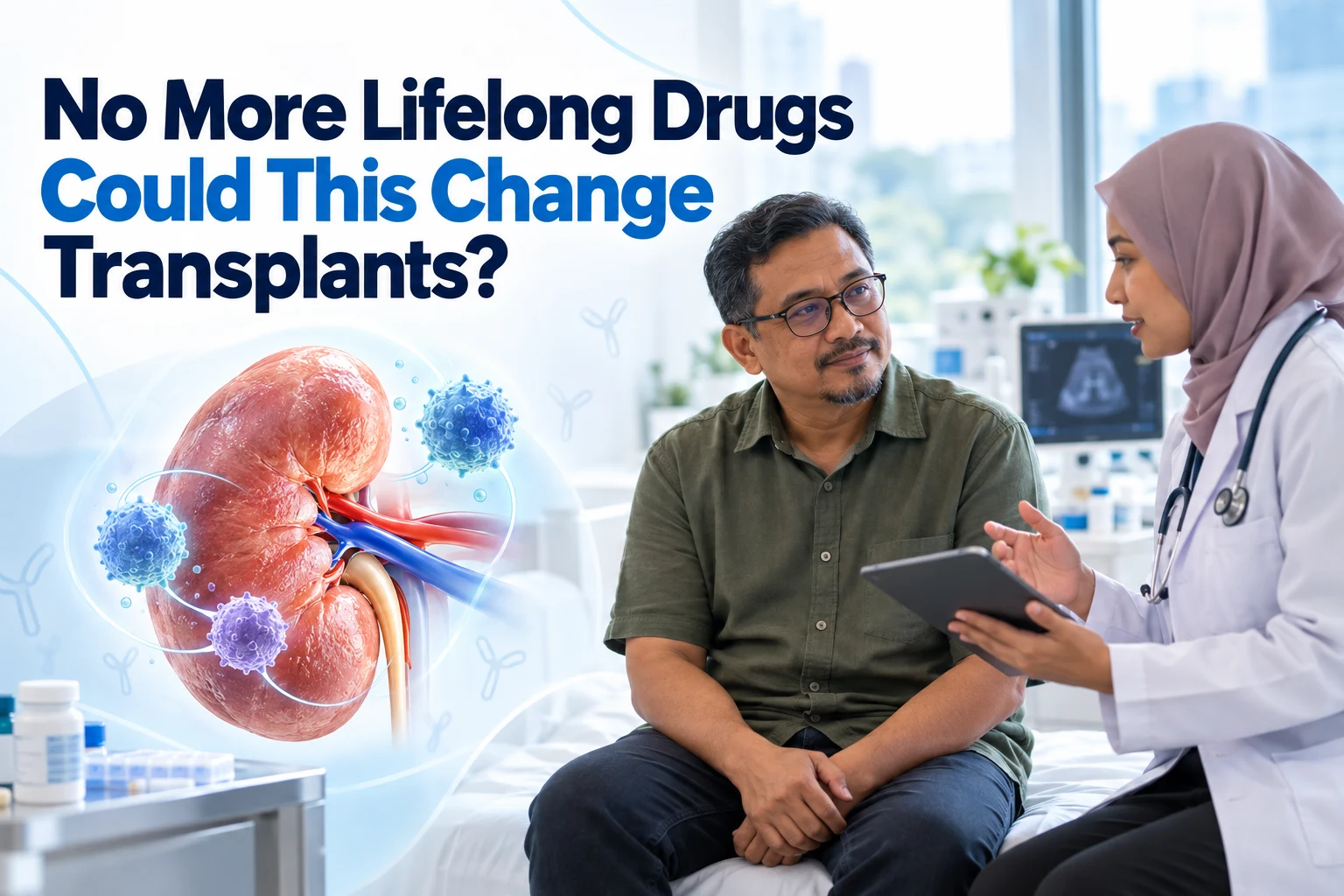
Most transplant patients take anti-rejection drugs for life, but a Wisconsin study tested a way to stop them. Here is the kidney transplant stem cell trial: what the results show, in plain language. Wisconsin Public Radio’s report found that 75% of treated patients stayed off the drugs for over two years.
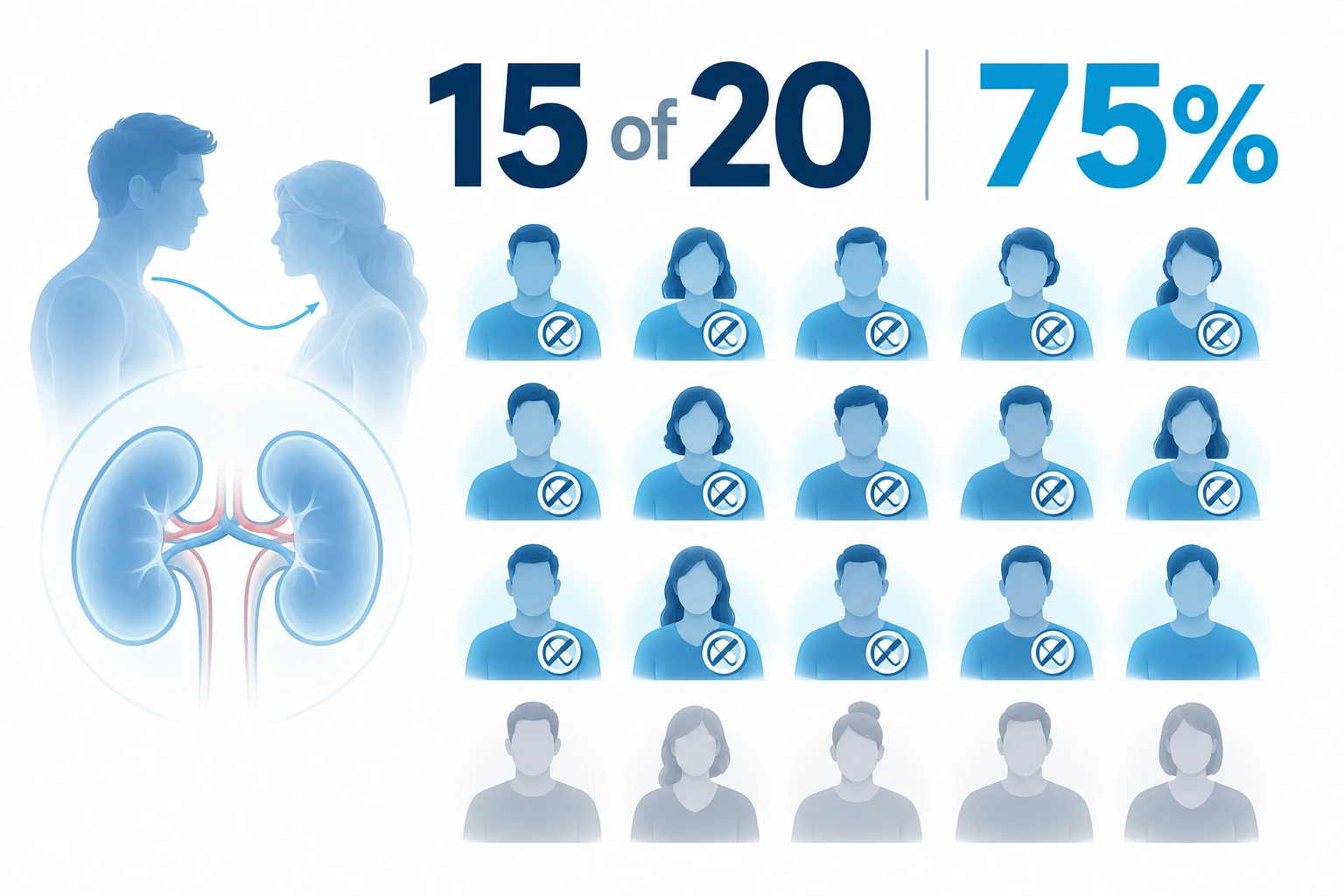
Kidney Transplant Stem Cell Trial: What the Results Show in Numbers
The phase 3 study found that 75% of treated recipients stayed off all anti-rejection drugs for more than two years. In raw counts, 15 of the 20 treated recipients met that goal. These are notable numbers for a small phase 3 study, though they cover only matched siblings.
This clinical trial enrolled 30 adults who received a kidney from a closely matched sibling. Researchers randomly assigned 20 people to the stem cell protocol and 10 to routine care. Routine care means those patients kept taking standard anti-rejection drugs.
Dixon Kaufman, MD, PhD, of the University of Wisconsin-Madison led the work. The phase 3 results appeared in the American Journal of Transplantation in July 2025.
Nineteen of the 20 treated patients stopped all drugs about one year after surgery. In addition, none developed graft-versus-host disease, when donor immune cells attack the body. Kaufman told WPR that patients who reached tolerance reported better wellness and quality of life.
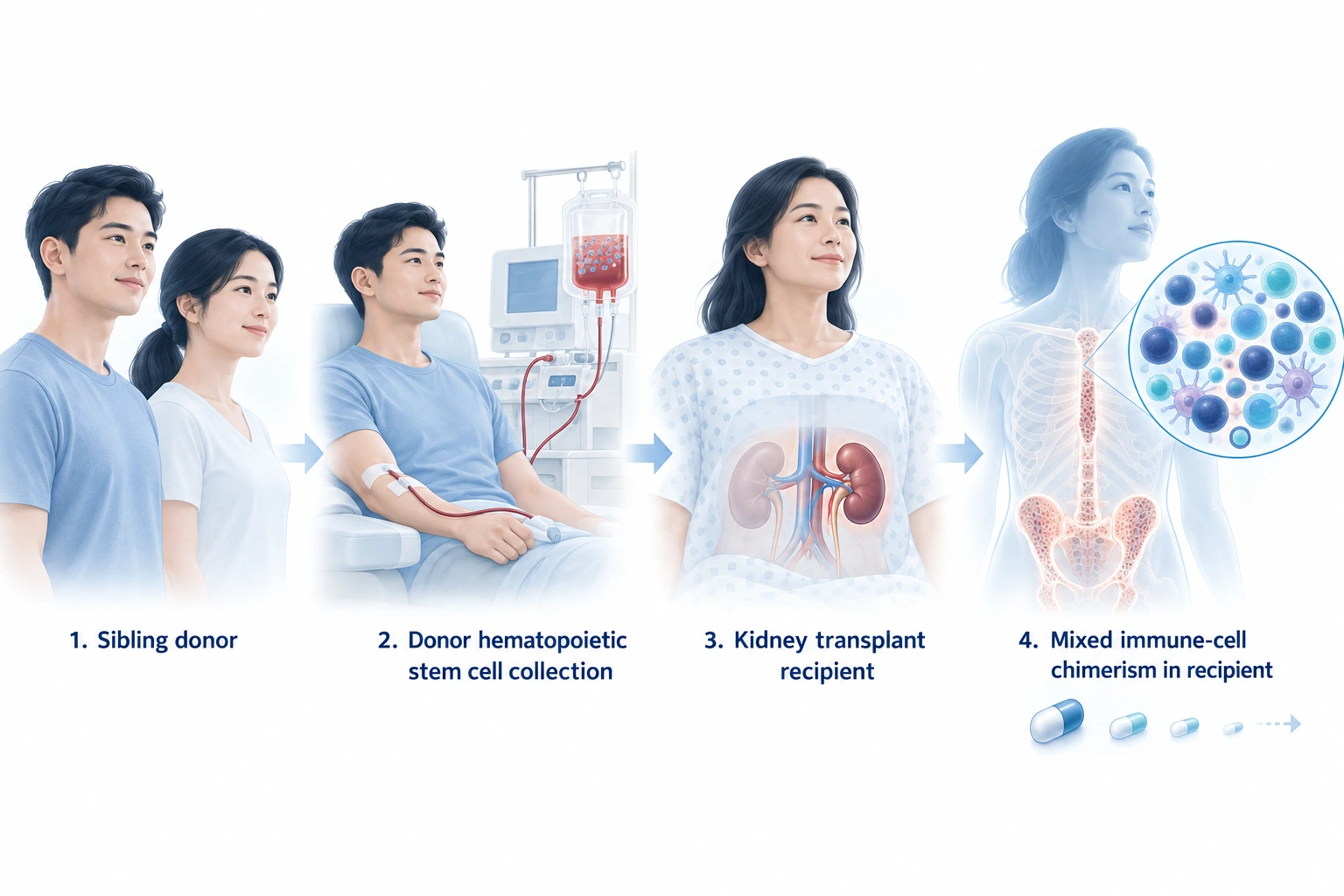
How the Stem Cell Treatment Works
The treatment retrains the immune system to accept the new kidney. Doctors use a gentler form of stem cell transplantation. The cells are hematopoietic stem cell material from the same sibling who donates the organ.
First, doctors collect blood-forming cells from the sibling donor’s blood. After surgery, the recipient receives a rabbit-derived antibody drug and ten low-dose radiation sessions. On day 11, the team infuses the donor cell product, called MDR-101.
Both early steps weaken the recipient’s existing immune defenses so donor cells can take hold.
Kaufman explained that the cells settle in the marrow and build an immune system that mirrors the donor’s. Specialists call this mixed chimerism. In other words, the body holds two sets of immune cells and treats the kidney as its own.
Meanwhile, doctors withdrew steroids by day 10 and a second anti-rejection drug by day 39. Tacrolimus continued until day 180. With donor cells at 5% or more of immune cells, doctors tapered tacrolimus to zero about one year post transplant.

Who Qualified and Why the Results Have Limits
Only adults with a living sibling donor whose tissue type matched closely (a two-haplotype HLA match) qualified. That makes the findings relevant to a small group of kidney transplant recipients. A transplant team can check HLA matching with blood tests, so patients can ask whether a matched sibling exists.
Kaufman told WPR that perfect matches are a small share of all kidney transplantations. Imperfect matches face a stronger immune barrier, he added. Extending the therapy to them is the next goal.
The figures carry limits. Fifteen of 20 is a small sample, and five treated patients did not reach the endpoint. Simon Knight, a professor at Oxford’s Centre for Evidence in Transplantation, said the researchers did not blind the trial.
Even so, Knight’s review said the study surpassed the 48% success threshold the FDA had set. Because MDR-101 remains an investigational cellular product, only research settings offer access. Teams must also track graft health in both the short and long term.
In this kidney transplant stem cell trial, results in matched siblings may not extend to others. Longer follow-up will also show whether tolerance lasts for decades.

Why Patients Want Fewer Anti-Rejection Drugs
Anti-rejection drugs protect the graft but cause real side effects. Taking them for decades is a heavy burden for many patients. UW transplant nephrologist Sandesh Parajuli lists higher risks of cancer, infections, and high blood pressure.
A transplant gives patients with end stage renal disease a better chance of survival than dialysis. Peired and colleagues reached that conclusion in a 2016 review. Still, rejection is a high risk without drugs.
Kaufman added that the drugs can be costly and hard on the kidney. UCLA transplant surgeon Jeffrey Veale also links long-term drug use to infections, heart disease, diabetes, and cancer. About half of kidney transplants fail within 15 years, UCLA reports.
Doctors call the goal tolerance. A tolerant immune system accepts the transplanted kidney without daily drugs. Reaching that state has long been a major aim of transplant research, which is why a 75% result drew attention.
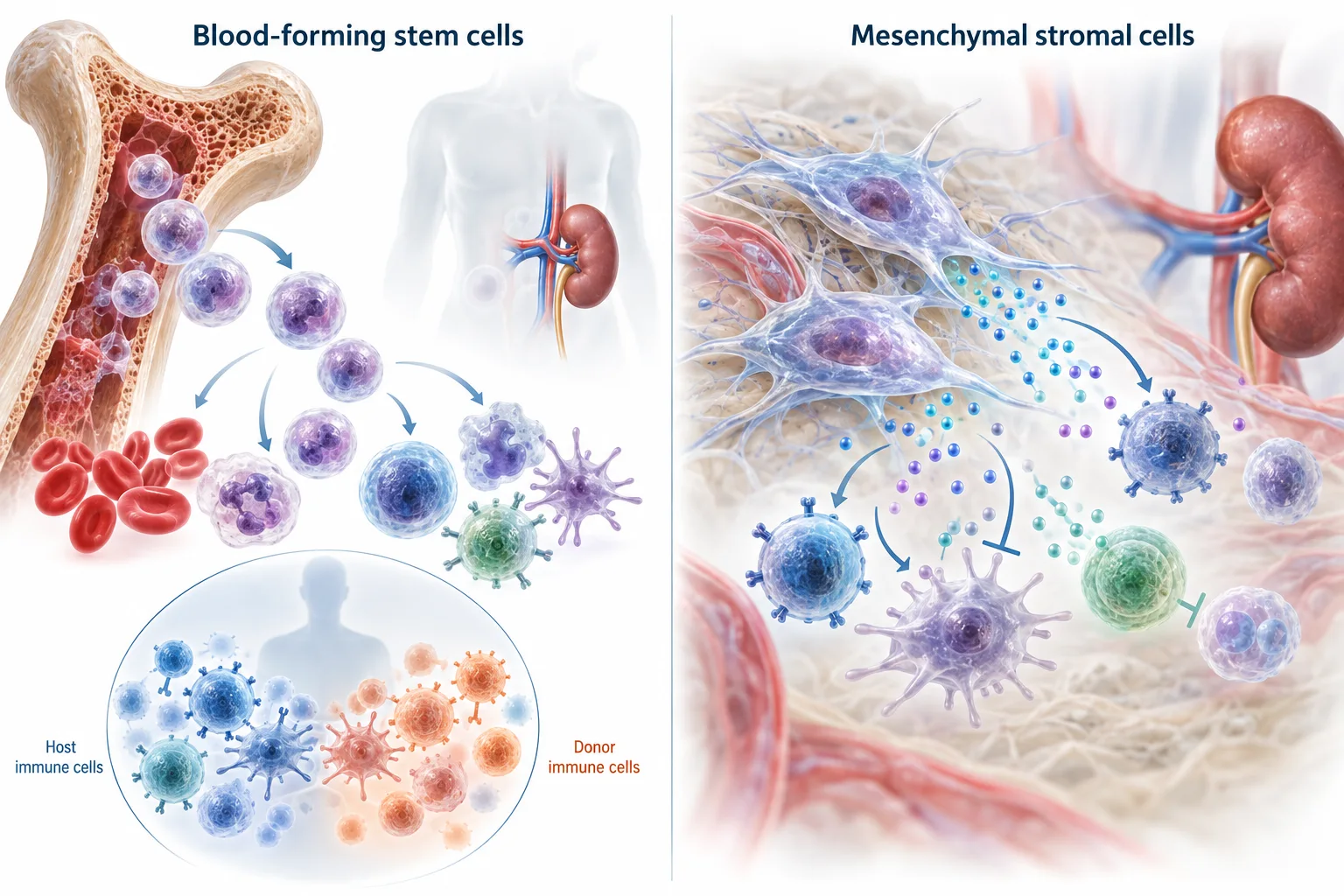
Not All Stem Cell Therapies Work the Same Way
The Wisconsin result does not apply to every cell type. Mesenchymal stem cells act differently from blood-forming cells.
Each mesenchymal stromal cell can release signals that calm the immune system. Scientists call these cells MSC for short. They come from tissues such as bone marrow, fat, and the umbilical cord.
Blood-forming cells rebuild the blood and immune system, while MSCs mainly send signals. That difference helps explain why one approach reached a phase 3 trial, and the other remains in early studies.
Early studies show that MSCs may help by reducing inflammation and limiting tissue injury. However, the 2016 review by Peired and colleagues found no proven benefit yet in transplant recipients. For wider background, see this overview of stem cell therapy for chronic kidney decline.
In 2025, researchers led by Imran Anwar and Allan Kirk studied primate kidney transplants. They gave the animals repeated donor-derived mesenchymal cells after kidney transplants. The infusions failed to induce tolerance, so researchers cannot treat all stem cell therapies as interchangeable.
For related context, read why a CAR-T trial pause does not apply to all cell therapies.

What Comes Next for Kidney Transplant Recipients
Researchers now test whether the approach works beyond perfect matches. Trials at UCLA and UW Health show two different directions.
At UCLA, Veale’s team infuses donor stem cells months or years after the transplant. In UCLA’s delayed tolerance trial for kidney transplants, three of six patients were off all anti-rejection drugs by November 2025. The other three were on lower doses or tapering.
Meanwhile, UW Health plans a trial of a patient’s own MSCs, taken from the lip, for rejection driven by the body’s T cells. The FDA approved the trial application in February 2026. Enrollment will reach 18 patients, with enrollment expected to start in 2027.
Patients can search ClinicalTrials.gov to see which studies are enrolling. Eligibility rules differ for each study, so your nephrologist can help you read a listing.
Similar caution applies elsewhere. For example, a small report on stem cells given after a lung transplant could not prove that the cells helped.
Frequently Asked Questions About Stem Cells and Kidney Transplants
How do you know if a stem cell transplant is successful?
In this trial, success meant over two years off all anti-rejection drugs. Patients also had no biopsy-proven rejection, graft loss, or antibodies against the donor kidney. Doctors confirmed that donor cells stayed at 5% or higher before tapering tacrolimus, since success takes years to judge.
Can stem cells repair your kidneys?
Not in this trial, because the Wisconsin therapy retrains the immune system and does not rebuild kidney tissue. Researchers study mesenchymal cells for renal diseases, but proof in people remains limited. Our guide covers how doctors use stem cell treatment for kidney disease.
How long do stem cell transplants take to work?
In this trial, doctors infused donor cells on day 11 after the kidney transplant. They then tapered drugs over about a year, guided by blood tests showing donor cells at 5% or higher. The key test followed when patients stayed drug-free for more than two years, though timelines differ for other conditions.
How to know if a kidney transplant is successful?
Transplant teams commonly track kidney function with blood tests such as serum creatinine levels. A stable creatinine level over time suggests the graft is working.
In the Wisconsin trial, patients also attended periodic appointments and tests before and after stopping drugs. Your own transplant team sets the schedule that fits you.

What These Results Mean for Patients Today
Kidney transplant stem cell trial: what the results show comes down to one message. The proof is strong for matched siblings, and open for everyone else. This result is promising but early, and larger studies must confirm it.
Patients should not stop or change any medicine without their transplant team. Instead, ask your nephrologist whether a registered trial fits your situation.
Researchers need longer follow-up and larger groups before this approach changes routine care. Until then, standard anti-rejection drugs remain the proven option.