Key Takeaways
- The ATTIC trial randomly assigned 80 adults with Crohn’s perianal fistulas at six Italian hospitals, and the device maker Lipogems International funded it.
- Combined clinical and MRI remission at 24 weeks reached 57.6% with fat injection versus 18.2% with saline (19 of 33 versus 6 of 33 patients).
- Surgery alone also helped, since about 55% of control patients reached clinical remission.
- One fat-group patient had an ischemic stroke that the authors rated as possibly related, and follow-up lasted only 24 weeks.
- Darvadstrocel (Alofisel), an earlier fat-derived cell product, left the EU market after its larger trial failed to beat placebo.
Estimated read: 6 min
Crohn’s fistula trial: new fat treatment improved healing is the headline from the ATTIC study. Adding injected fat to surgery raised combined clinical and MRI healing at 24 weeks. Yet the control group also improved, and one patient had a stroke.

What Is a Crohn’s Perianal Fistula?
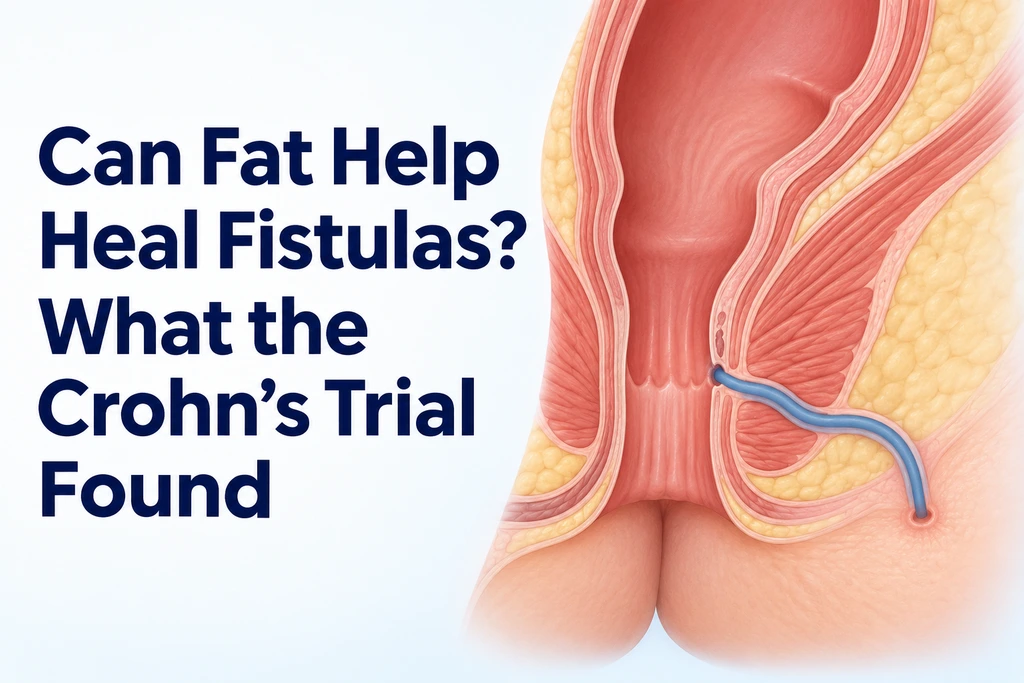
A perianal fistula is an abnormal tunnel between the gut and the skin near the anus. Doctors call the tunnel the fistula tract, and it usually drains through an external opening. These anal fistulas can come with painful pus pockets called perianal abscesses.
Seyfried and Herold reviewed fistulas in Crohn disease in Visceral Medicine in 2019. The review ties the fistulas to pain, fecal incontinence, and lower quality of life. It also puts the lifetime risk at 14% to 38% for patients with Crohn’s disease.
Standard care combines biological therapy with surgical drainage. Doctors often add seton placement, which leaves a drainage thread in the tract.
Crohn’s disease is a type of inflammatory bowel disease. Biologics help, but a 2018 Annals of Gastroenterology review calls their results in fistulizing disease modest.
How Did the ATTIC Trial Test Fat Injection?
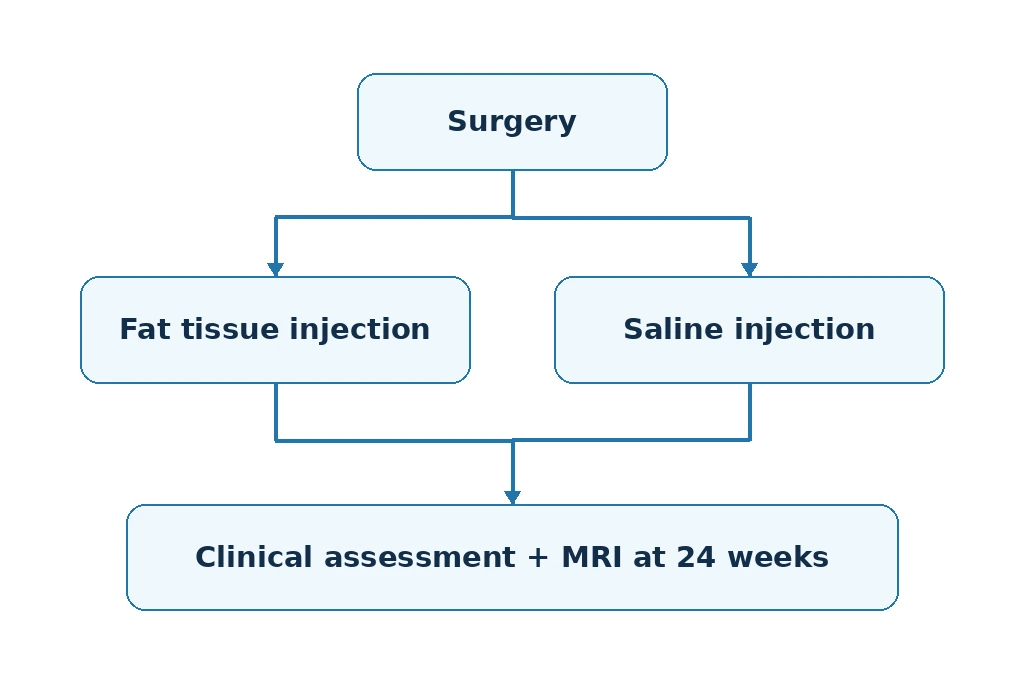
ATTIC compared surgery plus injected fat against surgery plus saline. Laureti and colleagues ran this phase 3 trial at six Italian hospitals, per PubMed Central’s ATTIC trial report. They randomly assigned 80 adults between January 2023 and April 2024.
Each adult had a complex fistula that resisted standard care. The trial excluded people who could not supply at least 60 milliliters of fat by liposuction.
Surgeons first cut away diseased tissue around the fistula tract in a cone-like shape. The fat group then received fat tissue broken into tiny pieces, which a Lipogems device prepared during surgery. Researchers hope such fat may support tissue repair, but ATTIC did not test how it works.
Controls had the internal opening sutured, a saline injection, and sham liposuction. Patients and most investigators stayed masked, though the operating surgeons did not.
The main goal was combined remission at 24 weeks. That meant no drainage from any treated external opening and no fluid collection over 3 millimeters on MRI.
Crohn’s Fistula Trial: New Fat Treatment Improved Healing on MRI
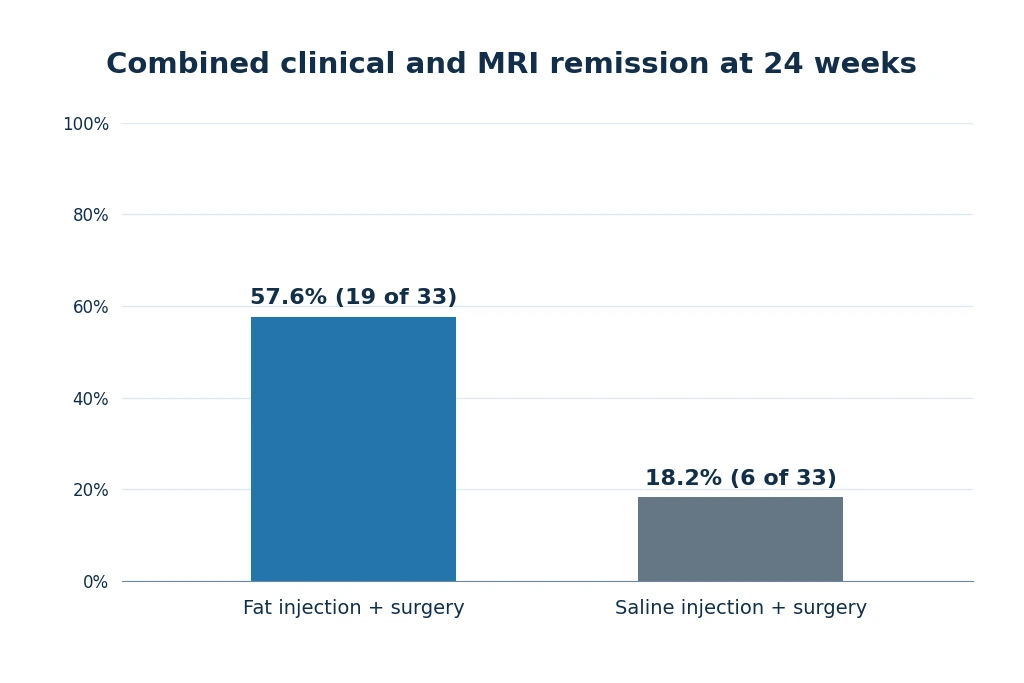
Fat injection raised combined remission to 57.6% from 18.2% at 24 weeks. That means 19 of 33 patients in the fat group reached remission, versus 6 of 33 in the control group. Chance is an unlikely explanation for the gap (risk ratio 3.17; p = 0.004).
A risk ratio of 3.17 means fat-group patients were about three times as likely to reach combined remission. The 95% confidence interval runs from 1.45 to 6.91, so the true effect remains uncertain.
Combined remission is the trial’s stricter test of complete fistula healing. Clinical remission measures fistula closure at the skin. It reached 78.8% with fat and about 55% with saline (p = 0.044).
Clinical response and C-reactive protein levels showed no clear difference between groups. Scores for quality of life and perianal disease activity improved in both groups without a clear gap. A work-productivity score was lower with fat (median 0% versus 20%; p = 0.014).
Surgery alone clearly helped, as the authors noted. Yet fat added more fistula healing on MRI. So the headline “Crohn’s fistula trial: new fat treatment improved healing” rests mainly on imaging-confirmed results.

How Safe Was the Fat Injection?
Overall adverse events looked similar between groups, but one serious stroke deserves attention. Any adverse event affected 4 of 37 fat-group patients (10.8%) versus 3 of 37 controls (8.1%). Serious events totaled 1 versus 2, and the trial reported no infections or misplaced tissue growth.
One fat-group patient had an ischemic stroke after surgery, which the authors rated as possibly related. Imaging showed an undiagnosed brain blood vessel malformation, and the authors saw no clear sign of fat embolism. However, they could not exclude a link.
The patient went home with lasting loss of part of the visual field and did not finish the study.

What Limits the ATTIC Findings?
Short follow-up, sponsor involvement, and a strong control response limit what the results prove. The trial measured efficacy only at 24 weeks, so nobody knows whether healing lasts over the long term. Dropout also exceeded the expected 10%, partly after three patients withdrew following Crohn’s flare-ups.
Lipogems International, which makes the device, funded the trial, supplied the devices, and ran the central database. The team excluded four control patients after random assignment because their fistulas did not meet the criteria. Analysts also reread some charts after unblinding, though the authors say this did not change outcome assessment.
Entry required at least a year of biologic treatment, yet three patients had not received one. Independent replication would strengthen the case.
How Does Fat Injection Compare With Earlier Cell Therapies?
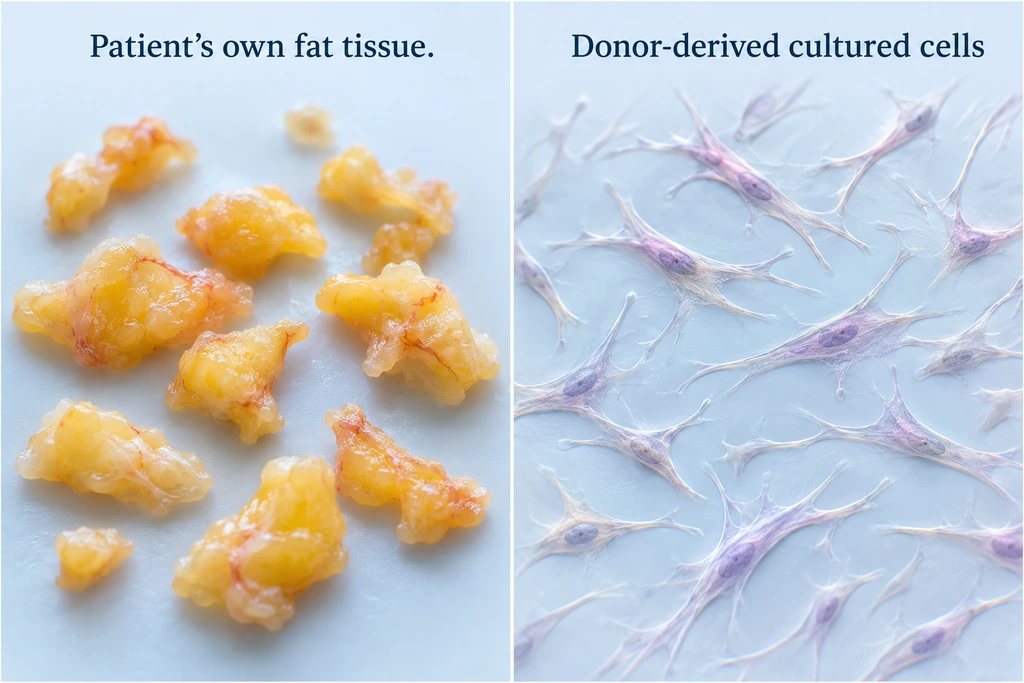
ATTIC uses the patient’s own fat, whereas the earlier product darvadstrocel used donor cells. Darvadstrocel, sold as Alofisel, contained mesenchymal stem cells from donor fat. EMA’s Alofisel withdrawal notice says its 568-patient trial, ADMIRE-CD II, failed to beat placebo.
No new patients could receive Alofisel in the EU after December 13, 2024. Cyrona’s review of phase 3 MSC trials covers that story in detail. Readers who follow stem cell therapy for Crohn’s disease can also see stem cell treatment beyond biologics.
ATTIC tests a different treatment approach. It injects tissue processed during surgery, not a laboratory-grown, adipose-derived stem cell product. Because each approach has its own evidence, ADMIRE-CD II results do not automatically apply to ATTIC.

What Should Patients Take From This Trial?
Patients should see this result as promising but early. Standard drainage and biologic care remain the established path for most people. Any new option deserves a review with a colorectal surgeon and a gut specialist.
The headline “Crohn’s fistula trial: new fat treatment improved healing” describes a selected group followed for 24 weeks. Larger independent studies must show how long healing lasts and whether repeat injections help. Meanwhile, patients can read Cyrona’s overview of Crohn’s disease stem cell options before talking with their doctors.
Frequently Asked Questions
What is the best treatment for Crohn’s fistulas?
No single option fits everyone. Specialists usually combine surgical drainage with biological therapy and tailor the plan to each fistula. Only one phase 3 trial has tested fat injection so far, so its evidence is still early.
Is ATTIC the latest breakthrough in Crohn’s treatment?
ATTIC adds new evidence for fistulas, not a breakthrough for Crohn’s disease overall. It tested one procedure in perianal fistulas and followed patients for 24 weeks.
Can doctors cure Crohn’s disease?
No. According to NIDDK’s Crohn’s treatment overview, medicines do not cure Crohn’s disease, and surgery will not either. Treatment aims to lower inflammation, prevent flares, and keep symptoms in remission.