Key Takeaways
- Autism stem cell therapy remains experimental, and no trial has shown that it improves core autism symptoms.
- A 2020 trial of 180 children found no overall social gain after one cord blood infusion.
- A 2013 trial of 37 children in China reported differences in autism ratings, but it did not assign children by chance.
- Malaysia’s National Pharmaceutical Regulatory Agency says most stem cell based therapies fall under its registration framework (second edition, September 2025).
- The Centers for Disease Control and Prevention says behavioral approaches have the most evidence for treating autism.
Estimated read: 8 min
Clinics in Malaysia advertise autism stem cell therapy to parents. Yet a 2020 trial of 180 children found no overall social gain from one cord blood infusion. This checklist therefore explains what the research shows, how Malaysian rules apply, and what to ask before you travel.
What Is Autism Stem Cell Therapy?
Autism stem cell therapy is an experimental treatment. It uses cells from umbilical cord tissue, cord blood or bone marrow, and researchers watch for changes in symptoms. This work belongs to regenerative medicine, a field that studies how cells might repair or support the body.
Autism spectrum disorder is a developmental condition that affects communication, social interaction and behavior. Some researchers are studying whether the immune system plays a part in it. The idea is that cells may calm inflammation and lead to reduced neuroinflammation.
However, no trial has confirmed this in children. Cyrona Cell explains how researchers think the cells work in a separate article.
Which Types of Stem Cells Have Researchers Tested?
Trials in children with autism have tested three types of stem cells: cord blood cells, cord tissue cells and bone marrow cells.
- Cord blood cells: blood left in the umbilical cord after birth, which holds blood cells and immune cells.
- Cord tissue cells: mesenchymal stem cells (MSCs), which may calm inflammation. Bone marrow holds similar cells. Some programs describe their cells as umbilical cord derived.
- Bone marrow cells: cells taken from the marrow of the child or a donor.
Because each type behaves differently, results from one do not carry over to another. Ask any provider which exact cell product it uses.
What Do Clinical Trials Show for Autism?
Published clinical trials of cells for autism report short-term safety but have not shown better social skills. The two trials below differ in design, cell type and size, so you cannot combine their results.
What Did the 2020 Trial of 180 Children Find?
A 2020 trial in the Journal of Pediatrics found no social skills gain after one cord blood infusion. It enrolled 180 children aged 2 to 7, with 56 getting their own cord blood and 63 donor cord blood. Another 61 received a placebo, which is a dummy infusion.
Neither families nor researchers knew who received what, and the team checked results after six months. The infusions were safe and well tolerated. Autism symptoms and word skills also showed no overall gain, and the authors called for more research.
What Did the 2013 Trial in China Find?
A 2013 trial of 37 children in China found different autism ratings at 24 weeks. Some children received cell infusions plus rehabilitation, while others had rehabilitation alone. Its authors also reported no severe side effects.
Children received four weekly infusions of cord blood cells, with or without cord tissue cells. However, the trial did not assign children by chance, and families knew who received cells. Because each group held only 9 to 14 children, the results cannot show that the cells caused the change.
| Study | Who took part | What happened | What it means |
|---|---|---|---|
| 2020 trial, Journal of Pediatrics | 180 children aged 2 to 7, with a placebo group | No overall social gain at six months | A placebo comparison found no overall benefit |
| 2013 trial in China | 37 children, 14 on rehabilitation alone | Autism ratings differed from the rehabilitation-only group at 24 weeks | Small, with no chance-based grouping |
Cyrona Cell’s article on what science shows for autism gives more background on the open questions.

Is Autism Stem Cell Therapy Approved in Malaysia?
Approval in Malaysia depends on the exact cell product. The National Pharmaceutical Regulatory Agency (NPRA) sits under the Ministry of Health and regulates stem cell products. Its September 2025 guideline says most, if not all, stem cell based therapies follow its registration rules.
Under the NPRA cell and gene therapy guideline, products that miss its narrow low-risk criteria fall into Class II. The Drug Control Authority regulates these as biologics. It also requires a trial import license or exemption before cells enter Malaysia for research.
The guideline explains how companies register products. However, it is not a list of cleared treatments, so it does not tell parents whether a given product suits autism. Ask any provider for the registration status of the exact cell product, in writing.

What Are the Risks and Unknowns of Autism Stem Cell Therapy?
The main risk of autism stem cell therapy is uncertainty, because trials followed children for months, not years.
- Safety: The 2020 trial called cord blood infusion safe and well tolerated at six months. The 2013 trial reported no severe side effects at 24 weeks.
- Follow-up: because neither trial tracked children for years, long-term effects remain unknown.
- Dose: the 2013 trial gave four weekly infusions, while the 2020 trial gave one.
- Cell source: because cord blood differs from other cells, its results do not apply to cord tissue or bone marrow cells.
- Cost and travel: treatment abroad also adds travel costs and time away from current therapy.
Researchers still do not know which children benefit when treating children with cells. Therefore, ask your child’s own doctor to review any plan before you travel.

Parent Checklist: What Should You Ask Before Choosing a Program?
Parents should ask about the cell product, the evidence and the full cost in writing before agreeing to any program.
Cyrona Cell has a separate guide to red flags in stem cell programs for autism. This section covers practical questions.
What Should Parents Ask About the Cells and Treatment Protocol?
Ask for the exact cell source, dose and route in writing, together with the written treatment protocol.
- Cell type and source: cord blood, cord tissue or bone marrow, and whether donor cells or the child’s own.
- Dose and route: how many cells, and whether doctors give them by vein or into the spinal fluid.
- Batch testing: records of the quality and sterility checks for each batch. One Cyrona Cell article summarises a study on cell batch quality testing in another condition.
- Schedule: the number of infusions, their timing and the follow-up visits.
- Registration: written details of the registration route for the exact product.
What Should Parents Ask About Evidence, Consent and Cost?
Ask for published studies that tested the same cell product, dose and group of children.
- Evidence: peer-reviewed human studies, because stories from other families cannot show that cells caused a change.
- Consent: a written form that lists the risks and says the treatment is experimental.
- Independent view: a second opinion from your child’s own doctor or other medical professionals on the care team.
- Cost: a written breakdown of cells, medical fees, repeat doses and travel. Cyrona Cell explains what affects treatment costs in Malaysia in more detail.
- Goals: set a few measurable goals before treatment, so that you can compare later changes with a starting point.
What Should You Prepare Before Traveling to Malaysia?
First, gather your child’s medical records and current therapy reports before the first consultation.
- Diagnosis reports from the doctor who assessed your child.
- Summaries from speech, occupational therapy and behavioral therapy providers.
- A list of medicines, supplements, allergies, and any sleep, digestion or seizure history.
- School or developmental support notes.
- Your goals for quality of life at home, such as sleep, communication or daily routines.
Cyrona Cell arranges treatment at partner facilities in Kuala Lumpur. Therefore, ask which facility and which doctor would treat your child.
How Does Stem Cell Treatment Fit With Other Autism Therapies?
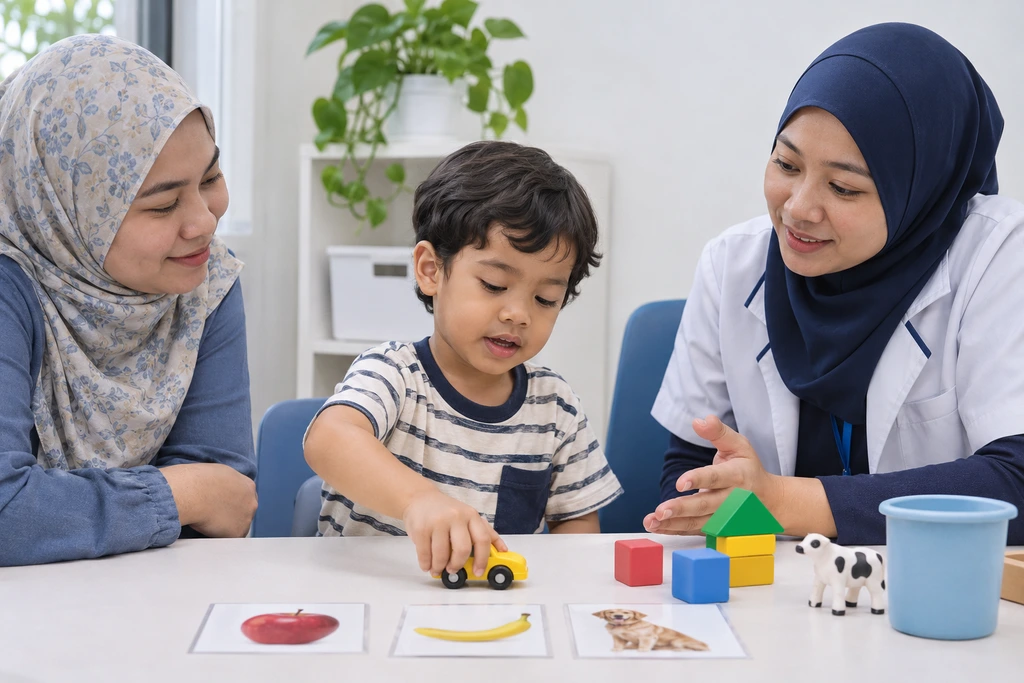
A stem cell treatment, where offered, sits beside standard autism care and does not replace it. The Centers for Disease Control and Prevention (CDC) outlines standard care in its overview of autism treatment. Behavioral approaches have the most evidence for treating symptoms, the CDC says.
The CDC also says no medicine addresses the core symptoms. In the 2013 trial, for example, cells came with rehabilitation. No trial described here tested cells as a replacement for therapy.
Cyrona Cell explains how cells fit with behavior and speech therapy in a separate article. Nobody should stop or change a medicine or therapy without their own doctor’s advice.
Parents who want to see how Cyrona Cell describes its autism program can read its autism treatment page, then ask the team their questions.
Frequently Asked Questions About Autism Stem Cell Therapy
Can Stem Cell Therapy Help an Autistic Child?
No trial has shown that stem cells improve core autism symptoms across children. One 2020 trial of 180 children found no overall social gain. A smaller 2013 trial reported differences in autism ratings, but its design cannot tie them to the cells.
Is Stem Cell Therapy Approved in Malaysia?
Malaysia regulates stem cell products through the NPRA, and the answer depends on the exact product. The September 2025 NPRA guideline says most, if not all, stem cell based therapies follow its rules. Ask any provider for written registration details.
What Are the Potential Downsides of Stem Cell Therapy?
The main downside is uncertainty, because trials followed children for only 24 weeks to six months. Researchers also found no overall benefit in the larger 2020 trial. Other downsides also include unknown long-term effects, travel costs and time away from current therapy.
How Much Does Stem Cell Treatment Cost in Malaysia?
No single price fits every child, because costs vary by program, cell type, number of infusions, and the care included. Ask for a written breakdown of cells, medical fees, repeat doses and travel before you agree to anything.
Talk to Cyrona Cell About Autism Stem Cell Therapy in Malaysia
Parents weighing autism stem cell therapy can message the Cyrona Cell team on WhatsApp and share their child’s reports. The team can explain what the research shows. It can also say whether treatment at a partner facility in Kuala Lumpur may be suitable.
You can also email info@cyronacell.com with questions about the cells, the process or travel. This article is for information only and does not replace advice from your child’s own doctor.