Key Takeaways
- The Centers for Disease Control and Prevention (CDC) says behavioral approaches have the most evidence for treating autism, while stem cell therapy for autism remains experimental.
- A 2020 randomized trial of 180 children found that one cord blood infusion did not improve overall social skills.
- A 2013 trial of 37 children in China compared cells plus rehabilitation with rehabilitation alone, but it did not assign children by chance.
- In a 2024 update, the United States Food and Drug Administration says no stem cell product is approved to treat autism.
- Nobody should stop a therapy or medicine without their own doctor’s advice.
Estimated read: 8 min
Parents often ask whether stem cells for autism could replace speech or behavior therapy. So far, research points the other way because trials tested cells only as an add-on, and the results remain unproven. This guide explains how stem cell therapy fits with other therapies.
What Are Stem Cells for Autism?
Stem cells for autism are an experimental approach that gives children cells from umbilical cord blood or tissue. Researchers then watch for symptom changes. A related Cyrona Cell article covers what science shows for autism, including what remains experimental.
Autism is a group of conditions, called autism spectrum disorders (ASDs), that affect communication, learning, and social connection. A 2013 trial team in China suggested that autism involves immune system and nervous system imbalances. That team then tested cell transplants in children.
How Might Stem Cell Therapy Work Alongside Other Therapies?
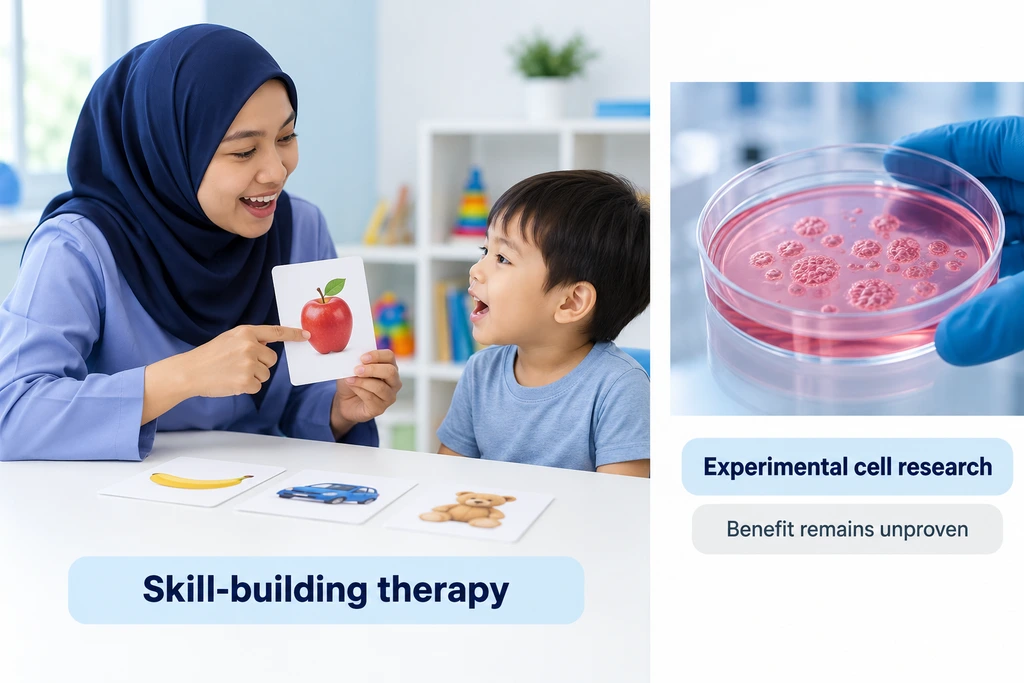
Behavior and speech therapies teach skills, while researchers test stem cells for autism to calm inflammation.
Researchers hope a stem cell based treatment can reduce inflammation, which may affect the immune system and brain cells. However, this remains a hypothesis that trials have not confirmed. Cyrona Cell’s guide explains in more detail how stem cell therapy may work.
In practice, the two approaches do different jobs:
- Therapy: teaches skills such as language, movement, and independence through steady practice.
- Cells: tested as one infusion or a short series of infusions that aim to act on biology, not to teach skills.
- Combined care: the trials that tested both gave cells in addition to rehabilitation or education.

What Do Standard Therapies for Autism Include?
The Centers for Disease Control and Prevention (CDC) groups autism therapies into behavioral, developmental, educational, social, and psychological approaches. Its overview of autism treatment approaches says behavioral approaches have the most evidence for treating symptoms. The page also notes that some treatments combine more than one approach.
- Behavioral: changes behavior by studying what triggers it and what follows it.
- Developmental: teaches skills, such as speech therapy for communication and therapy for daily living skills.
- Educational: classroom approaches that use routines and visual supports.
- Social and psychological: builds social skills and helps with anxiety or depression.
The CDC page, reviewed in May 2024, also says no medication treats the core symptoms of autism. It advises families to talk to a doctor before starting any complementary or alternative treatment. That advice also covers other options, including stem cell therapy.
Nobody should stop or change a medicine or therapy without their own doctor’s advice.
Which Types of Stem Cells Have Researchers Tested for Autism?
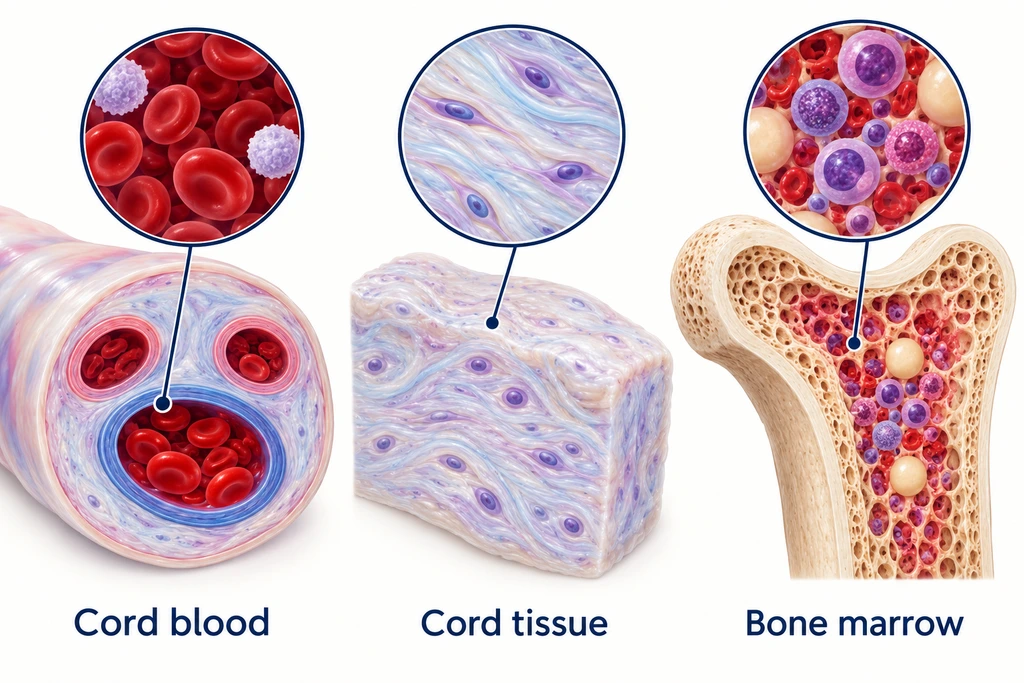
Researchers have tested three main types of stem cells in children with autism, and the table below sets them side by side.
| Cell type | Where it comes from | Example trial |
|---|---|---|
| Cord blood cells | Blood left in the umbilical cord after birth | 2020 trial of 180 children in the United States |
| Cord tissue cells | Tissue of the umbilical cord | 2013 trial of 37 children in China, given with cord blood cells |
| Bone marrow cells | The child’s own bone marrow | 2021 trial of 30 children in Vietnam |
Mesenchymal stem cells come from sources such as cord tissue and release signals that may calm inflammation. Cord blood holds blood cells, including immune cells, while cord tissue is the source of these mesenchymal cells.
Each type of cell behaves differently. Because the cell types differ, results from one do not apply to another.
What Did the 2020 Cord Blood Trial Find for Autism?
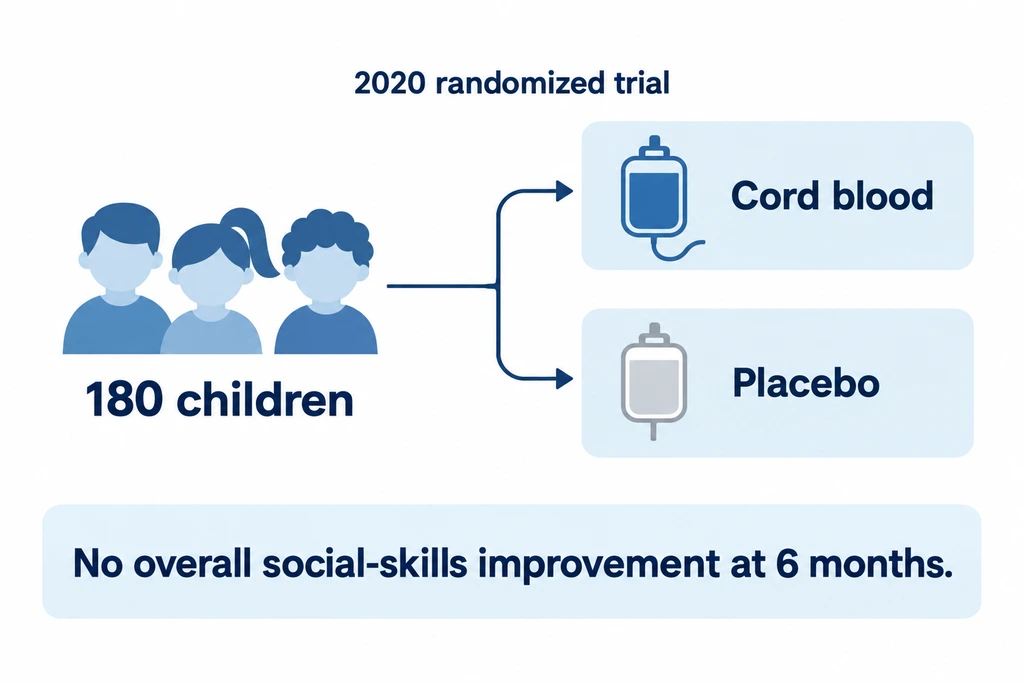
A 2020 randomized trial of 180 children aged 2 to 7 tested one cord blood infusion. It found no overall gain in social skills or autism symptoms after six months. The infusion was safe and well tolerated, but the authors called for more research.
Chance decided who received cord blood and who received a placebo, a dummy infusion. Neither families nor researchers knew which. Among children without intellectual disability, more of those given donor cord blood improved on one doctor-rated scale.
However, that difference was not large enough to rule out chance. Researchers at Duke University ran the trial, and the Journal of Pediatrics published it in 2020.
What Happened When Researchers Added Cells to Therapy?
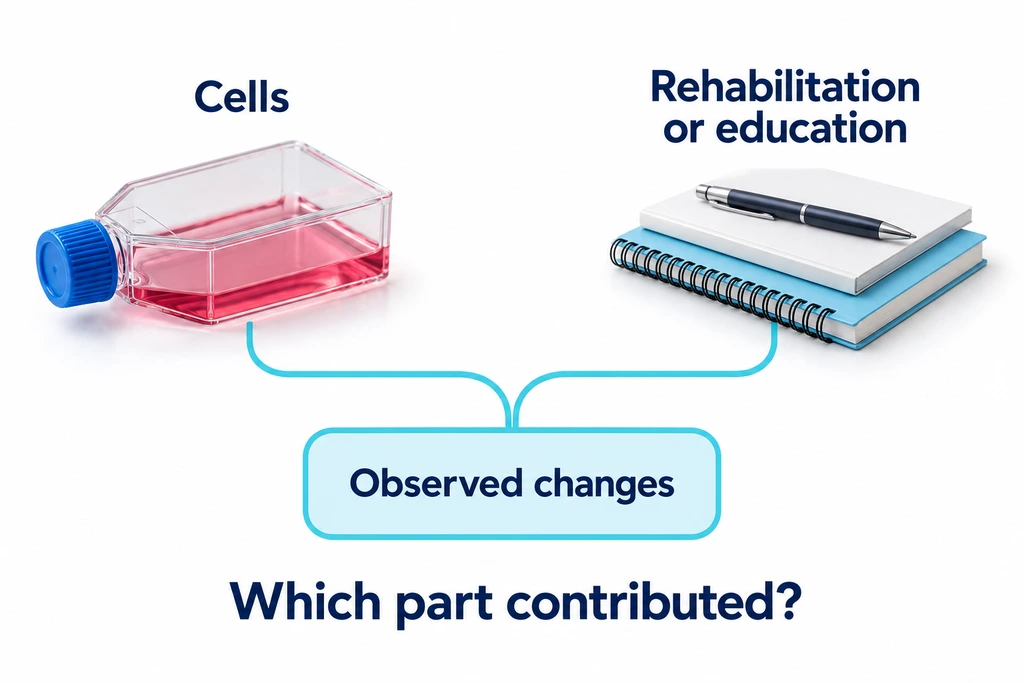
Stem cell research on combined care remains limited. Only a few small trials gave cells with rehabilitation or education.
A 2013 trial in China enrolled 37 children, and 14 of them received rehabilitation alone as a comparison. Autism ratings in both cell groups differed from that comparison group 24 weeks later. However, the trial was small and not randomized, so other differences between groups may have played a role.
A 2021 trial in Vietnam gave 30 children their own bone marrow cells, followed by an eight-week education program. The median score on an autism severity scale was 50 before treatment and 46.5 afterward. Because the program combined cells with education, the trial cannot show which part helped.
| Study | Who took part | What happened | What it means |
|---|---|---|---|
| 2013 trial in China | 37 children, 14 with rehabilitation alone | Ratings differed from the rehabilitation-only group at 24 weeks | Small and not randomized |
| 2020 trial from Duke | 180 children aged 2 to 7 | No overall gain in social skills at 6 months | Randomized, with a placebo |
| 2021 trial in Vietnam | 30 children | Median severity score 50 before, 46.5 after | Cells and education given together |
The authors of both combined trials reported no severe side effects linked to the cells. Together, these trials cannot say whether adding cells improves on therapy alone.

What Are the Risks and Unknowns of Stem Cell Treatments?
The main risk of stem cell treatments for autism is uncertainty, because trials followed children for months, not years.
- Cell source: different trials tested cord blood, cord tissue, and bone marrow cells.
- Route: cells were delivered via vein or intrathecal infusion, into the fluid around the spinal cord.
- Dose and timing: trials used one infusion, two procedures, or four weekly infusions.
- Who benefits: the Duke authors called for more research to find which children might benefit.
The United States Food and Drug Administration (FDA) has not approved any stem cell product for autism. Its consumer alert on stem cell products, updated in April 2024, names autism among conditions with no approved product. According to the alert, the FDA has approved only blood-forming cells from cord blood for disorders that affect blood production.
Families who see stem cell treatments advertised for autism can also read about red flags in stem cell programs.
How Can Families Fit Cell Research and Standard Care Together?
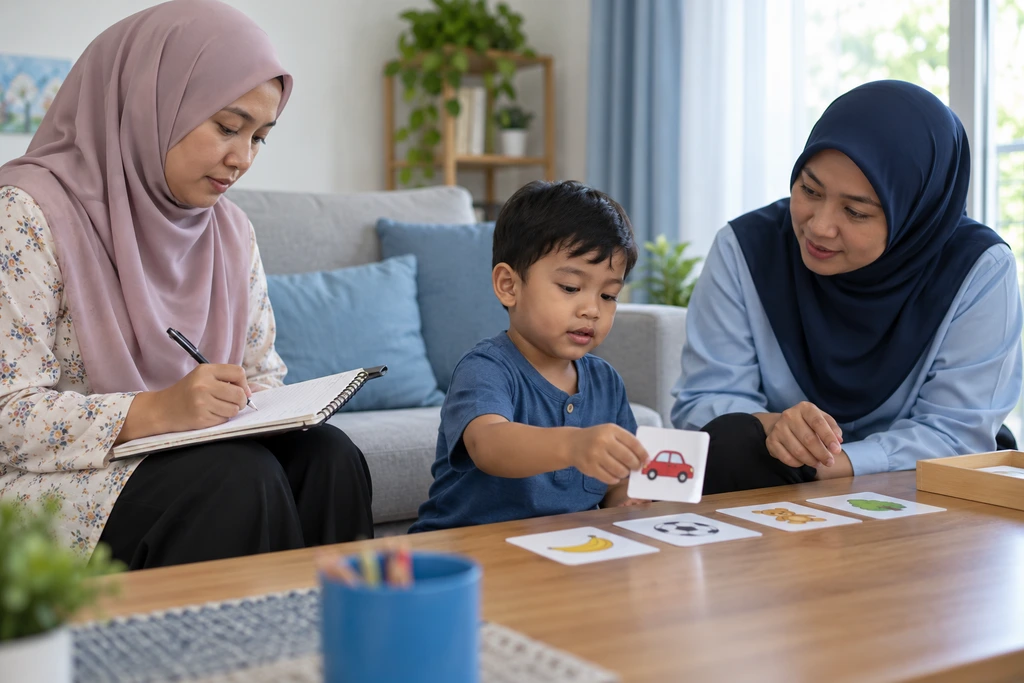
Families weighing stem cell therapy for autism should keep standard care in place. The cells remain an unproven add-on.
First, ask the therapy team to record baseline skills. Then track a few measures over several months so that you can compare changes with that starting point.
- Speech and communication, such as words, gestures, and eye contact.
- Note whether play, learning, and social interaction change over time.
- Note whether sleep, mood, and daily routines change over time.
- Any new symptoms after treatment.
A related Cyrona Cell article explains how rehab fits with cell therapy in cerebral palsy. Keep a simple list of each therapy, how often it happens, and who runs it. Ask any provider for written records of the cell source, dose, and route.
Scientific research on stem cells for autism is still early. Those records help the child’s doctor weigh the evidence. Keep therapy and medicines unchanged unless that doctor advises otherwise.
To see how Cyrona Cell describes its process for families, read its page on stem cell therapy for autism.
Frequently Asked Questions About Stem Cells for Autism
How Do They Do Stem Cell Therapy for Autism?
In trials of stem cell therapy for autism, researchers gave cells through a vein or into the fluid around the spinal cord. The 2020 Duke trial used one infusion, while the 2013 trial in China gave four weekly infusions. Because doses, routes, and cell types differed, no standard method exists.
What Is the Most Successful Treatment for Autism?
The CDC says behavioral approaches have the most evidence for treating autism symptoms. Providers often pair behavioral approaches with developmental ones, such as speech and language therapy. Stem cell therapy is not an established option.
What Is the Success Rate of Stem Cell Therapy in Treating Autism?
No reliable success rate exists for stem cell therapy in autism, according to published trials. The 2020 randomized trial of 180 children found no overall gain in social skills. Smaller trials, however, reported changes in autism ratings, and their designs limit what they can show.
Can Stem Cells Replace Speech or Behavior Therapy for Autism?
No trial described here tested stem cells as a replacement for therapy. Trials that combined both gave cells alongside rehabilitation or education. Families should keep current therapy unless their own doctor advises otherwise.
Talk With the Cyrona Cell Team About Stem Cells for Autism
Parents weighing stem cells for autism can ask the Cyrona Cell team their questions by phone or on WhatsApp. Share your child’s reports and current therapy plan. The team can then explain what the research shows. The team can also say whether treatment at a partner facility in Kuala Lumpur, Malaysia, may be suitable.
This article is for information and does not replace advice from your child’s own doctor.