
Key Takeaways
- One placental stem cell injection closed all 10 chronic foot ulcers within six months in a new first-in-human trial.
- The pilot study was small and had no placebo or comparison group, so it cannot prove the cells caused the healing.
- A larger placebo-controlled trial of placenta-derived cells showed no clear gain in its best subgroup.
- The Wake Forest team reported no treatment-related serious adverse events across 12 months of follow-up.
- Placental stem cell therapy for diabetic foot ulcers remains experimental, and standard wound care still comes first.
Estimated read: 5 min
This stem cell study for diabetic foot ulcers: early results show all 10 chronic wounds closed within six months. Wake Forest researchers used placenta-derived cells. However, the trial was small and had no control group.
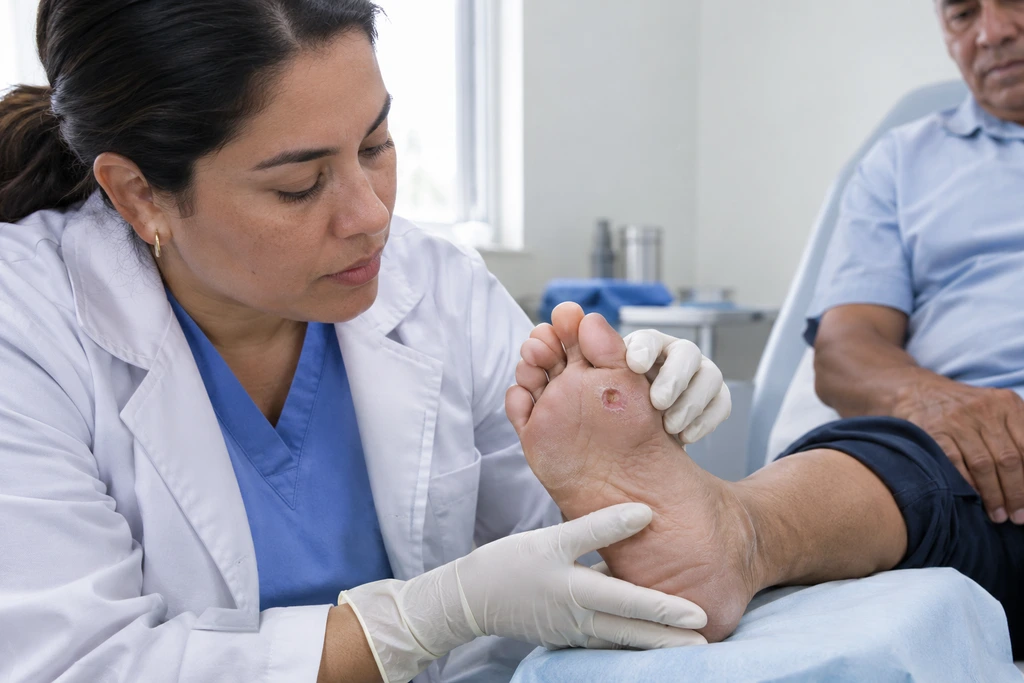
Stem Cell Study for Diabetic Foot Ulcers: Early Results From Nicaragua
One injection of placental cells led to complete wound closure in all 10 patients within six months. Wake Forest researchers led this pilot study, with Anthony Atala, M.D., as corresponding author. News-Medical’s report on the study says it appeared in Stem Cells Translational Medicine in 2026.
The 10 participants were adults aged 40 to 74. Their diabetic foot ulcers had stayed open for at least three months despite standard care. Each patient then received one injection of 30, 40, or 60 million cells.
Light touch and vibration sensing also improved in the treated foot. By 12 months, all but one patient had normal protective sensation. The trial registry notes that nerve damage, called peripheral neuropathy, helps set the stage for foot ulcers.
However, blood flow showed no clear overall improvement. Some patients gained flow while others lost it, so the foot wounds healed without a consistent gain in circulation.
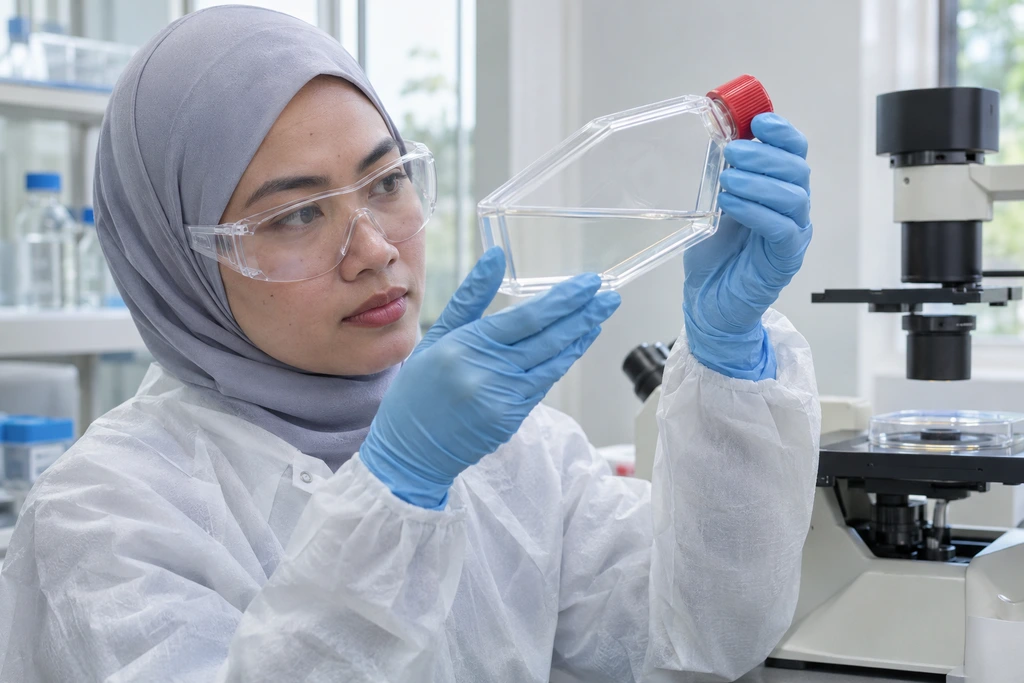
How Placental Cells Differ From Other Wound Treatments
Placental cells are donor mesenchymal stem cells. Researchers study them for their ability to promote wound healing and rebuild blood vessels. Wake Forest prepared the cells from its own cell bank.
In 2021, the same group tried a different source in 63 patients. Patients received cells from their own fat, including adipose derived mesenchymal stem cells and other cell types. That Stem Cells Translational Medicine report found full closure in 51 of 59 evaluated patients at six months.
A 2024 Frontiers’ stem cell therapy review covers cells from bone marrow and fat. Most of that work took place in labs or animals, not people.
Some researchers use exosomes instead of cells. Exosomes are tiny vesicles that carry repair signals. Our exosome versus stem cell therapy guide explains the difference.
Quality control also matters. Because potency can vary between batches, cell quality testing is a growing focus for cell products.

What Larger Trials Show So Far
Larger trials add context to the stem cell study for diabetic foot ulcers: early results are encouraging, not conclusive. Placental cell injections did not clearly beat placebo in one trial. In contrast, placental membrane products did improve early healing.
The International Wound Journal’s PDA-002 trial randomized 159 adults to placenta-derived cells or placebo. Patients received 3, 10, or 30 million cells in two injections. The lowest dose did best in patients with peripheral artery disease.
In that group, 38.5% reached wound closure by three months, versus 22.6% on placebo. However, chance could explain that gap (p = 0.25), so the cells did not significantly improve closure there. Higher doses did not beat the lowest dose in this subgroup.
Safety signals were mixed. Among those patients, major limb amputation occurred in 3 of 26 on the lowest dose and none on placebo. By comparison, new gangrene appeared less often on the lowest dose (3.8% versus 16.1%).
A 2026 pooled review in International Wound Journal combined nine trials with 944 participants. Placental products plus standard care closed 59.0% of ulcers by 12 weeks, versus 35.8% with standard care alone. Many such products are grafts or membranes placed on the wound, unlike injected cells, and certainty was moderate.

Safety and Limits of the Evidence
Reported safety was good over 12 months, but the evidence is still too early to guide care. In a stem cell study for diabetic foot ulcers, early results found no serious harm from the cells. Meanwhile, the larger trial found drug-related adverse events in 12.3% of cell patients and 15.6% of placebo patients.
However, the Wake Forest trial was a first-in-human safety study with one treatment and no comparison group. Without a placebo arm, no one can separate the cells’ effect from good wound care. News-Medical says the field still needs a larger controlled study.
Standard wound care therefore remains the base of treatment of diabetic foot ulcers. Whether placental cells can reliably treat diabetic foot ulcers is still unproven.

What Patients Should Take From These Early Results
The takeaway from the stem cell study for diabetic foot ulcers: early results are promising, not proof. Larger controlled trials must test whether placental cells truly speed ulcer healing. Those trials should also track patients longer, to see whether wounds reopen.
Until then, researchers cannot say how well the approach works. In the meantime, people with diabetic foot ulcers should keep following their wound care team’s plan. Anyone curious about placental stem cell therapy can ask a specialist about registered clinical trials.
FAQ
What is the success rate of stem cell therapy for diabetic foot ulcers?
No single success rate exists yet. The 10-patient pilot study closed every wound, yet the larger trial showed no clear gain in its best subgroup. For wider diabetes mellitus data, see diabetes stem cell success rates.
How long is recovery after a stem cell injection in the foot?
The reports reviewed did not describe downtime after injection. In the Wake Forest trial, wounds closed within six months and sensation improved by 12 months. However, no one can predict an individual timeline from ten patients.
How long can a diabetic foot ulcer take to heal?
Foot ulcers in diabetes often heal slowly. In the pooled review, only 35.8% of ulcers on standard care alone had closed by 12 weeks. Similarly, the Wake Forest patients had ulcers that stayed open for at least three months.