Key Takeaways
- A new human trial injected lab-grown heart muscle cells into 20 patients with advanced heart failure during bypass surgery.
- Patients who received the cells walked further, showed better heart blood flow, and had thicker heart muscle than those who had surgery alone.
- Pumping strength, scar size, and quality of life did not improve significantly, despite some headlines describing the trial as reversing heart failure.
- Every cell recipient developed an abnormal heart rhythm, and two needed treatment for a more serious rhythm problem.
- Researchers, including the study’s own authors, describe the results as early and exploratory, not proof the treatment works or is ready for wider use.
Estimated read: 5 min
A new clinical trial has tested something researchers have chased for over a decade. Doctors injected lab-grown heart muscle cells directly into a failing human heart. Nature Medicine published the trial on 19 August 2026. The results are genuinely notable, but not for the reason some early headlines suggested.
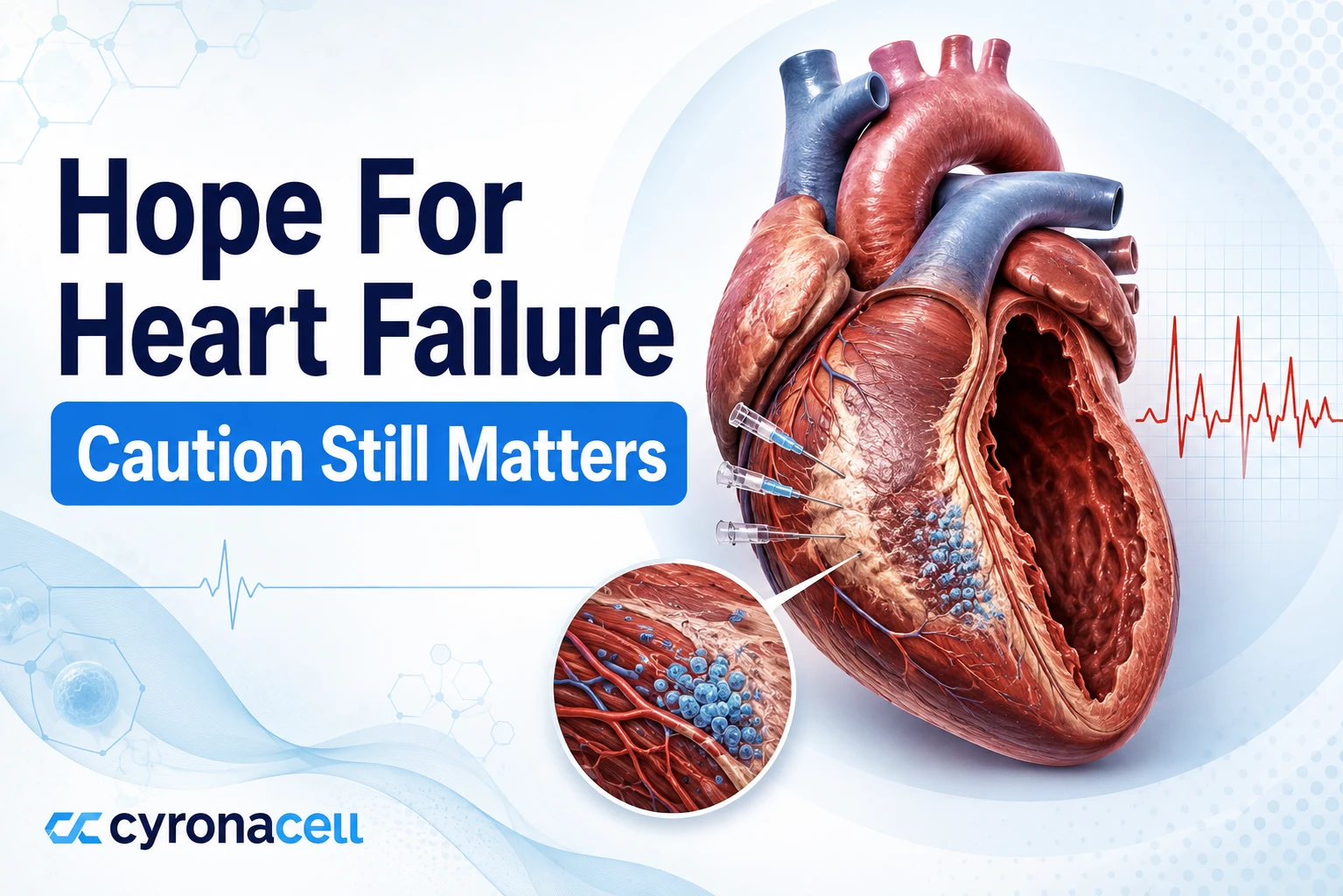
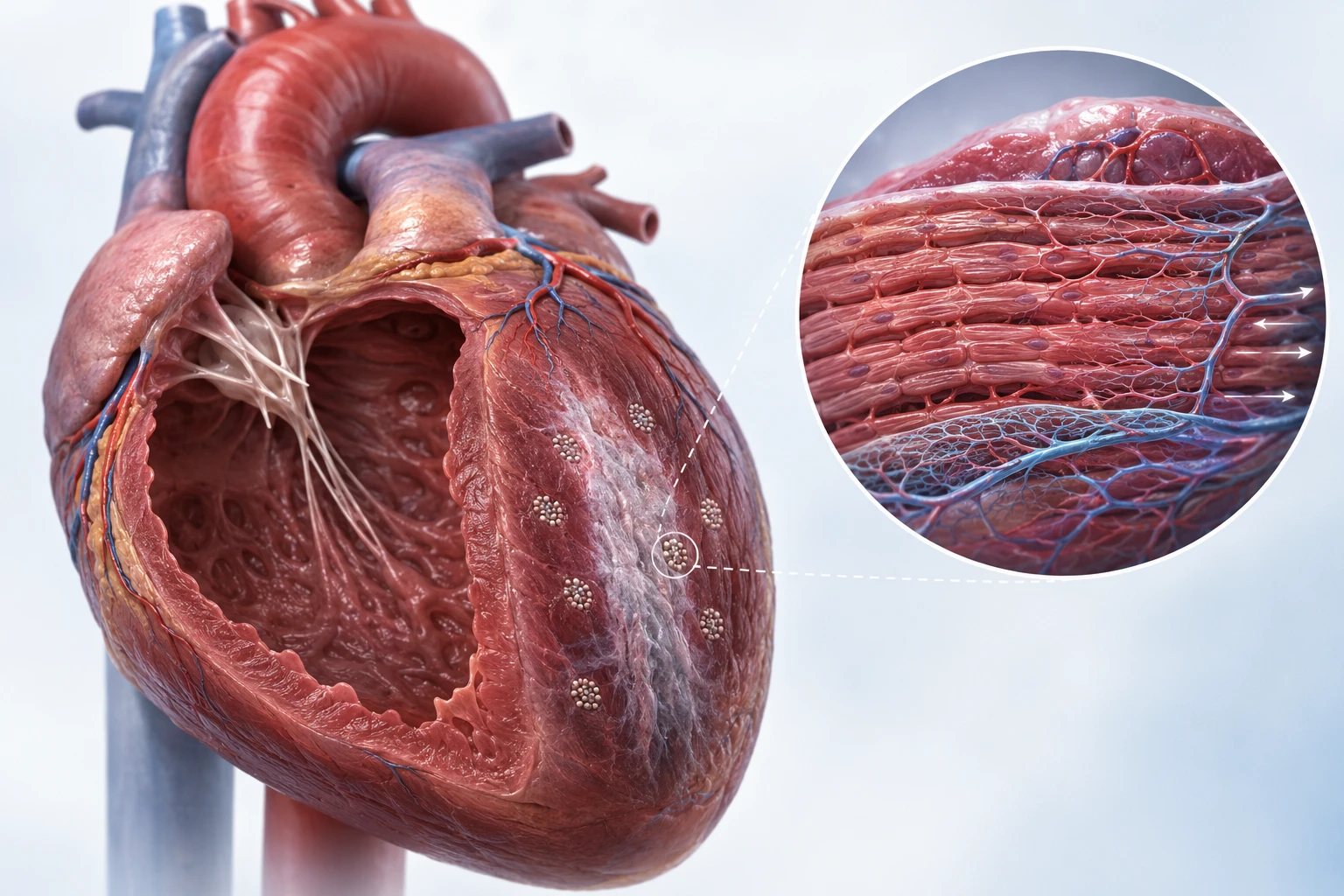
A team at Nanjing Drum Tower Hospital in China ran the study. Researchers randomized 20 patients with advanced heart disease into two groups. One group had bypass surgery alone. The other group also received an injection during that same operation. Surgeons used 200 million heart tissue cells grown from induced pluripotent stem cells.
Surgeons placed these cells at ten sites around each patient’s scarred, heart attack-damaged muscle.
What the study actually found
Patients who received the cells walked further in a standard six-minute test. Imaging showed better blood flow to their hearts. Muscle near the injection sites also grew thicker and contracted better than in patients who had surgery alone.
Some outside coverage described this as heart failure being “reversed.” The trial itself does not support that framing.
Doctors use left ventricular ejection fraction to measure pumping strength. This measure did not differ significantly between the two groups at 12 months. Scar size, heart failure class, and quality of life scores also showed no clear advantage for the cell treatment group.
The researchers were careful about this distinction. They called the trial an early, hypothesis-generating study, not final proof.
The safety finding that matters most
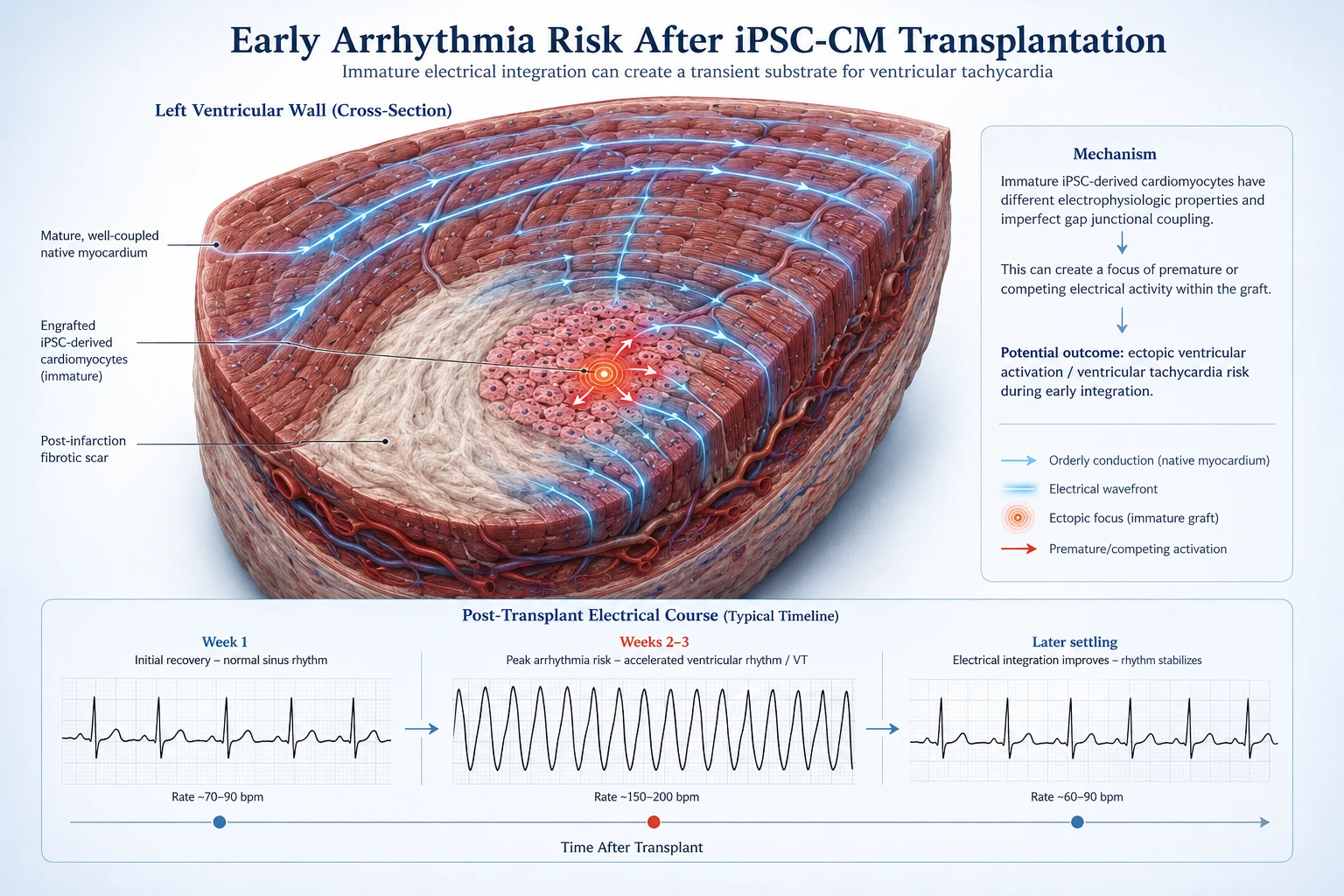
All ten patients who received the cell injections developed an abnormal heart rhythm. This began within the first week or two. Two patients needed cardioversion for a more serious, dangerously fast heart rhythm. Researchers who follow this field closely expected this pattern.
Large-animal studies have shown the same thing since 2016. Direct injection of immature heart cells repeatedly produces this pattern. The cells can integrate and improve function. They also tend to fire on their own rhythm for a period before settling down.
Researchers found no tumors in any patient at the one-year mark. That matters, since embryonic stem cells and other pluripotent-derived products have historically carried a theoretical risk of tumor formation. But the rhythm problem is the part of this story that a “reverses heart failure” headline leaves out.
How this fits into a longer research story
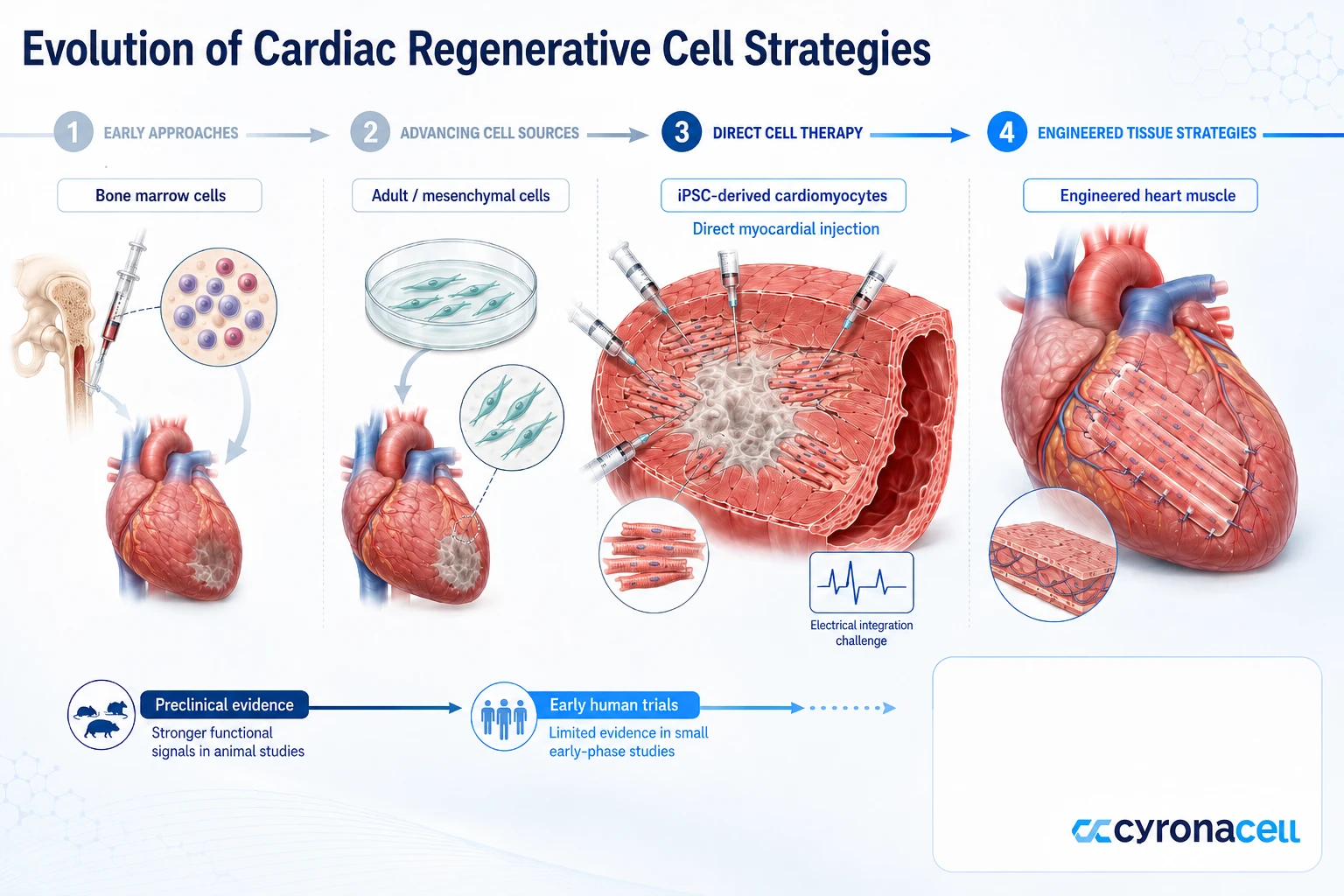
This is not the first attempt at cell therapy for heart failure. Stem cell therapy for the heart will not stop with this trial either. Bone marrow-derived cells were the first generation tried in humans. Doctors started using them in the early 2000s, with mixed and generally modest results.
Adult stem cells and mesenchymal cell types followed next. Researchers have long studied how stem cells heart tissue responds to each cell transplant approach.
A 2024 meta-analysis of 25 animal studies pooled results across many heart failure models. Pluripotent-derived heart cells improved ejection fraction by roughly 8.6 percentage points on average. This signal has consistently been far stronger in animals than what researchers have so far measured in people.
Researchers are also testing a separate, more cautious approach. Instead of injecting loose cells, some groups grow heart muscle cells into an engineered tissue patch. Surgeons place this patch on the heart’s outer surface during surgery.
A 2026 trial of this patch approach appeared in the New England Journal of Medicine. It reported improved wall thickness and a modest increase in ejection fraction in 20 patients. The rhythm profile was notably different and less dramatic than with direct injection.
Every patient in that study needed ongoing immune-suppressing medication. A donor supplied the cells, not the patient’s own body.
Both studies point toward the same open question in stem cell research. Can doctors add new heart muscle to a damaged heart without also adding a serious electrical risk? Does that new muscle help patients live longer, stay out of the hospital, or feel meaningfully better? Neither trial has answered these questions so far.
Why the field is still called early-stage
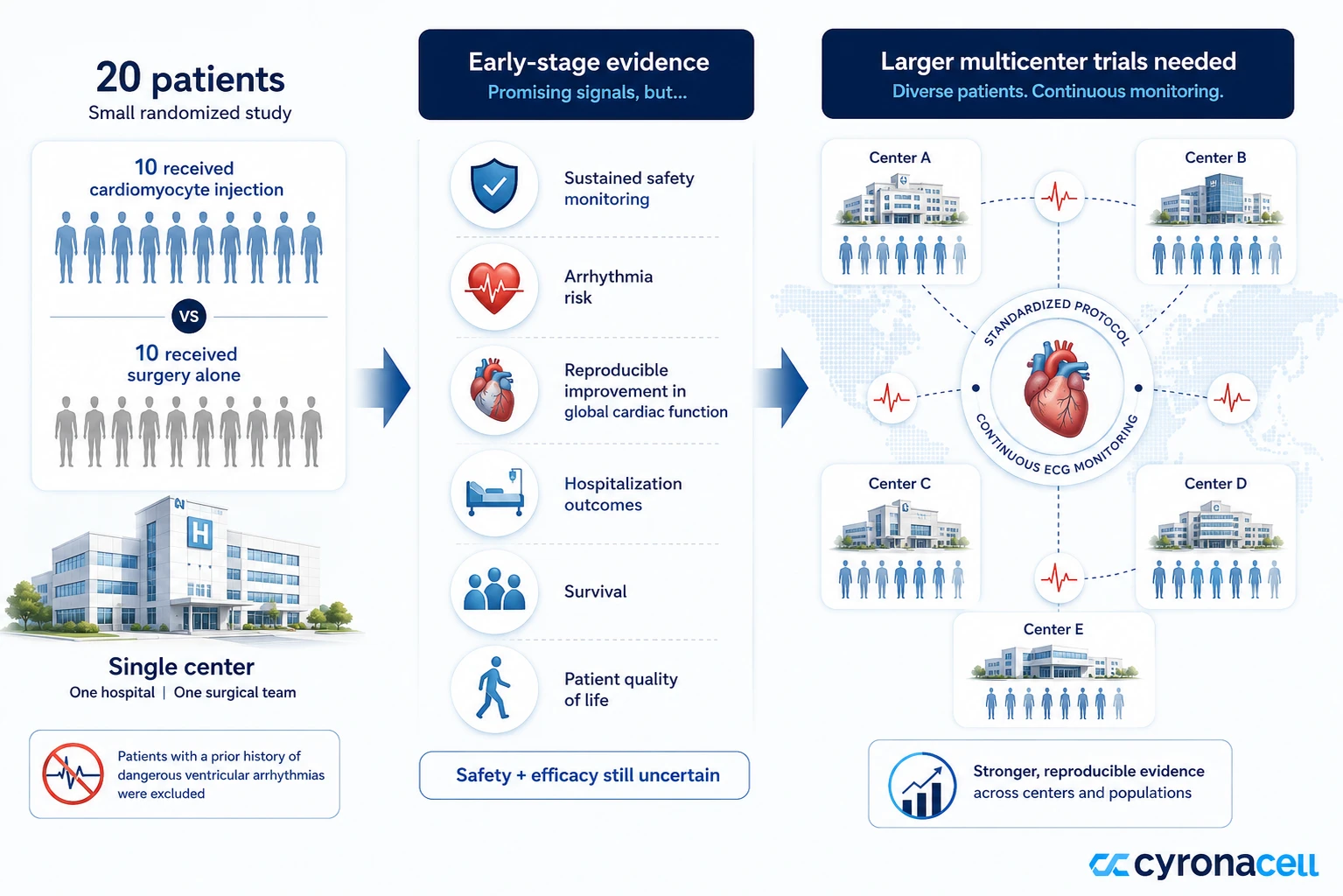
Both studies involved only 20 patients each and were conducted at a single medical center. In the Nanjing trial, patients and the surgical team knew who received the cells. Only the doctors who assessed outcomes afterward worked blind to that information.
The trial also excluded anyone with a prior history of dangerous heart rhythms. This exclusion likely made the safety results look better than they would in a broader, real-world population. Many patients with advanced heart failure do have that arrhythmia history.
Researchers in the field, including the study’s authors, generally agree on where things stand. Improving cardiac function with lab-grown heart cells has moved from a theoretical concept to a reality. Doctors can now show it happening in a small number of real patients.
Researchers have not yet shown that it works reliably or safely enough for routine use. Nor have they shown it works better than existing options. Medication, bypass surgery, and heart transplantation remain the standard choices for the sickest patients.
Multiple experts have called for larger, multi-center trials next. These should build in rhythm monitoring from day one, rather than starting a month after treatment.
Readers may also want to explore therapy for heart failure options more broadly. This includes where regenerative medicine and stem cell approaches currently stand for related joint and autoimmune conditions. Cyrona Cell’s overview of stem cell treatment for congestive heart failure provides a current landscape overview. It also explains what a realistic conversation with a specialist should include.
Frequently Asked Questions
What has the recent discovery about stem cells revealed?
The August 2026 trial showed that lab-grown heart muscle cells can survive inside a human heart after injection. They also produced measurable improvements in blood flow and exercise capacity. For the first time in humans, the trial confirmed a rhythm risk that animal studies had predicted for years.
What are the latest guidelines for treating heart failure in 2026?
Standard care remains the guideline-recommended approach, including medication, devices, and surgery where appropriate. Stem cell and heart muscle cell-based therapies remain investigational. Guidelines do not yet include them as routine treatment for heart failure.
What is the newest treatment for heart failure?
Beyond this trial, an engineered patch also reported results in 2026. Researchers are also running clinical research into other cell types and delivery methods. No regulator has yet approved these for routine use.
Can stem cells repair heart failure?
Early clinical studies suggest stem cell-derived heart tissue can integrate into damaged heart muscle. It can also improve some measures of function. No trial to date, though, has shown it repairs heart failure. None have shown it can restore normal pumping strength or replace standard treatment.