Key Takeaways
- Stem cells for psoriasis remain experimental, and the human evidence comes from very small studies.
- Cochrane’s living review found that biologic medicines cleared skin better than older tablets across 204 studies.
- A 2022 trial of 17 people found 8 had at least 40% skin improvement after cord cell infusions, with no comparison group.
- Authors of a 2025 report on three people say larger studies are needed before any conclusions.
- Nobody should stop or change psoriasis medicines without their own doctor.
Estimated read: 8 min
Biologic medicines clear the skin for many people, yet some still search for stem cells for psoriasis. This guide to stem cells for psoriasis: how they compare with medicines sets the trial results side by side. The studies differ greatly in size and strength.
What Are Stem Cells for Psoriasis and How Might They Work?
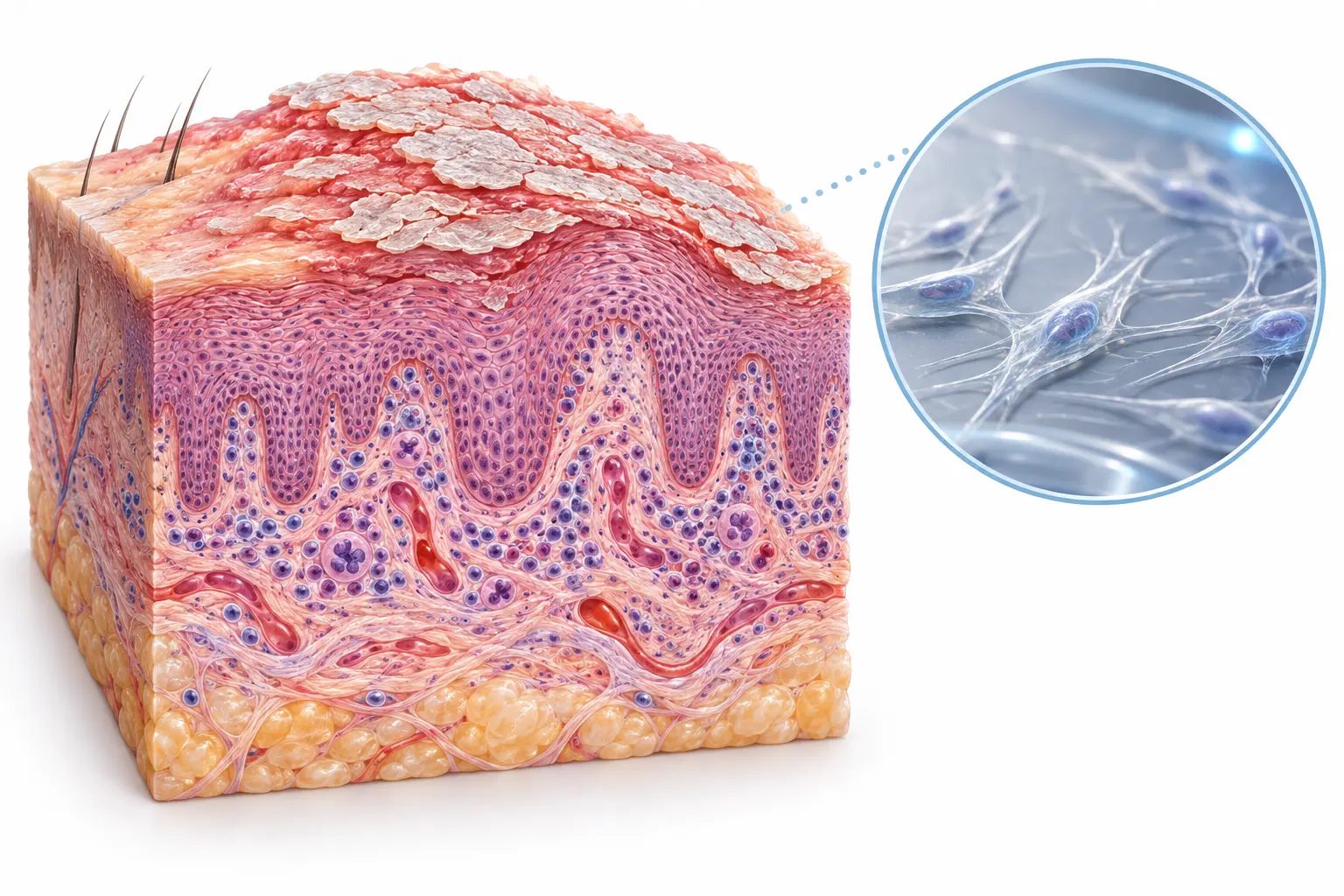
Stem cell therapy for psoriasis is an experimental treatment still under study. It delivers donor cells, usually mesenchymal stem cells, to help calm an overactive immune system. The cells come from adult tissue such as bone marrow or from the human umbilical cord.
No version is an established treatment of psoriasis yet. Researchers need larger studies first.
Psoriasis is an autoimmune disease. Cochrane’s plain-language review of psoriasis medicines explains that the immune system speeds up skin cell growth. That growth builds raised, scaly patches called plaques.

What Do the Cells Seem to Do in the Body?
Researchers think the cells release a mix of growth factors that may calm inflammation and shift the balance of immune cells. Many papers call them mesenchymal stromal cells, which is the same cell family under a newer name.
The 2022 trial described below measured two kinds of immune cells in blood. Regulatory T cells calm other immune cells, while Th17 cells drive the inflammation seen in psoriasis.
- Regulatory T cells rose in people who responded.
- Th17 cells and a Th17 signal called interleukin-17 fell.
- These blood changes show activity, but they do not prove the cells caused the skin change.
How Well Do Standard Psoriasis Medicines Work?
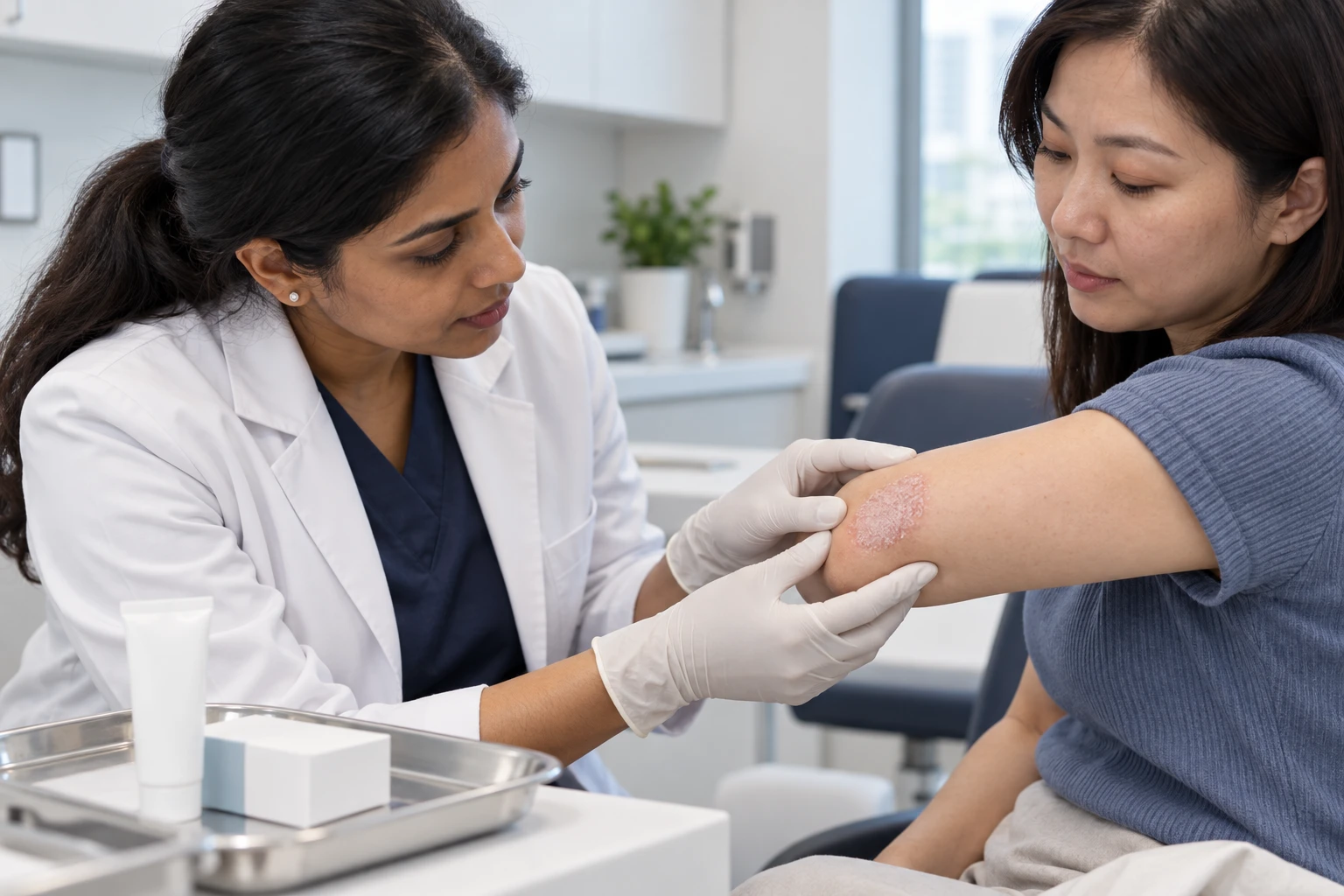
Cochrane’s living review, searched to July 2024, found that biologic medicines cleared skin better than older tablets. The review covered 204 studies of 67,889 adults. In that 2024 search, five biologics ranked highest for 90% skin clearing compared with placebo, with little difference between them.
Biologics are proteins that block inflammation signals such as interleukin-17, interleukin-23, and TNF-alpha. Cochrane groups psoriasis medicines into three types, and doctors choose among these treatment options by severity.
- Biologics that target specific inflammation signals.
- Targeted synthetic pills made to act on immune cells.
- Older medicines that broadly dampen the immune system.
However, the evidence has limits. The studies lasted two to six months. Drug companies funded 157 of the 177 studies that named a funder.
Few studies measured quality of life. Studies also reported serious harms unevenly, so Cochrane’s authors are unsure whether safety differs between medicines.
The authors add that many participants had severe psoriasis at baseline. Results may not apply to milder disease. Their findings cover treatment for at most six months.

What Did Human Trials of Stem Cells for Psoriasis Find?
A 2022 trial of umbilical cord cells studied 17 people. Signal Transduction and Targeted Therapy reported that 8 improved their skin scores by at least 40% within six months. All 17 received infusions of donated cells, and the trial had no comparison group.
Researchers saw no obvious side effects during treatment or follow-up. However, six months is short, so later problems would not show in these results.
In that trial, 3 of 17 people had no or minimal disease at the end. Women responded more often than men (6 of 9 versus 2 of 8), but the groups were too small to conclude. The authors also reported that people with lower baseline regulatory T cell levels responded more often.
What Do Case Reports and Reviews Add?
A 2025 case series of three women with hard-to-treat psoriasis appeared in a Frontiers journal. Each woman received two cord cell infusions one week apart. In that 2025 series, the best responder had an 87% lower skin score at week four.
Researchers called the cells well tolerated. Two women later responded better to biologics that had failed before. They restarted those medicines at week nine, while the third woman switched to a new biologic at week 24.
These case reports describe three people with no comparison group, so the authors call for larger studies. A 2022 systematic review of mesenchymal cells in psoriasis found 69 studies, mostly lab, animal, and small human reports. Its authors wrote that the wide range of cell types and methods makes a standard protocol impossible for now.
How Do Stem Cells and Medicines Compare Side by Side?
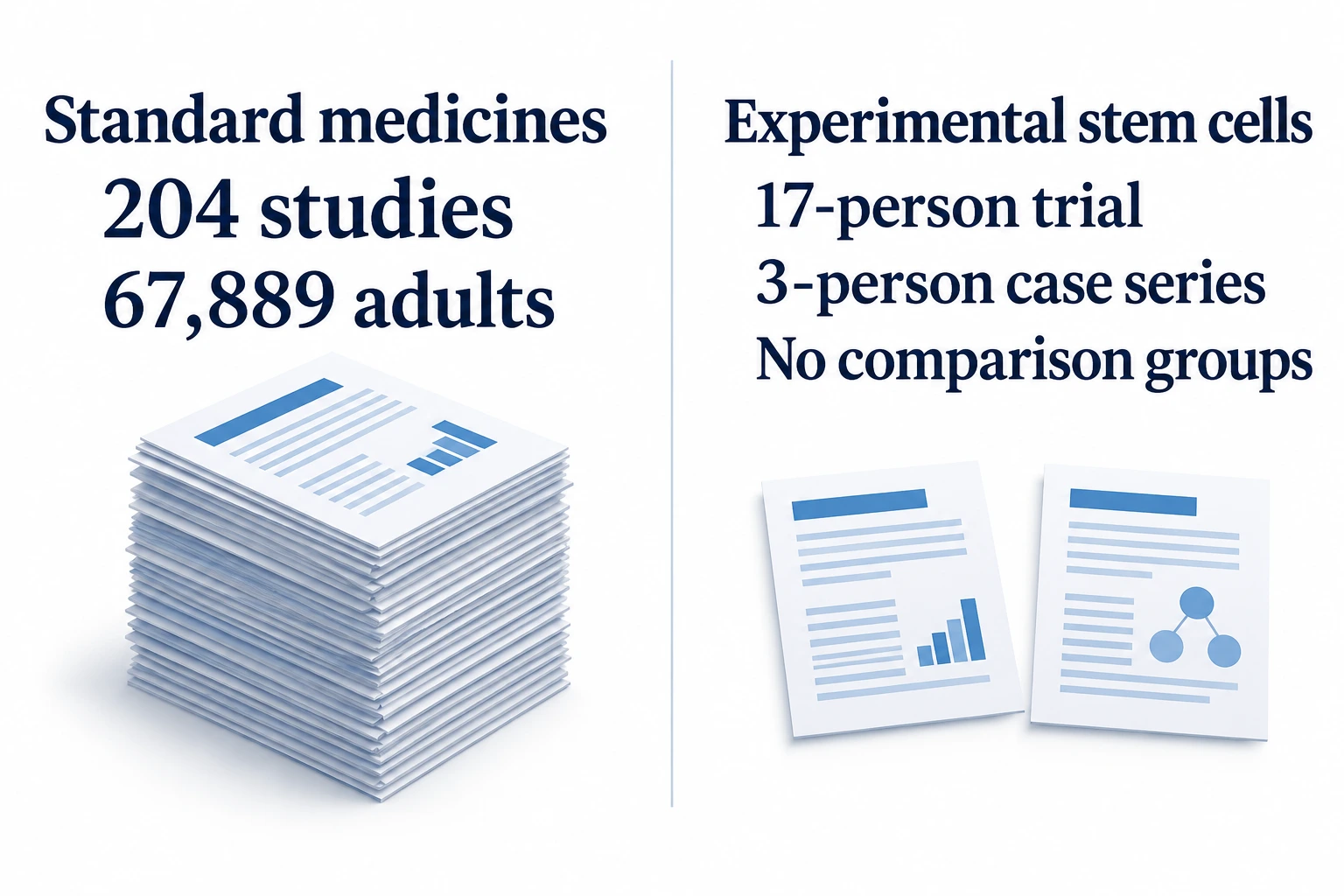
Standard medicines rest on far more evidence than any cell approach, and the gap is large. The table below puts the two bodies of research side by side.
| Question | Standard medicines | Cell studies so far |
|---|---|---|
| People studied | 67,889 adults in 204 studies | 17 in one trial, 3 in a case series |
| Comparison group | Most used a placebo | None in these studies |
| Follow-up | Two to six months | Six months in the 2022 trial |
| Safety information | Reported unevenly | Too few people to judge rare problems |
| Status | Standard care | Experimental |
This comparison explains why doctors still lead with established care for patients with psoriasis. A single small clinical trial cannot show that cells beat, or even match, a medicine.
The comparison group row carries the most weight. Without a comparison group, researchers cannot separate the cells’ effect from other causes of change. That is why Cochrane’s studies used placebo groups, and their results carry more weight.

Who Might Consider Stem Cells for Psoriasis, and What Should They Ask?
The three women in the 2025 case series had not responded to several biologics. Researchers most want to help that group. Most people with psoriasis do well on standard care and never need an experimental option.
Anyone weighing an experimental option can ask a treating doctor these questions before deciding:
- Which cell source is used, and how were the cells tested?
- What dose and schedule will the doctor use, and how will the cells reach the body?
- How are current medicines handled around the time of treatment?
- Which published study or registered clinical trial supports the offer?
Clear answers don’t prove a treatment works, but vague ones are a warning sign.
What Are the Risks and Unknowns of Stem Cell Therapy?
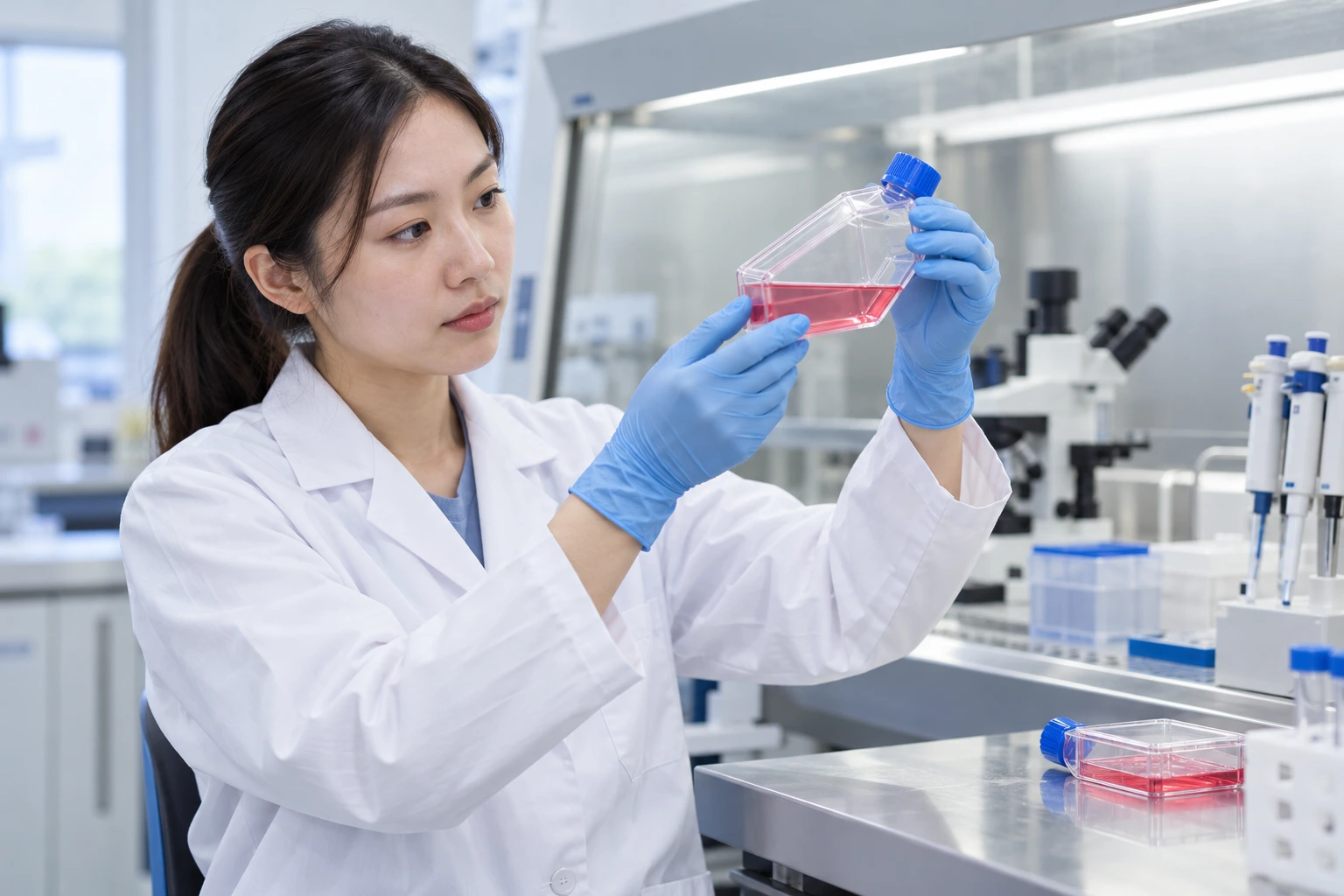
The main unknowns are the right cell source, the dose, how long any effect lasts and how safe repeat treatment is. Because researchers used different MSC treatment plans in each study, they cannot pool the results.
The 2022 review lists local skin reactions as a possible risk. It also names graft-versus-host disease, in which donor cells trigger an immune attack.
Key gaps in the evidence include:
- No trial has compared cells with a placebo in psoriasis.
- No data show long term safety or how long benefits last.
- Cell culture and freezing methods vary between labs.
Anyone considering cells should ask about the cell source, testing, and the paperwork behind any offer.
Can Stem Cells Work Alongside Standard Psoriasis Care?
No trial has yet tested whether cells and biologics work better together than biologics alone. The three-woman case series raises the question, but three people cannot answer it.
The series’ authors found more regulatory T cells in the blood as skin improved. They suggest the cells may reset the immune response.
Cyrona Cell’s earlier look at immune modulation in psoriasis covers the same early research.
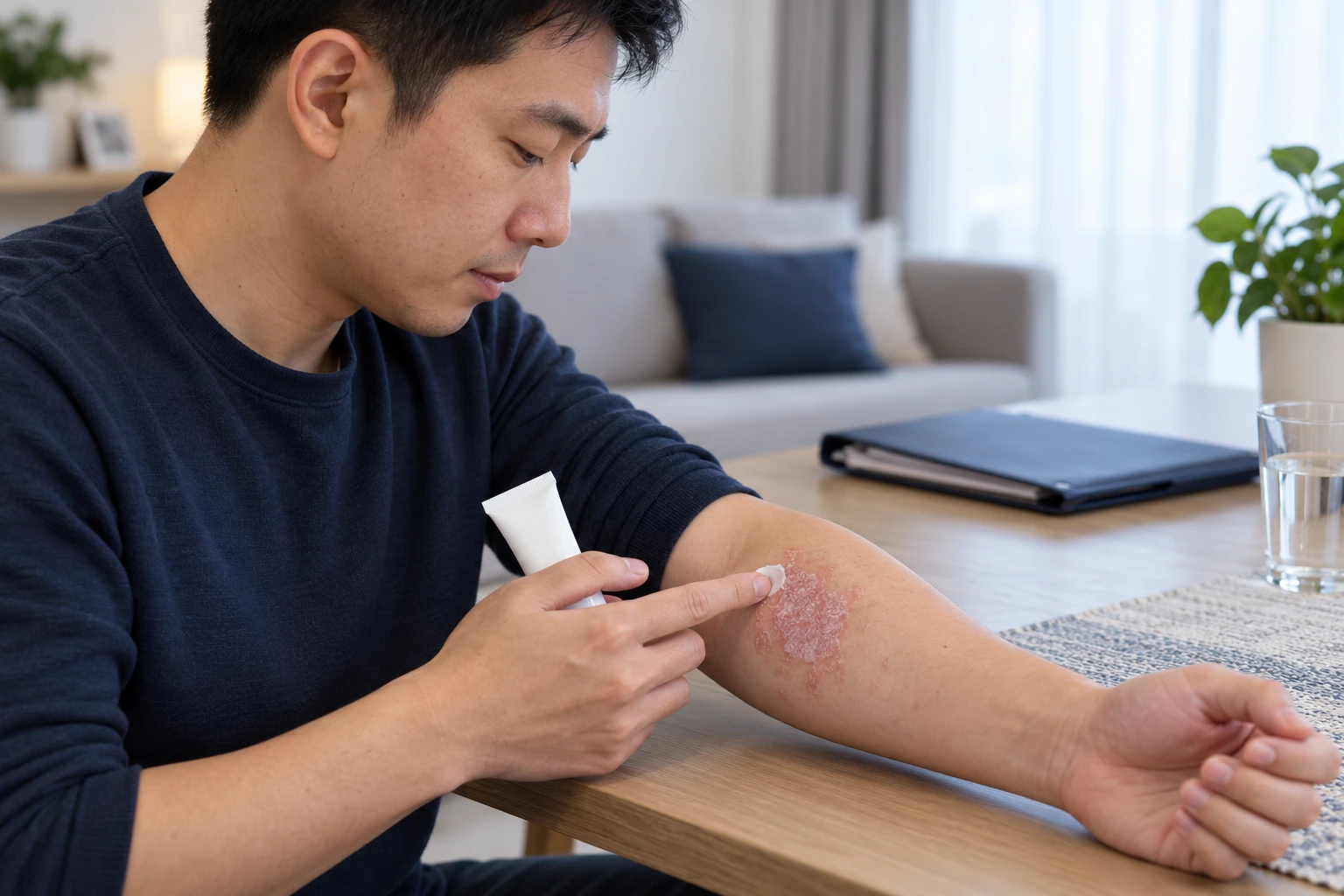
Doctors treat patients with psoriasis with creams, light, and medicines. Biologic therapies remain central for moderate to severe disease. Nobody should stop or change medicines without their own doctor.
Similarly, questions about cells besides medicines arise in bowel disease, another immune-driven condition. Cyrona Cell explains stem cells alongside biologics and steroids and umbilical cord cells and colitis inflammation.
Readers who want to know what follows an enquiry can read the steps on the Cyrona Cell how-it-works page.
Stem Cells for Psoriasis FAQ
Can stem cells heal psoriasis?
No study has shown that stem cells heal psoriasis. The 2022 trial of 17 people had no comparison group, so its results cannot show the cells caused the skin change. Medicines remain the standard care for treating psoriasis.
What is the most successful drug for psoriasis?
Cochrane’s 2024 review ranked five biologics highest for 90% skin clearing compared with placebo. Three block interleukin-17, one blocks interleukin-23, and one blocks TNF-alpha. The right choice depends on a doctor’s assessment, other health conditions, and cost.
Do stem cells for psoriasis cause side effects?
Small studies reported few or no obvious side effects, but they were too small to find rare problems. A 2022 review lists graft-versus-host disease and local skin reactions as possible risks. Therefore, ask a doctor about these before any decision.
Can stem cells replace biologics for psoriasis?
No trial has compared stem cells with biologics, so the evidence does not support replacing biologics with stem cells. In the 2025 case series, doctors returned two women to a previous biologic after the cell infusions. Their treating doctors made those choices.
How are stem cells for psoriasis given?
In the 2025 case series, researchers gave two infusions into a vein one week apart. The 2022 trial gave all 17 people donated cord cells. Dose details are missing from the 2022 abstract, so no standard method is clear.
Ask Cyrona Cell About Stem Cells for Psoriasis in Malaysia
Are you or a family member weighing stem cells for psoriasis? The Cyrona Cell team can answer your questions. It can also review your medical reports and say whether the therapy may be suitable.
Cyrona Cell arranges treatment at partner facilities in Kuala Lumpur. Contact the team by WhatsApp at +60 18-222 0032 or by email at info@cyronacell.com.
This article is for information only and does not replace advice from your own doctor.