
Key Takeaways
- Mesenchymal stem cells are among the most studied cell types for chronic liver disease, but the approach is still experimental.
- Researchers think the cells may calm the immune system and slow scar-forming cells, mostly based on lab and animal work.
- Small human trials reported better survival in some liver failure groups, but many lacked a placebo group.
- Fever was more common in a 2017 trial, and long-term safety remains unknown.
- Standard care and liver transplant remain the established options, and no one should change medicines without their own doctor.
Estimated read: 8 min
Stem cells for liver disease are under research, not standard treatment. Because scarring and inflammation slowly destroy liver tissue, scientists ask whether donor or bone marrow cells could help. This article explains what small trials reported, how the cells may work, and what remains unknown.

What Are Stem Cells for Liver Disease?
Stem cells for liver disease are cells from bone marrow or umbilical cord tissue. Researchers give them to people with liver conditions to see whether they ease inflammation and scarring. Because the work is still early, this approach is considered a cell based therapy under study rather than routine care.
Few options exist beyond treating the cause and, ultimately, a transplant. As a result, interest in stem cell therapy for liver disease keeps growing.
The liver can repair small injuries, but years of damage overwhelm that ability. Researchers therefore ask whether donor cells could shift the balance.
Three cell groups appear most often in liver research, and they overlap in some ways.
- Mesenchymal stem cells (MSCs) come from bone marrow, fat, or umbilical cord tissue. They can calm the immune system and are the most common choice in the trials below.
- Hematopoietic stem cells are blood-forming cells found in bone marrow and blood.
- Adult stem cells are a broader group taken from a person or donor after birth and include both types above.
How Do Fibrosis and Inflammation Damage the Liver?
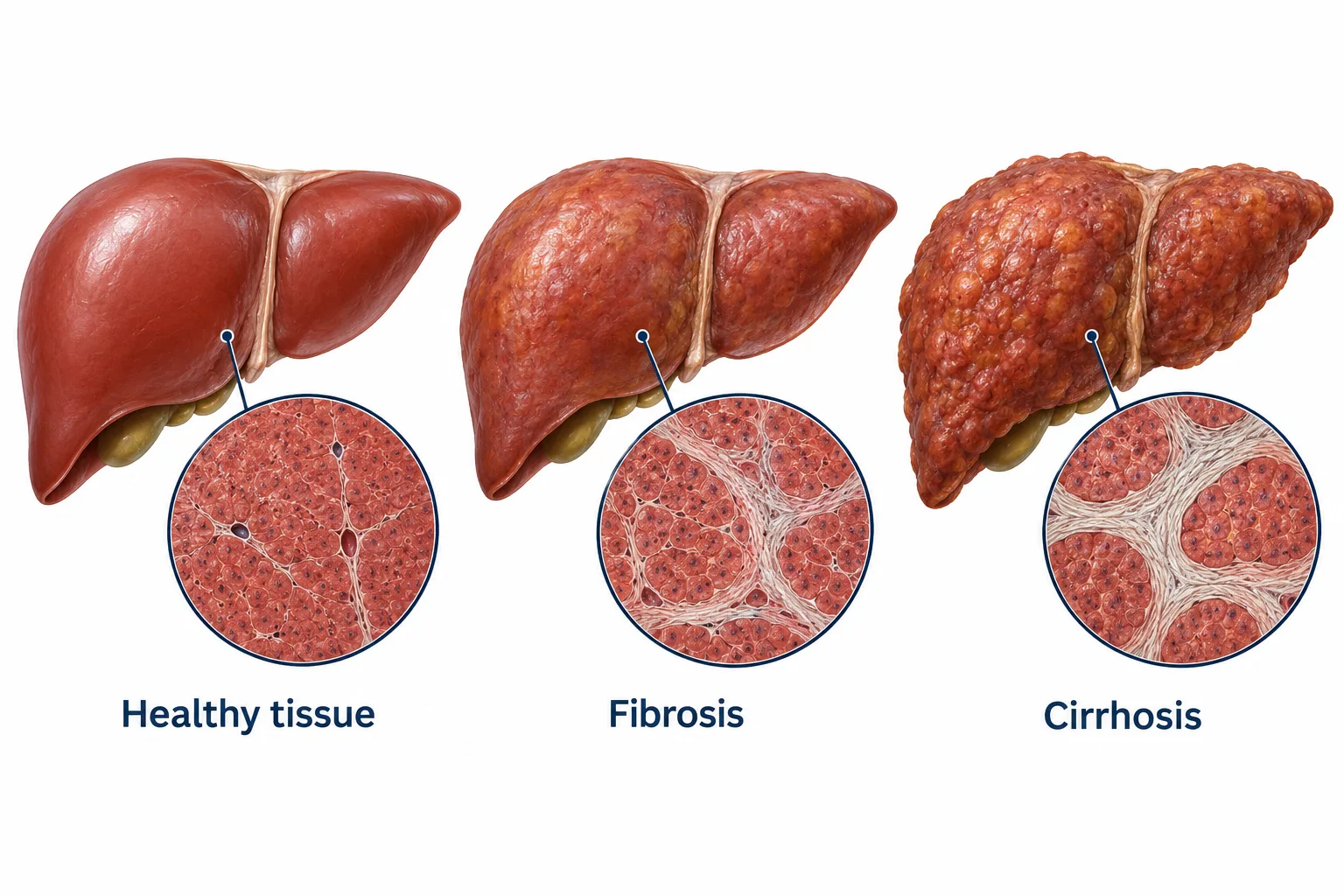
Long-lasting inflammation makes the liver replace healthy tissue with scar tissue, a process doctors call fibrosis. The National Institute of Diabetes and Digestive and Kidney Diseases (NIDDK) describes cirrhosis as permanent scarring. Its overview of cirrhosis and its causes names common triggers.
In chronic liver disease, the injury continues for months or years, so each round adds more liver damage. Doctors treat fibrosis and cirrhosis as stages on a single path, with fibrosis early and cirrhosis late. Advanced cirrhosis can progress to end stage liver disease, and then a liver transplant may come into view.
Early scarring often causes no symptoms, so many people learn about it only through blood tests or scans. For this reason, doctors usually closely monitor the cause of the injury.
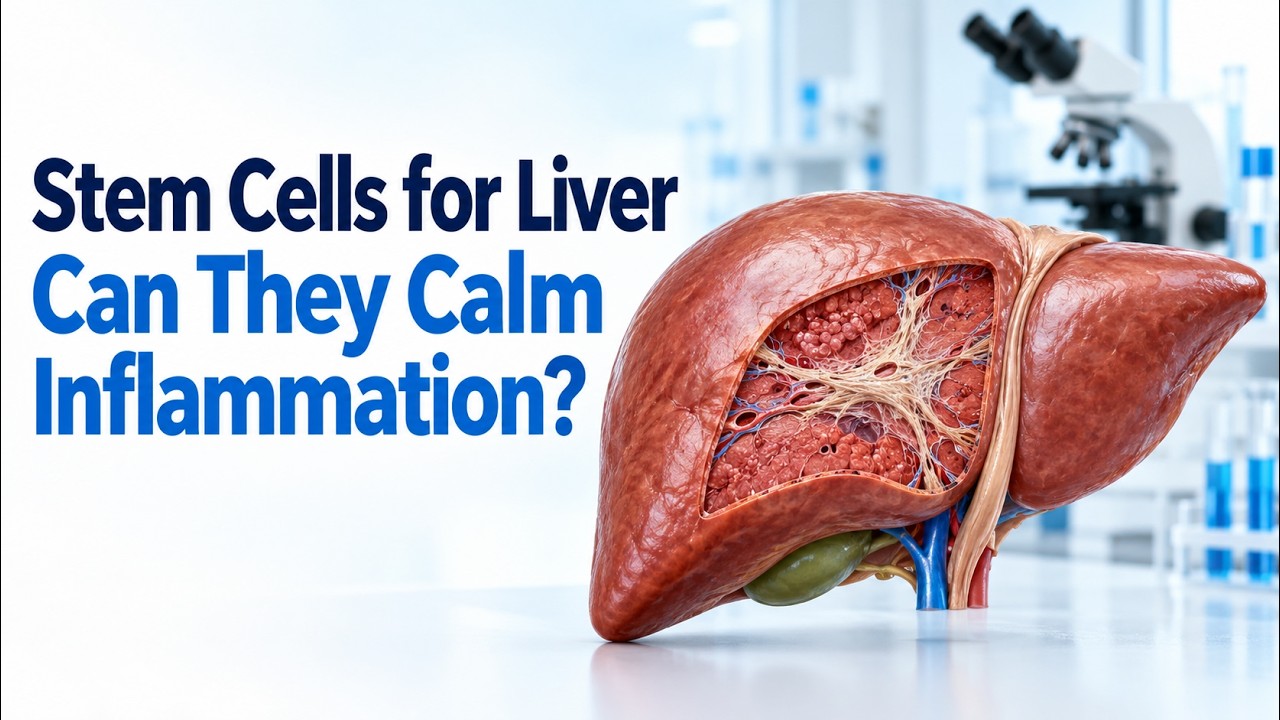
NIDDK lists these common causes of long-lasting liver injury:
- Hepatitis B or hepatitis C infection
- Heavy alcohol use over many years
- Fatty liver disease
- Autoimmune liver conditions
How Might Mesenchymal Stem Cell Therapy Work?
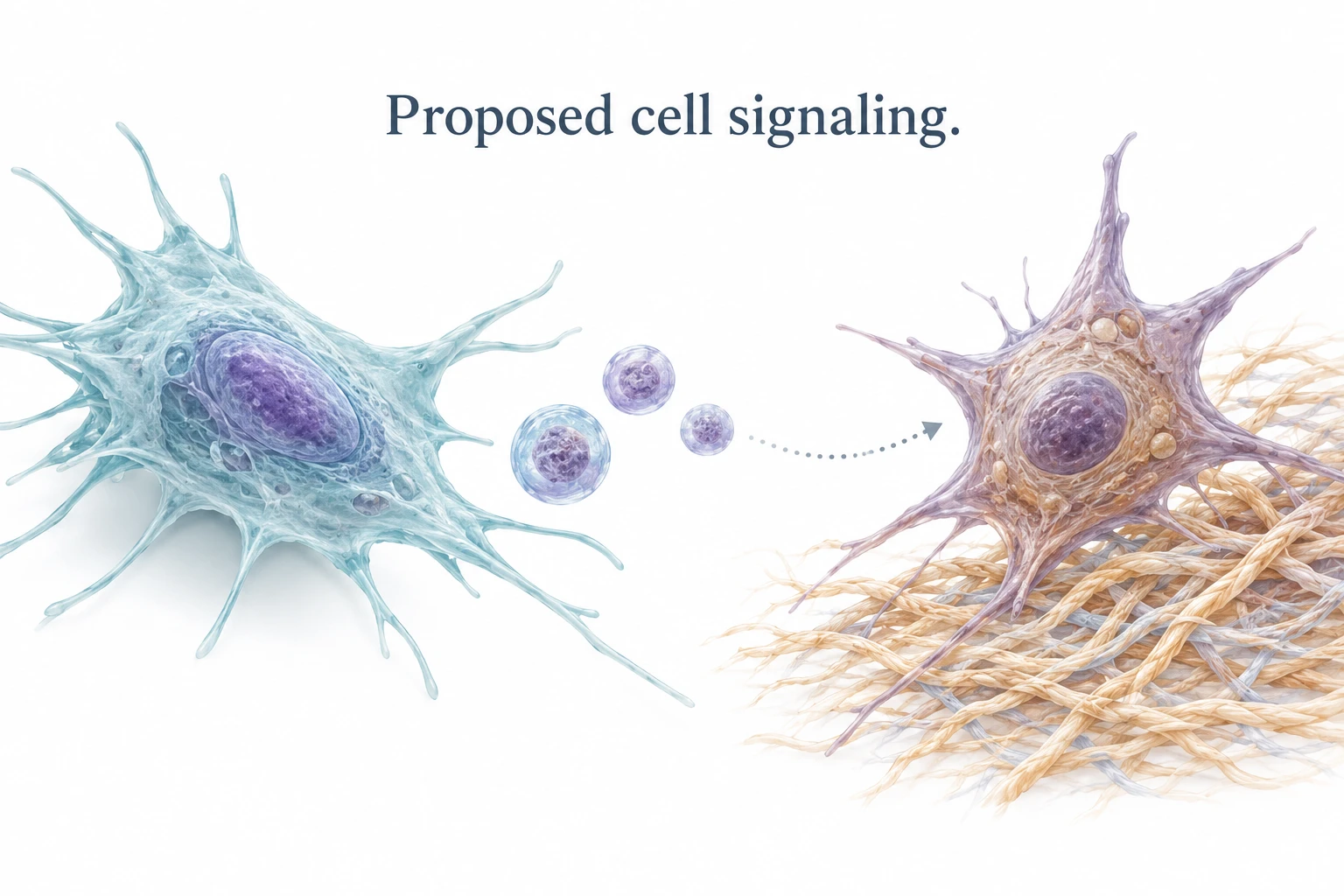
Mesenchymal stem cell therapy may work by sending chemical signals that calm the immune system. Researchers do not think it works mainly by replacing liver cells. However, most evidence for this idea comes from lab and animal studies, so the mechanisms in people remain theoretical.
A 2022 review of liver cell therapies describes several proposed effects:
- Calming overactive immune cells that keep inflammation going
- Slowing the hepatic stellate cells that build scar tissue after injury
- Releasing extracellular vesicles, tiny packets of proteins and genetic material that carry signals to nearby cells
- Giving surviving liver cells a better chance to recover
The same review notes that, when it was written, extracellular vesicles had not yet been tested in human trials. Meanwhile, researchers study related ideas, such as stem cell research on lung scarring and exosome therapy for inflammation repair.
In human trials, teams usually infused the cells through a vein or through an artery that feeds the liver. Because cell sources and doses differ, results from one cell type may not apply to another.
However, animal results often don’t translate to people. For example, liver injury in animal experiments often develops over weeks, while human disease builds over years.

What Did Clinical Trials Find?
Small clinical trials of mesenchymal stem cells in liver failure and cirrhosis reported improved liver function. Some groups also had better survival, but many trials were small, lacked a placebo group, or took place in China. Researchers want larger studies before drawing firm conclusions.
The table gives each trial a plain label, with who took part and what the authors reported.
| Study | Who took part | What happened | What it means |
|---|---|---|---|
| The 2016 alcohol-related cirrhosis trial | 72 people with alcohol-related cirrhosis, given cells from their own bone marrow | Liver biopsies showed less scarring at 12 months in groups that received cells than in the group that did not | An early sign that needs larger trials |
| The 2017 hepatitis B liver failure trial | 110 people with liver failure linked to hepatitis B, given donor bone marrow cells | Survival at 24 weeks in the 2017 report was 73.2% with cells and 55.6% without, and fever was more common with cells | A hint of benefit, but too small to settle the question |
| The 2021 long follow-up trial | 219 people with liver failure, followed for up to 75 months | Liver-cancer-free survival did not differ between groups | Long follow-up helps check safety but cannot prove the cells caused any benefit |
What Did the Pooled Results and Long Follow-Up Show?
A 2020 pooled review of cell trials suggested possible gains in some liver tests. However, pooling small trials also pools their weaknesses.
The 75-month follow-up of cell recipients looked at the long term and found no difference in liver-cancer-free survival. Meanwhile, the 2017 trial of donor bone marrow cells tracked survival for 24 weeks, so that study showed nothing beyond that point.

How Do Stem Cells Fit With Standard Care and Liver Transplant?
Standard care treats the cause of liver injury. A liver transplant remains the established option for end stage liver disease. For example, treatment may involve antiviral medicines for hepatitis B or stopping alcohol use.
Stem cell trials so far have tested cells as an add-on to this care, not as a replacement. None of the trials above tested cells in place of a transplant. The 2022 review also reported that a hematopoietic stem cell trial did not improve disease severity measures.
Cyrona Cell’s earlier article on supportive stem cell therapy for cirrhosis covers how cell treatments might sit alongside care. Another related approach, macrophage cell therapy for cirrhosis, has its own trial.
Any decision about liver disease treatment should be made with a liver specialist who knows your full history. Useful questions to bring include:
- What is causing my liver injury, and is that cause being treated?
- At which stage is my liver disease?
- Ask when a doctor would assess you for a liver transplant.
- Does any cell treatment fit my situation, and what are its risks?
Nobody should stop or change medicines without advice from their own doctor.

What Are the Risks and Unknowns?
The main unknowns are whether any benefit lasts, which cells work best, and how safe repeated doses are over the long term. In the 2017 trial, fever was more common with cells, and other side effects can occur. No result so far shows that cells cure liver disease.
Research on stem cells for liver disease also has gaps in how it was done:
- Because several trials compared cells with standard care alone, patients and doctors knew who received cells, which can sway results.
- Since many trials enrolled people with hepatitis B, results may not apply to other causes.
- Cell source, dose, and timing also differ between studies, which makes results hard to compare.
- According to the 2022 review, infused cells may not survive long in the body.
Larger trials with dummy-treatment groups would help, because they separate what the cells do from what extra care does. Longer follow-up would also show whether any benefit lasts. Until then, researchers describe the results as early signals rather than answers.
The International Society for Stem Cell Research (ISSCR) offers patient guidance on unproven stem cell treatments. It covers risks and questions to ask.
To see what Cyrona Cell arranges, read its stem cell page for liver conditions.
Frequently Asked Questions About Liver Stem Cell Research
Can stem cells repair liver damage?
No trial has shown that stem cells for liver disease repair liver damage in people. However, small trials reported improved liver function in some groups. Most evidence of repair comes from animal and lab work, so researchers need larger trials.
Can you live a long life with liver fibrosis?
Many people with early fibrosis live for years when doctors treat the cause. However, outcomes depend on the cause and the stage. NIDDK says treating the underlying cause can prevent further liver damage, so regular follow-up with a doctor matters.
What are the newest treatments for liver cirrhosis?
New approaches under study include cell based therapy and exosome research, though both remain experimental. Established care still centers on treating the cause and, for advanced disease, a liver transplant.
Can stem cells cure inflammation?
Doctors know of no treatment that cures long-lasting inflammation, and stem cells are no exception. Research suggests mesenchymal stem cells may calm liver inflammation. Most evidence comes from animal and lab studies, and human results are early.
Talk to Cyrona Cell About Stem Cells for Liver Disease
Cyrona Cell, based in Cyberjaya, Selangor, arranges consultations and treatment at partner facilities in Kuala Lumpur. Families with questions about stem cells for liver disease can message the team on WhatsApp or write to info@cyronacell.com. Sharing recent medical reports lets the team say whether therapy may be suitable.
This article is for information only and does not replace advice from your own doctor.