How Mesenchymal Stem Cells Support Damaged Joint Tissues in Osteoarthritis and Wear-and-Tear

Simple insights into regenerative medicine for healthier knee joints and long term mobility

Quick Read Summary

Wondering how mesenchymal stem cells support damaged joint tissues in osteoarthritis and wear and tear? This guide explains the role of mesenchymal stem cells mscs in regenerative medicine for knee joints and other affected joints. Unlike temporary pain relief, stem cell treatment targets the root causes of joint degeneration by reducing inflammation, supporting articular cartilage repair, and balancing immune systems. Learn how derived mscs release growth factors to promote improved joint function, support tissue repair, and potentially delay surgical procedures. Backed by ongoing stem cell research and clinical trials, these stem cell therapies offer hope for long term mobility and pain relief.
  • How mesenchymal stem cells mscs reduce inflammation and support articular cartilage repair
  • Stem cell treatment focuses on tissue repair and improved joint function, not just symptom masking
  • Derived mscs release growth factors that influence immune systems and promote healing
  • Regenerative medicine may delay or reduce need for surgical procedures in appropriate candidates
  • Ongoing stem cell research and clinical trials continue to evaluate long term outcomes for knee joints
Estimated read: 6 min
Keywords: how mesenchymal stem cells support damaged joint tissues in osteoarthritis and wear and tear, mesenchymal stem cells mscs, stem cell treatment, stem cell therapies, regenerative medicine, articular cartilage, knee joints, affected joints, immune systems, stem cell research, derived mscs, growth factors, improved joint function, pain relief, tissue repair, clinical trials, surgical procedures

Simple insights into regenerative medicine for healthier knee joints and long term mobility

Joint pain from osteoarthritis often begins slowly. Over time, wear and tear damage the smooth surface of articular cartilage inside knee joints and other affected joints. As cartilage breaks down, movement becomes painful. In this guide, How Mesenchymal Stem Cells Support Damaged Joint Tissues in Osteoarthritis and Wear and Tear, we explain how mesenchymal stem cells mscs, stem cell treatment, and stem cell therapies are used in regenerative medicine to support healing, reduce inflammation, and improve long term joint function.

Today, stem cell research continues to explore safer and more effective ways to restore damaged tissue. Because immune systems play a major role in joint inflammation, modern regenerative medicine focuses on balancing the body’s response while encouraging repair.

What Happens to Articular Cartilage in Osteoarthritis

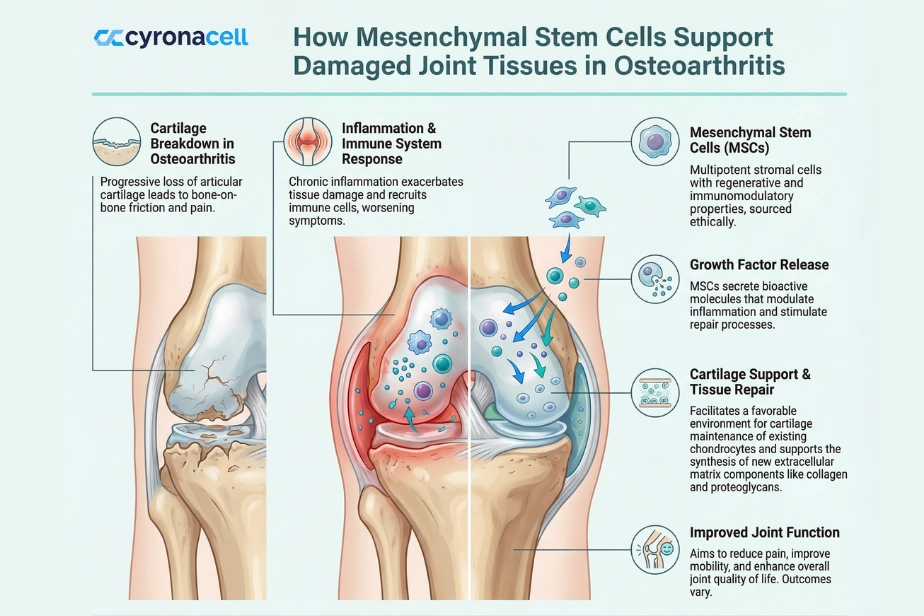
Articular cartilage covers the ends of bones in knee joints and other affected joints. It allows smooth, pain free motion. However, repeated stress, injury, aging, and daily wear and tear slowly damage this tissue. As a result, cartilage becomes thin and rough.

When cartilage weakens, bones begin to rub together. Consequently, swelling and stiffness increase. Immune systems react to this damage, which can lead to chronic inflammation. Over time, this cycle limits mobility and reduces quality of life.

Understanding Mesenchymal Stem Cells MSCs

Understanding Mesenchymal Stem Cells MSCs

Articular cartilage covers the ends of bones in knee joints and other affected joints. It allows smooth, pain free motion. However, repeated stress, injury, aging, and daily wear and tear slowly damage this tissue. As a result, cartilage becomes thin and rough.

When cartilage weakens, bones begin to rub together. Consequently, swelling and stiffness increase. Immune systems react to this damage, which can lead to chronic inflammation. Over time, this cycle limits mobility and reduces quality of life.

Understanding Mesenchymal Stem Cells MSCs

Mesenchymal stem cells mscs are a type of stem cells found in bone marrow, adipose tissue, and other connective tissues. These cells are often called adult stem cells. Researchers classify them as multipotent because they can develop into cartilage, bone, and connective tissue cells.

Derived mscs used in stem cell treatment are carefully processed under controlled conditions. These cells are studied widely in stem cell research because they can:

• Release growth factors that support tissue repair

• Help reduce inflammation inside affected joints

• Support articular cartilage repair

• Influence immune systems toward balance

Because of these properties, mesenchymal stem cells mscs are central to many stem cell therapies used in regenerative medicine.

Mechanism of Action and Immune System Balance

How Stem Cell Therapies Support Knee Joints

Stem cell therapies aim to improve the joint environment rather than only provide short term symptom control. Instead of masking pain, stem cell treatment focuses on supporting tissue repair and promoting improved joint function.

How Stem Cell Therapies Support Knee Joints Explanation
Reduce Inflammation Mesenchymal stem cells release growth factors and signaling molecules that help reduce inflammation inside knee joints. As immune balance improves, swelling decreases and the joint environment becomes healthier.
Support Cartilage Repair Stem cell therapies encourage repair of articular cartilage. While severe damage may not fully reverse, derived MSCs can stimulate local repair processes and help protect remaining cartilage from further wear.
Promote Pain Relief and Improved Joint Movement As inflammation decreases and tissue repair improves, patients often experience pain relief. Growth factors may also strengthen surrounding tissues, supporting improved range of motion and daily function.

Mechanism of Action and Immune System Balance

The mechanism behind stem cell treatment is based on communication. Mesenchymal stem cells mscs send signals to nearby cells. These signals influence immune systems, encourage cartilage matrix production, and promote tissue repair.

Instead of suppressing immune systems completely, stem cell therapies guide them toward balance. Consequently, the body can heal without ongoing inflammatory damage. This balanced approach supports long term joint stability.

The Role of Clinical Trials and Stem Cell Research

Stem Cell Treatment Versus Surgical Procedures

Many people with advanced osteoarthritis consider surgical procedures when pain becomes severe. While surgery may be necessary in some cases, regenerative medicine offers a less invasive option for selected patients.

For example, hyaluronic acid injections may provide temporary lubrication in knee joints. However, stem cell treatment aims to address tissue repair at a deeper level. By supporting articular cartilage and reducing inflammation, stem cell therapies may delay or reduce the need for surgical procedures in appropriate candidates.

The Role of Clinical Trials and Stem Cell Research

Clinical trials continue to evaluate the safety and effectiveness of mesenchymal stem cells mscs in osteoarthritis care. Stem cell research explores optimal dosing, preparation methods, and long term outcomes.

Although results vary, many studies show encouraging improvements in pain relief and improved joint function. Because research continues, treatment plans should always rely on medical evaluation and evidence based practice.

Who May Benefit From Regenerative Medicine

Stem cell treatment may benefit:

• Adults with early to moderate osteoarthritis

• Patients with chronic knee joints pain

• Individuals seeking non surgical procedures

• People looking for long term joint support

However, not all patients qualify. A detailed assessment of affected joints, medical history, and imaging results helps determine candidacy.

Long Term Outlook for Joint Health

Long Term Outlook for Joint Health

Osteoarthritis is a progressive condition. Therefore, early care is important. By combining stem cell therapies with lifestyle support, weight management, and physical therapy, patients may improve long term joint health.

In summary, How Mesenchymal Stem Cells Support Damaged Joint Tissues in Osteoarthritis and Wear and Tear shows how mesenchymal stem cells mscs, derived mscs, and modern regenerative medicine approaches aim to reduce inflammation, encourage articular cartilage repair, and support immune systems. Through continued stem cell research and clinical trials, these therapies may offer meaningful pain relief and improved joint mobility for many patients.

FAQ

How do stem cells help osteoarthritis ?

Stem cells help osteoarthritis by reducing inflammation, releasing growth factors, and supporting articular cartilage repair. Mesenchymal stem cells mscs used in stem cell treatment can influence immune systems and promote improved joint function in affected joints, especially knee joints.

The mechanism involves cell signaling. Mesenchymal stem cells mscs release growth factors and proteins that help reduce inflammation and support tissue repair. Instead of replacing tissue directly, they guide immune systems and local cells to improve healing.

Stem cell therapies support healing by sending regenerative signals. In joints, derived mscs promote cartilage repair and pain relief. In other tissues, this type of stem cells may support connective tissue recovery. Ongoing stem cell research and clinical trials continue to evaluate long term results.

Stem cell treatment may help repair mild to moderate cartilage injuries by stimulating tissue repair and reducing inflammation. However, severe structural damage may still require surgical procedures. A medical evaluation of affected joints is necessary before treatment decisions.

Author

One Response

Leave a Reply

Your email address will not be published. Required fields are marked *