New Parkinson’s Cell Therapy Research: What Patients Should Know

What the Latest Parkinson’s Cell Therapy Update Means

Quick Summary

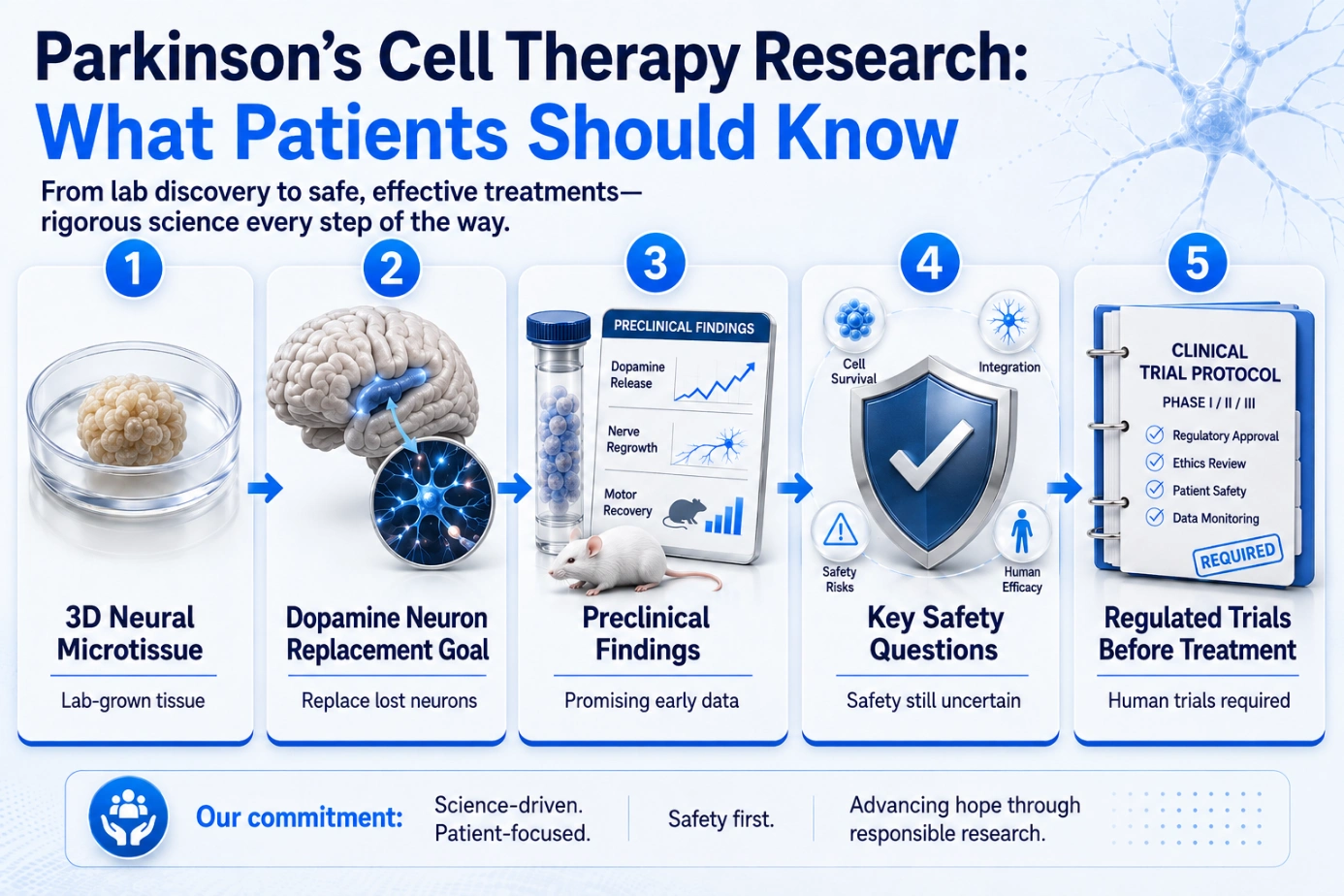
TreeFrog Therapeutics announced preclinical data for TFG‑001, a 3D neural microtissue therapy for Parkinson’s disease. The approach aims to replace damaged dopamine‑producing neurons. Preclinical models showed rapid dopamine release, nerve regrowth, and motor recovery. However, the work is still preclinical; a Clinical Trial Application is expected in 2027. Patients should remain cautious: cell survival, integration, safety, and human efficacy are not yet proven. No approved stem cell therapy exists for Parkinson’s today.
  • What is TFG‑001: 3D neural microtissue therapy (not single cells) designed to replace dopamine neurons
  • Preclinical findings: Quick dopamine release, wide nerve regrowth, faster motor recovery vs. benchmarks
  • Current status: Preclinical only; no human trials yet. Clinical Trial Application expected 2027
  • Key challenge: Transplanted cells must survive, integrate, release dopamine correctly, and connect safely
  • Patient caution: Unapproved “stem cell” clinics may promise unproven Parkinson’s therapies
  • What to ask a specialist: Regulated clinical trials, risks of brain cell transplantation, current symptom management options
Estimated read: 4 min
Keywords: Parkinson’s cell therapy, TFG‑001, dopamine neurons, preclinical research, stem cell treatment

What the Latest Parkinson’s Cell Therapy Update Means

A new preclinical update from TreeFrog Therapeutics is drawing attention in the cell therapy and Parkinson’s research communities. TreeFrog shared new data on TFG-001 in its Parkinson’s cell therapy announcement. TFG-001 is a 3D neural microtissue therapy for parkinson s disease pd.

This new parkinson’s cell therapy research: what patients should know matters because Parkinson’s can damage brain cells that control movement. These cells include dopamine neurons, which make dopamine. Dopamine is a chemical messenger that helps the brain guide smooth, controlled movement.

When these cells decline, patients may notice tremors, stiffness, slower movement, and balance problems. Current medicines can help ease symptoms. However, they do not replace the damaged dopamine producing cells.

Why Dopamine-Producing Cells Matter in Parkinson’s

Parkinson’s develops when key nerve cells in the brain lose function or die. Many of these cells help manage movement. As dopamine levels drop, movement becomes harder to control.

The Michael J. Fox Foundation stem cell overview says stem cell research may help scientists create dopamine-producing brain cells. Researchers can use these cells to study Parkinson’s, test new therapies, and explore future treatment options.

This is where stem cell therapy for parkinson s disease becomes important. The goal is not just to place new cells in the brain. Scientists want the transplanted cells to survive, grow, connect with nearby tissue, and release dopamine in a helpful way.

What Makes This Research Different

What Makes This Research Different?

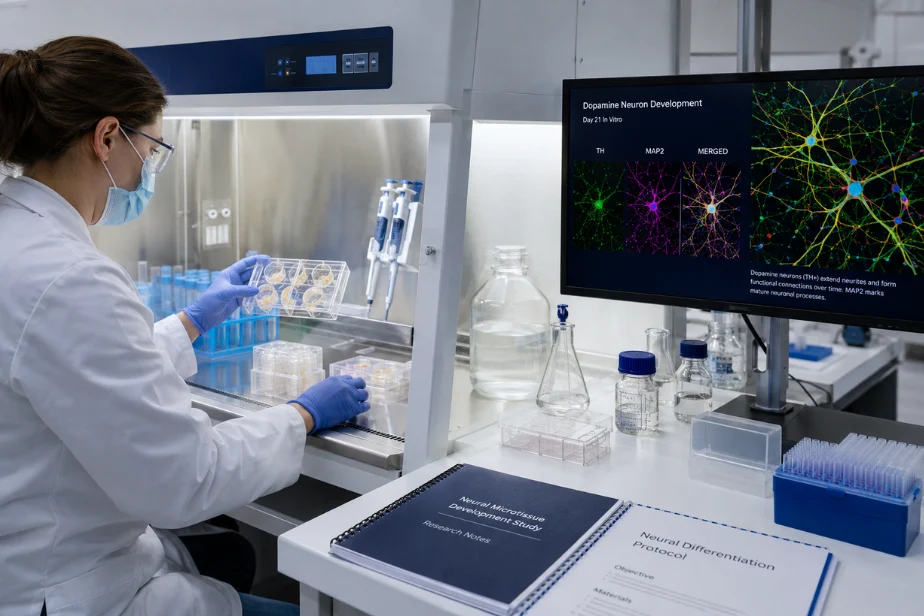
TreeFrog’s TFG-001 uses a 3D neural microtissue design. Some cell therapy approaches use single cells. By contrast, this approach uses organized cell groups prior to transplantation.

That structure may help the cells work together more effectively after delivery. It may also support reinnervation, meaning new cells form connections with nearby brain tissue.

This step matters because cells transplanted into the brain must do more than survive. They also need to communicate with existing brain networks.

TreeFrog said TFG-001 released dopamine quickly in preclinical models. The company also reported wide nerve regrowth and faster motor recovery than benchmark therapies. Even so, patients should understand one key point: this work is still preclinical. It has not yet proved safety or beneficial in people.

Where Stem Cell-Based Therapies Stand Today

The wider field has made real progress. Recent clinical trials have tested cell replacement approaches that use embryonic stem cells and induced pluripotent stem cells.

A 2025 Nature study on dopamine neuron replacement therapy shared early human trial results. Researchers used cells made from human embryonic stem cells. These early studies are important, but they are still part of a careful testing process.

Researchers are also studying induced pluripotent stem cell ipsc methods. These cells begin as adult cells. Scientists then reprogram them into a stem-like state. After that, they guide them into specific cell types, including dopamine-producing nerve cells.

These stem cell based therapies may use stem cell derived products, derived stem cells, or other specialized cell preparations. Each option has its own safety, dosing, delivery, and manufacturing challenges.

Therapy Approach Main Goal Current Status Key Challenge
TFG-001 3D Neural Microtissue Replace damaged dopamine-producing neurons Preclinical research Human safety and long-term integration
Embryonic Stem Cell Therapy Generate healthy dopamine neurons Early clinical trials Immune response and cell survival
Induced Pluripotent Stem Cells (iPSC) Create patient-compatible nerve cells Ongoing research and testing Stable cell development and safety
Brain Cell Transplantation Restore dopamine function in movement centers Experimental treatment approach Precise delivery into the brain
Current Parkinson’s Medications Reduce symptoms and improve movement Approved standard treatment Does not replace lost brain cells
What Patients Should Understand Before Getting Excited

What Patients Should Understand Before Getting Excited

This research offers hope, but it remains early. That distinction matters for patients and families. New data can look encouraging, but preclinical results do not always lead to approved treatments.

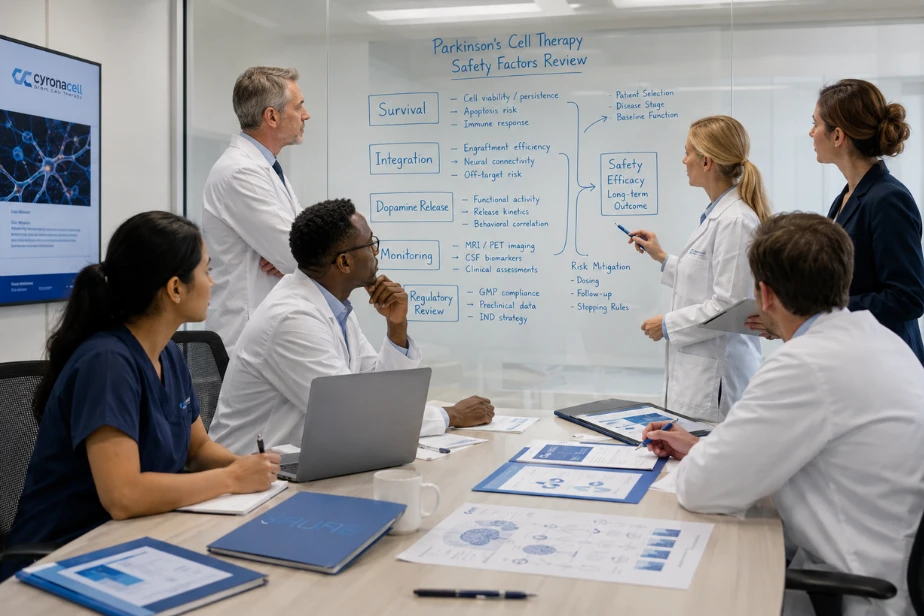
A future treatment for parkinson must answer several questions. Do the new cells survive over time? Do they release dopamine at the right level? Can they form safe brain connections? Do they improve movement in a meaningful way? Can doctors deliver them safely and consistently?

One major delivery target is the brain called the putamen, a part of the brain involved in movement. Many Parkinson’s cell therapy studies focus on placing new cells in this area. Still, any procedure that delivers cells into the brain needs careful safety testing.

Why Cell Survival and Integration Matter

For any cell therapy, cell survival can shape how well the treatment works. If too few cells survive, the therapy may not help enough. If cells grow in the wrong way, they may create safety concerns.

That is why researchers study dose, purity, cell maturity, immune response, and long-term monitoring. They also look at whether the new cells connect with the correct areas of the brain.

In Parkinson’s, researchers hope healthy dopaminergic neurons can survive and grow. They also want these cells to release dopamine and connect with the right brain regions. This would be an important step toward restoring some lost function.

That is also why many experts still view stem cell treatments as an active area of research. They do not yet view them as a finished treatment category.
What This Means for Cell Therapy Patients

What This Means for Cell Therapy Patients

Patients interested in new cell therapies should follow this research closely but remain cautious. Legitimate stem cell treatments must go through regulated trials before they become standard care.

At this stage, TFG-001 appears to be a research candidate with encouraging preclinical data. TreeFrog said it expects the program to be ready for a Clinical Trial Application in 2027. That means patient access, if it happens, would still depend on human studies, safety results, and regulatory review.

Patients should also be careful with clinics that promise fast results or offer unapproved Parkinson’s cell therapies. These claims may sound hopeful, but they may not be supported by strong safety data.

How Patients Can Talk to Their Doctor

questions. A movement disorder specialist can help explain where cell therapy fits within current Parkinson’s care.

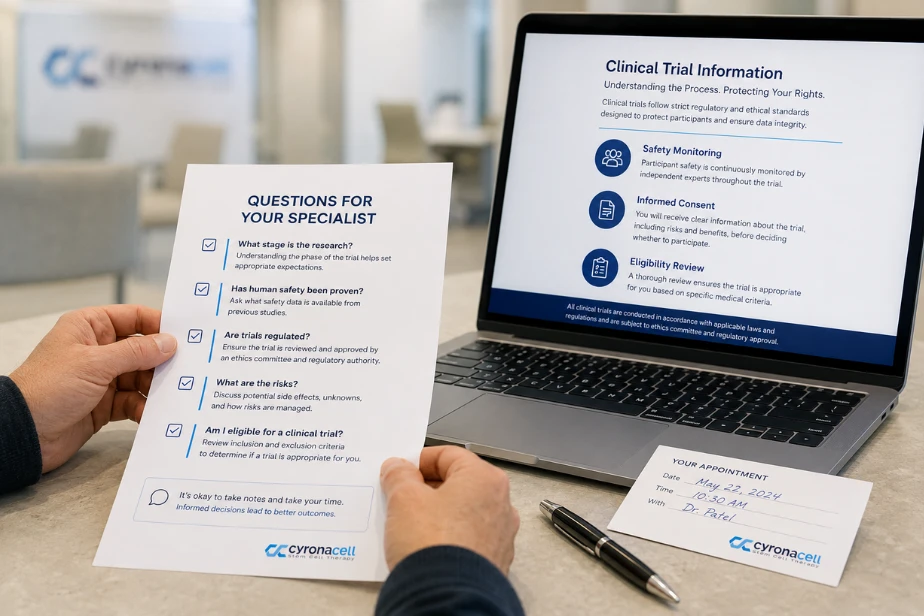
Helpful questions may include:

  • Are any regulated clinical trials appropriate for my condition?
  • What risks come with brain cell transplantation?
  • How do researchers measure whether transplanted cells are working?
  • What treatments can help manage symptoms now?

These questions can help patients make informed choices while the science continues to develop.

Why Patients Should Watch the Timeline

Patients may hear more about TFG-001 as it moves toward human testing. However, early research often takes years to become a real treatment option. Each step must check safety, dosing, cell behavior, and patient outcomes.

This slower process can feel frustrating. Still, it helps protect patients and gives doctors better evidence before they recommend a new therapy. For now, TFG-001 remains a research program, not an approved Parkinson’s treatment.

Why Patients Should Watch the Timeline

Stay Informed Before Making Treatment Decisions

Parkinson’s cell therapy may become an important part of future care. For now, the field still needs careful human testing.

Patients should follow peer-reviewed research. They should also ask about regulated clinical trials and speak with a qualified Parkinson’s specialist before considering any cell-based treatment.

Author

Leave a Reply

Your email address will not be published. Required fields are marked *