Key Takeaways
- A new umbilical cord exosome study, published in Stem Cell Research & Therapy, tested umbilical cord mesenchymal stem cell-derived vesicles in patients with sudden hearing loss that had not responded to steroids.
- Researchers set out to evaluate the safety of injecting these vesicles through the eardrum. They found a reassuring safety profile across all four dose levels tested.
- No serious side effects occurred. The most common reactions were mild ear pain, ear fullness, and brief dizziness.
- Five of twelve patients showed meaningful hearing improvement. Most of these patients were in the lower-dose groups and had been treated within 22 days of onset.
- With no control group and just 12 evaluable patients, researchers describe the hearing signal as exploratory, not proof of benefit.
Estimated read: 10 min
Sudden hearing loss is frightening, and doctors treat it as a medical emergency. Most patients recover with steroid treatment, but some do not respond.
This leaves few options beyond hoping for spontaneous recovery.
A new umbilical cord exosome study explored a different approach for these patients. Researchers tested a cell-free product made from human umbilical cord stem cells, delivered directly into the ear.
The goal was not to replace steroid treatment. Instead, researchers wanted to help patients who had already run out of standard choices.
The findings appeared in a Phase 1 trial published in Stem Cell Research & Therapy on 30 June 2026. This umbilical cord exosome study asks a simple question: Is the approach safe enough to pursue further study?
The journal published the paper under a Creative Commons Attribution open-access license. This license permits distribution and reproduction in any medium, provided readers credit the original authors. That is part of why the full findings are freely available to anyone who wants to read them.
Why Sudden Hearing Loss Needs Urgent Care
Sudden hearing loss develops rapidly, often within hours or days, and typically affects only one ear. Many patients first notice it upon waking or while using a phone.
Doctors consider early treatment critical, since the condition responds best when caught early. Delays of even a few weeks can meaningfully reduce the chance of recovery. This is part of why specialists treat any sudden hearing change as urgent.
Steroids remain the standard first-line treatment. Doctors give them either as pills or as an eardrum injection. Specifically, this second method delivers the drug directly to the middle ear.
Specialist guidelines recommend this eardrum injection as a salvage option. Doctors turn to it when initial steroid treatment fails to restore hearing within two to six weeks. Some patients also receive hyperbaric oxygen therapy alongside steroids.
A 2025 review looked at salvage treatments for patients who do not respond to initial care. It found that steroids and oxygen therapy work best, especially when combined. The same review noted that newer approaches need more evidence first.
What the New Trial Tested
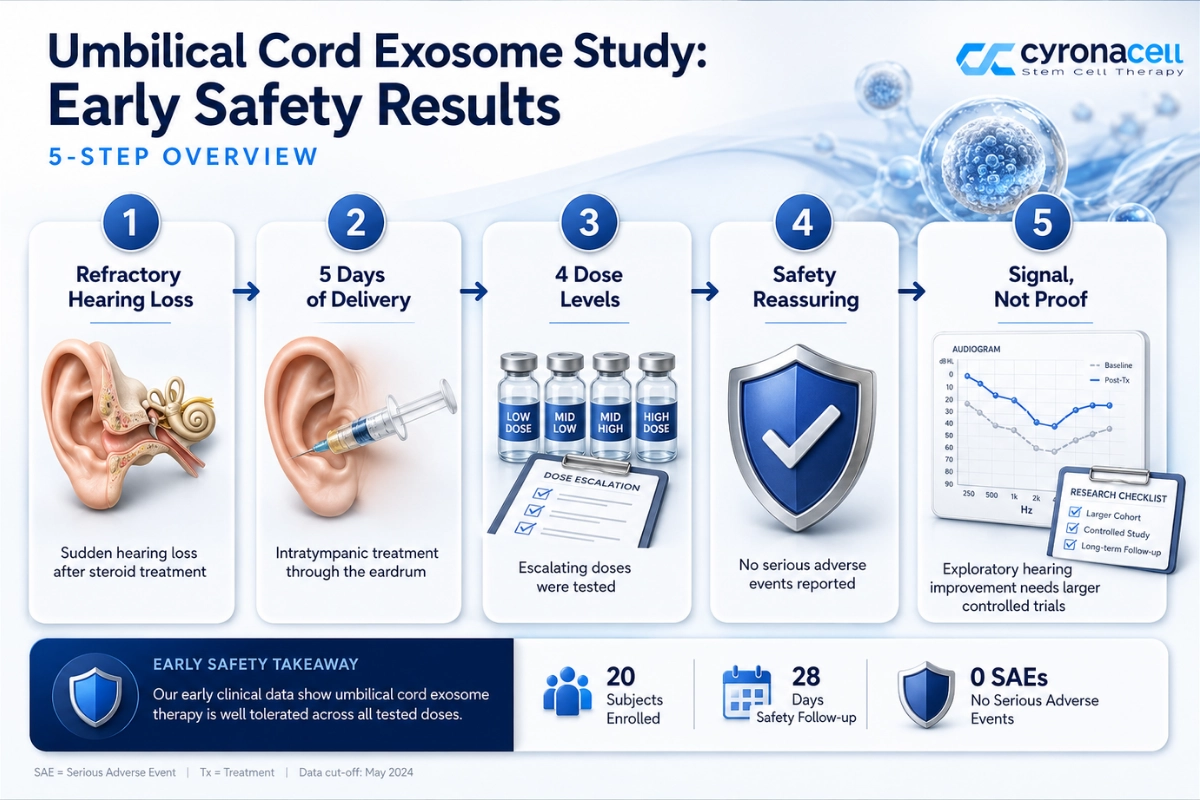
The trial enrolled patients between June and September 2025. All had refractory sudden hearing loss. This meant they had already received at least a week of steroid treatment without meaningful improvement.
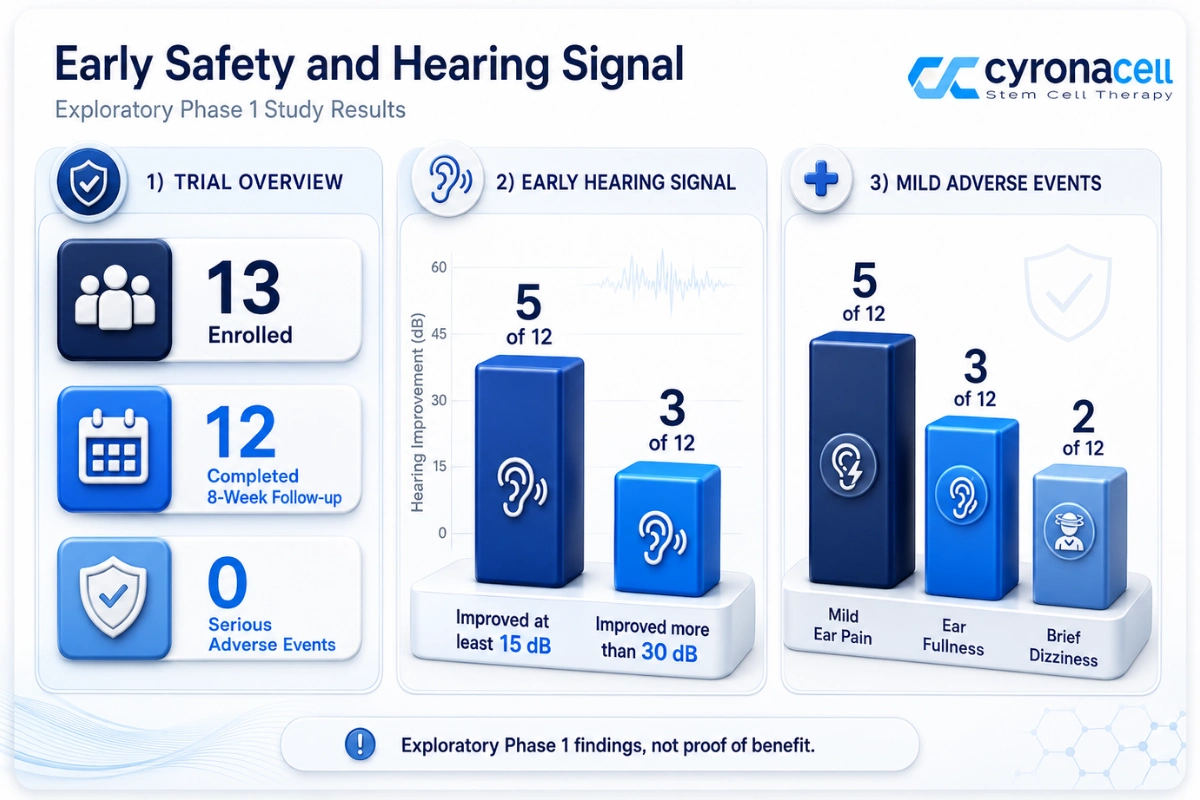
Thirteen patients enrolled, and twelve completed the full eight-week follow-up period. Once enrolled, each patient received five consecutive days of eardrum injections.
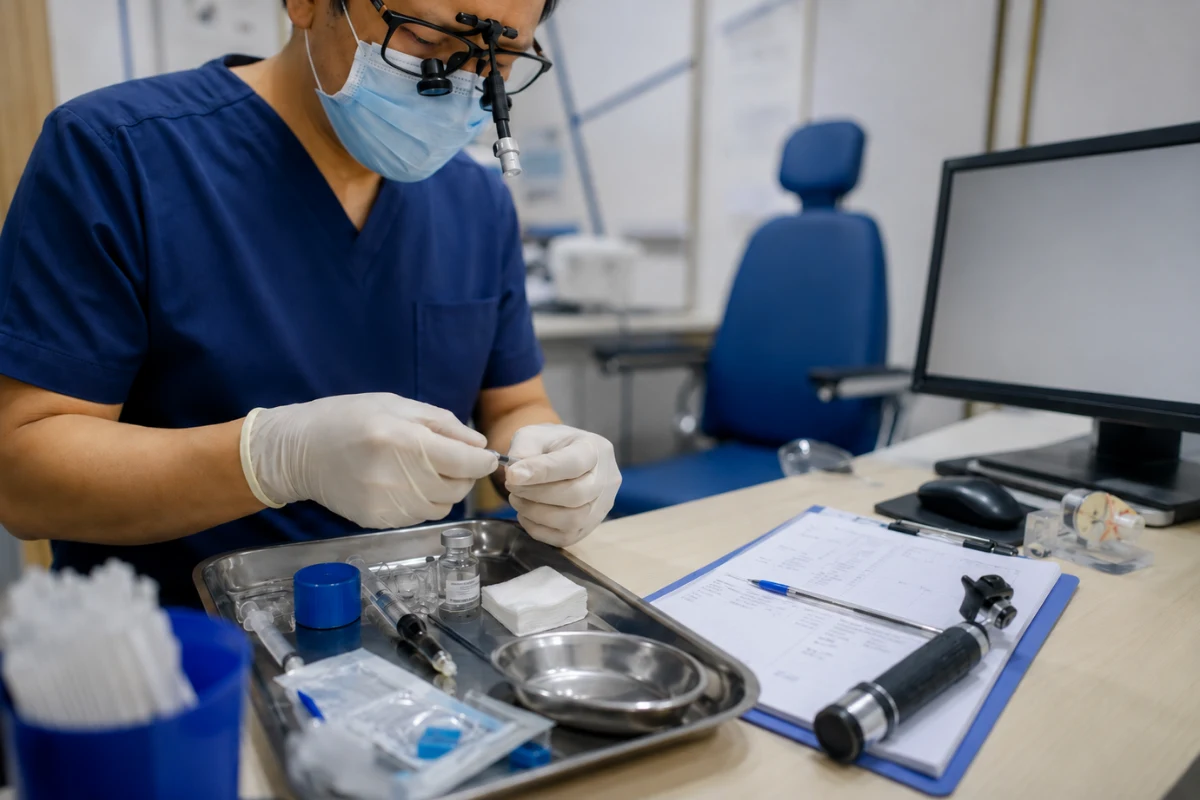
Researchers delivered these vesicles directly into the middle ear. This differs from the intravenous administration route used in some other MSC-derived exosome studies. Specifically, doses varied across four cohorts, ranging from 8×10⁸ to 1×10¹¹ particles per milliliter.
The trial protocol went through a hospital medical ethics committee before enrollment began. Researchers then followed each patient at one, two, four, and eight weeks after treatment.
The group had a median age of 40. Notably, hearing loss ranged from just over a week old to nearly a year old at the time of treatment. Previous studies in animal models had already suggested that these vesicles carry signals that protect and repair the ear.
That groundwork is part of why researchers moved to test the approach in humans. They started with the most basic safety question.
Safety Results: What Researchers Found
Safety was the clearest finding in this trial. The goal was to evaluate the safety of the injections first.
Researchers reported no dose-limiting toxicity at any dose level, with no serious adverse events either. This gave the trial a reassuring safety profile across all four doses tested.
None of the reactions required a hospital stay or caused lasting harm to any patient in the trial. The reactions that did occur were mild and expected for this type of injection. This matches what clinicians typically see with the same eardrum steroid injections, too.
Five of twelve patients had ear pain. Three also had ear fullness, and two experienced brief dizziness. All these reactions resolved without additional treatment.
Researchers also reported no tympanic membrane perforation. They found no fluid buildup in the middle ear and no infection. This matters, since these are the complications clinicians watch most closely with any ear injection procedure.
| Safety Outcome | Result |
|---|---|
| Serious adverse events | None reported. |
| Dose-limiting toxicity | None observed. |
| Ear pain | Reported in 5 patients. |
| Ear fullness | Reported in 3 patients. |
| Brief dizziness | Reported in 2 patients. |
| Tympanic membrane perforation | None reported. |
| Middle-ear fluid buildup | None reported. |
| Infection | None reported. |
| Required hospitalization | No patients required hospitalization. |
Early Hearing Improvement Signals
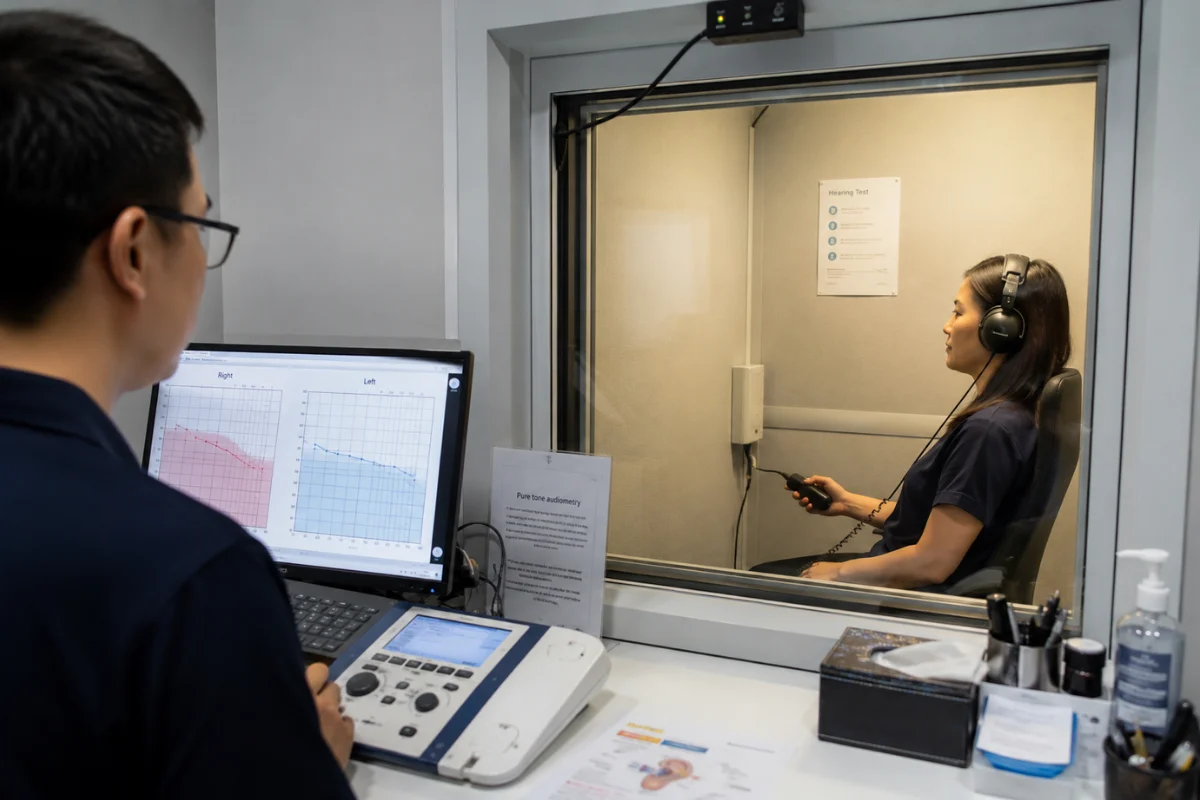
Beyond safety, researchers also tracked hearing changes, specifically using a standard hearing test that measures tone by tone.
Five of the twelve patients showed at least a 15-decibel improvement. Researchers measured this by the end of the eight-week follow-up. Three of those five improved by more than 30 decibels.
The results did not spread evenly across the trial, however. Every patient in the lowest-dose group improved. Two of three improved in the second-lowest group, too.
Patients in the two higher-dose cohorts, by contrast, showed little response. Timing also stood out as an important factor.
Every patient who improved had been living with hearing loss for 22 days or less before starting treatment. Patients with longer-standing hearing loss showed little to no improvement, regardless of dose received.
With only 12 evaluable patients and no comparison group, researchers urge caution. Researchers have not tested this pattern for statistically significant difference. It could reflect a genuine treatment effect, natural recovery, or simply chance in such a small sample.
Why Extracellular Vesicles Differ From Whole Stem Cells
Small extracellular vesicles are not stem cells themselves. Instead, they are tiny packages that stem cells release. Notably, these vesicles carry proteins, genetic material, and signaling molecules that can influence nearby cells.
Crucially, they do this without introducing any living cells into the body. This is why researchers describe the approach as a cell free therapeutic.
No living cells enter the body with this approach, so two common risks disappear. Cells cannot multiply out of control, and the immune system has nothing living to reject.
Manufacturing and quality control matter greatly for a product like this. Manufacturers typically confirm particle size and concentration for each batch. They do this using nanoparticle tracking analysis, then examine vesicle structure under transmission electron microscopy.
The source cells themselves also undergo screening before use. Manufacturers typically check umbilical cord mesenchymal stem cells against standard identity markers, including differentiation potential.
Only cells that pass this screening have their vesicles considered suitable for further processing.
Routine safety monitoring in a trial like this also typically tracks basic blood measures. These include white blood cells, which can reveal early signs of an unwanted immune reaction.
This cell-free approach differs in important ways from traditional stem cell therapy. To learn more, see exosome and secretome-based stem cell therapy at Cyrona Cell. For a broader look at delivery methods, review how stem cell and exosome therapy works at Cyrona Cell.

How This Fits the Broader Research Picture
This trial is part of a wider wave of research. Scientists are studying umbilical cord mesenchymal stem cell-derived vesicles for conditions well beyond hearing loss. Current work spans wound care, breathing-related illness, and now inner-ear disorders too.
A separate mouse study evaluated the immune-system safety of these same derived exosomes. The animals lived under standard lab conditions, including a regular light dark cycle.
Researchers also found no meaningful changes in body weight, organ function, or immune markers.
This held even after intravenous dosing over a two-week observation period. The finding offers reassuring, if indirect, supporting evidence from a different species and delivery route.
Human trials are also underway elsewhere for entirely different conditions. One Phase I/II trial tested umbilical cord stem cell derivatives for chronic diabetic foot ulcers. It reported complete wound closure with no significant adverse events across all enrolled patients.
A separate trial compared bone marrow and umbilical cord-derived cells for chronic spinal cord injury. Notably, that study used whole stem cells rather than vesicles. It still reflects the same broader interest in umbilical cord tissue as a source for tissue-repair treatments.
Another ongoing trial is testing inhaled umbilical cord exosomes for chronic cough following COVID-19 infection. Each of these studies uses a different delivery route and targets a completely different condition.
None of them directly proves anything about hearing loss specifically. Taken together, though, these trials point to something bigger happening across medicine right now. Whole-cell stem cell transplants are giving way to cell-free vesicle products in many specialties, not just ear care.
Researchers and manufacturers are still working through the practical and regulatory questions this newer approach raises. Standardizing dosing across such different applications remains an open challenge. Each new trial, including this umbilical cord exosome study, adds another data point to that larger picture.
What Researchers Say Is Still Unknown
This trial answers a narrow question well. Results show that this eardrum injection of hucMSC-sEVs is reasonably safe in humans, at least in the short term.
The trial does not answer whether the treatment reliably improves hearing. It had no placebo group for comparison, which limits the conclusions researchers can draw.
Follow-up also lasted only eight weeks, so long term safety and hearing outcomes remain unknown. A larger trial with a control group would help confirm the pattern.
Longer observation, spanning months rather than weeks, would help answer a key question. Do early improvements hold up over time, or fade as the ear continues to heal on its own?
A wider regulatory point is also worth noting here. No exosome product currently holds approval from the FDA for treating any disease or condition.
Regulators have specifically warned patients about misleading marketing claims tied to stem cell and exosome products. Research-stage findings like these, however promising, are not the same as an approved therapy.
Researchers involved in the trial were direct about this distinction. Their conclusion describes the vesicles as well tolerated with preliminary signals of improvement. That language, notably, stops well short of claiming a working treatment.
Frequently Asked Questions
Do exosomes come from the umbilical cord?
Yes, the vesicles tested in this trial come from umbilical cord mesenchymal stem cells, sometimes called hucMSCs. Cells from other sources, including bone marrow and fat tissue, can also release their own tiny vesicles.
What is the dark side of exosome therapy?
The main concern is regulatory rather than specific to this trial. No exosome product has FDA approval for treating any condition. Clinics operating outside regulation have also marketed unproven exosome products using misleading claims.
This trial, by contrast, followed a registered protocol with ethics oversight. It also reported its limitations transparently, unlike many products sold without that oversight.
What is intratympanic injection?
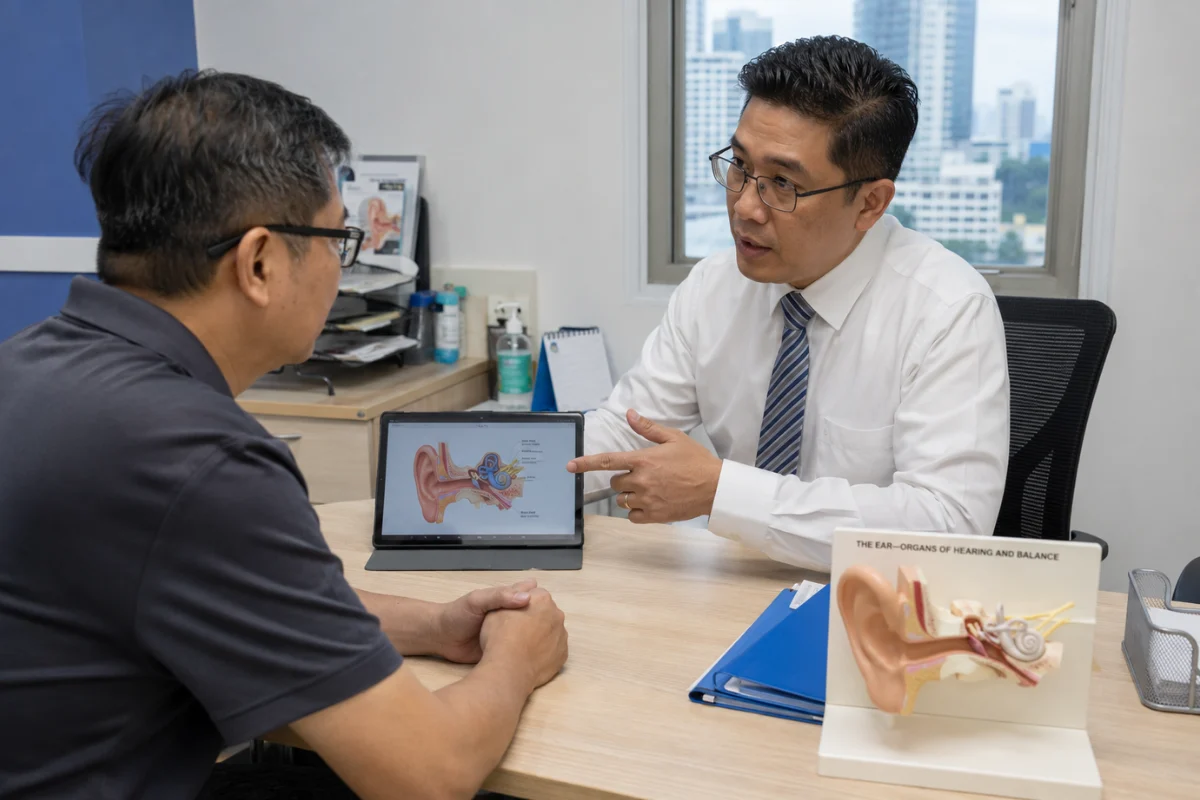
Intratympanic injection delivers medication, or in this trial, extracellular vesicles, directly through the eardrum into the middle ear. Notably, doctors already use this method to deliver steroids for sudden hearing loss.
Applying the same delivery route to a new product was therefore a logical next step. This umbilical cord exosome study builds directly on that existing practice.
Is this treatment available to patients now?
No. This is an early Phase 1 trial designed to test safety, not an approved or widely available treatment. Researchers have planned a separate Phase 1/2 trial comparing similar vesicles against standard steroid treatment.
That trial had not yet begun enrolling patients as of this study’s publication. Sudden hearing loss remains a medical emergency in the meantime.
Patients experiencing it should seek prompt evaluation from an ear, nose, and throat specialist. Waiting for investigational treatments to become available is not advisable, since timing matters so much for recovery.