Key Takeaways
- Six lung transplant patients with advanced chronic lung allograft dysfunction (CLAD) received 251 monthly stem cell infusions, with follow-up up to 58 months.
- All six survived 24 months, and doctors saw no serious side effects linked to the cells.
- Lung function did not improve at first, but the rate of decline slowed afterward.
- The authors treat the slowdown as an early hint, because the study had no control group.
- A larger randomized trial, ASSIST-CLAD, found no benefit from a shorter course of similar cells.
Estimated read: 7 min
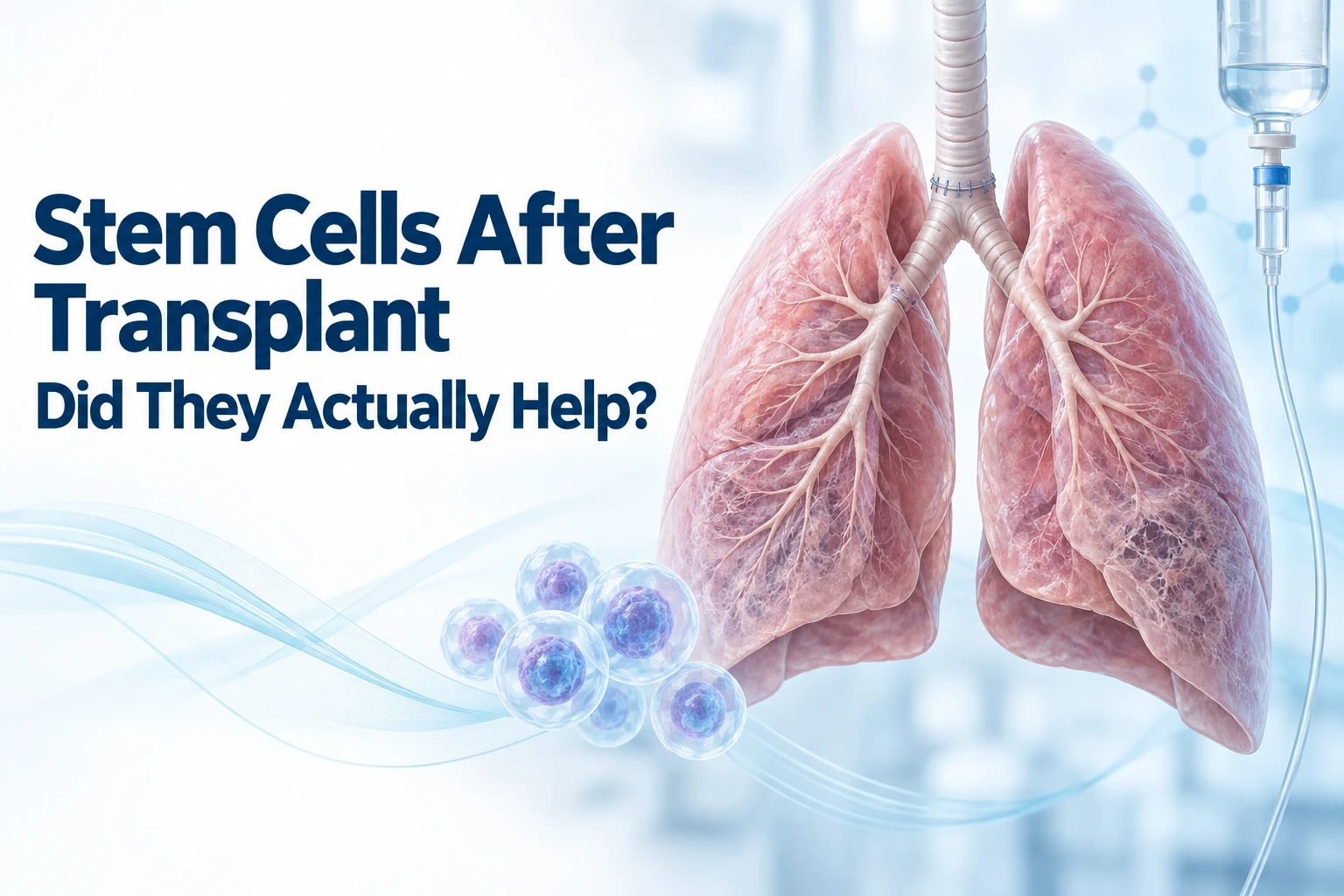
Doctors in Pavia, Italy, tested lung transplant stem cells in six patients whose transplanted lungs were failing. Each then received monthly infusions, and follow-up lasted up to 58 months. The treatment looked safe, and lung function declined more slowly, yet six patients cannot prove the cells caused that.
What Are Lung Transplant Stem Cells, and Who Received Them?
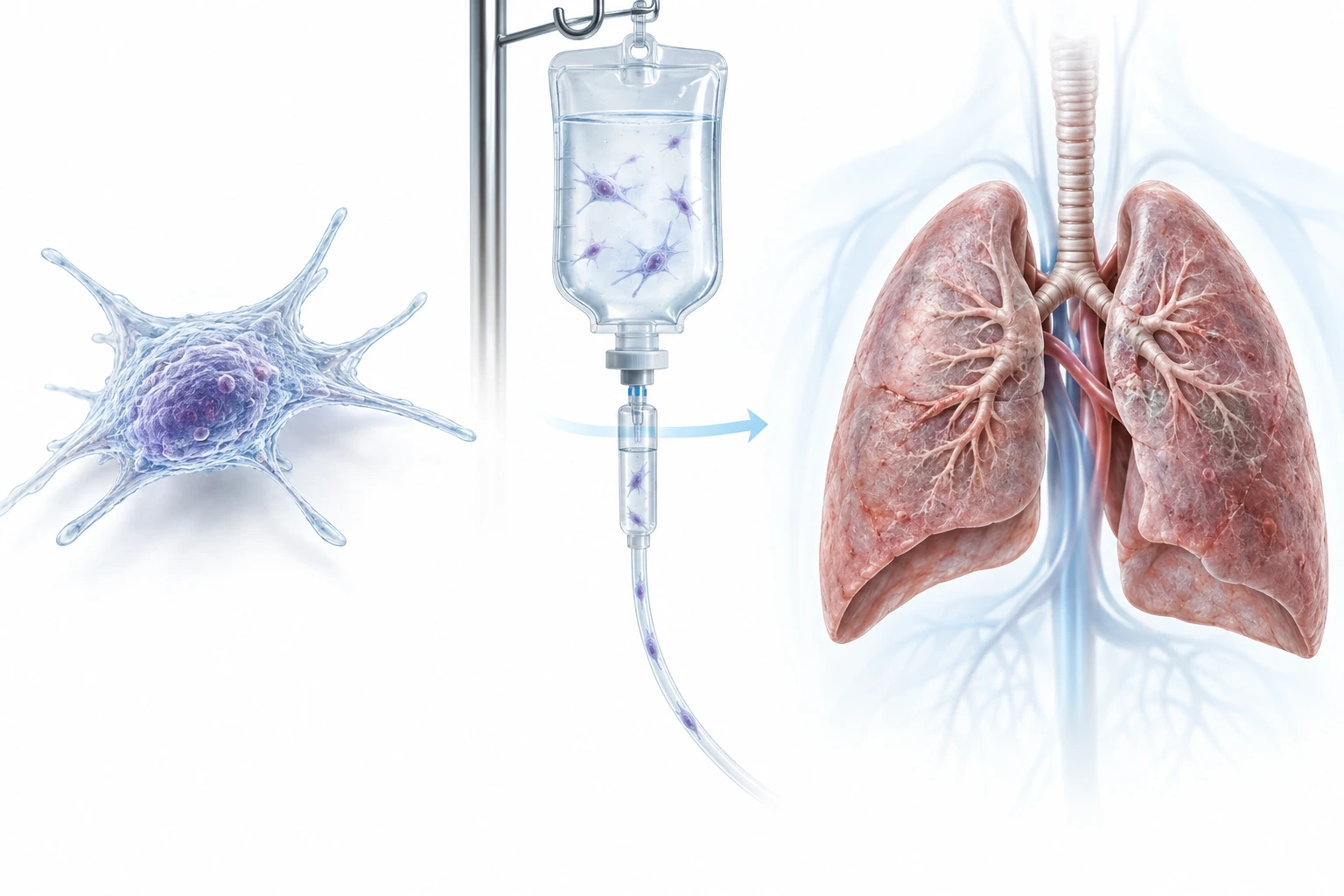
In this study, lung transplant stem cells were mesenchymal stromal cells (MSCs) grown from healthy donors’ bone marrow. Six lung transplant recipients with advanced chronic lung allograft dysfunction (CLAD) then received them by vein each month. Many MSCs also lodge in the lungs after infusion, which is why researchers see promise for lung disease.
CLAD, also called chronic rejection, is the leading cause of late death after a lung transplant. Repeated immune and non-immune injuries are key risk factors, because they damage the airway lining. As a result, the lung tissue scars.
Patients already take daily drugs that hold back their immune systems, yet CLAD can still develop. Standard therapies had failed for all six, so the team used the cells on a compassionate-use basis. Their average age was about 58, while treatment began 3.5 to 22 years after transplant.
Sara Lettieri and colleagues at IRCCS San Matteo Hospital Foundation in Pavia treated the patients between 2020 and 2023. They made the cells under European manufacturing rules and tested each batch for sterility and quality. Later, the 2026 single-center cohort study in Frontiers in Medicine reported the results on September 14.
What Happened to the 6 Lung Transplant Patients?
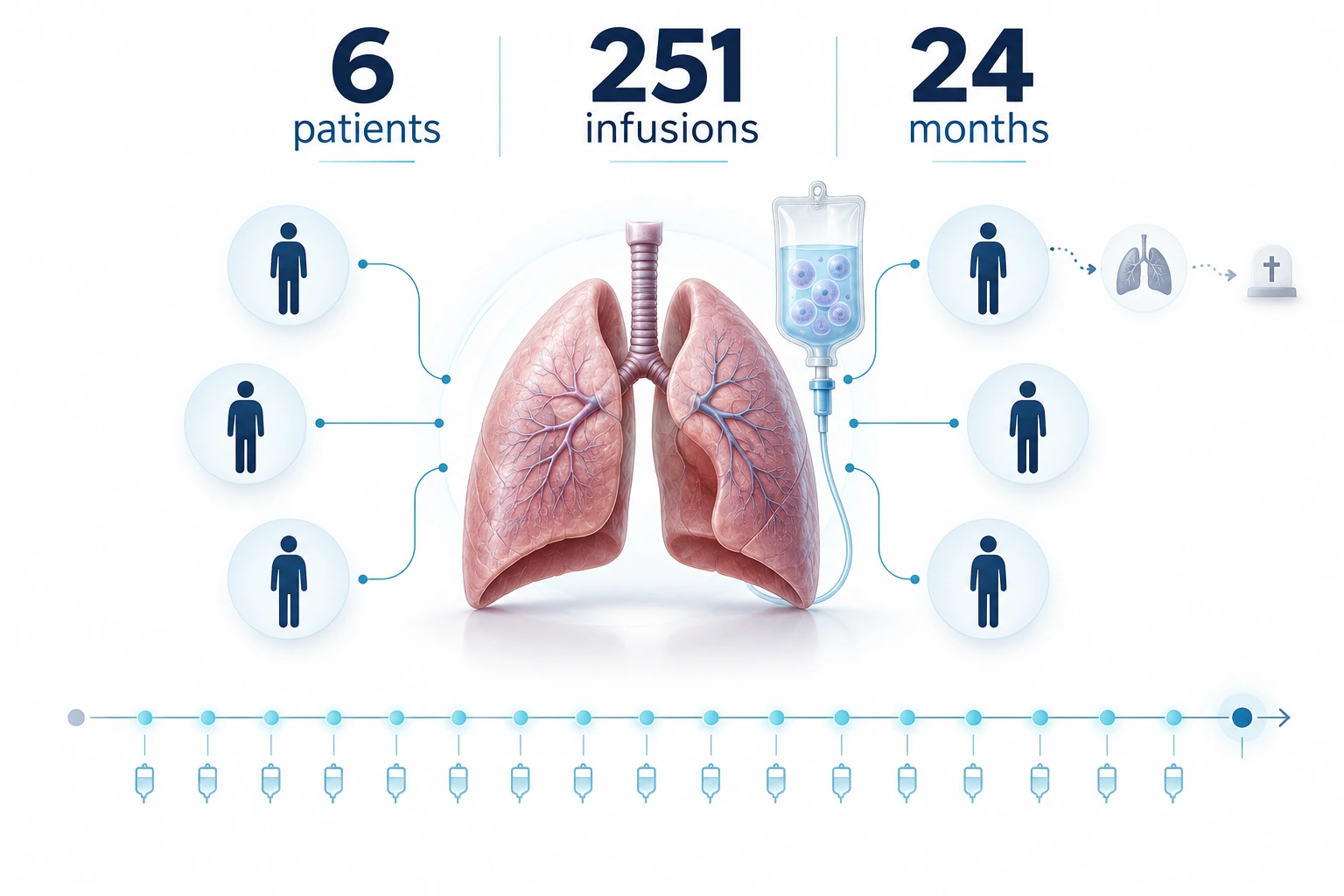
All six lung transplant patients survived the first 24 months. Doctors saw no serious side effects linked to the cells. The team gave 251 infusions in total, and follow-up lasted up to 58 months.
According to the authors, this is the first report of prolonged monthly MSC dosing in advanced CLAD. After 34 months of treatment, one patient joined the retransplant waiting list.
That patient died three months later from a severe lung infection. Meanwhile, the other five are alive and still receiving monthly infusions.
The dose was one million cells per kilogram of body weight. Each infusion took about ten minutes, and staff monitored vital signs for an hour afterward. The only other events reported were dizziness in one patient and irregular uterine bleeding needing treatment in another.
Nobody had a fever or a severe allergic reaction. Blood tests stayed stable, and no new donor-specific antibodies appeared. Infections did not rise significantly, although four of the six patients had at least one airway or lung infection.
Did the Stem Cells Improve Lung Function?
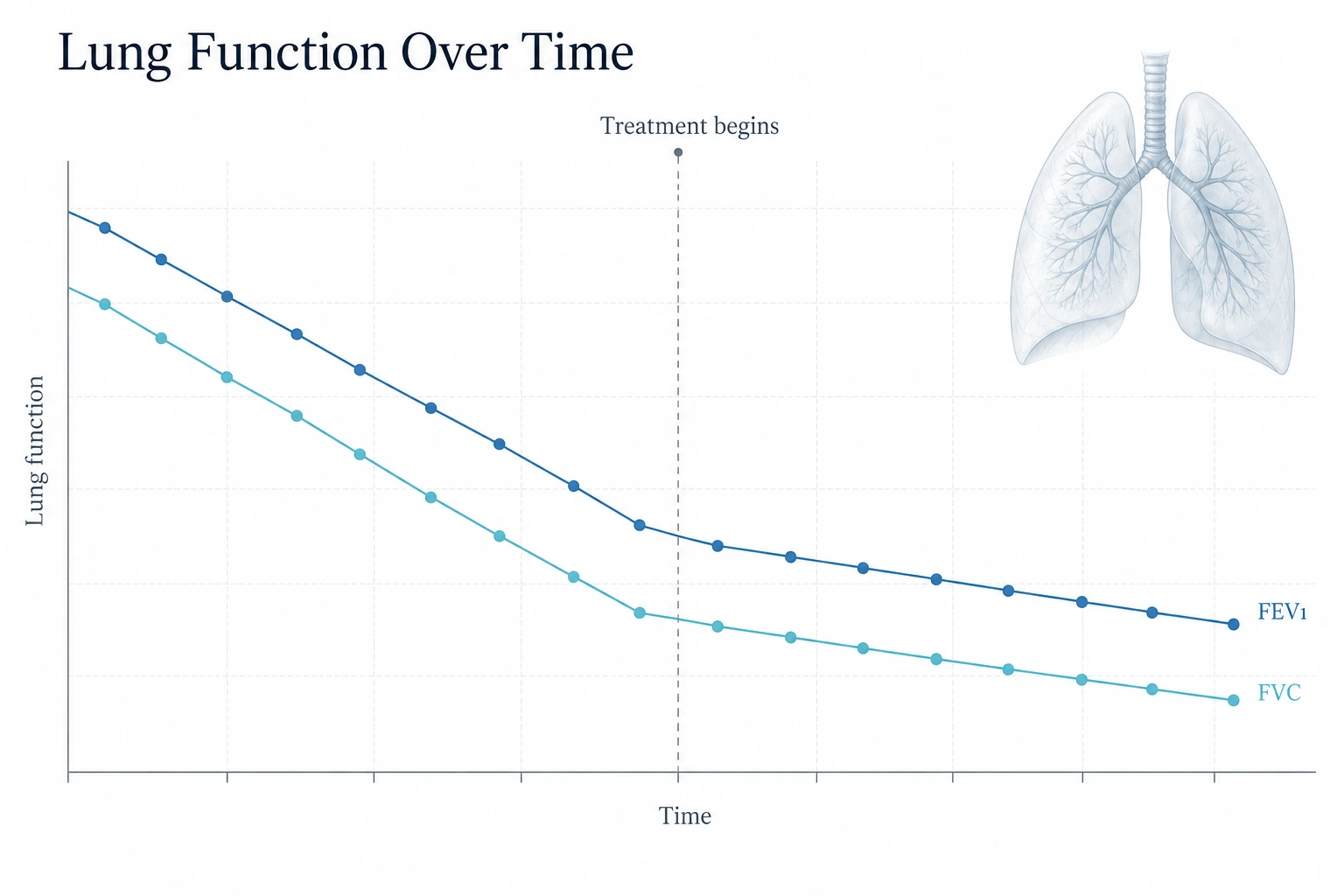
Not immediately, although the rate of decline slowed significantly over time. Lung transplant stem cells did not raise lung function right after treatment began. However, the authors treat the slowdown as an early hint, so it does not yet prove the cells worked.
Doctors tracked breathing with a pulmonary function test that measures FEV1 and FVC. FEV1 measures the volume of air a person can exhale in one second. FVC measures the total volume exhaled after a deep breath.
Both measures declined less steeply after treatment began, and chance alone is an unlikely explanation. The p-values were 0.003 for FEV1 and 0.008 for FVC. Neither measure jumped right away, so any effect would appear only gradually.
In practice, a slower decline would let patients keep more breathing capacity for longer, if the effect is real.
Why Can’t This Small Study Prove the Stem Cells Worked?
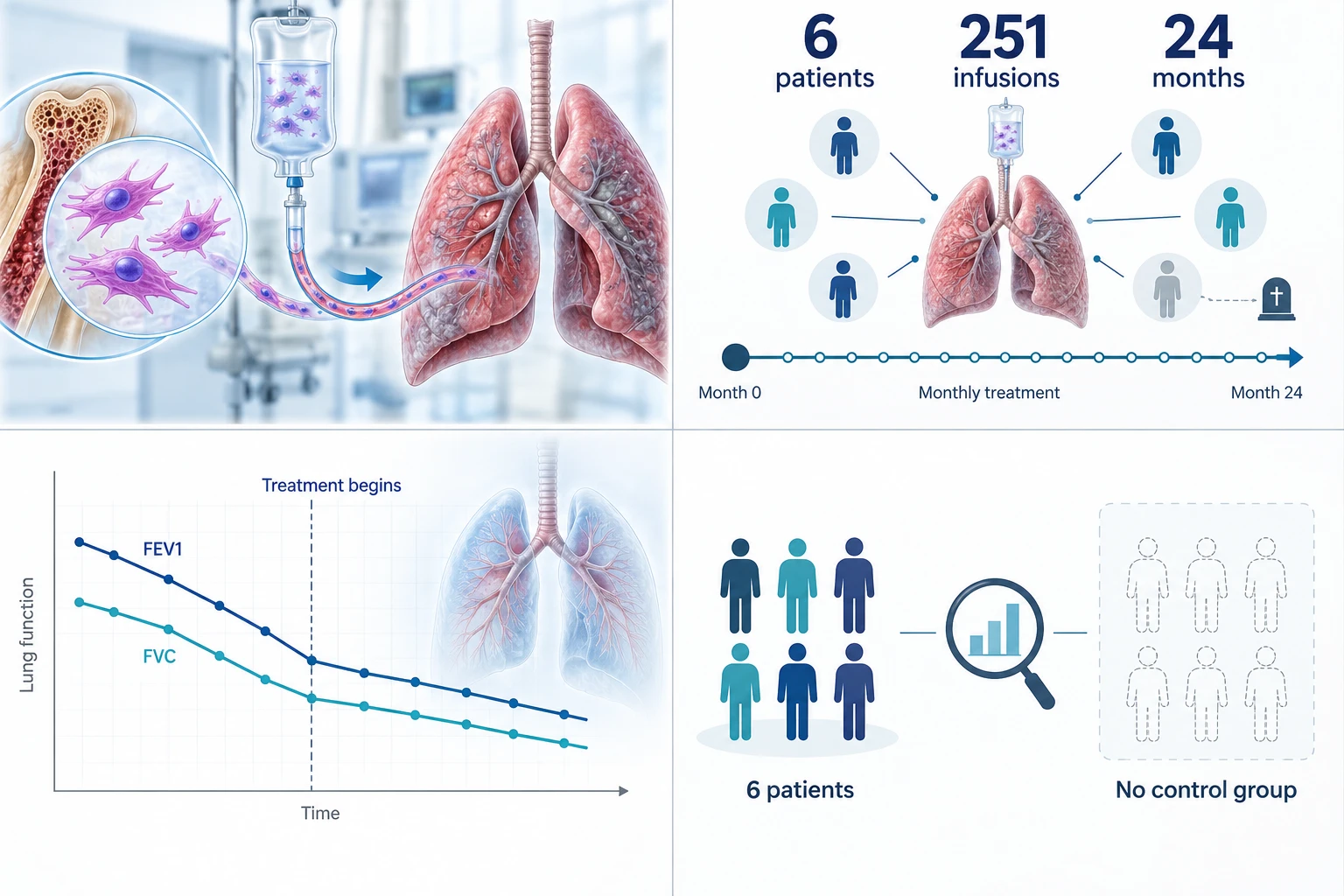
Because the study had only six patients and no control group, other explanations remain possible. For example, the authors note that CLAD sometimes reaches a plateau without any new treatment. Survivor bias may also matter, since only patients who lived longer contributed the latest data.
This study also cannot rule out a higher risk of infection. The infection rate ratio was 1.33, although the confidence interval ran from 0.67 to 2.61. That range is too wide to settle the question.
The team did not measure biological markers of MSC activity. As a result, the mechanism behind any slowdown remains unknown.
Furthermore, the cells came from bone marrow, so the results may not carry over to other cell sources. In addition, this overview of stem cells in COPD and pulmonary fibrosis covers other lung diseases. Only controlled trials can show whether MSCs help over the long term.
What Did the Larger ASSIST-CLAD Trial Find?
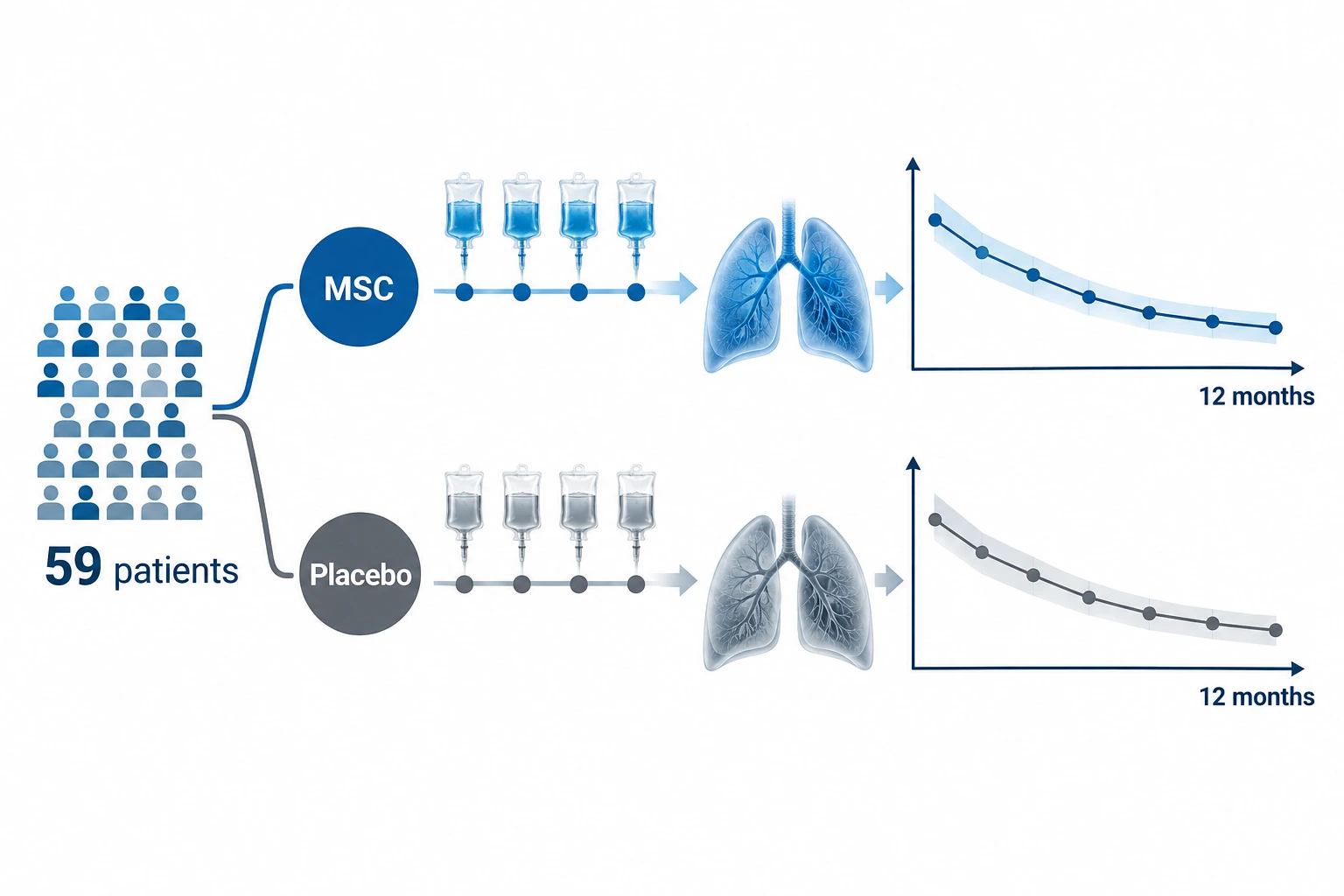
The randomized ASSIST-CLAD trial found no benefit from a short course of MSCs in new-onset CLAD. Daniel Chambers and colleagues randomized 59 patients to four MSC infusions over two weeks or a placebo. The trial had aimed to enroll 41 patients per group.
According to the ASSIST-CLAD randomized trial abstract on PubMed, progression-free survival did not improve at 12 months. Lung function decline also did not differ significantly between groups. Meanwhile, the trial ran at several transplant centers and used a placebo group, which the Pavia study lacked.
An earlier 2017 study of 10 patients reported FEV1 decline slowing from 120 to 30 milliliters per month. That earlier study used a single treatment arm and had no control group.
However, the two studies differ in important ways. ASSIST-CLAD gave a two-week course for new-onset disease, while the Pavia team gave monthly infusions for advanced disease. As a result, neither study settles the question.
Is MSC Therapy the Same as a Stem Cell Transplant?
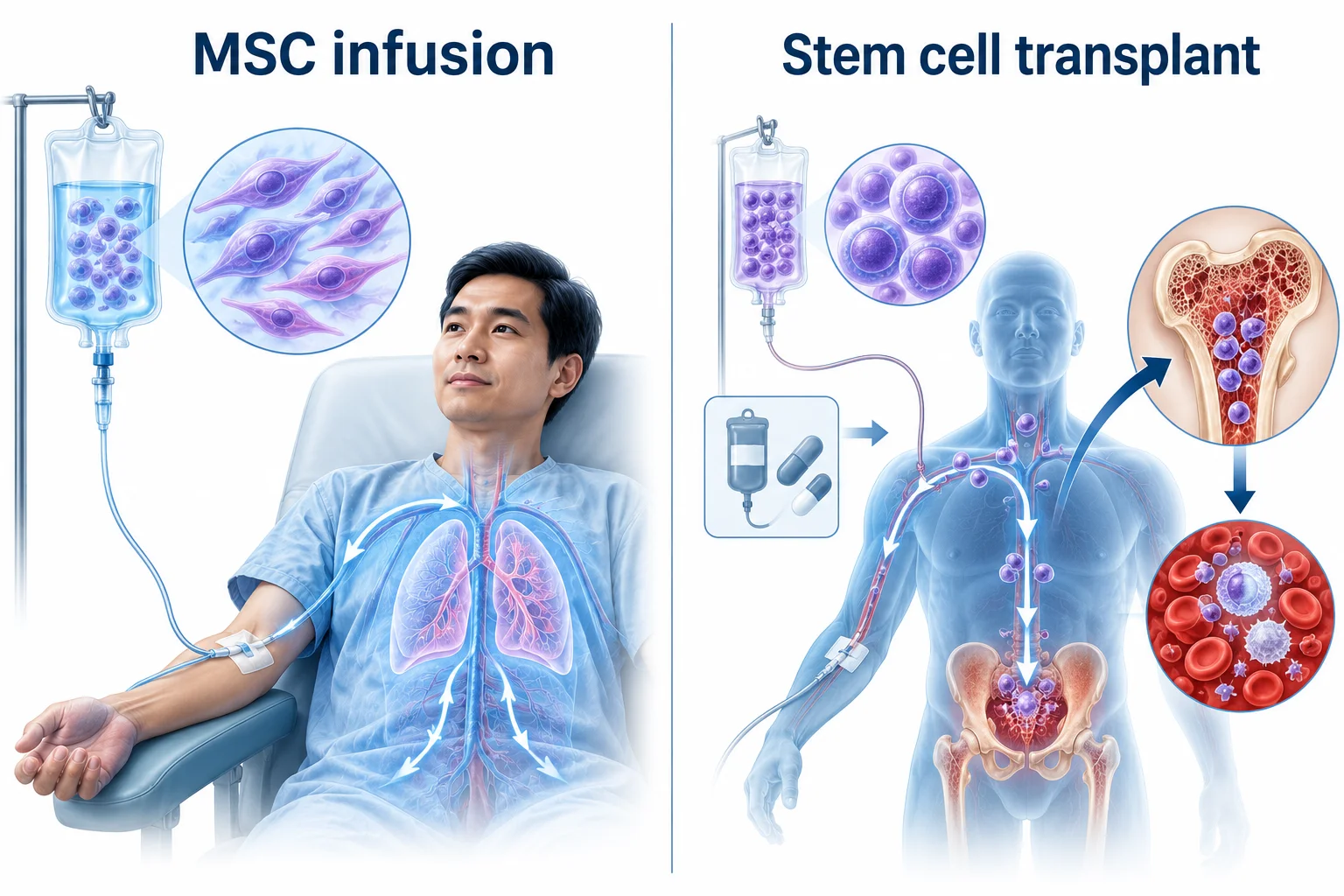
No. A stem cell transplant replaces a person’s blood-forming system with donor stem cells, often to treat blood cancers. First, doctors usually prepare the body with high-dose chemo or total body irradiation.
The Pavia patients received only repeated MSC infusions, so their treatment was closer to a medicine than a transplant. Still, the two treatments connect through graft versus host disease (GVHD). GVHD occurs when donor immune cells attack the recipient’s body after a stem cell transplant.
In December 2024, the FDA approved Ryoncil, the first MSC therapy, for children whose acute GVHD resists steroids. The Pavia team notes that its long, low-dose schedule resembles strategies used in GVHD care. In fact, earlier trials cited in the Frontiers paper tested MSCs to prevent chronic GVHD.
Still, cell therapies carry different risks, as this news on paused CAR-T trials and cell therapy differences explains.

What Comes Next for Lung Transplant Stem Cells?
Controlled trials come next, because lung transplant stem cells remain experimental. However, the Pavia study shows safety, not proof of benefit. Overall, the honest summary is cautious interest, not a proven cure.
The title question, 6 lung transplant patients got stem cells: what happened?, has a cautious answer. First, survival held at 24 months. Second, no serious side effects appeared, and lung function declined more slowly.
Next, the authors want trials that find the best schedule and the right patients. They urge tests of cell-free products made from MSCs, such as exosomes. Exosomes are tiny packages that cells release, so a separate guide compares exosome therapy versus stem cell therapy.
Frequently Asked Questions
Can stem cells heal lungs?
Current evidence does not yet show that stem cells can heal lungs. ASSIST-CLAD found no MSC benefit in transplanted lungs, and the Pavia study is too small to establish healing. Still, researchers keep testing whether lung transplant stem cells can slow damage.
Why don’t people live long after lung transplants?
Chronic lung allograft dysfunction is the leading reason. Median survival stays below seven years, the Pavia team notes, so each year after transplant matters. In addition, repeated injuries scar the lung, and current treatments cannot reliably stop that damage.
Can patients get MSC therapy for CLAD today?
Only through research or compassionate use. For example, the Pavia patients received cells on a compassionate-use basis, while ASSIST-CLAD followed formal trial rules. Anyone curious can ask their transplant team which studies are open.
Do these results apply to other lung diseases?
The results do not apply directly to other lung diseases. These six patients had CLAD after a lung transplant, and their cells came from bone marrow. Therefore, other lung diseases need their own controlled trials.