Key Takeaways
- A one-year Parkinson’s stem cell trial called STEM-PD found no serious side effects linked to the cell product itself.
- Scientists used embryonic stem cells to grow dopamine producing cells, then transplanted them into eight patients with Parkinson’s disease.
- Six of seven surviving patients cut their Parkinson’s medication substantially, with the higher dose group showing the clearest gains.
- One participant died from a lung infection tied to immunosuppression, not to the transplanted cells.
- Biotech firm Cellular Intelligence now leads STEM-PD’s development, with a Phase 2 clinical trial planned for late 2026.
Estimated read: 5 min
Doctors just published the first full year of results from a closely watched Parkinson’s stem cell trial. Eight patients received lab-grown dopamine producing cells directly into their brains. Twelve months later, the safety data is in, alongside early hints of symptom relief. The findings, published in Nature Medicine, mark real progress, though questions about long-term benefit remain.
What Is the STEM-PD Parkinson’s Stem Cell Trial?
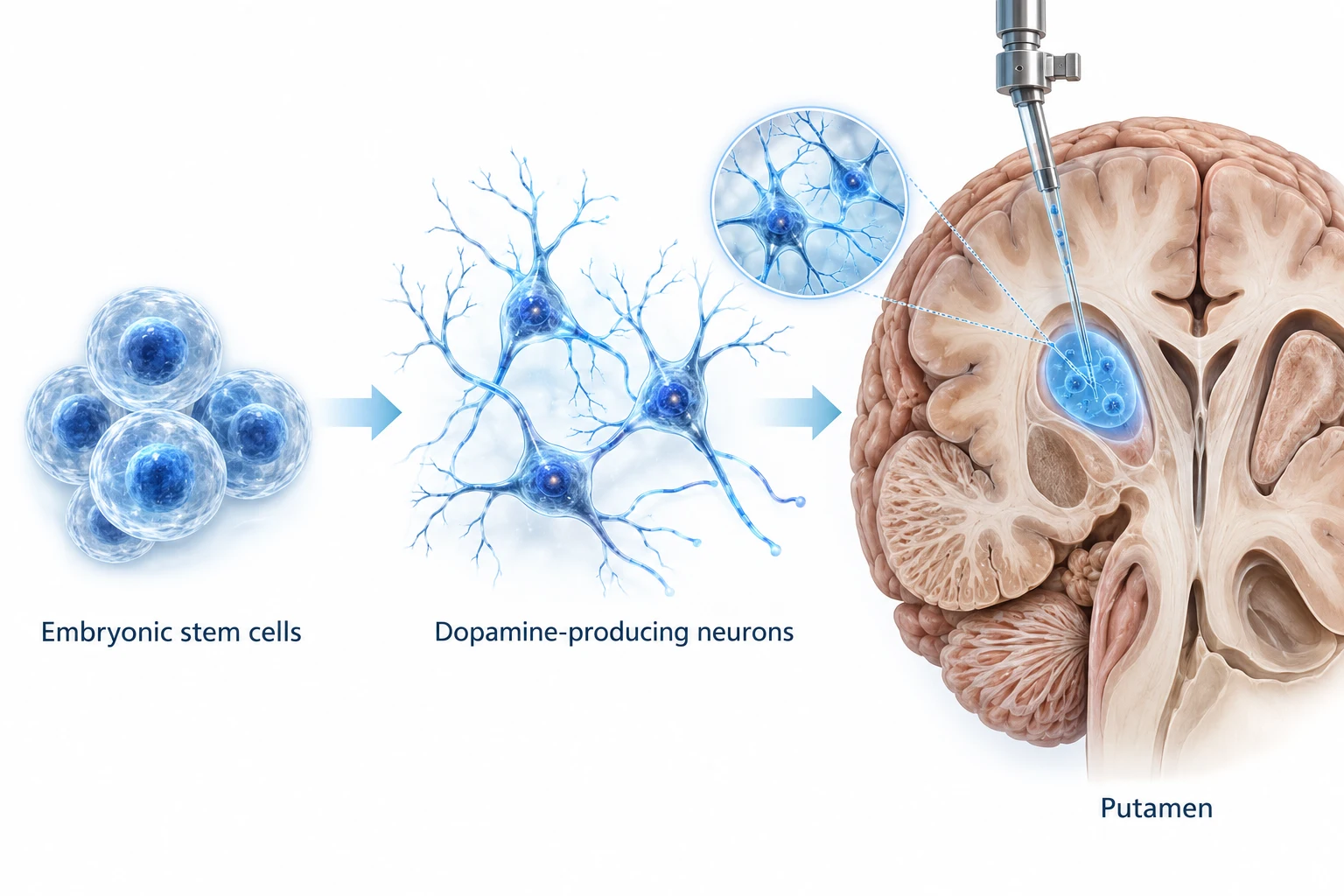
STEM-PD is a phase 1/2 clinical trial that tests whether lab-grown dopamine neurons can replace brain cells lost to Parkinson’s disease. Researchers at Lund University and the University of Cambridge transplanted the cells into eight patients between 2023 and 2024. They then tracked safety and early results for 12 months.
Parkinson’s disease already affects more than eight million people worldwide, a number expected to keep rising.
The cell product comes from a clinical-grade human embryonic stem cell line known as RC17. The study is registered on ClinicalTrials.gov under NCT05635409 for anyone who wants the full protocol.
Scientists coax these pluripotent stem cells into mature dopamine neurons. Surgeons then inject them into the putamen, a brain region that controls movement.
Parkinson’s disease is a movement disorder driven by the loss of these exact cells. Replacing them could, in theory, restore some lost function. That is the core promise behind stem cell therapy for Parkinson’s disease. It builds on other Parkinson’s cell therapy research we’ve covered, which explored similar early-stage approaches.
Still, how stem cell therapy works varies widely by cell type and delivery method. Results from one trial rarely transfer neatly to another.
What Did the One-Year Results Show?
One year on, the trial met its primary safety goal. Seven of the eight participants completed follow-up, and none developed tumors or dangerous growths on brain scans.
Doctors also recorded no unwanted extra movements known as graft-induced dyskinesias. Patients could not control these movements, and they caused harm in earlier cell transplant attempts. None of the serious side effects came from the transplanted cells or the surgery itself.
Beyond safety, the trial picked up early signs of benefit:
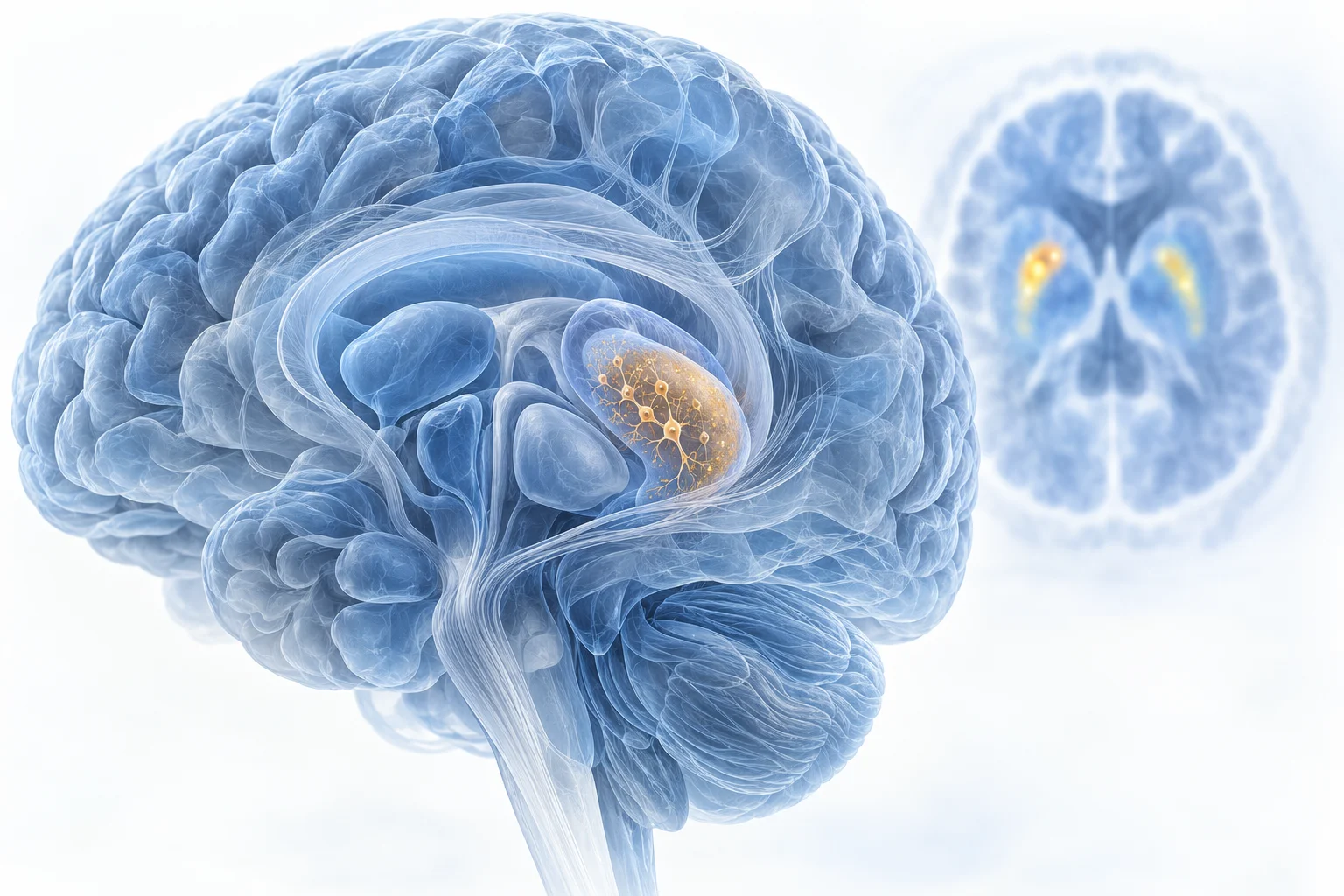
- Dopamine production rose on brain scans, especially in the higher dose group, suggesting the transplanted cells survived.
- Six of seven surviving patients substantially reduced their Parkinson’s medication. Cuts ranged from roughly 12% to 44%, depending on dose.
- Patients on the higher dose gained extra symptom-free time, based on daily diaries.
- Motor symptoms stayed broadly stable across both dose groups, with some patients showing mild improvement.
However, no patient reached normal dopamine levels. No patient stopped medication completely either, so the cells clearly help without curing the disease yet. Patient advocacy group Parkinson’s UK called the one-year data an encouraging, if early, step for the field.
Why Did One Trial Participant Die?
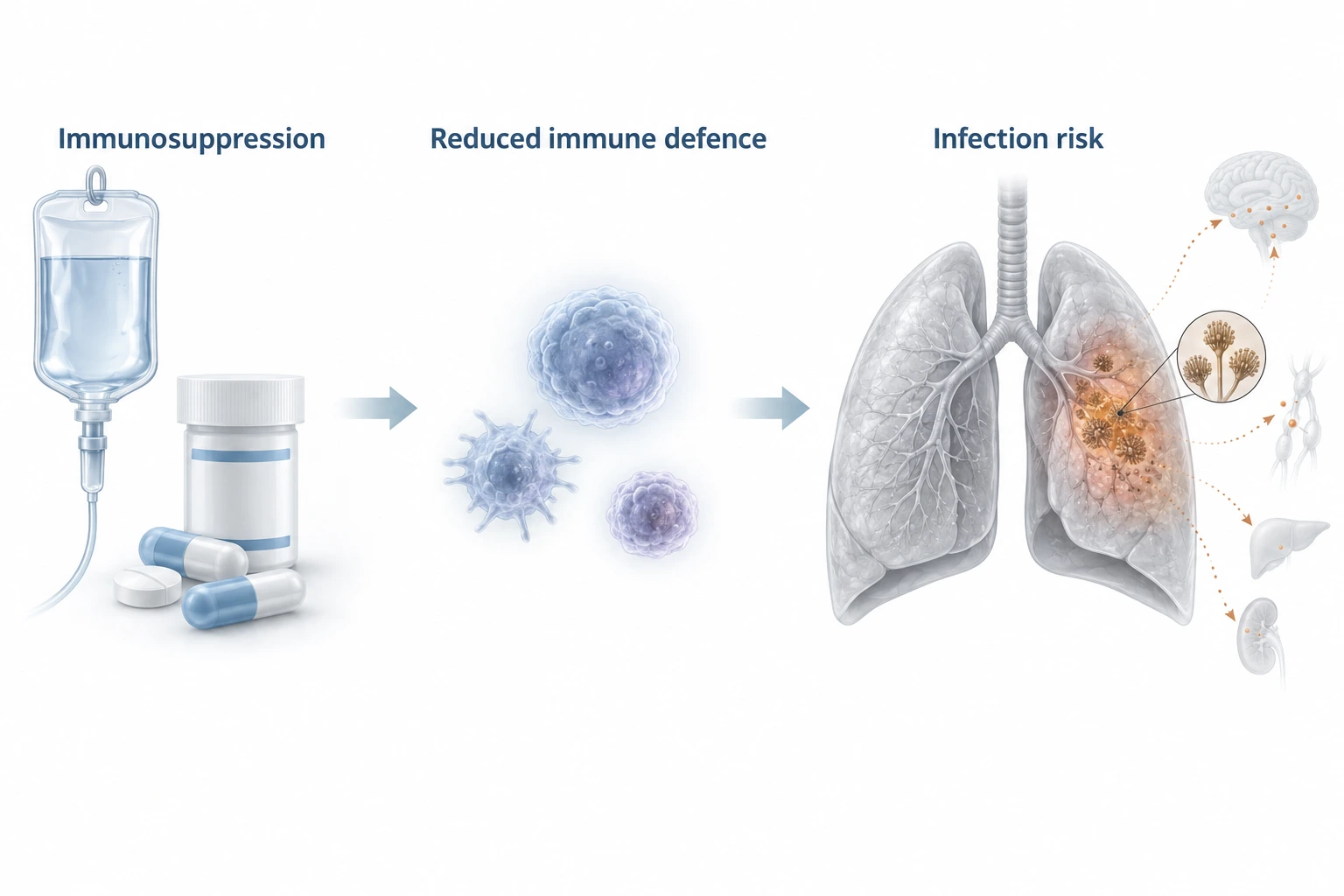
One high-dose participant died ten weeks after surgery from a fungal lung infection that spread to the brain. Immune-suppressing drugs caused the infection, not the STEM-PD cell product itself. Doctors give these drugs to stop the body from rejecting the donor cells.
Immune-suppressing treatment carries known side effects. One risk is a higher chance of infections that a healthy immune system would normally fight off. Researchers reviewed the case with an independent safety board and adjusted the steroid taper for the one remaining patient. All surviving participants have since completed or are tapering off their immune-suppressing medication, following the original trial protocol.
How Does STEM-PD Compare With Other Stem Cell Trials for Parkinson’s?
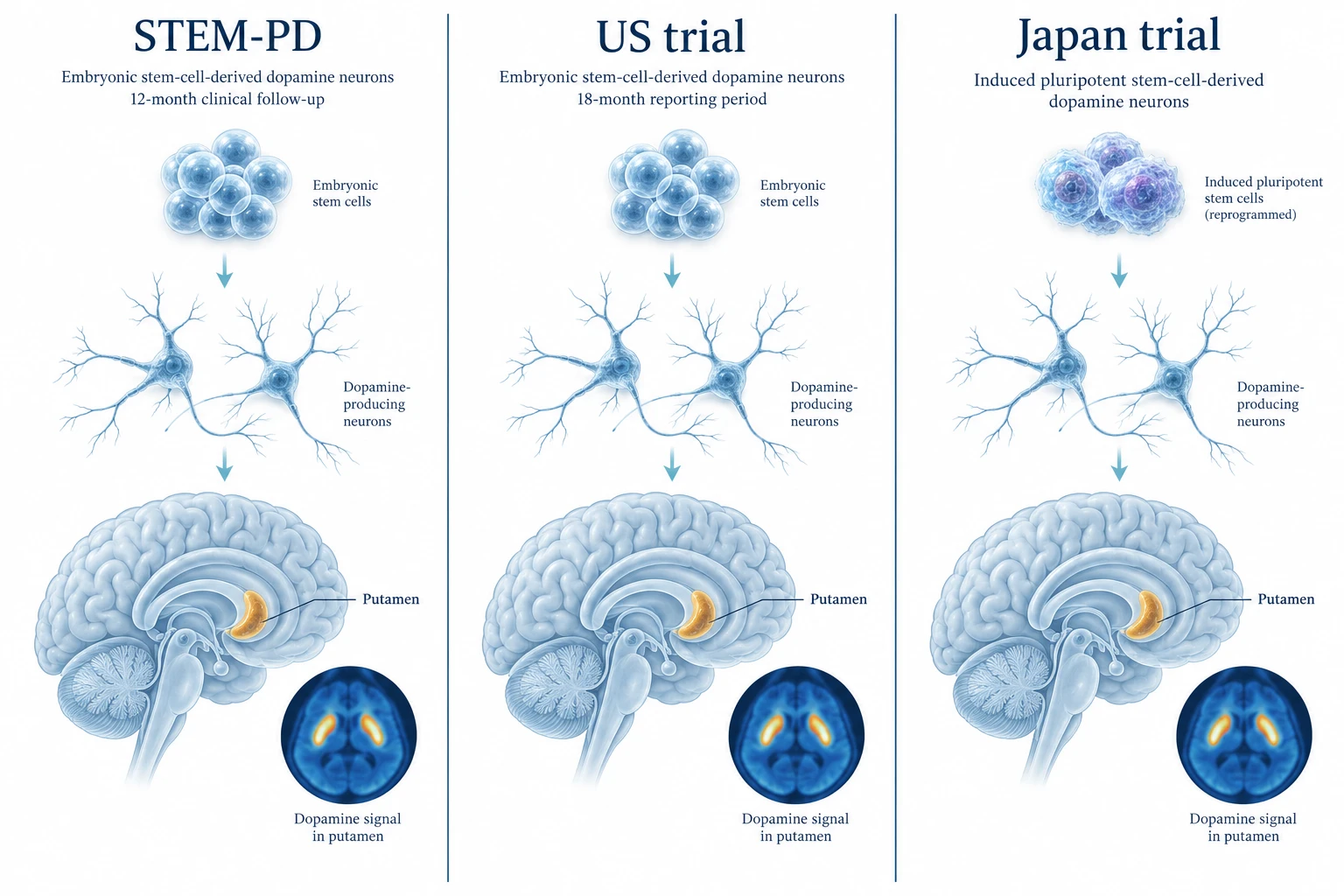
STEM-PD is not the only Parkinson’s stem cell trial to reach this milestone this year. One related clinical trial in the United States used embryonic stem cells. Another trial in Japan used induced pluripotent stem cells.
The US trial reported its dopamine gains at 18 months, a longer check-in point than STEM-PD’s 12-month mark. Comparing all three shows how much dosing and cell source still vary across this early field of regenerative medicine.
Beyond embryonic and induced pluripotent sources, other researchers are separately studying Wharton’s jelly-derived MSCs for cell quality and consistency. That work reminds us that cell sourcing choices shape outcomes across the field.
| Trial | Cell Source | Participants | Dopamine Signal Increase | Cell-Related Serious Side Effects |
|---|---|---|---|---|
| STEM-PD (Sweden/UK) | Embryonic stem cells | 8 | Up to 15% (high dose) | None |
| Tabar trial (US) | Embryonic stem cells | 12 | Reported gains at 18 months | None |
| Sawamoto trial (Japan) | Induced pluripotent stem cells | 7 | 44.7% average | None |
The larger increases seen in the Japan and US trials suggest STEM-PD’s dose may have room to grow in future studies. None of the three trials reported serious side effects tied to the cells themselves. That is an encouraging, consistent pattern across this stem cell research.
What Happens Next for This Parkinson’s Stem Cell Trial?
In May 2026, biotech company Cellular Intelligence acquired global rights to STEM-PD from Novo Nordisk. Cellular Intelligence now leads clinical development of the therapy. The deal included an equity investment from Novo Nordisk, which keeps future royalty and milestone rights.
STEM-PD has FDA Fast Track designation and a cleared application for a Phase 2 trial, expected to start in late 2026. This treatment for Parkinson’s disease is moving closer to larger studies. Meanwhile, the original eight participants will continue follow-up for three years. Doctors plan more scans and symptom tracking through 2027.
Longer follow-up should clarify whether these early gains hold up over time. For families considering future trials, that distinction still matters most.
FAQ
How successful is stem cell therapy for Parkinson’s disease so far?
Early trials, including STEM-PD, show the approach is safe and technically feasible. Most patients reduced their Parkinson’s medication, and some brain scans showed dopamine production increasing.
Still, no patient in any trial has stopped medication completely. None have seen dopamine levels return to normal either. For now, that pattern points to safety and early promise, not a cure.
How close are we to curing Parkinson’s disease?
Current stem cell trials aim to restore lost dopamine neurons, not cure the underlying disease. Researchers still don’t fully understand what triggers Parkinson’s disease, and cell transplants address only one part of the condition. Most experts view these trials as an important step toward better treatment, not an imminent cure.
Has anyone ever fully recovered from Parkinson’s disease?
No participant in the STEM-PD trial or similar studies has fully recovered. Some fetal tissue transplant patients decades ago saw long-lasting symptom relief, but researchers have not documented full recovery. Current goals focus on reducing medication and easing motor symptoms rather than reversing the disease entirely.
What are the potential breakthroughs in Parkinson’s disease research in 2026?
Several developments for STEM-PD have emerged in 2026:
- One-year safety data with no serious cell-related side effects
- Acquisition by biotech firm Cellular Intelligence
- A planned Phase 2 trial with FDA Fast Track status
Researchers are comparing cell doses and sources across multiple pluripotent stem cell trials worldwide. The goal is to find which approach best restores dopamine production long term.