Stem Cell Therapy: Could It Transform Medicine and Slow Ageing?

Why Stem Cells Matter in Regenerative Medicine

Quick Summary

Stem cell therapy is making measured progress toward treating age-related diseases like vision loss, frailty, and Parkinson's, but broad age reversal remains unproven. Recent clinical trials show improved mobility in frailty patients, while Parkinson's and vision repair trials aim to replace specific damaged cells. However, safety risks persist, with unapproved treatments causing serious harm. Manufacturing and regulatory hurdles also slow progress. Patients should prioritize registered trials and verified outcomes over exaggerated claims.
  • Promising areas: Frailty, Parkinson's, age-related macular degeneration (AMD), Alzheimer's, vision repair, mobility improvement
  • Clinical trial highlights: Phase 2b laromestrocel (MSC) trial improved physical condition in frailty patients (Cell Stem Cell, 2026); first-in-human safety trial for glaucoma began March 2026; iPSC-derived RPE cell transplant for late-stage AMD in Phase I
  • Key safety warnings: FDA restricts certain gene therapies after hematologic malignancy risk; adverse events linked to unapproved stem cell products reported, including deaths
  • Manufacturing challenges: iPSC therapies costly, labor-intensive, difficult to scale; automation and modular bioprocessing needed for clinical/commercial viability
  • Expert view: New Scientist columnist notes many past rejuvenation therapies failed after hype; current progress is cautious but real
  • Patient advice: Seek registered clinical trials (ClinicalTrials.gov), verified efficacy data, regulatory approval; avoid unproven "miracle" treatments
Estimated read: 5 min
Keywords: stem cell therapy, age reversal, frailty, mesenchymal stem cells, iPSCs, regenerative medicine, FDA safety

Stem cell therapy: could it transform medicine and slow ageing? The question sounds bold, but it no longer belongs only to science fiction. New trials now suggest that carefully designed stem cell treatments may repair damaged tissue, ease frailty, and treat some age-related diseases.

A recent New Scientist report explored growing interest in stem cells as tools for repair and possible renewal. However, the most important word is “possible.” Scientists are not close to offering a safe, proven way to stop the aging process. Still, the field has moved from hype toward serious clinical testing.

Why Stem Cells Matter in Regenerative Medicine

Stem cells can renew themselves and develop into more specialized cells. As a result, researchers see them as powerful tools for regenerative medicine. In theory, they could replace damaged cells, support tissue repair, and release helpful signals such as growth factors.

Different approaches use different sources. Some therapies rely on adult stem cells. Others use induced pluripotent stem cells, which scientists create by reprogramming adult cells into a more flexible state. Researchers also study cells from umbilical cord blood and tissue, although these products are subject to strict regulation.

One major focus involves mesenchymal stem cells mscs. These cells may help calm the immune system, support an anti inflammatory response, and reduce inflammation in damaged tissue. That matters because chronic inflammation plays a major role in many age-related chronic diseases.

Can Stem Cells Really Reverse Aging

Can Stem Cells Really Reverse Aging?

The phrase reverse aging attracts attention, but it can mislead readers. Current evidence does not show that stem cells can restore the whole human body to a youthful state. Instead, early studies suggest they may improve specific functions in certain conditions.

For example, frailty studies have found that older adults walked better after receiving stem cells from young donors. Other early trials in Parkinson’s disease, Alzheimer’s disease, and age-related vision loss have reported possible benefits. Yet many of these studies remain small, early-stage, or open-label. That means scientists still need larger controlled trials before doctors can draw firm conclusions.

So, while anti aging stem cells may one day help treat some signs of aging, their near-term use will likely focus on repairing specific damage, not renewing the whole body.

The Most Promising Areas of Stem Cell Treatment

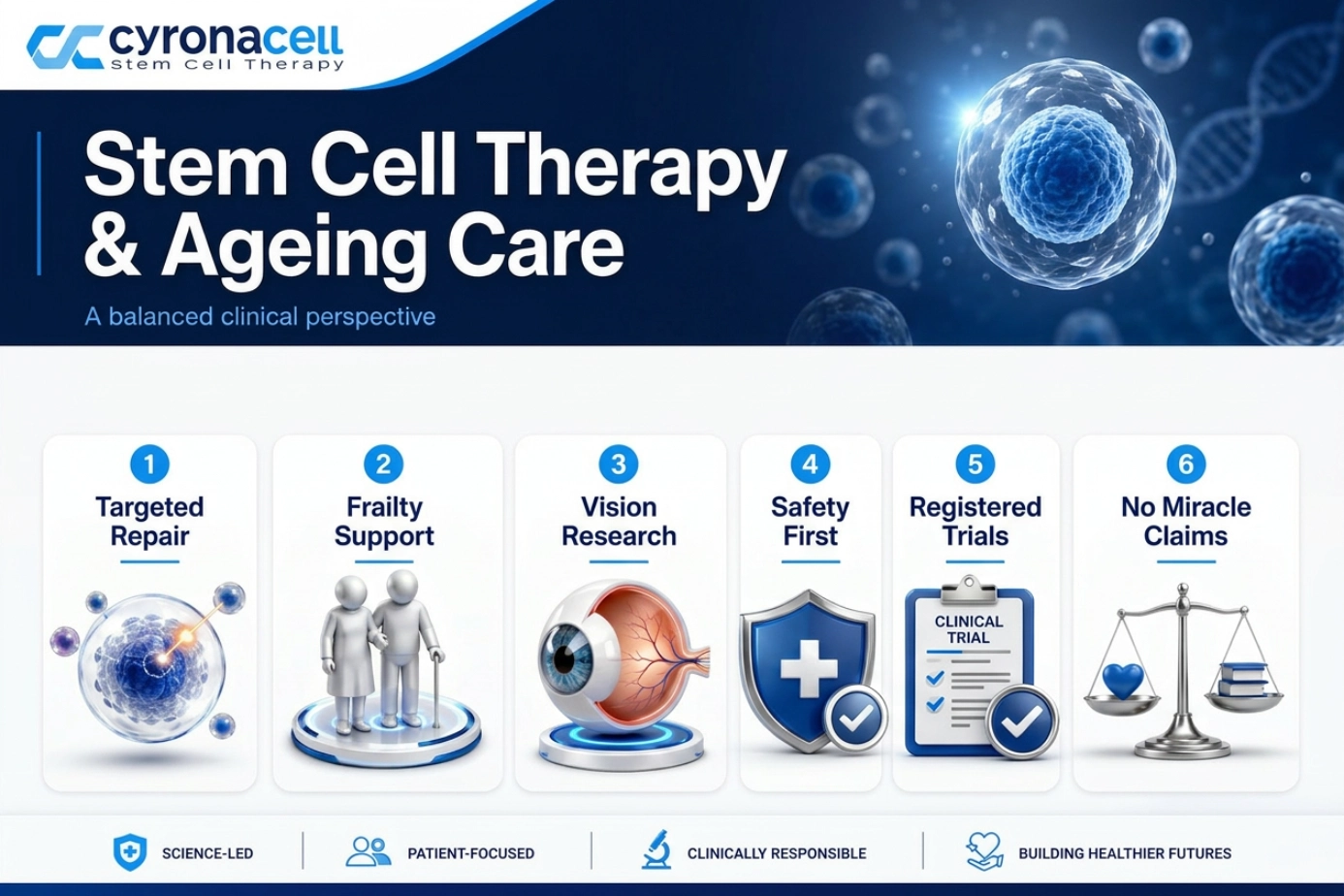
The strongest near-term promise lies in diseases in which a clear cell type is damaged or lost. In Parkinson’s disease, for example, researchers aim to replace dopamine-producing nerve cells. In age-related vision loss, they try to restore retinal cells that support sight. In frailty, scientists hope cell therapy can improve mobility, blood vessel health, and daily function.

These goals are more realistic than broad age reversal. They also give regulators clear outcomes to measure, such as walking distance, vision scores, motor function, or biomarkers.

Importantly, stem cells may help in more than one way. Some may become replacement cells. Other stem cells may act at the cellular level by sending signals that support repair, guide the immune response, or promote the surrounding environment around damaged tissue.

If these effects hold up in larger studies, they could improve quality of life for people with age-related illnesses.
Target Condition How Stem Cells May Help Current Research Status
Frailty in Older Adults May improve mobility, strength, and physical function Early clinical trials reported encouraging results
Parkinson’s Disease Attempts to replace dopamine-producing nerve cells Active clinical research with early-stage human trials
Age-Related Macular Degeneration (AMD) Aims to restore damaged retinal support cells Phase I studies currently underway
Glaucoma and Vision Loss May support optic nerve and retinal repair First-in-human safety trials recently started
Alzheimer’s Disease Researchers study immune and repair-related effects Still experimental with limited evidence
Inflammation and Tissue Repair Mesenchymal stem cells may reduce inflammation signals Ongoing studies across multiple diseases
Whole-Body Age Reversal No proven ability to fully reverse human aging Currently unsupported by strong clinical evidence
Safety Still Comes First

Safety Still Comes First

The excitement around stem cells has created a risky market for unproven treatments. Some clinics advertise therapies for arthritis, brain or nerve disease, pain, or ageing without strong evidence. That is a major concern.

The FDA stem cell warning states that many stem cell and exosome products require approval, and some clinics may mislead patients by selling treatments without proof they are safe or effective.

Stem cell therapies also carry real biological risks. Cells may grow in unexpected ways, trigger immune reactions, or fail to behave as intended. Pluripotent stem cells raise special concern because they can differentiate into many cell types, making careful production essential.

For this reason, the field depends on strict trial design, transparent reporting, and long term monitoring. A therapy that looks safe after three months may still need years of follow-up.

Why Manufacturing Is a Major Bottleneck

Even when a therapy works, scaling it can prove difficult. Some treatments use a patient’s own cells, reducing the risk of rejection. However, this approach requires a custom batch for each person. That raises cost and slows production.

Other therapies use donor cells. These “off-the-shelf” options could be easier to distribute, but they may create immune-mismatch challenges. Every batch must meet strict standards for purity, strength, and safety.

The ISSCR stem cell guidelines say stem cell treatments need strong evidence, careful production, and proper review before doctors use them in regular care.

These standards matter because ageing-related diseases affect millions of people. A therapy cannot transform medicine unless companies can produce it safely, consistently, and affordably.

What This Means for the Future of Ageing Care

What This Means for the Future of Ageing Care

Stem cell science may change how doctors treat diseases linked to ageing. Over the next decade, the biggest advances will likely focus on frailty, vision loss, brain diseases, and tissue damage after illness or injury.

However, patients should separate credible research from marketing claims. A legitimate trial will explain its risks, endpoints, oversight, and follow-up plan. It will not promise miracle renewal or guaranteed age reversal.

The best way to view this field is with cautious optimism. Stem cells may help the body repair damage that once seemed permanent. They may also reveal new ways to treat inflammation, restore function, and slow some biological decline.

What Patients Should Know Before Considering Treatment

Anyone considering a stem cell therapy should ask whether the treatment has regulatory approval for that exact condition. They should also ask whether the treatment is part of a registered clinical trial, what evidence supports it, and what risks researchers already know.

Patients should be careful when clinics make vague claims such as “boosts vitality,” “repairs all organs,” or “reverses ageing naturally.” These phrases often signal weak evidence.

Science is moving fast, but responsible medicine moves step by step. For now, stem cell therapy looks most promising as a tool for targeted repair. It may help treat diseases of aging before they can truly slow aging.

The Takeaway for Healthy Ageing

Stem cell therapy could become one of the most important medical advances of the next generation. It may improve tissue repair, support recovery from age-related disease, and help older adults maintain function for longer.

But the strongest evidence still points to specific treatments for specific conditions. Broad human renewal remains unproven. The future of stem cells is exciting. However, it must stay grounded in careful science, strict rules, and honest communication.

Author

Leave a Reply

Your email address will not be published. Required fields are marked *