Quick Read SummaryStem Cell Therapy For Autism: What Science Shows and What Remains Experimental
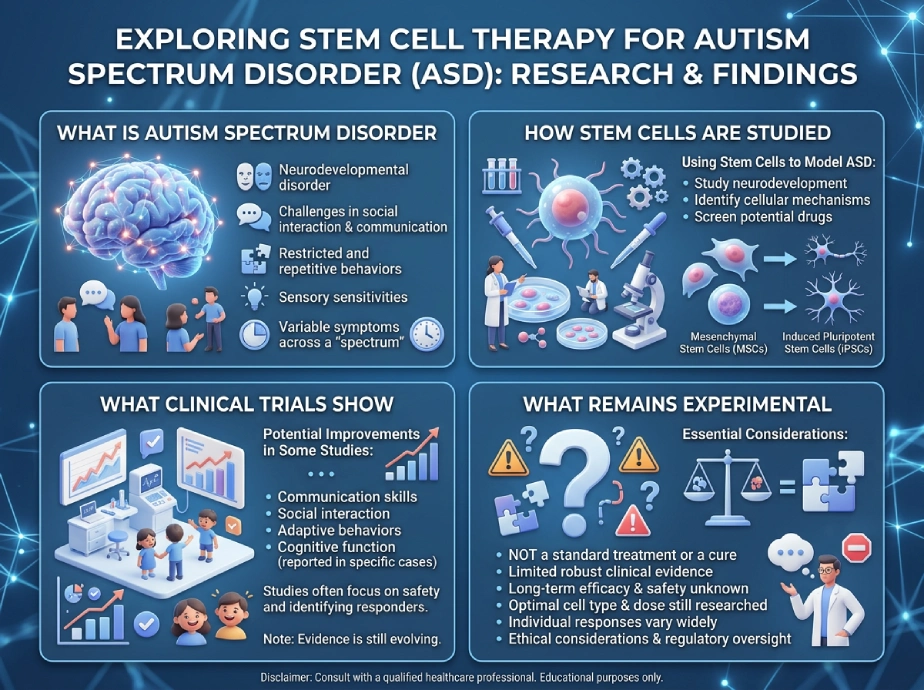
Stem cell therapy for autism is still considered experimental treatment. Early clinical trial studies show possible improvements in speech, focus, and social interaction in some children. However, the evidence base remains limited, and doctors do not approve it as standard care.
What Researchers Know
Autism spectrum disorder ASD involves brain development, genetics, and immune system changes. Some researchers study umbilical cord blood and other stem cell types to reduce inflammation and support communication between brain cells. Regenerative medicine research continues, but long term safety and efficacy require more data.
Key Takeaways for Parents
Estimated read: 6 min
Keywords: stem cell therapy for autism what science shows and what remains experimental, autism spectrum disorder ASD, stem cell treatment, experimental treatment, clinical trial, regenerative medicine, umbilical cord blood, scientific evidence, effectiveness of stem cell
Stem Cell Therapy For Autism: What Science Shows and What Remains Experimental explains current research, clinical trials, safety, and evidence for families.
stem-cell-therapy-autism-what-science-shows-experimental
|
What parents should know before choosing this treatment
Many families look for new ways to help children with autism. You may have seen stories online about stem cells improving behavior or speech. Because of this growing interest, many people now search for clear answers about Stem Cell Therapy For Autism: What Science Shows and What Remains Experimental.
In this article, we explain what researchers know, what clinical trial studies show, and what doctors still consider experimental treatment. Our goal is simple. We want to help you make informed decisions using real scientific evidence.
What Is Autism Spectrum Disorder ASD?
Autism spectrum disorder ASD affects how a person communicates, learns, and interacts with others. Symptoms range from mild to severe. Some children with autism need daily support. Others live more independently.
Scientists believe autism involves brain development, genetics, and immune system changes. However, researchers still study the exact causes. Because inflammation in the brain may play a role, experts now explore stem cell therapy as part of regenerative medicine research.
What Is Stem Cell Therapy?
Stem cells can turn into different cell types inside the body. Doctors use stem cell treatment in some approved medical conditions. However, when doctors discuss cell therapy for autism, they still study it in research settings.
Some researchers use umbilical cord blood because it contains stem cells that may support immune balance. Scientists hope these cells may reduce inflammation and improve communication between brain cells.
Even so, doctors do not approve stem cell therapy as a standard method for treating autism.
What Science Shows So Far
Researchers completed several small clinical trial studies in children with autism. Some studies show promise. In certain cases, children improved speech, focus, or social interaction.
However, these studies included small groups. They also followed patients for short periods. Because of this, the evidence base remains limited.
Scientists continue exploring stem cell therapy to measure safety and efficacy. So far, most regulated trials report mild short term side effects. Still, researchers must study long term results.
Therefore, while early data suggests possible benefits, experts cannot confirm the full effectiveness of stem cell approaches yet.
What Remains Experimental
Many clinics advertise stem cell treatment for autism. However, most programs still count as experimental treatment.
Researchers continue exploring stem cell therapy, and they still ask important questions:
• Which cell types work best
• What dose gives the safest results
• How long the benefits last
• How treatment improves quality of life
• What long term risks may appear
Until large clinical trial research confirms strong and consistent results, doctors cannot recommend it as routine care.
Safety, Cost, and Smart Decisions
Parents must review the scientific evidence carefully. Always check if a program runs under official clinical trial approval.
The cost of stem cell procedures can be high. Insurance often does not cover it. Therefore, families should ask clear questions about price, follow up care, and safety standards.
Most importantly, speak with licensed doctors who understand autism spectrum disorder ASD. Balanced guidance helps families make informed decisions without false hope.
Where Research Goes Next
Regenerative medicine research continues to grow each year. Scientists improve study design and patient tracking. As a result, the evidence base may become stronger over time.
Stem cell therapy shows promise in early research. Still, experts need more data before they confirm safety and long term benefit.
In closing, Stem Cell Therapy For Autism: What Science Shows and What Remains Experimental reminds families to balance hope with facts. While researchers continue exploring stem cell therapy, it remains an experimental treatment. Strong clinical trial evidence must confirm safety, effectiveness of stem cell methods, and real improvement in quality of life before doctors widely recommend it.
FAQ
Is stem cell therapy still experimental?
Yes. Doctors still classify stem cell treatment for autism as experimental treatment. Although some clinical trial studies show promise, researchers need stronger scientific evidence before approval. Families should choose regulated programs when exploring stem cell therapy.
What have scientists found out about autism?
Scientists found that autism spectrum disorder ASD involves genetic and immune system differences. Brain inflammation may affect communication pathways. Because of this, researchers study cell therapy for autism within regenerative medicine. However, the current evidence base continues to develop.
What is the science behind stem cell therapy?
Stem cells can support repair and immune balance. Researchers test whether certain cell types, including umbilical cord blood cells, may reduce inflammation in children with autism. Early research shows possible effectiveness of stem cell approaches, but experts must confirm safety and efficacy through larger clinical trial studies.