Stem Cell Therapy for Degenerative Disc Disease: New 2026 Trial Data Explained

Why Disc Disease Is So Difficult to Treat

Quick Summary

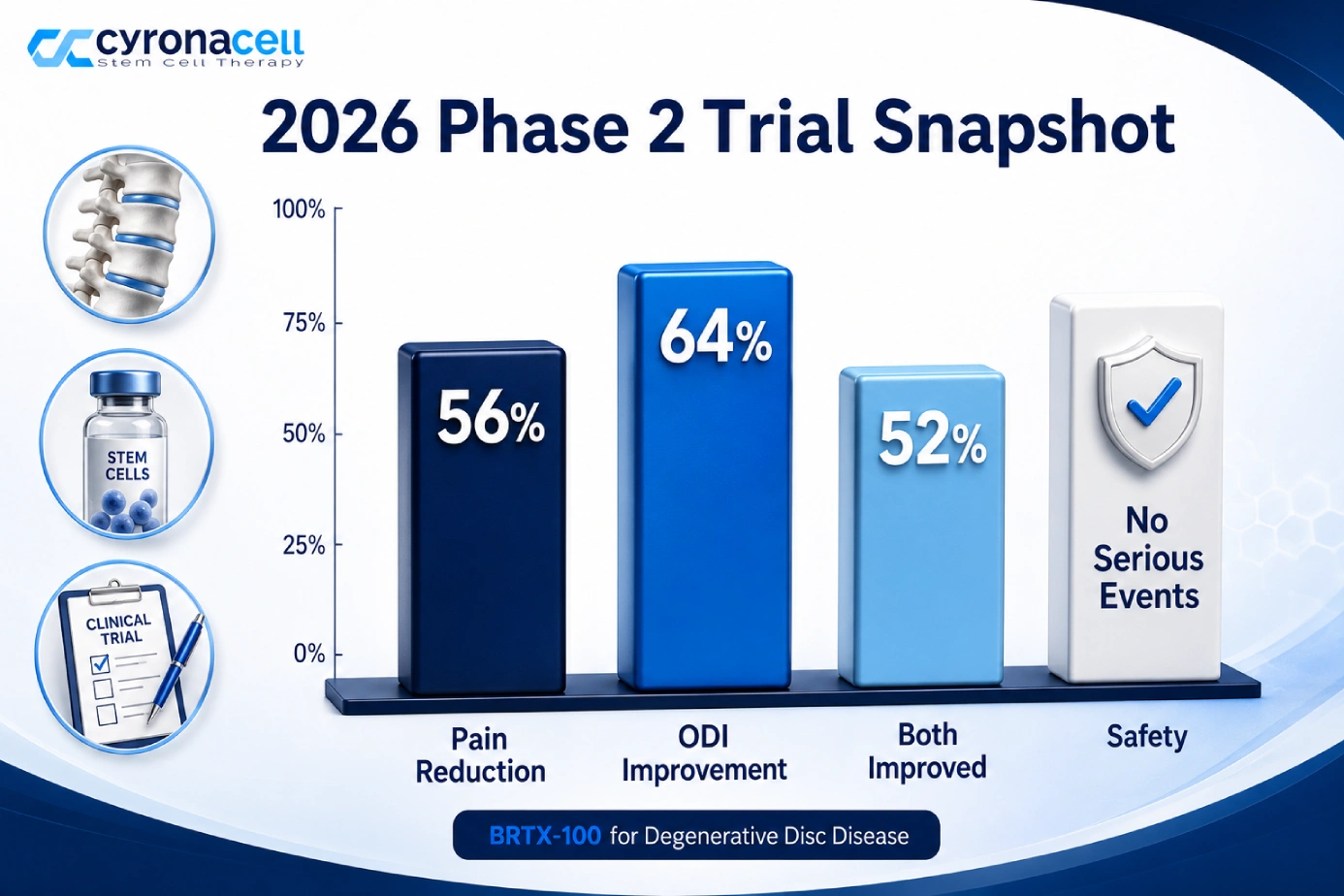
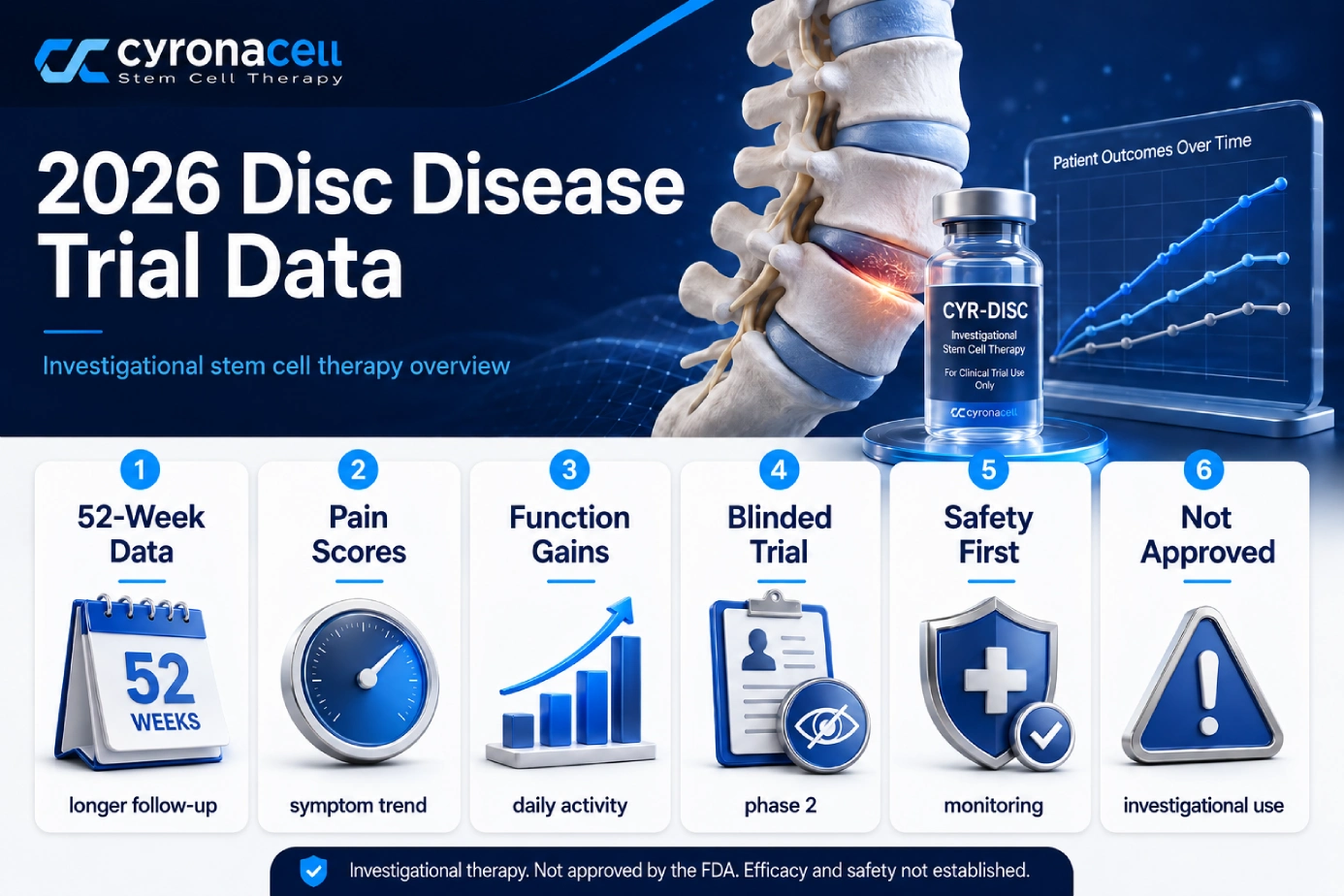
New 2026 Phase 2 data for BRTX-100 (autologous mesenchymal stem cell therapy for chronic lumbar disc disease) shows sustained pain and functional improvements at 52 weeks: 56% of evaluable patients had ≥50% VAS pain reduction, 64% had ≥50% ODI disability improvement. Safety data reported no dose-limiting toxicities or treatment-related serious adverse events. However, the trial remains blinded (no comparison vs. saline control yet), so results are promising but not proof of efficacy. BRTX-100 is investigational, not FDA-approved for disc disease.
  • Patient group: 99 patients with chronic lumbar disc disease; Phase 2 randomized, double-blind, controlled trial
  • Key results (52 weeks): 56% ≥50% VAS pain reduction; 64% ≥50% ODI improvement; 52% achieved both
  • Average improvements: 71.4% VAS pain; 73.7% ODI at 52 weeks (evaluable patients)
  • Two-year durability (small group): 73.8% VAS improvement; 68.2% ODI improvement at 104 weeks
  • Safety: No dose-limiting toxicities, no treatment-related serious adverse events; mild post-procedure pain only
  • Major limitation: Trial remains blinded – no control group comparison yet; true effect vs. placebo still unknown
  • Regulatory status: Investigational; not FDA-approved for disc disease; no commercial product available
Estimated read: 5 min
Keywords: stem cell therapy, degenerative disc disease, BRTX-100, mesenchymal stem cells, chronic low back pain, Phase 2 trial

New 2026 data have brought fresh attention to stem cell therapy for degenerative disc disease: new 2026 trial data explained, especially after BioRestorative Therapies shared expanded Phase 2 results for BRTX-100 in chronic lumbar disc disease.

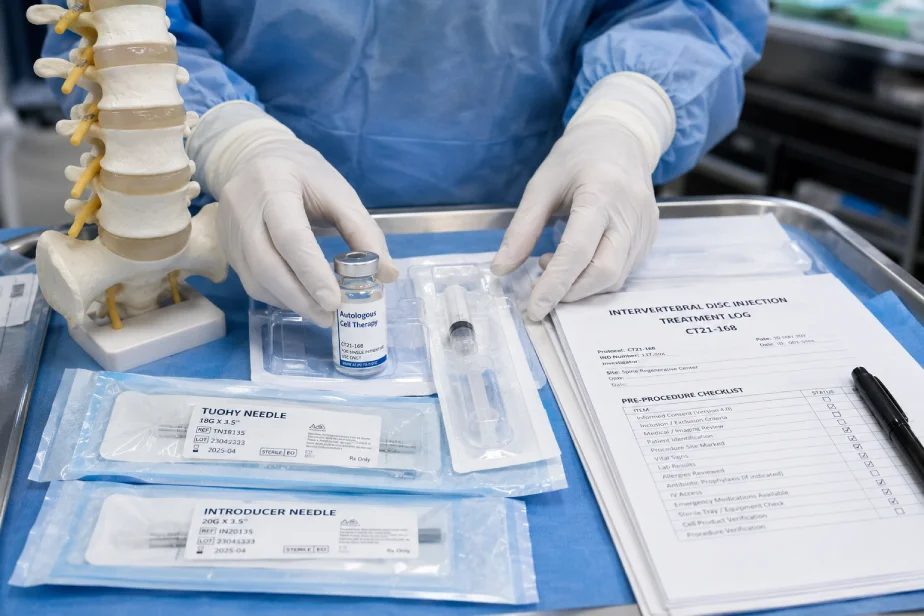
According to the company’s BRTX-100 Phase 2 data, patients experienced sustained pain and functional improvements after a single injection of autologous mesenchymal stem cell therapy into the disc.

However, readers should view the results with care. The dataset remains blinded. That means the company has not yet shown how the treatment group performed compared with the control group. As a result, the findings are promising but do not yet prove that BRTX-100 works better than the saline control.

Why Disc Disease Is So Difficult to Treat

Degenerative disc disease affects the spinal discs that cushion the vertebrae. Over time, intervertebral discs can lose water, flexibility, and strength. As this happens, people may develop chronic low back pain, stiffness, nerve irritation, and limited movement.

Most patients begin with conservative care. Doctors may recommend physical therapy, medication, activity changes, injections, or rehabilitation. In severe cases, surgeons may discuss procedures such as spinal fusion.

Still, these options often focus on symptom control. They do not reliably rebuild damaged disc tissue. They also do not always prevent the underlying disc damage from worsening.

That treatment gap explains the growing interest in regenerative medicine. Instead of only blocking pain, researchers want to see whether biologic treatments can support disc repair, calm inflammation, and protect the remaining disc structure.
What BRTX-100 Is Designed to Do

What BRTX-100 Is Designed to Do

BRTX-100 is an investigational stem cell therapy made from a patient’s own bone marrow cells. BioRestorative describes the therapy as an autologous hypoxic-cultured cell therapy enriched with mesenchymal stem cells mscs.

The idea is simple. Damaged discs have low oxygen levels, limited blood flow, and poor healing capacity. Because of this, the company grows the cells in low-oxygen conditions to help them survive inside the disc.

Researchers believe these cells may work in several ways. They may release growth factors, help with reducing inflammation, and affect the damaged area around the nucleus pulposus, the soft center of the disc. They may also influence the annulus fibrosus, the tough outer ring that helps support disc pressure.

Even so, BRTX-100 remains an investigational therapy. The FDA has not approved it as a treatment for disc disease.

What the 2026 Trial Data Shows

What the 2026 Trial Data Shows

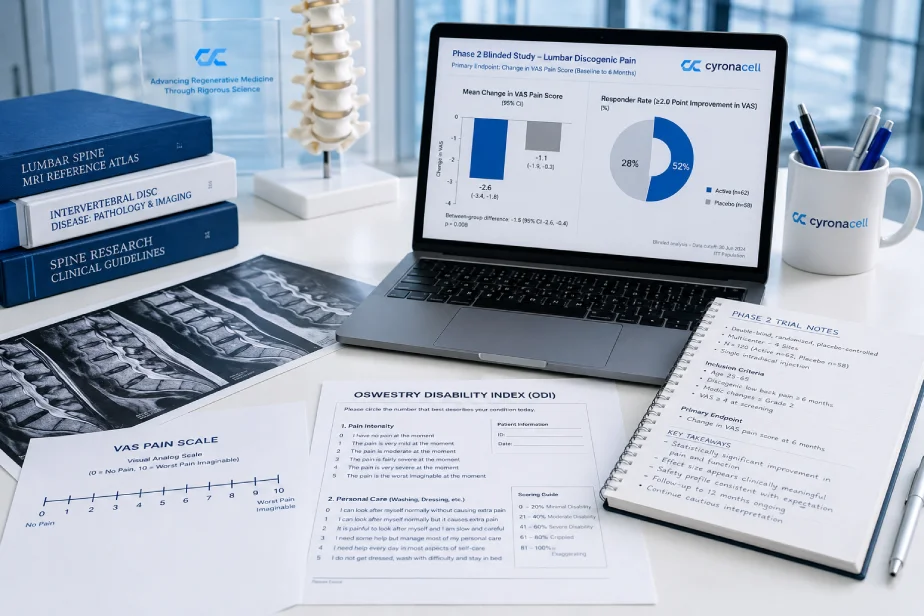
BioRestorative’s Phase 2 trial enrolled 99 patients with chronic lumbar disc disease. The study used a randomized, double-blind, controlled design. It compares BRTX-100 with a saline control through an injection into the disc.

ClinicalTrials.gov lists the BRTX-100 study as a Phase 2 trial evaluating the safety and early efficacy of a single BRTX-100 dose in patients with chronic lumbar disc disease.

The 2026 update focused on patients who reached key follow-up points. At 52 weeks, BioRestorative reported that 56% of evaluable patients had at least a 50% reduction in VAS pain. The company also said that 64% had ODI disability scores at least 50% better.

In addition, 52% of evaluable patients reached at least 50% improvement in both pain and disability. The company also reported average improvements of about 71.4% in VAS pain and 73.7% in ODI at 52 weeks.

The longer-term data also drew attention. At 104 weeks, a smaller patient group showed sustained average improvement. That group achieved 73.8% improvement in VAS pain and 68.2% improvement in ODI.

These numbers matter because chronic disc-related pain can be hard to improve over the long term. However, the two-year group was small. Therefore, a lasting signal in a small group can guide future clinical trials, but larger unblinded results still matter more.

Trial Category BRTX-100 Findings Why It Matters
Study Design Phase 2 randomized, double-blind, controlled trial Helps reduce bias and improve research reliability
Patient Population 99 patients with chronic lumbar disc disease Targets a common cause of chronic low back pain
Pain Reduction (VAS) 56% achieved at least 50% pain improvement at 52 weeks Suggests potentially meaningful long-term pain relief
Disability Improvement (ODI) 64% achieved at least 50% ODI improvement May reflect better daily function and mobility
Combined Improvement 52% improved in both pain and disability measures Shows overlap between symptom relief and function
Long-Term Durability Benefits remained at 104 weeks in a smaller group Raises interest in sustained regenerative effects
Safety Findings No treatment-related serious adverse events reported Important for therapies injected into spinal discs
Main Limitation Trial data still blinded versus saline control True treatment effect remains unconfirmed
Why the Blinded Trial Design Matters

Why the Blinded Trial Design Matters

The most important limitation is the blinded design.

In masked randomized controlled trials, neither patients nor evaluators know who received the treatment or the control. This design helps reduce bias. It matters a lot in back pain research because pain can change for many reasons.

For example, symptoms may improve because of placebo response, natural changes in pain, rehabilitation, patient expectations, or other care. Therefore, researchers need to compare the treatment group with the control group before they can judge the true effect.

For now, readers should see the 2026 BRTX-100 data as an encouraging signal, not final proof. The unblinded results will need to show whether patients who received BRTX-100 improved more than patients who received saline control.

This point is important. A therapy may look strong in a combined blinded dataset. Then, it may show a smaller effect after researchers separate the treatment and control groups.

Safety Findings Look Encouraging So Far

The safety findings may be the most important part of the update. BioRestorative reported no dose-limiting toxicities and no treatment-related serious adverse events in the expanded blinded Phase 2 dataset.

The company described the reported adverse events as mild and mainly related to post-procedure pain. That matters because any injection into a spinal disc must clear a high safety bar before researchers can justify larger trials.

So far, the safety profile appears encouraging. Still, patients should not confuse early trial safety data with approval.

The FDA says it has not approved regenerative medicine therapies for orthopedic conditions, including disc disease and back pain. Its regenerative medicine warning remains important for anyone considering commercial stem cell treatments outside regulated studies.

How This Fits Into the Larger Research Landscape

How This Fits Into the Larger Research Landscape

BRTX-100 is not the only biologic treatment under study for disc disease. Scientists have studied cells from bone marrow, fat tissue, and disc tissue. They have also studied exosomes, scaffolds, hydrogels, and hyaluronic acid gel.

This wider research effort shows why one Phase 2 update should not stand alone. Researchers need consistent results across multiple studies before doctors can know which patients may benefit most.

Some studies also compare biologic injections with platelet rich plasma prp, another treatment studied in orthopedic care. PRP uses concentrated platelets rather than stem cells. Therefore, it is not the same as cell therapy. However, both approaches aim to influence inflammation, healing signals, and pain pathways.

At the same time, the field still faces major questions. Researchers need to identify the best cell source, dose, delivery method, follow-up period, and imaging markers. They also need to show which results last and which fade over time.

Can Stem Cells Rebuild Disc Height?

Many patients want to know whether stem cells can restore disc height. Right now, the answer remains uncertain.

Pain and disability can improve even when imaging does not show major rebuilding. In other words, a patient may feel better because inflammation drops or pain signals change, even when MRI scans do not show major structural repair.

True disc rebuilding would require stronger evidence. Researchers would need to show better disc hydration, new matrix formation, improved structure, and stable results over time.

This is difficult because the nucleus pulposus and annulus fibrosus have complex mechanical roles. The disc must absorb pressure, support movement, and protect nearby nerves. As a result, rebuilding a damaged disc is much harder than relieving pain.

Future studies should include imaging endpoints, biomarkers, and longer follow-up. These data can help show whether a therapy only improves symptoms or also supports real disc repair.

What Patients Should Take From the 2026 Update

What Patients Should Take From the 2026 Update

The BRTX-100 update offers cautious optimism. The reported pain relief and functional gains appear meaningful, especially because some benefits lasted up to 2 years in a small group.

The safety findings also look encouraging so far. No treatment-related serious adverse events were reported in the blinded dataset. That gives researchers a reason to keep moving forward.

However, patients should not read too much into the data yet. BRTX-100 has not completed pivotal Phase 3 testing. It has not received FDA approval for disc disease. Also, the current dataset does not yet demonstrate that BRTX-100 is better than the control.

For now, BRTX-100 appears to be a promising regenerative medicine candidate, but researchers still need unblinded Phase 2 results and strong Phase 3 data.

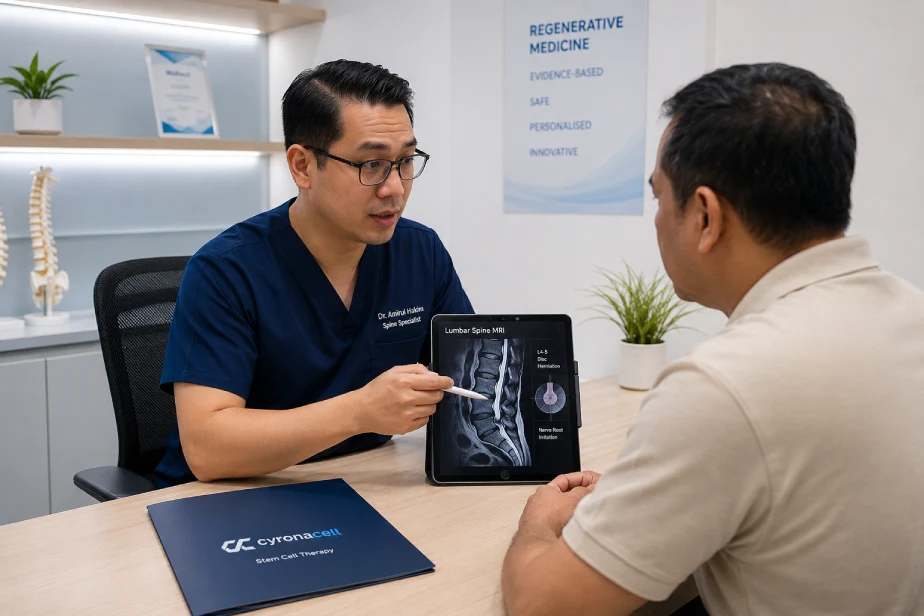
Patients with chronic low back pain should talk with qualified spine specialists about proven options. They should also avoid clinics that sell unapproved stem cell treatments for disc disease without strong trial evidence.

What Comes Next for BRTX-100

The next major milestone is the unblinded Phase 2 analysis. That data should show the extent of improvement from BRTX-100 compared with the saline control.

If the unblinded results support the current signal, BioRestorative may have a stronger case for Phase 3 planning. A larger Phase 3 trial would need to confirm safety, measure treatment effect, and define the patient group most likely to benefit.

Strong Phase 3 evidence would also help answer practical questions. How long does the effect last? Which patients respond best? Does the treatment change MRI findings? Can it reduce the need for surgery or long-term medication? These questions matter for doctors, patients, payers, and regulators.

What Comes Next for BRTX-100

A Promising Signal, Not a Finished Answer

The new 2026 BRTX-100 data adds momentum to the search for better treatments for chronic lumbar disc disease. It also shows why mesenchymal stem cell research continues to attract attention in spine care.

Still, readers should view the data accurately. The reported improvements in pain and function are encouraging. The safety findings look reassuring. Yet the trial remains blinded, and no commercial stem cell product has FDA approval for disc disease.

For patients, the message is balanced hope. Stem cell therapy may one day treat the biology of disc disease more directly than today’s symptom-focused options. However, strong evidence must come first.

Until then, the best path remains careful diagnosis, conservative care, specialist guidance, and participation in legitimate, regulated clinical trials when appropriate.

Author

Leave a Reply

Your email address will not be published. Required fields are marked *