
Key Takeaways
- Most trials do not measure meaningful change until at least one month, with pain relief typically building gradually through 3 to 6 months.
- By 12 months, trial data show improvements in both pain and function, with dose and cell source affecting how strong and how long-lasting that benefit is.
- A separate review found that roughly half to two-thirds of the improvement seen in stem cell trials may come from contextual (placebo) effects, not the cells alone.
- Patients with milder, earlier-stage knee changes tend to respond more predictably than those with advanced joint damage.
- Rehabilitation, weight management, and simple progress tracking all shape outcomes alongside the injection itself, not as separate afterthoughts.
Estimated read: 9 min
Patients considering stem cell therapy often ask the same question. What actually happens month by month?
Real trial data provides a clearer answer than most marketing pages. Specifically, this guide walks through the first year after cell therapy for knee pain.
It uses studies that tracked patients at 3, 6, and 12 months, rather than vague promises of eventual relief.

Stem Cell Therapy for Knee Pain: What Happens in the First Weeks?
Doctors typically deliver mesenchymal stem cells through a direct injection into the knee joint. Most patients resume light daily activity within a day or two.
Early pain relief, if it happens at all, tends to build gradually rather than appear immediately. Growth factors and calming signals from the cells take time to act on the joint environment.

Why Early Results Are Rare
Some mild swelling or soreness at the injection site is common in the first few days. This reflects the joint responding to the injection itself, not a sign of failure.
Icing the joint and limiting high-impact activity for the first week or two are common, sensible precautions. Neither guarantees a faster result, but both may help manage early discomfort.
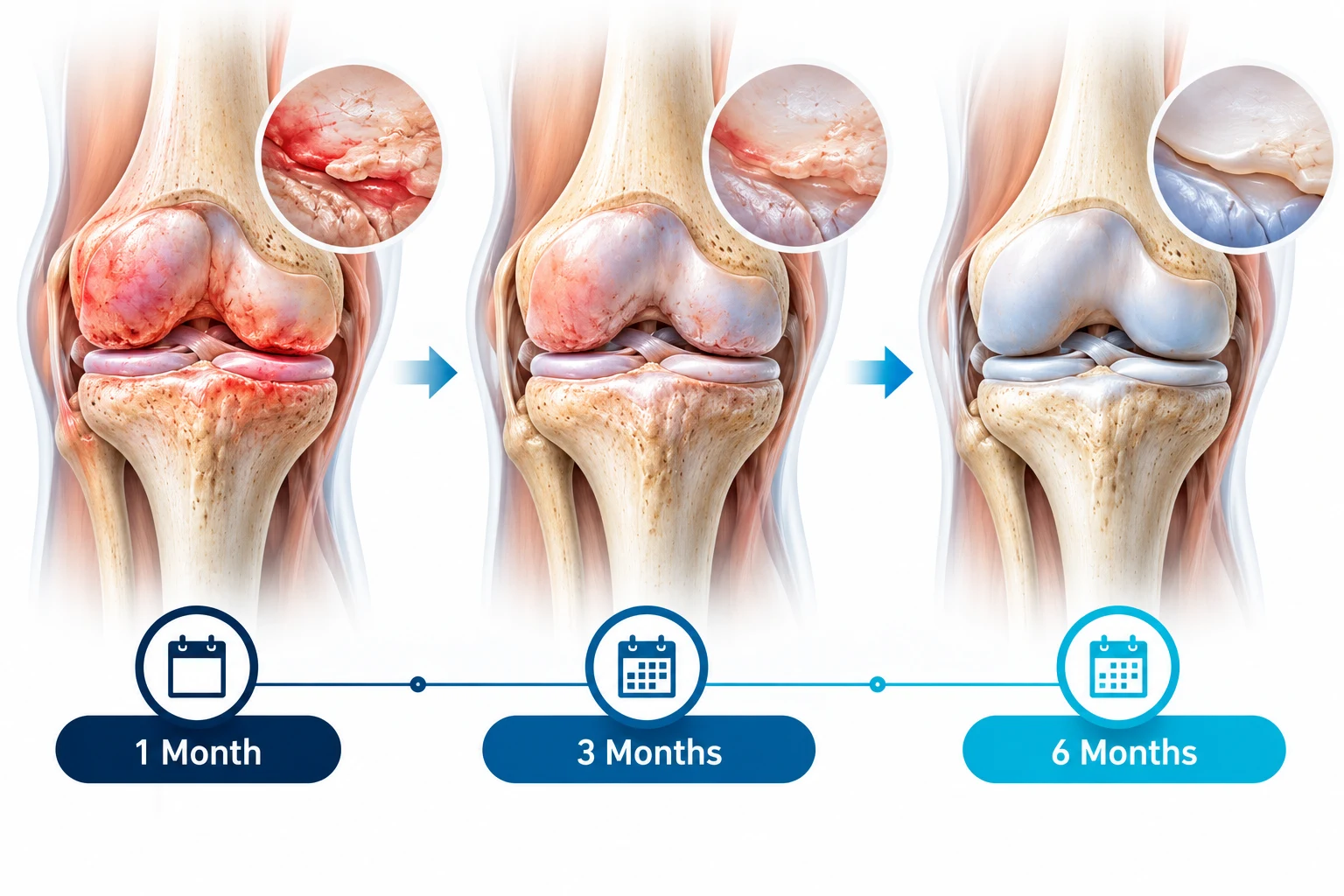
Most published trials do not even measure outcomes until the one-month mark or later. Judging results in week one sets an unrealistic bar this early.
What Does the Evidence Show at 3 and 6 Months?
A large review of randomized trials tracked pain and function at three, six, and 12 months. Researchers specifically followed patients after adipose-derived stem cell injections.
They ranked results using a statistical score called SUCRA. Higher scores mean a treatment was more likely to rank best across the trials pooled.
A high SUCRA score does not mean a treatment works for every patient. It means that treatment tended to outperform others on average, across the specific group of trials analyzed.
High-dose autologous stem cells, meaning cells taken from a patient’s own body, ranked highest for pain relief. This held at all three checkpoints tested.
By contrast, high-dose donor-derived cells ranked highest specifically for function. This pattern appeared at six and 12 months, though not as clearly at three.
Meanwhile, a separate trial focused on early stage knee osteoarthritis compared adipose-derived cells directly against hyaluronic acid. Both groups improved over time.
However, the cell-based group showed better pain, stiffness, and function scores throughout six months of follow-up. Imaging also showed less cartilage loss in that same group.
This cartilage finding matters because pain relief and structural change do not always go hand in hand. A patient can feel better without necessarily showing less joint damage on imaging, and vice versa.
| Checkpoint | What Trials Typically Show |
|---|---|
| 1 month | Too early for most trials to measure meaningful change |
| 3 months | Early pain relief becomes measurable in higher-dose groups |
| 6 months | Function scores often catch up to pain improvements |
| 12 months | Both pain and function typically remain improved from baseline |
What About the Full First Year?
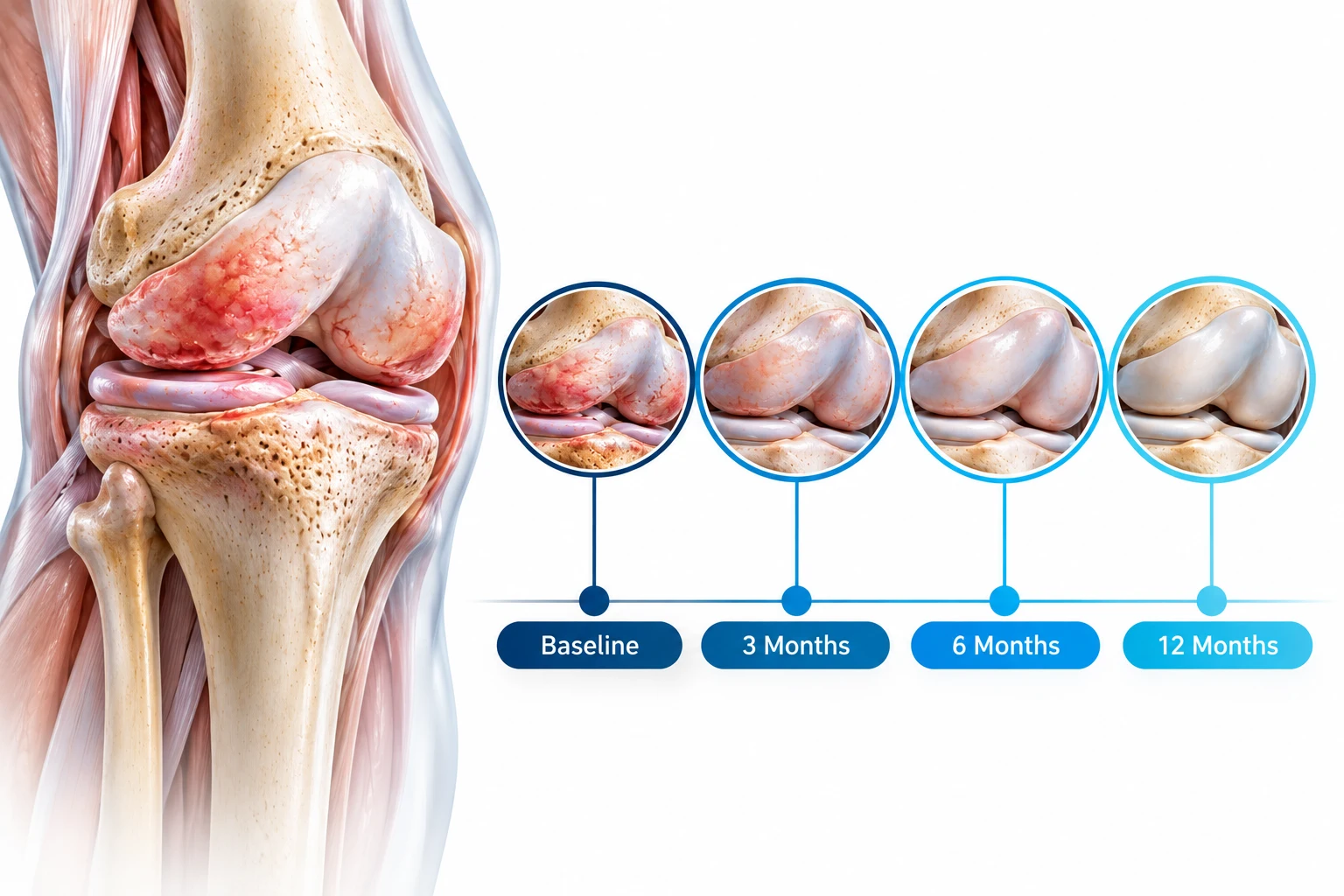
By 12 months, most trials report improvement in pain and function compared with baseline. That holds, not just compared against a control group.
This distinction matters for setting expectations early. A trial can show a real, lasting change even without a dramatic edge over other treatments tested.
One dose-comparison trial found pain and functionality score improvements sustained through 12 months. This held specifically in the higher-dose group tested.
Lower doses showed weaker, less consistent results over the same period. Timing of the second dose also appeared to matter in that same trial.
Patients receiving a second infusion at a set interval showed more sustained improvement through the full 12 months. This detail rarely appears in general marketing content.
Overall, this points to a long term pattern worth understanding upfront. Dose and cell source both shape the durability of the benefit.

An Honest Caveat Most Clinics Don’t Mention
A separate systematic review looked specifically at contextual effects in stem cell trials for knee osteoarthritis. Contextual effects include the placebo response, patient expectations, and the attention that accompanies any medical procedure.
Researchers estimated these contextual factors accounted for roughly half to two-thirds of the total improvement. This applied at both the 6- and 12-month checkpoints.
The stem cells themselves appeared to add a real, but modest, benefit on top of that. Certainty in these specific estimates remained low, according to the review’s own authors.
This does not mean stem cell therapy does nothing. Instead, it means patients should expect a meaningful boost, not a dramatic transformation unlike anything else tried before.
A responsible clinic should be willing to discuss this nuance openly. Patients deserve an honest picture of the extent to which their improvement likely comes from the cells themselves.
What Type of Stem Cell Matters for Timeline?
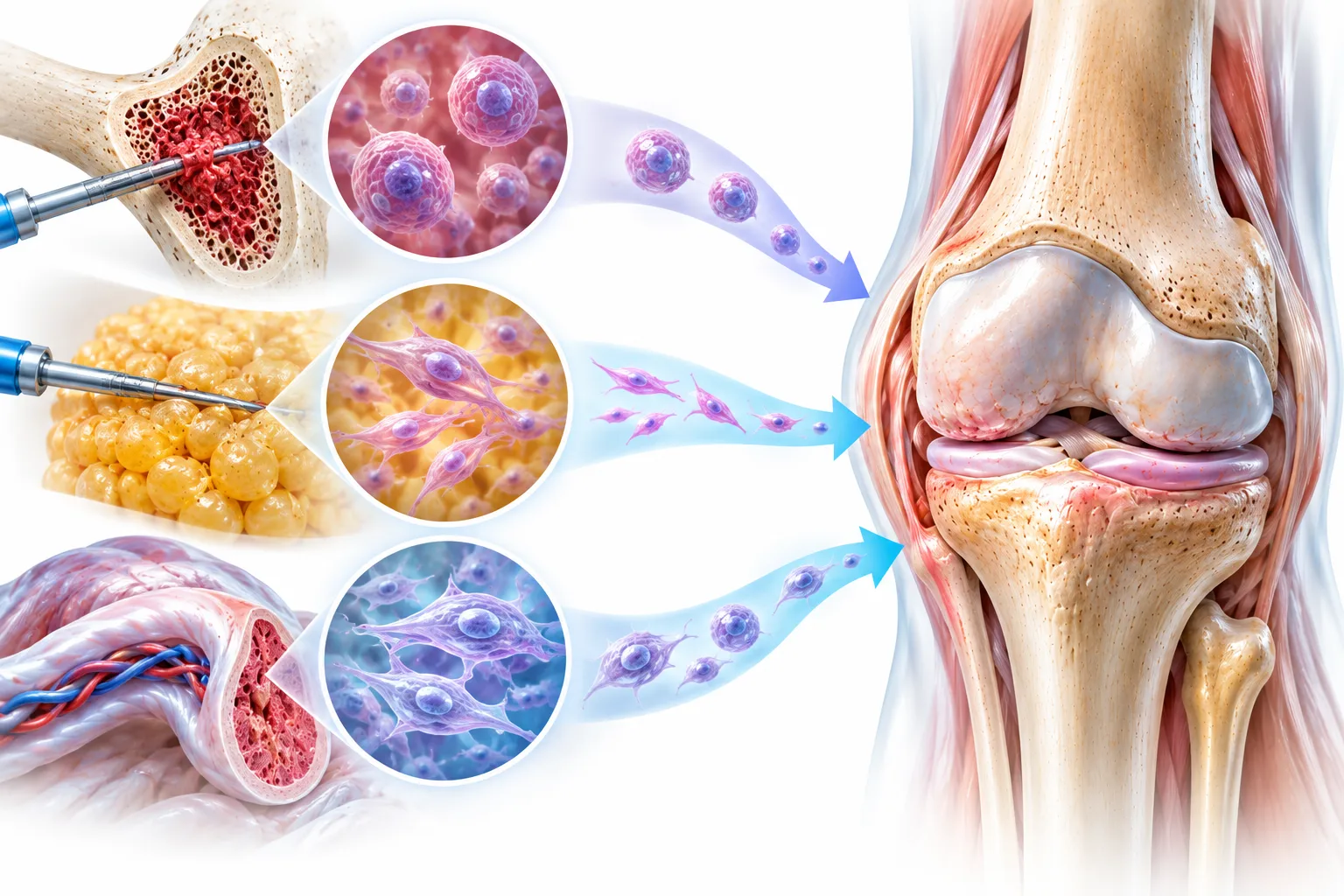
Type of stem cell source appears to influence both speed and durability of results. Bone marrow and adipose tissue remain the two most studied sources for knee applications.
Cyrona Cell, by contrast, uses umbilical cord derived stem cell injections rather than bone marrow or adipose sourcing. This reflects a broader industry shift toward cord-derived cells for several conditions, not just knee pain specifically.
Umbilical cord cells generally trigger a weaker immune response than a patient’s own aged bone marrow or fat tissue. Whether this translates into a faster or more durable knee-specific timeline remains to be seen; dedicated head-to-head trials are still needed.
Cyrona Cell’s article on how mesenchymal stem cells support damaged joint tissue covers this mechanism in more depth.
Dose also plays a measurable role, as shown by the trials discussed above. Generally, higher doses showed stronger, more consistent results than lower doses within the same studies.
Sourcing and dosing both shape the specific benefits of stem cell therapy. Understanding both helps set a more accurate timeline before treatment even begins.

What Helps or Hurts Progress During the First Year?
Physical therapy and appropriate movement remain part of standard care after any injection, not an optional add-on. None of the trials discussed here tested stem cells in isolation from rehabilitation.
Weight also plays a measurable role in outcomes of knee osteoarthritis generally. Extra load on the joint can offset some of the benefit a cell-based treatment might otherwise provide.
Smoking and poorly controlled diabetes both appear to slow healing across many treatments, not stem cell therapy alone. Addressing these factors before treatment may support a smoother first year.
None of this guarantees a specific outcome. It simply means the injection itself is one part of a larger recovery picture, not the whole picture.

Who Tends to See the Clearest Benefit?
Patients with milder, early stage knee changes tend to respond more predictably than those with advanced joint damage. This pattern holds across most of the trials reviewed here.
Age, weight, and activity level also factor into how quickly benefits appear. However, none of these factors alone rules a patient in or out.
A prior response to PRP or HA injections can also offer a useful clue. Patients who saw at least some benefit from those options sometimes respond similarly well to stem cell therapy.
Cyrona Cell’s guide on stem cell therapy for joint pain after PRP and physio covers when this treatment option fits.
For a broader look, see Cyrona Cell’s overview on stem cell therapy for osteoarthritis. It covers therapy for knee osteoarthritis and the timing of joint replacement.
A physician typically reviews imaging and symptom history before recommending any specific stem cell treatment. Timelines vary from patient to patient, and no single one applies equally to everyone.

How Can Patients Track Their Own Progress?
Simple, consistent tracking helps separate real change from day-to-day fluctuation. A basic pain diary, scored the same way each week, often works better than relying on memory alone.
Tracking a specific function gives a concrete marker to revisit at each checkpoint. Climbing stairs without stopping, or walking comfortably for a set number of minutes, both work well as markers. This mirrors how the trials themselves measured progress.
A simple activity log can also help a physician spot patterns over the following months. This information becomes useful context at follow-up visits.
If pain worsens beyond the first week, that warrants a conversation with a physician. The same applies if no change appears at all by the three-month mark. Waiting quietly through a full year rarely serves a patient well.
Frequently Asked Questions About Stem Cell Therapy for Knee Pain
What is the success rate of stem cell therapy for knees?
No single success rate applies to every patient. Trials report meaningful improvements in pain and function in many participants. However, a large share of that benefit may come from contextual factors rather than the cells alone.
Is stem cell therapy for knee pain safe long term?
Most reviewed trials reported no severe adverse events tied directly to the cells. Mild reactions, such as temporary swelling or soreness, were more common.
Even so, long-term data beyond one to two years remains limited. This gap applies across the field, not to any single clinic.
How long does it take to recover from stem cell therapy for knees?
Most patients resume light activity within a day or two. Meaningful pain relief typically takes weeks to months to develop. Results often continue building through the six- to 12-month mark.
Does stem cell therapy help with knee pain?
Many trial participants report reduced pain compared with baseline. The size of that benefit varies by dose, cell source, and the extent to which the joint damage had already progressed. Realistic expectations matter as much as the treatment itself.
Ask About Stem Cell Therapy for Knee Pain
Curious what a realistic first-year timeline might look like for your specific case?
Learn more about Cyrona Cell’s stem cell therapy for joint pain. The team reviews candidacy carefully before any treatment begins.