Key Takeaways
- Stem cell injections can support healing in joint injuries, but the cells rarely finish the job alone.
- Physical therapy after the injection helps guide how new tissue forms and how the joint moves.
- Recovery timelines vary by joint and injury type, from a few weeks to several months.
- The injection’s growth factors work best alongside guided movement, not rest alone.
- Surgery still suits some injuries better, despite the appeal of a minimally invasive option.
Estimated read: 5 minutes
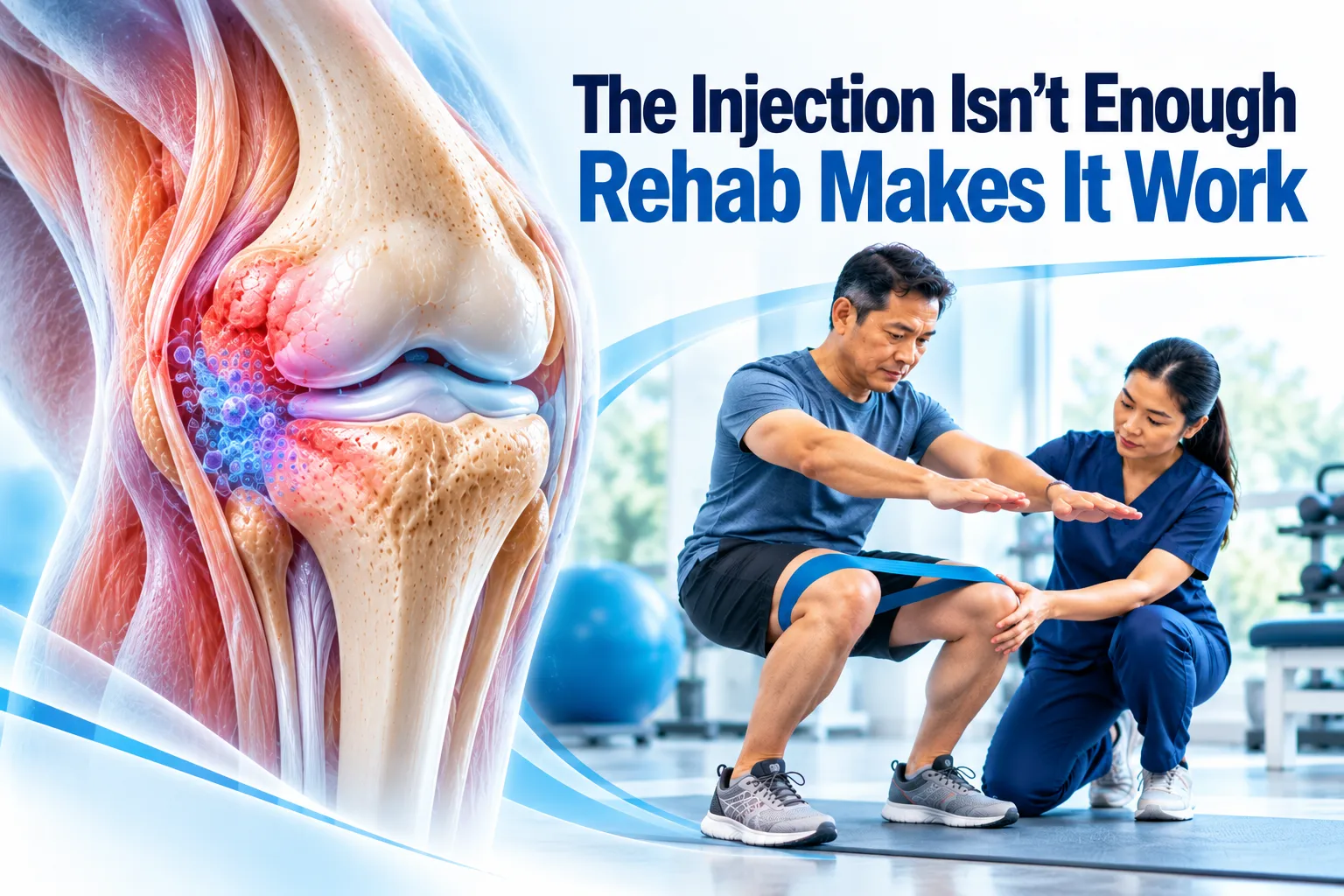
Stem cell injections for joint injuries rarely work on their own. What happens afterward, especially physical therapy, often decides whether the treatment actually helps.
What Stem Cell Injections for Joint Injuries Actually Do Inside the Joint
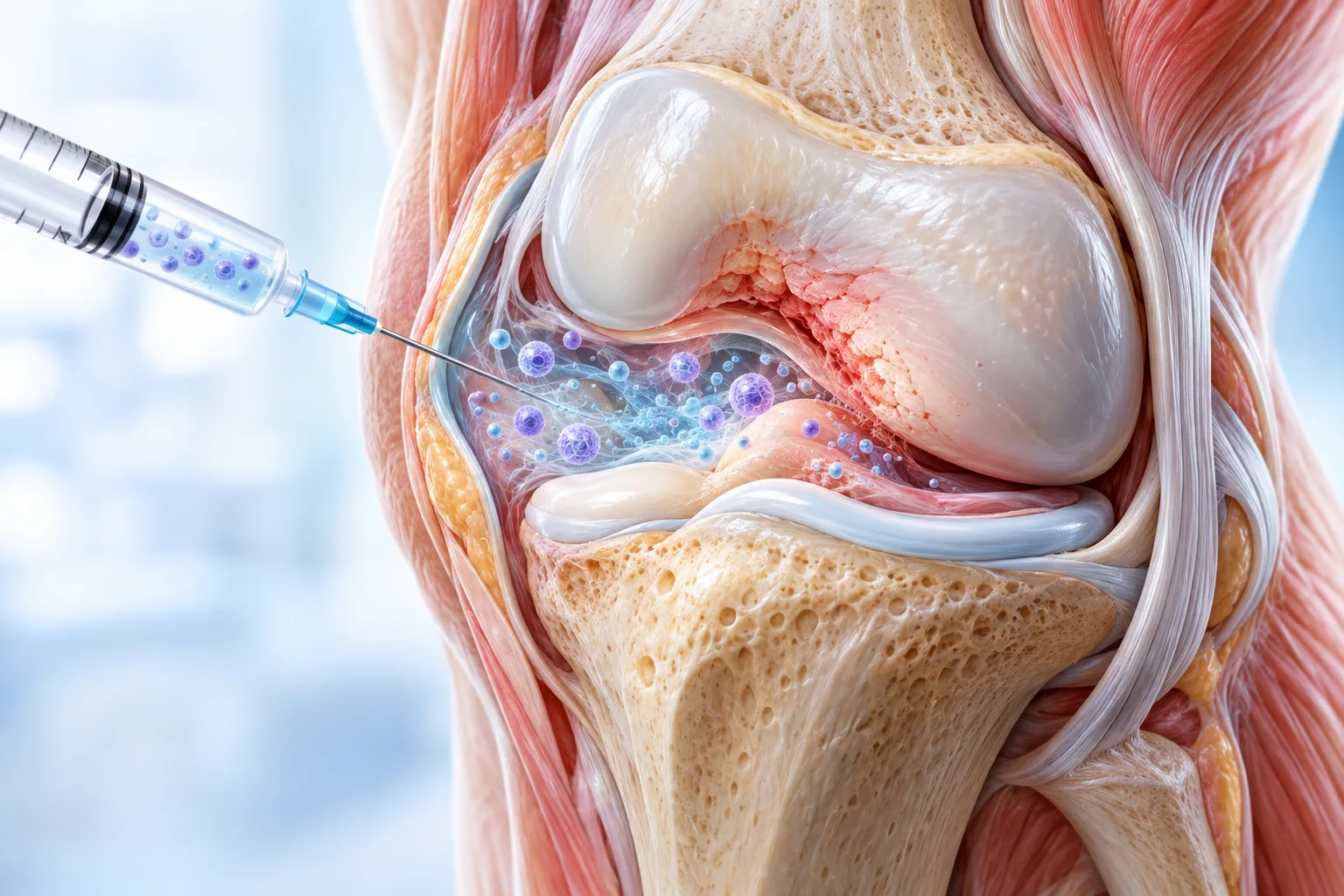
A stem cell injection releases signals that calm inflammation and support the body’s own repair process. It does not rebuild damaged tissues by itself. Instead, it creates better conditions for healing.
Clinics source these cells from a patient’s bone marrow, fat tissue, or donated umbilical cord tissue. Each source releases growth factors and anti inflammatory proteins once inside the joint. These signals can support soft tissue healing in tendons, ligaments, and cartilage.
The procedure is usually quick, often under an hour, and uses imaging guidance to place the injection accurately. Most patients go home the same day, well before the biological work of healing has even started. Therefore, what happens in the days and weeks after matters just as much as the injection itself.
None of this happens right away. The cells need time to work. At the same time, the joint needs the right kind of movement.
Together, these two factors turn a biological signal into real tissue repair. An injection also cannot fix a problem it never reaches. For example, a fully torn structure usually needs more than a supportive signal to heal well.

Why Rehab Is Not Optional After the Injection
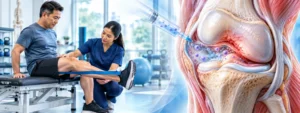
Physical therapy shapes how new tissue forms after a stem cell injection. Without guided movement, the joint can stiffen. As a result, the benefits of stem cell treatment fade faster than expected.
Early sessions usually focus on gentle range of motion, not heavy loading. As healing progresses, therapists then add strength work to support tissue regeneration around the joint. This staged approach protects the area while it is most fragile.
A minimally invasive injection still needs this structured follow-up plan. Skipping rehab does not accelerate recovery. In fact, it usually does the opposite and can limit results over the long term.
Consistency also matters more than intensity in these early weeks. A few short, guided sessions each week tend to outperform one long, unsupervised workout. A therapist can also spot small setbacks early, before they turn into bigger problems.
Cyrona Cell’s article on stem cell therapy for joint pain after PRP and physio follows this same pattern. It approaches the topic from a slightly different angle.
What a Realistic Recovery Timeline Looks Like
Recovery timelines depend on the joint and the injury, not a fixed number of weeks. A knee or shoulder injury, for instance, may need a longer rehab plan than a smaller joint.
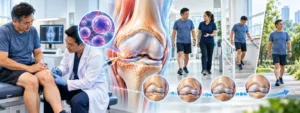
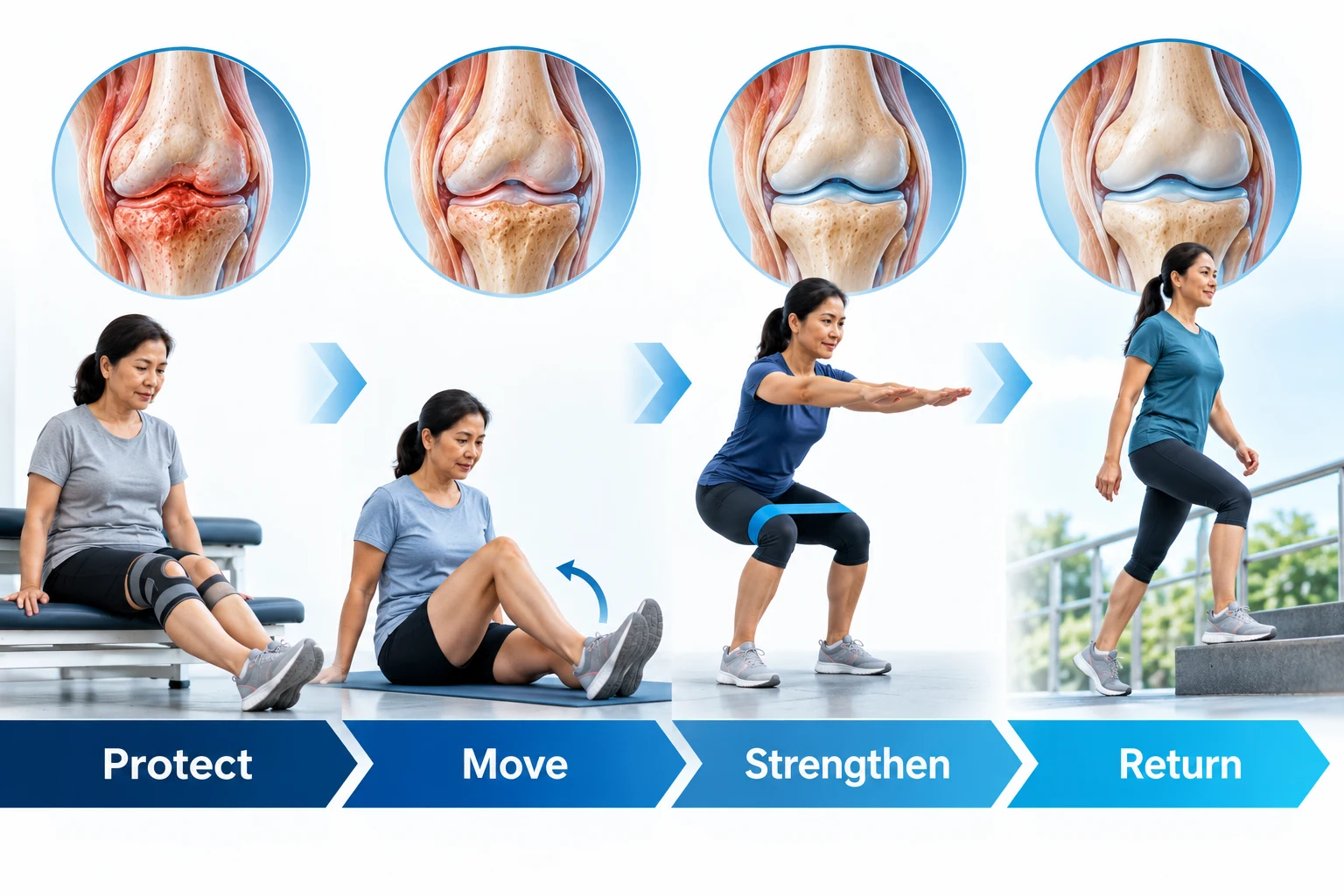
One published case followed a structured four-phase recovery after a stem cell procedure for a knee cartilage injury. The first phase focused on protecting the joint. This phase lasted approximately eight weeks.
Later phases gradually added strength work, then higher-impact movement. A published case report on stem cell rehabilitation in a young athlete described this exact progression.
This phased approach is common across clinical trials studying stem cell injections for joint pain. Patients typically begin with protected movement. From there, they build toward full activity as scans and symptoms allow.
A knee often follows a slower path than a shoulder. This happens simply because the knee carries more body weight during daily activity. Meanwhile, a shoulder injury may progress faster once early pain settles, since it bears less constant load.
A hip or ankle injury falls between these two examples. The exact pace depends on how much weight that joint carries during normal walking. This is one reason a generic recovery estimate rarely fits every patient.
When Rehab Alone Is Not Enough
Some joint injuries still need surgery, even after stem cell therapy and rehab. A full rotator cuff tear or severe cartilage loss may not respond to injections.
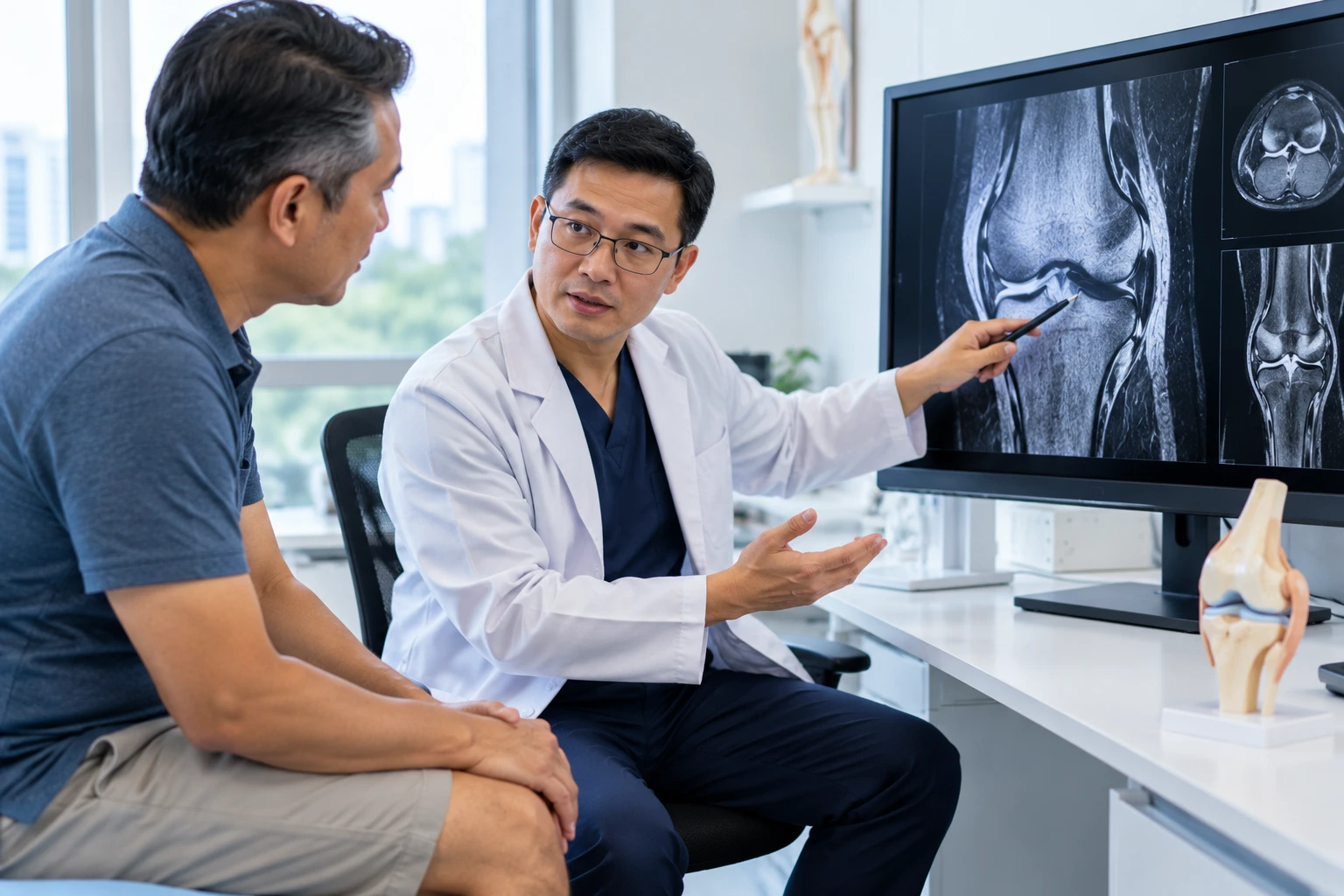
The right treatment for knee injuries depends on several factors. These include imaging results, symptom severity, and how the joint responded to earlier care.
For some patients, stem cell therapy delays the need for joint replacement. For others, however, it does not change the surgical timeline much.
A doctor should set expectations before treatment starts, not after. Otherwise, patients can lose valuable time on an approach unlikely to suit their specific injury. A clear conversation about imaging findings and treatment for knee, shoulder, or hip injuries helps set that expectation early.
A related look at stem cell therapy for meniscus tears and sports injuries covers this same decision point. It focuses on one specific type of joint injury. Cyrona Cell’s own overview of stem cell injections for joint injuries explains how doctors evaluate a case before treatment starts.
Considering stem cell injections for a joint injury? Message the Cyrona Cell team on WhatsApp to talk through your imaging and rehab history.

Frequently Asked Questions
How long does it take to recover from a stem cell injection in the knee?
Most patients need several weeks of protected movement before returning to normal activity. Full recovery, including strength work, often takes two to four months. The exact timeline still depends on the injury.
How long to rest after a stem cell injection?
Most clinics recommend a short rest period of a few days. After that, gentle guided movement usually begins. Extended rest without any movement can slow recovery rather than help it.
How long does it take to recover from a stem cell injection in the foot?
Foot and ankle joints often need a similar early protection period as the knee. This typically means one to two weeks of limited weight bearing. Full recovery timing still depends on the specific injury and rehab plan.
Can stem cell therapy repair joints?
Stem cell therapy can support the body’s own repair process inside a joint. However, it does not guarantee full repair on its own. Results still depend on the injury, the rehab plan, and how the joint responds over time.
Talk to a Doctor About Your Recovery Plan
Every joint injury responds differently. Stem cell injections for joint injuries work best with a rehab plan that matches your specific case. Submit your case for a free medical review and get a doctor’s honest read on your options.