Stem Cell Therapy For Diabetes Type 2: Can It Help Blood Sugar Control?

Exploring research-clinical trials-and potential benefits for blood sugar

Quick Read Summary

Stem Cell Therapy For Diabetes Type 2: Can It Help Blood Sugar Control?

Stem cell therapy is being studied as a potential way to improve insulin production and support blood sugar control in diabetes type 2. Early clinical trial results show some patients had lower blood sugar and reduced insulin needs, but results vary. Doctors still consider this treatment experimental and continue researching long term safety and effectiveness.

Key Points for Patients

  • Stem cell therapy may support insulin production and blood sugar control
  • Evidence is promising but limited
  • Long term safety and consistent glucose improvements still require research
  • Stem cell therapy does not replace insulin injections yet
  • Patients should participate only in approved clinical trial programs
Estimated read: 6 min
Keywords: stem cell therapy for diabetes type 2, blood sugar control, insulin production, stem cell transplant, mesenchymal stem cells, beta cell function, clinical trials, regenerative medicine, long term outcomes, glucose control

Exploring research, clinical trials, and potential benefits for blood sugar

Many people with diabetes type 2 look for new ways to control blood sugar. Families and patients often ask, Stem Cell Therapy For Diabetes Type 2: Can It Help Blood Sugar Control? This question is important because maintaining healthy blood glucose levels affects long term health, insulin requirements, and daily life.

In this article, we explain what stem cell treatment does, what clinical trial studies show, and what remains experimental. Our goal is to help readers understand this therapy and make informed decisions.

What Is Stem Cell Therapy for Diabetes

Understanding Type 2 Diabetes

Diabetes type 2 happens when the body cannot use insulin properly or the pancreas cannot produce enough insulin. Blood sugar levels rise, leading to complications such as heart disease, kidney problems, and nerve damage.

Traditional therapies include insulin injections, oral medicines, lifestyle changes, and diet management. However, researchers now explore stem cell therapy to see if it can support insulin production and improve glycemic control.

What Is Stem Cell Therapy for Diabetes?

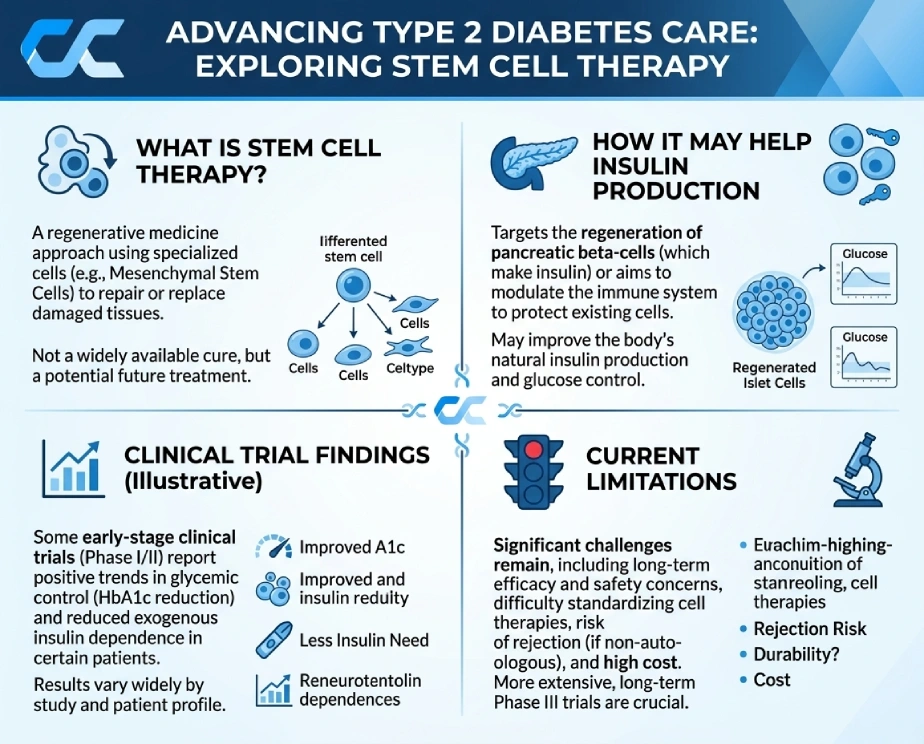
Stem cell therapy uses special cells that can develop into different cell types. In diabetes research, doctors focus on stem cell derived insulin producing cells, which may help replace damaged pancreatic cells. For example, researchers study mesenchymal stem cells from bone marrow, as well as umbilical cord blood stem cells. In addition, some studies investigate stem cells taken from pancreatic tissue. This type of cell transplant aims to restore insulin production and lower insulin needs. It also helps control blood glucose levels.

Moreover, combining stem cell therapy with existing treatments may improve long term glucose control, and researchers continue exploring how different cell types and delivery methods affect effectiveness. Consequently, patients and doctors can make more informed decisions based on ongoing clinical trial results.

What Clinical Trials Show

What Clinical Trials Show

Clinical Trial Results Early Clinical Trial ResultsEarly clinical trial studies show promise. Some patients experienced lower blood sugar levels and reduced need for insulin injections after stem cell transplant. Researchers also reported improved beta cell function and long term glucose control in selected cases. However, most studies are small and follow patients for only a few years. Results vary depending on the type of stem cells used, the cell dose, and delivery method. Researchers continue testing to understand which therapy for diabetes offers the strongest results.
Mechanism How Stem Cells May Help Blood SugarStem cells may support repair in damaged pancreatic cells. They can boost insulin production and improve communication between insulin producing cells and the immune system. In addition, stem cells may encourage long term glycemic control. These actions could help maintain healthier blood glucose levels. Still, scientists must confirm how strong and lasting these effects are.
ConsiderationsWhat Patients Should ConsiderBefore choosing stem cell therapy, patients should review scientific evidence carefully, confirm participation in an approved clinical trial, ask about types of stem cells used, understand costs and follow up care, and discuss expectations with specialists. Because diabetes affects each patient differently, results vary. Families and patients should base decisions on facts, not promises.
What Research Means Today

What Research Means Today

Research in regenerative medicine continues to grow. Large clinical trial studies will clarify safety, best cell types, long term outcomes, and effectiveness of stem cell therapy.

For now, Stem Cell Therapy For Diabetes Type 2: Can It Help Blood Sugar Control? remains an emerging therapy. Early findings show promise, but doctors cannot yet guarantee major improvements in blood glucose control for all patients.

FAQ

Can stem cell therapy help diabetes type 2?

Yes. Clinical trial research shows that stem cell treatment may support insulin production and better glucose control. Mesenchymal stem cells, bone marrow cells, and stem cell derived insulin producing cells are under study.

Most studies report mild side effects like temporary fever or headache. Unregulated treatments increase risks. Patients should only participate in approved clinical trials.

Results vary. Some patients see improvement in blood sugar levels within months. Long term effectiveness depends on the type of stem cells, cell dose, and patient response.

Not yet. Stem cell therapy may reduce insulin requirements in some cases but does not fully replace traditional treatments. Doctors still recommend it alongside standard care.

Author

Leave a Reply

Your email address will not be published. Required fields are marked *