Stem Cell Therapy vs Spinal Surgery for Degenerative Disc Disease: When to Consider Each

Comparing regenerative medicine and surgical options for chronic back pain relief

Quick Read Summary

Wondering about stem cell therapy vs spinal surgery for degenerative disc disease when to consider each? This guide compares both options for chronic back pain relief. Stem cell therapy uses adult stem cells from bone marrow through minimally invasive injections to support damaged disc repair. Spinal surgery, including fusion or artificial disc replacement, corrects advanced spinal conditions. Learn how recovery times and candidacy differ.
Estimated read: 5 min
Keywords: stem cell therapy vs spinal surgery for degenerative disc disease when to consider each, stem cell therapy, degenerative disc disease, spinal surgery, chronic back pain, damaged disc, stem cell injections, adult stem cells

Comparing regenerative medicine and surgical options for chronic back pain relief

Chronic back pain from disc degeneration affects daily life, work, and sleep. In this guide, Stem Cell Therapy vs Spinal Surgery for Degenerative Disc Disease: When to Consider Each, we explain how stem cell therapy compares with surgical care for the treatment of degenerative disc problems. We review recovery times, long term outcomes, and how doctors decide whether a patient is a candidate for stem cell procedures or surgery.

Degenerative disc disease develops when a damaged disc loses height and flexibility. Over time, disc degeneration can cause nerve irritation, stiffness, and ongoing pain. Therefore, choosing the right treatment matters.

Understanding Degenerative Disc Disease

Degenerative disc disease is one of the most common spinal conditions. Although discs naturally age, injury and repeated strain can speed up damage. As a result, the spine may lose stability.

At first, doctors recommend conservative care. This may include physical therapy, activity changes, and guided exercise. In many cases, conservative care helps improve disc support and reduce symptoms. However, when chronic back pain continues, patients often explore other options.

What Is Stem Cell Therapy for Disc Degeneration

What Is Stem Cell Therapy for Disc Degeneration

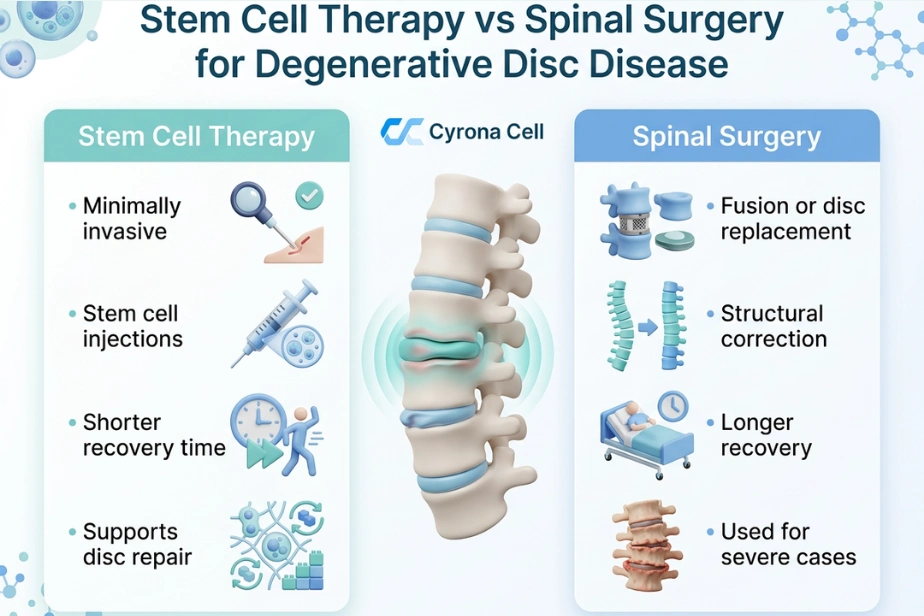
Stem cell therapy is part of regenerative medicine. It aims to support healing instead of removing tissue. Doctors often use adult stem cells collected from bone marrow. These cells are processed and delivered through stem cell injections directly into the damaged disc.

Stem cell treatments focus on repair. They aim to improve disc structure, reduce inflammation, and support long term stability. Because the procedure is minimally invasive, recovery times are usually shorter than open surgery.

Patients who qualify as a candidate for stem cell care often have mild to moderate disc degeneration. In addition, they may want to avoid spinal fusion or artificial disc replacement.

How Stem Cell Treatments Work

Stem cell treatments use adult stem cells taken from bone marrow. These cells release growth signals that may help improve disc health. Furthermore, regenerative medicine strategies attempt to treat degenerative disc disease by supporting natural repair.

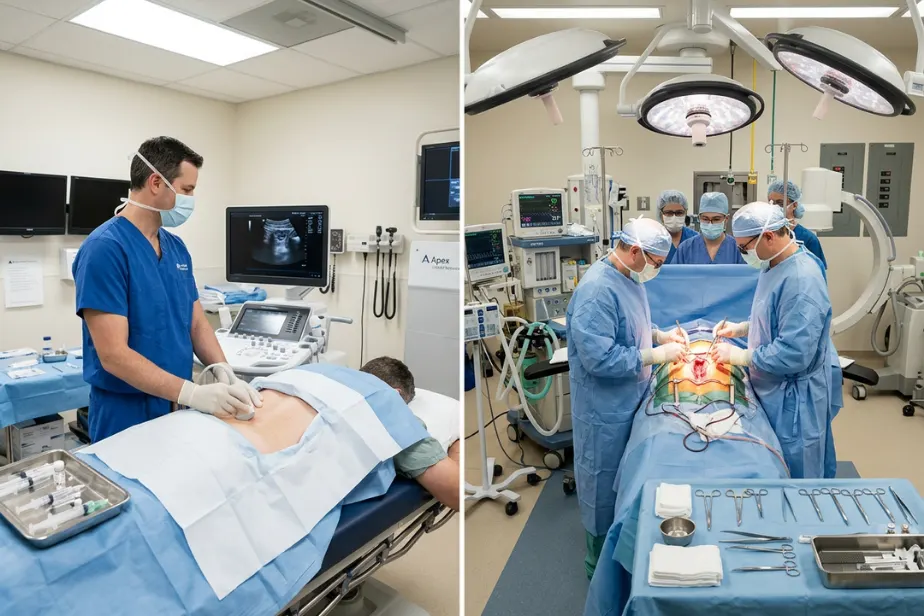
Doctors perform stem cell injections under imaging guidance. The process is minimally invasive and usually completed in one visit. Most patients return home the same day. Therefore, recovery times tend to be faster than traditional surgery.

However, results vary. While some patients report reduced pain and improved function, others may need additional care.

When Spinal Surgery Becomes Necessary

When Spinal Surgery Becomes Necessary

In advanced spinal conditions, surgery may offer stronger structural correction. Spinal fusion stabilizes painful segments by joining two vertebrae, while artificial disc replacement removes the damaged disc and replaces it with an implant.

Doctors may recommend surgery when severe disc degeneration compresses nerves, when chronic back pain does not respond to conservative care, when weakness or loss of function appears, or when structural instability begins to affect daily life. Although surgery can provide relief, recovery times are usually longer. In addition, physical therapy often follows surgery to restore strength and movement. Therefore, patients must carefully weigh long term goals, potential risks, and lifestyle factors before making a decision.

Stem Cell Therapy vs Surgical Treatment

When comparing regenerative medicine to surgery, several factors matter.

First, stem cell therapy is minimally invasive, while spinal fusion and artificial disc replacement require surgical procedures. Second, recovery times differ. Stem cell injections often involve shorter downtime. In contrast, surgery may require weeks or months of healing.

Third, the treatment of degenerative disc disease depends on severity. Early disc degeneration may respond well to stem cell treatments. However, severe structural damage may require surgical correction.

Therefore, doctors evaluate imaging, symptoms, and medical history before recommending care.
Factor Stem Cell Therapy Spinal Surgery
Treatment Type Minimally invasive injections using adult stem cells Invasive procedures such as spinal fusion or disc replacement
Goal Supports natural disc repair and reduces inflammation Corrects structural damage and stabilizes the spine
Recovery Time Short recovery, often same day discharge Longer recovery, may require weeks or months
Best For Mild to moderate disc degeneration Severe degeneration, nerve compression, or instability
Risk Level Lower risk due to non surgical approach Higher risk associated with surgery and anesthesia
Outcome Variability Results may vary, some patients need additional treatments More predictable structural correction outcomes
Hospital Stay Usually outpatient procedure May require hospital stay depending on procedure
Who May Be a Candidate for Stem Cell Care

Who May Be a Candidate for Stem Cell Care

A patient may be a candidate for stem cell treatment when disc degeneration is mild to moderate and chronic back pain continues despite conservative care. In addition, there should be no severe nerve compression, and the patient should prefer a minimally invasive approach.

On the other hand, individuals with advanced spinal conditions, significant instability, or major nerve involvement may benefit more from surgical solutions that provide structural correction.

Local Treatment Decisions and Long Term Planning

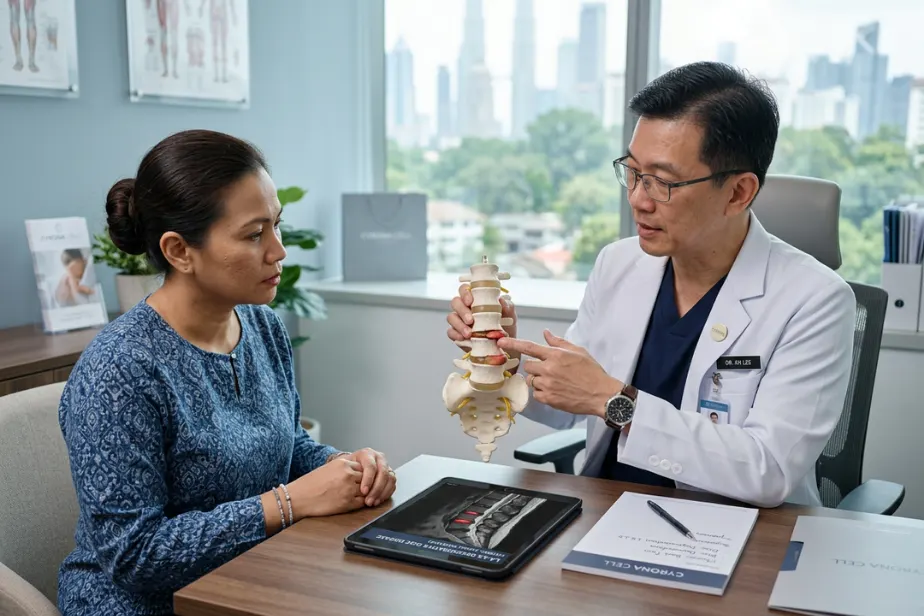
In our clinic, treatment plans focus on safety, evidence, and patient goals. We assess imaging results, symptoms, and lifestyle needs. Then we discuss options clearly. Whether choosing stem cell therapy or surgery, long term spine health remains the priority.

Ultimately, Stem Cell Therapy vs Spinal Surgery for Degenerative Disc Disease: When to Consider Each depends on severity, response to conservative care, and patient expectations. Regenerative medicine offers promise for selected patients, while surgery provides structural correction when needed.

Local Treatment Decisions and Long Term Planning

FAQ

How is stem cell therapy used instead of spinal fusion?

Stem cell therapy may be used as a minimally invasive option before spinal fusion. Doctors use stem cell injections with adult stem cells from bone marrow to support repair of a damaged disc. This approach aims to treat degenerative disc disease without joining vertebrae.

Surgery is considered when conservative care, including physical therapy, fails to control chronic back pain. It is also recommended when severe disc degeneration causes nerve damage or instability.

Stem cell treatments may offer shorter recovery times and a minimally invasive option. However, surgery such as artificial disc replacement may be necessary in advanced cases. The best choice depends on imaging findings and patient goals.

Patients with severe structural collapse, major nerve compression, or advanced spinal conditions may not be ideal candidates. A full evaluation determines whether someone is a candidate for stem cell treatment.

Author

Leave a Reply

Your email address will not be published. Required fields are marked *