
Key Takeaways
- Stem cells for disc degeneration can be delivered in two ways: intradiscal injection straight into the disc, or IV infusion through a vein.
- A 2014 mouse study found intradiscal injection preserved disc height better, while IV delivery still boosted some tissue-repair markers without that structural effect.
- Cyrona Cell uses IV administration specifically to avoid the risks of needle access near the spine, working instead through systemic anti-inflammatory signaling.
- Neither delivery route has been shown to outperform the other across all outcomes that matter, and current clinical trial evidence for both remains limited.
- Good candidates typically have early to moderate disc changes, stable overall health, and a full imaging review before any treatment begins.
Estimated read: 9 min
Doctors can deliver stem cells to treat disc degeneration in two ways. First, one method injects cells directly into the damaged disc. Instead, the other sends cells through a vein.
This intradiscal vs IV stem cell choice shapes both the evidence behind treatment and what a patient actually experiences. Understanding the difference helps set realistic expectations before starting any program.
Neither route is automatically the better option. Instead, each one fits a different set of priorities, from procedural risk to the type of evidence available. This guide walks through both routes so you can ask better questions before choosing one.
Intradiscal vs IV Stem Cell Delivery: What Is the Difference?
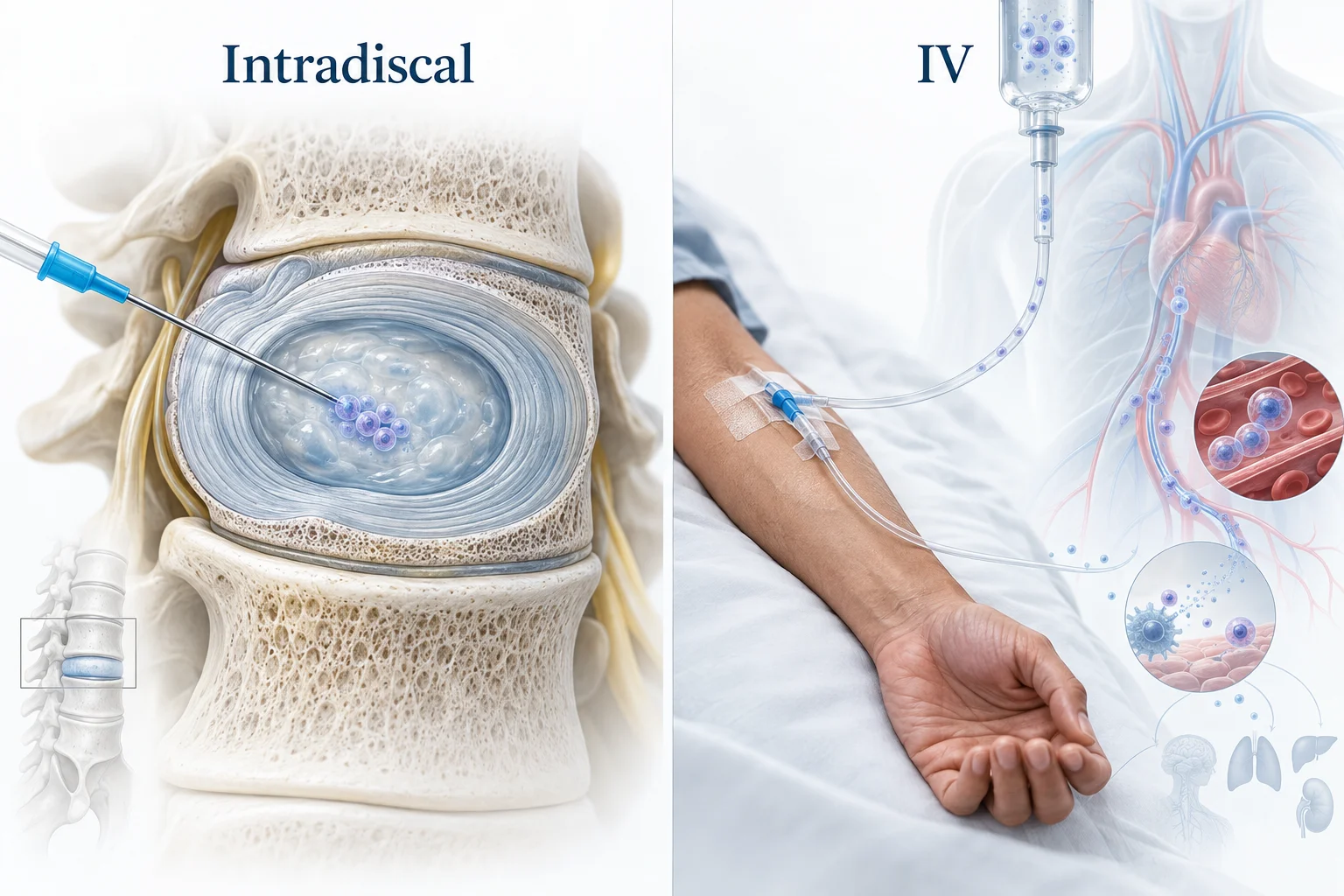
Mesenchymal stem cells MSCs are the main cell type studied for disc degeneration, regardless of delivery route. Specifically, intradiscal injection places these cells straight into the nucleus pulposus, the soft center of the disc. A doctor uses imaging guidance to reach the exact spot.
This method aims to rebuild tissue right where the damage sits. IV delivery, on the other hand, infuses MSCs into the bloodstream via a vein.
The cells then travel throughout the body rather than targeting one disc directly. As a result, this route works mainly through immune signaling rather than local tissue replacement.
What Happens During an Intradiscal Injection
First, a physician numbs the area, then uses fluoroscopy to guide a needle into the disc. Next, the physician places cells near the nucleus pulposus, which gives the disc its cushioning gel. The goal is direct contact with damaged tissue.
However, this approach carries genuine procedural risk. Puncturing the disc itself can accelerate disc degeneration in some cases. Researchers have raised this exact concern directly in published literature.
For this reason, intradiscal injections remain more invasive than most alternative delivery methods.
What Happens During an IV Infusion
By comparison, IV infusion is simpler than intradiscal delivery. A nurse places a standard drip line, and MSCs enter the bloodstream over roughly an hour. This method needs no imaging or needle placement near the spine.
Overall, this minimally invasive approach avoids the risks tied to needle access near the spine. Even so, it also means the cells never make direct contact with damaged disc tissue.
What Does the Evidence Say About Each Route?
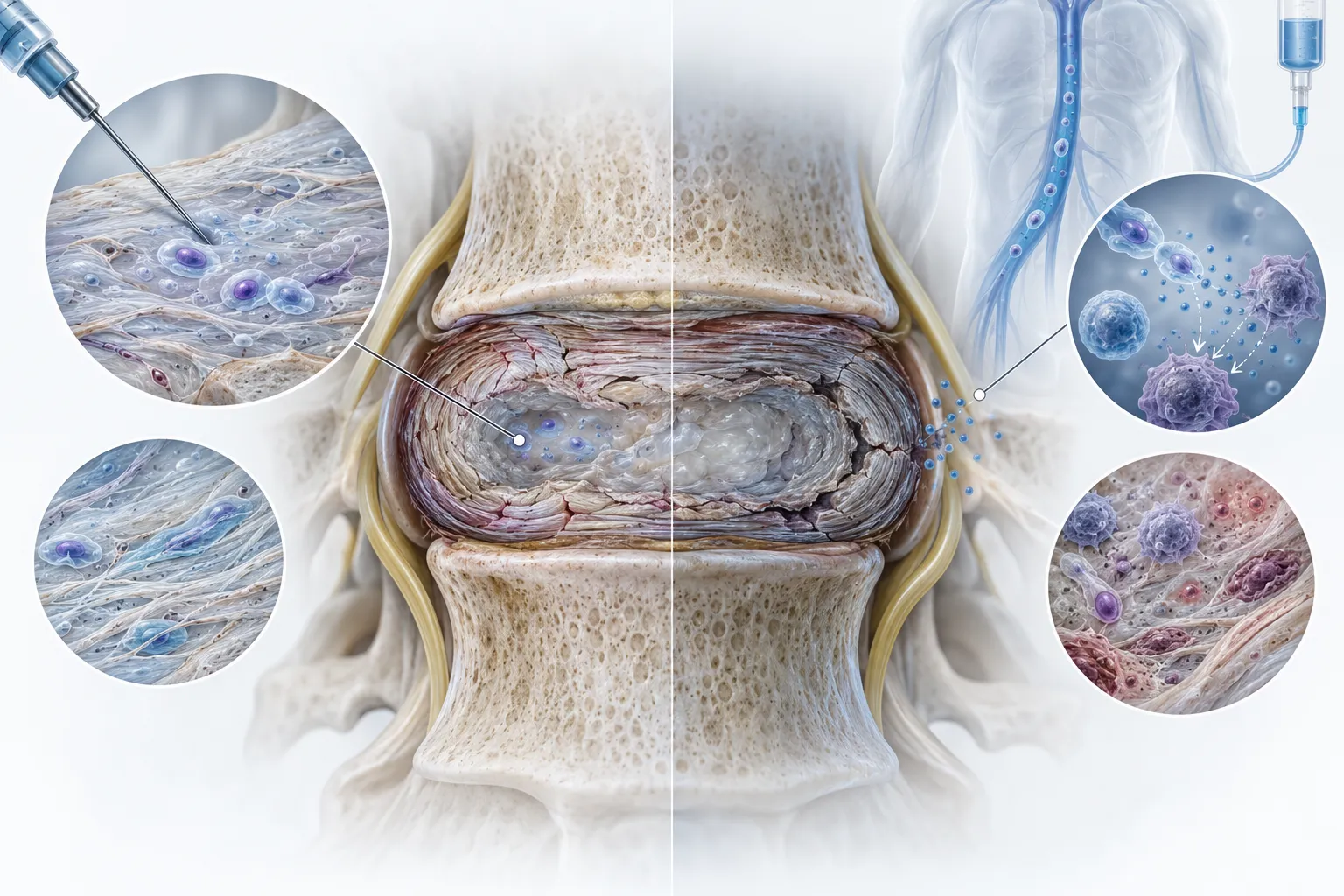
A widely cited 2014 comparison study in mice tested both delivery routes side by side. This clinical study found that intradiscal injection helped preserve disc height and slow the progression of degenerative markers. By contrast, IV delivery did not preserve disc height to the same degree.
However, both delivery routes increased certain extracellular matrix proteins compared with untreated controls. This suggests IV cells still produced some effect. The likely cause is growth factors released into circulation, rather than direct tissue rebuilding.
Indeed, similar patterns appear across other animal models. Rats and rabbits receiving intradiscal MSCs often show better preserved disc structure than those receiving cells systemically. Still, researchers debate how well these specific findings translate to people.
A 2022 commentary in npj Regenerative Medicine raised specific concerns about intradiscal cell therapy. The intervertebral discs are largely avascular, with low oxygen and high internal pressure. Cells placed directly inside often struggle to survive that harsh environment over time.
| Factor | Intradiscal Injection | IV Infusion |
|---|---|---|
| Invasiveness | Needle into the disc, imaging guided | Standard vein access, minimally invasive |
| Main mechanism | Local tissue contact and repair attempt | Systemic anti-inflammatory signaling |
| Disc height data | Preserved in some animal models | Not shown to preserve disc height |
| Key risk | Needle puncture may worsen degeneration | No direct contact with damaged tissue |
A 2025 systematic review in the North American Spine Society Journal reached a cautious conclusion overall. It described the disc itself as a hostile, avascular environment for any delivered cells, regardless of route.
The review also noted that existing clinical trial designs carry real methodological weaknesses. Consequently, firm conclusions about which delivery route works best remain hard to draw from current data alone.
Taken together, these sources point to a genuine tradeoff in the intradiscal vs IV stem cell debate. Neither route emerges as a clear winner.
Intradiscal delivery offers closer contact with damaged tissue, but at a real procedural cost. IV delivery trades that direct contact for a simpler, systemic approach with a different safety profile.
This is the heart of the intradiscal vs IV stem cell decision that patients and physicians work through together. No study has shown either route to outperform the other on every measure that matters.
For patients weighing this decision, the practical question often comes down to risk tolerance rather than pure biology. A patient comfortable with a spinal needle procedure for potentially stronger local effects may lean intradiscal. Someone who wants safety and simplicity above all may lean IV instead.

Why Cyrona Cell Uses IV Administration
Specifically, Cyrona Cell delivers mesenchymal stem cells through IV infusion rather than intradiscal injection. Doctors slowly deliver the cells through a vein, and most patients simply relax in a treatment chair throughout the process.
This choice reflects a safety tradeoff. IV delivery removes the risk of disc puncture entirely. That matters given the mixed evidence on whether puncture itself may worsen degeneration.
Instead, the approach works through a different mechanism than direct injection. Rather than physically rebuilding the disc, IV-delivered MSCs aim to calm immune activity. This route reduces inflammation that drives ongoing disc breakdown rather than directly replacing tissue.
Cyrona Cell’s exosome and MSC treatment program uses a similar systemic, anti inflammatory approach for several conditions. Disc degeneration is not the only case where this mechanism applies. That shared mechanism is one reason IV delivery fits the clinic’s broader treatment philosophy.
The route also fits patients who prefer to avoid needle access near the spine altogether. For some people, that tradeoff matters as much as the underlying biology itself.

What Do Clinical Trials Show About Outcomes?
In general, degenerative disc disease trials tend to measure pain and function rather than disc regrowth alone. This holds regardless of which delivery route a given trial uses. Cyrona Cell’s own review of 2026 trial data for degenerative disc disease covers these outcome patterns in more depth.
Overall, most published trials report measurable pain relief and better function scores over six to twelve months. Fewer trials show clear disc regeneration on imaging, regardless of delivery method used.
Currently, bone marrow derived MSCs remain the most studied cell source overall. Umbilical cord sources, the type Cyrona Cell uses, appear in fewer published trials so far. Even so, early safety data look broadly similar between sources.
Nonetheless, these remain long term questions without full answers yet. Most follow-up periods stop well short of five years. So, lasting durability remains an open question across the field, not just at any single clinic.
Meanwhile, researchers are still mapping out the exact regenerative effect of MSCs. They continue to study whether benefit comes mostly from cells turning into new tissue or mainly from signaling alone.
What Are the Safety Considerations for Each Route?
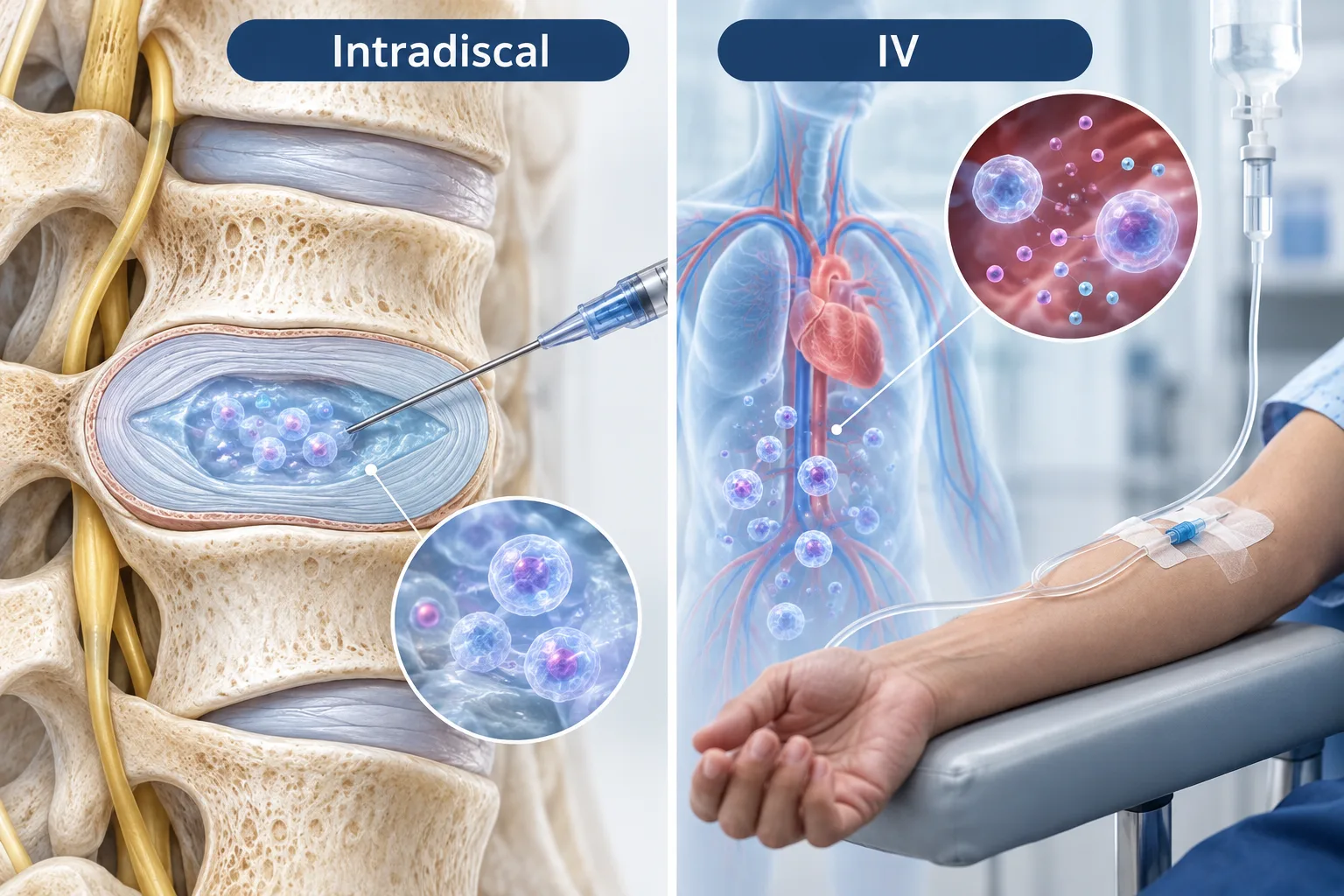
Intradiscal injection carries procedural risks beyond the cells themselves. Needle placement near the spine always carries some chance of infection or nerve irritation. This adds to the risk of degeneration already discussed above.
IV infusion carries a different, generally milder risk profile. Standard infusion reactions are the most commonly reported side effects. These include mild fever or temporary discomfort at the injection site.
Neither route is risk-free, and no reputable clinic should present either one that way. A thorough medical screening remains the best way to reduce risk. This holds regardless of which delivery method a patient ultimately chooses.

Who Is a Good Candidate for This Approach?
Generally, people with early to moderate disc changes tend to respond better. Those with severe collapse or an unstable spine often see less benefit. A physician typically reviews imaging, symptom history, and prior treatments before recommending IV stem cell treatment for disc degeneration.
Anyone already considering surgery may want to compare options first. Cyrona Cell’s guide on stem cell therapy versus spinal surgery outlines when each option tends to make sense.
People who have already tried physical therapy, medication, or injections without lasting relief often fit this profile well. So do people who want to avoid surgery for as long as reasonably possible.
In addition, age and overall health factor into candidacy decisions. Younger patients with earlier-stage degeneration typically have more treatment options open to them. Those with long-standing, severe changes often have fewer choices.
Typically, the care team orders blood tests and imaging first, before scheduling any infusion. This step lets the care team confirm the diagnosis actually matches what stem cell therapy addresses.
A full medical review in Cyrona Cell’s degenerative disc disease treatment program covers who qualifies and which imaging is required. It also explains what the IV infusion process actually involves.
Before that first consultation, it helps to gather recent MRI or CT scans. A summary of past treatments tried and a current medication list also help. This preparation allows the care team to provide a more accurate, personalized read on candidacy from the first visit.
Frequently Asked Questions About Intradiscal and IV Stem Cell Therapy
Can stem cell therapy reverse degenerative disc disease?
Overall, no current therapy completely reverses degenerative disc disease. Animal studies show some disc height preservation with intradiscal injection, whereas IV delivery shows anti-inflammatory effects. Either way, neither approach restores a disc to its original state.
What type of injection is most effective for treating degenerative disc disease?
No single method has proven clearly superior so far. Intradiscal injection shows stronger structural results in animal models. IV infusion offers a safer, systemic approach with less direct evidence of tissue rebuilding.
The right choice between intradiscal and IV delivery depends on a patient’s specific case. Risk tolerance plays a real role in that decision too.
Can stem cells treat a bulging disc at L4-L5?
Stem cell therapy may help manage pain and inflammation linked to a bulging disc. This applies at any lumbar level, including L4-L5. However, no treatment offers a permanent cure for a bulging disc.
A physician needs first to assess the severity of the bulge and any nearby nerve involvement.
Can stem cells repair a damaged disc?
Stem cells may support partial repair processes, such as producing more extracellular matrix or calming local inflammation. That said, human trials have not yet demonstrated full structural repair of a damaged disc. Most current benefit centers on pain relief and slower progression rather than complete repair.
Ask About IV Stem Cell Therapy for Disc Degeneration
Ongoing back pain from disc degeneration often means weighing several options. A personalized review can clarify whether IV stem cell therapy is appropriate for your case.
To ask about next steps, contact Cyrona Cell by phone or WhatsApp at +60 18-222 0032. The team will walk through your imaging and history before recommending a plan.