Key Takeaways
- Stem cell therapy for rheumatoid arthritis has real human trial data behind it, not just lab or animal studies.
- A 3-year study found that disease activity scores significantly decreased in patients who received stem cells alongside standard medication.
- Mesenchymal stem cells appear to calm the immune response that drives RA, rather than merely masking symptoms.
- RA is a chronic autoimmune disease, and no current stem cell treatment offers a permanent cure.
- A rheumatologist should confirm your diagnosis and disease activity before considering stem cell options.
Estimated read: 9 min
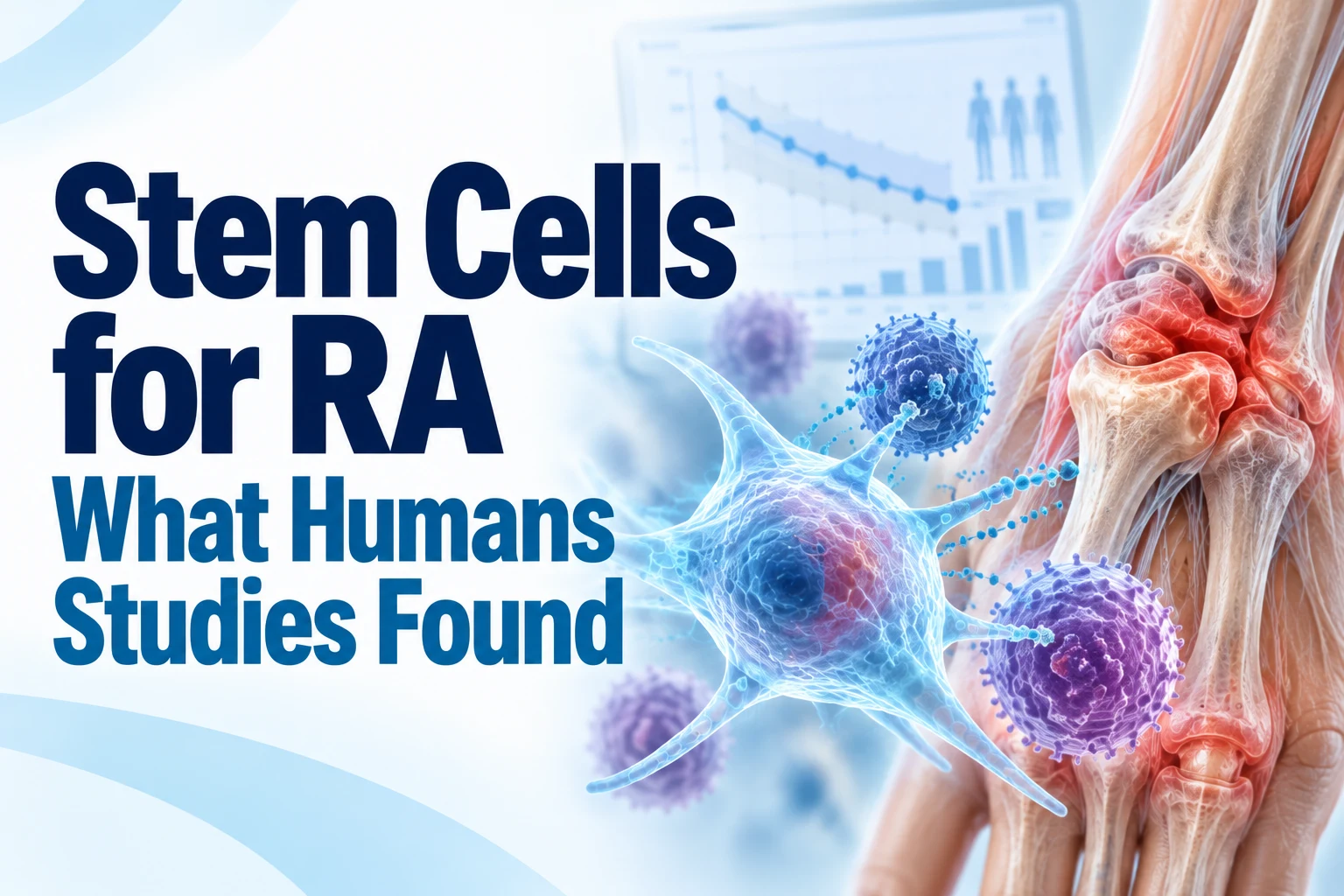
Rheumatoid arthritis wears people down slowly over years, not days. This guide looks at the real human evidence behind stem cell therapy for rheumatoid arthritis. It goes beyond theory or animal studies alone.

Stem Cell Therapy for Rheumatoid Arthritis Starts With Understanding RA
Rheumatoid arthritis (RA) is an autoimmune disorder. The immune system mistakenly attacks the lining of the joints. This causes chronic inflammation, pain, and swelling.
RA is a chronic condition that develops over time. Unlike a single injury, it tends to progress over years. Left uncontrolled, it can permanently damage cartilage and bone.
RA symptoms typically include joint pain, stiffness, and swelling. Fatigue is also common. RA often affects several joints simultaneously.
How RA Differs From Everyday Joint Pain
- RA usually affects joints symmetrically, on both sides of the body at once
- Morning stiffness in RA often lasts longer than an hour
- Blood tests can detect specific markers linked to RA, unlike mechanical joint wear
- RA can also affect organs beyond the joints in some patients
Why Early Diagnosis Matters So Much
- Joint damage from RA often cannot be undone once it occurs
- Early treatment can slow or prevent permanent joint deformity
- Blood markers can sometimes appear before symptoms become severe
- A rheumatologist can distinguish RA from other joint conditions early

Standard Treatment for Rheumatoid Arthritis Today
Treating rheumatoid arthritis usually starts with medication. Disease modifying anti rheumatic drugs (DMARDs) are often the first choice. They aim to slow disease progression itself.
Doctors also use anti inflammatory drugs (NSAIDs) for symptom relief. Steroidal anti inflammatory drugs may help during flares. However, long term use carries its own risks.
Biologic drugs that target tumor necrosis factor have also changed RA care. Still, some patients with RA stop responding to these options over time. Others cannot tolerate them well.

Where Stem Cell Therapy Fits Into This Picture
- Usually considered after DMARDs and biologics have been tried first
- Sometimes studied alongside existing medication, not only as a replacement
- More often discussed for cases that remain active despite standard care
- Not currently a first-line treatment for newly diagnosed RA
Why Some Patients Look Beyond Standard Treatment
- DMARDs and biologics do not work equally well for every patient
- Side effects can accumulate with years of continuous medication use
- Some patients want to explore every reasonable option available
- Disease activity can remain high even on maximum standard therapy
How Stem Cells May Help With RA
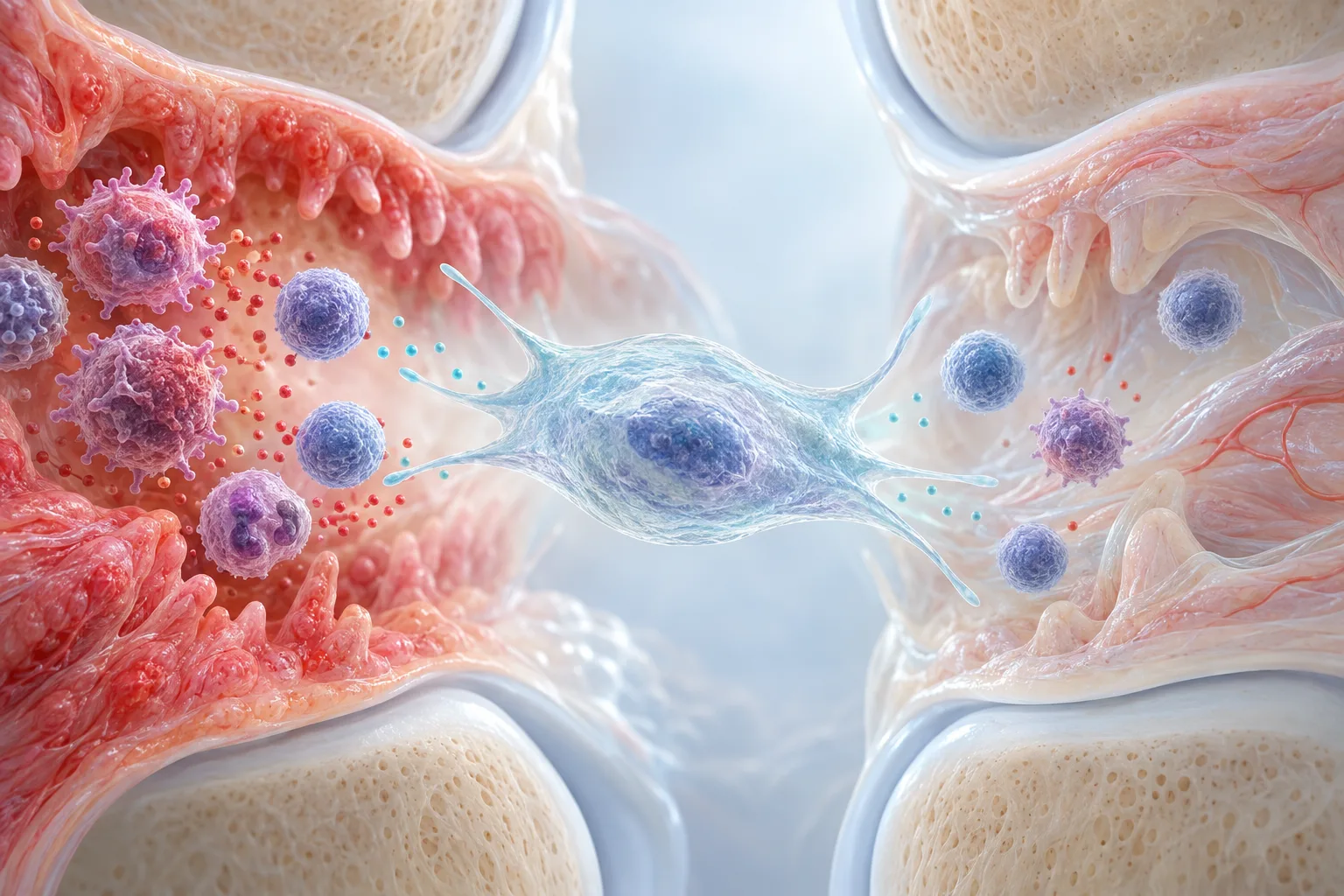
Mesenchymal stem cells are also studied for their effect on the immune system. Researchers believe they can calm the immune responses that drive joint damage in RA.
These cells may help protect affected joints from further harm. Researchers also study them for supporting tissue regeneration in damaged tissues around the joint.
This mechanism differs from DMARDs and biologics. Instead of blocking one specific pathway, stem cells appear to work more broadly across the immune system.
What Researchers Are Still Working Out
- Which cell source and dose produces the most reliable results
- How long any immune-calming effect lasts without repeat treatment
- Whether combining stem cells with DMARDs improves outcomes further
- Which patients are most likely to respond well to this approach

What Human Clinical Trials Actually Show
A 3-year cohort study of 64 RA patients combined umbilical cord-derived stem cells with standard DMARDs. Disease activity scores significantly decreased at one year and stayed lower at three years.
Health assessment scores also improved over the same period. The placebo group, by contrast, showed no meaningful change throughout the study.
A separate phase Ia safety trial in nine RA patients tested a single stem cell infusion. No major safety concerns emerged within four weeks of treatment.
Researchers also measured immune markers in this trial. Signals linked to inflammation dropped. A marker linked to regulatory immune cells increased at the same time.
What This Research Does and Does Not Show
- Supports meaningful, measurable improvement in disease activity for some patients
- Shows effects lasting years, not just weeks, in the larger cohort study
- Still comes from a relatively small number of total patients studied so far
- Does not yet prove stem cells can replace DMARDs entirely for most patients
How These Findings Compare Across Studies
- Both studies used umbilical cord-derived cells rather than the patient’s own tissue.
- Both found meaningful safety, with no major treatment-related complications.
- The larger study tracked outcomes far longer than the smaller safety trial
- Together, they offer more confidence than either study would alone
How Doctors Track Progress After Treatment
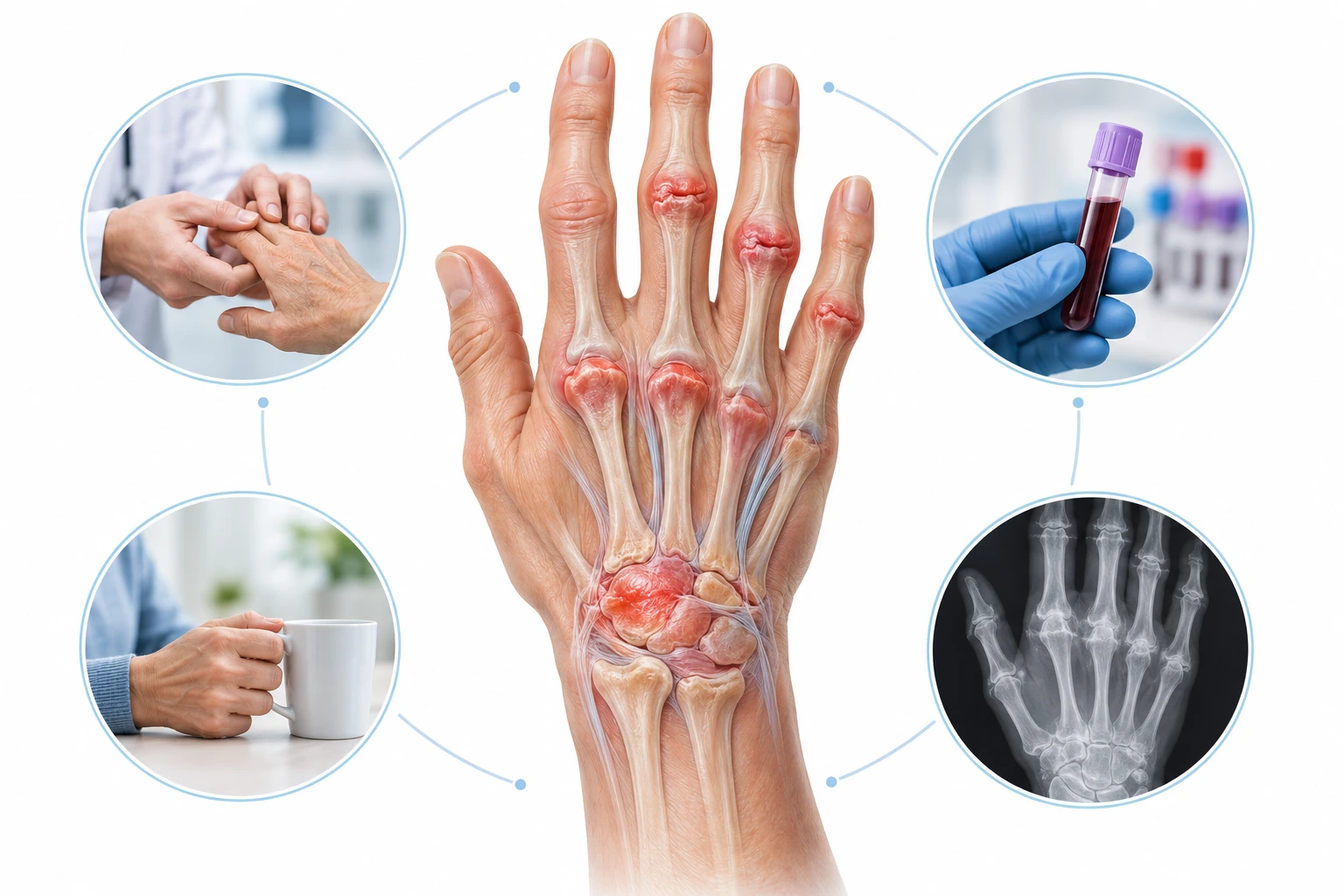
Disease activity scores give doctors a consistent way to measure RA over time. These scores combine joint counts, blood markers, and patient-reported symptoms into a single number.
Tracking this way matters more after a new treatment, such as stem cell therapy. It lets doctors and patients see whether real, measurable change is happening. This matters more than whether symptoms simply feel different day to day.
Common Ways Doctors Measure RA Disease Activity
- Disease activity scores combining joint counts and blood markers
- Health assessment questionnaires tracking daily function over time
- Regular blood tests for markers of inflammation like CRP and ESR
- Periodic imaging to check for new joint damage
Regular monitoring also helps catch problems early. If a treatment approach is not working, consistent tracking makes that clear sooner rather than later.
Comparing Treatment Options for RA
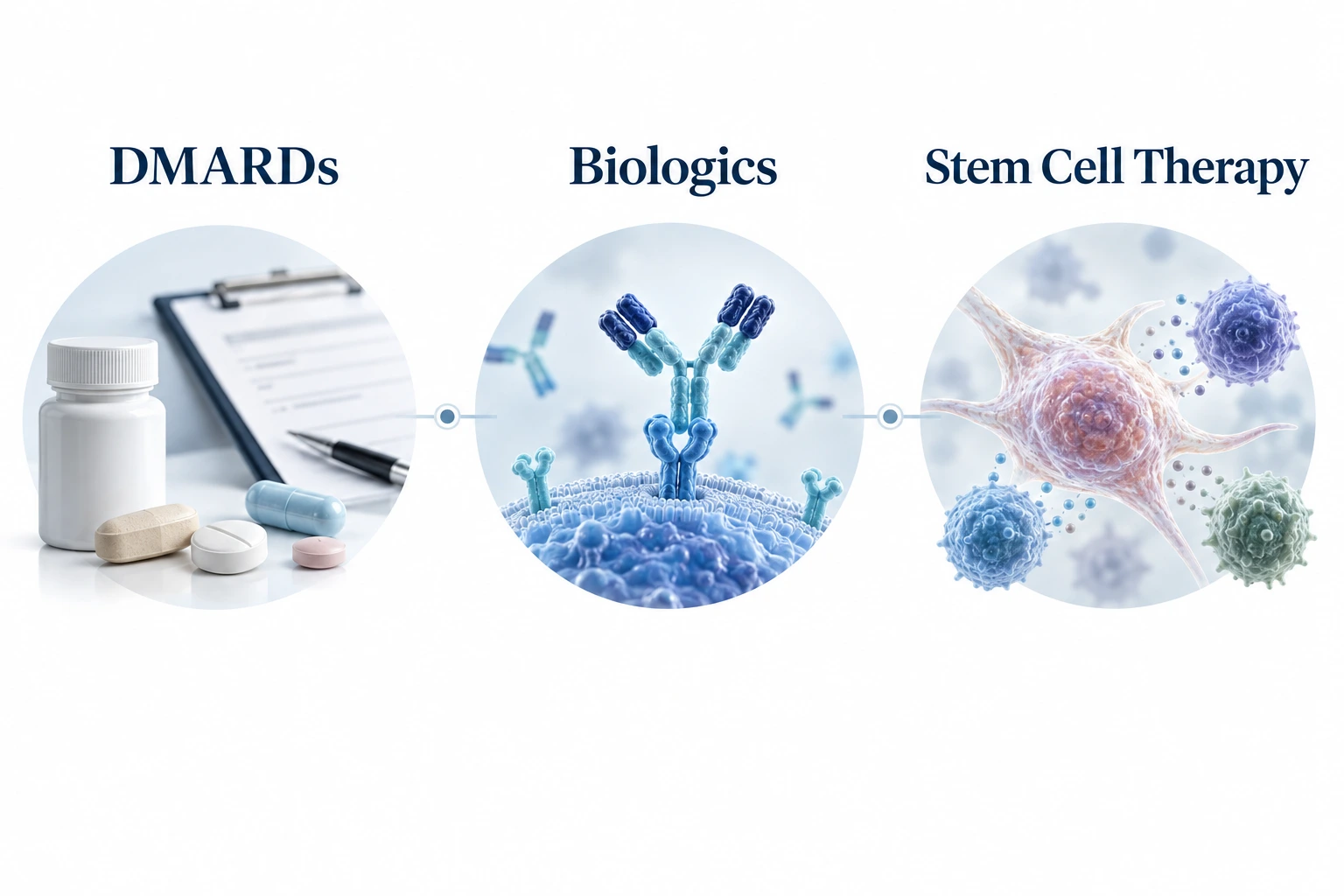
No single option automatically works best for every patient. Treatments for RA vary by disease stage and severity.
| Option | Main Goal | Typically Considered For |
|---|---|---|
| DMARDs | Slow disease progression | Standard first-line treatment |
| Biologics (anti-TNF) | Target a specific immune pathway | Cases not controlled by DMARDs alone |
| Stem cell therapy | Broader immune calming, tissue support | Cases still active despite standard treatment |
Our related article on how mesenchymal stem cells support damaged joint tissues covers a different, non-autoimmune joint condition. Osteoarthritis involves gradual wear, not an autoimmune attack. As a result, the underlying biology and treatment goals differ.
RA also shares some mechanisms with other autoimmune conditions. Our article on stem cell therapy for psoriasis explores a similar immune-calming approach in a different autoimmune disease.

Safety and Side Effects
Every treatment carries potential side effects. In the trials reviewed here, most reported issues were mild. The infusion itself caused many of them, not the cells.
Larger studies are still needed, though, to confirm these safety patterns hold at scale. Small trials are a first step, not the final word.
Questions Worth Asking Before Considering This Option
- What safety data exists for the specific cell source being proposed
- How will this fit alongside your current DMARDs or biologic treatment
- What does realistic improvement look like for your specific case
- What happens if this approach does not improve your disease activity
What a Consultation Should Cover
- A review of your diagnosis, disease activity, and prior treatment history
- Current medications and any conditions affecting your immune system
- A realistic discussion of what stem cell therapy can and cannot promise
- Clear next steps regardless of whether you proceed with treatment
Traveling for treatment adds another layer worth planning for. Coordination with your home doctor matters both before and after any procedure done abroad.
Sharing your full records between providers helps avoid duplicated tests. It also helps your home doctor know exactly what treatment you actually received, keeping ongoing monitoring consistent.
Questions to Ask About Follow-Up Care
- How will progress be tracked after you return home
- What records will be shared with your regular doctor
- Who do you contact if a concern comes up after treatment
- What is the realistic timeline before you would expect to notice change

Who Tends to Consider This Option
Most people exploring stem cell therapy for rheumatoid arthritis have already tried DMARDs. Some have also tried biologics without complete success.
A rheumatologist should first confirm your current disease activity and treatment history. This context shapes whether stem cell therapy makes sense for your situation.
Signs This Conversation May Be Worth Having
- DMARDs or biologics have stopped controlling your symptoms well
- Side effects from current medication have become hard to manage
- Your disease activity remains high despite trying standard treatment
- You want to understand every option before making a decision
Age alone does not usually rule someone out. What also matters more is overall health, current disease activity, and how well previous treatments have worked.
Some patients also have other autoimmune conditions alongside RA. This history matters too, since it can affect which treatment approaches make sense together.
Who May Need a Different Approach First
- Those with an active infection that needs treatment first
- Patients without a confirmed RA diagnosis from a rheumatologist
- Anyone with a condition that makes any procedure unsafe right now
- Patients who have not yet tried standard DMARD therapy at all
None of these situations rule out stem cell therapy forever. They simply mean another issue needs attention first, before this particular option makes sense to explore any further.
Curious whether stem cell therapy for rheumatoid arthritis could be relevant for your situation? Start your application and our care team will review your history and discuss realistic options with you.
Frequently Asked Questions
Can stem cells reverse rheumatoid arthritis?
Stem cells do not currently reverse rheumatoid arthritis in the sense of a permanent cure. Research suggests they may calm disease activity and support joint tissue. Results vary, though, and RA remains a chronic condition requiring ongoing management.
How close are we to curing rheumatoid arthritis?
Rheumatoid arthritis has no cure today. Current research, including stem cell studies, focuses on controlling disease activity. The goal is to protect joints, not to cure the underlying autoimmune condition.
How do Chinese treat rheumatoid arthritis?
Treatment approaches in China generally follow evidence-based standards similar to those used internationally. This includes DMARDs and biologics. Some Chinese research centers have also studied stem cell approaches, though practices vary by hospital.
How do the Japanese treat rheumatoid arthritis?
Japan generally follows international treatment guidelines for RA. This includes DMARDs and biologic therapies. Some Japanese centers also study cell-based approaches, though this remains an evolving area rather than standard first-line care.
Ready to Discuss Stem Cell Therapy for Rheumatoid Arthritis?
Call or WhatsApp us at +6018 222 0032, or email info@cyronacell.com to discuss your situation with our team.