Quick SummaryA 2026 Nature study (MATCH trial) shows autologous macrophage therapy may improve transplant‑free survival in cirrhosis. After 4 years, ~70% of treated patients were alive without liver transplant vs. ~40% in standard care. The treatment uses the patient’s own immune cells (macrophages) to reduce inflammation and support repair. However, it remains experimental – not a proven cure. Regulators have not approved it for routine use. Patients should distinguish this from unapproved commercial stem cell clinics. Larger trials are needed. Work with a liver specialist and do not delay standard care.
|
New Immune Cell Research Shows Promise, But Treatment Is Still Under Study
A new Nature report on macrophage therapy for cirrhosis highlights cell therapy for liver cirrhosis: what patients should know. The report shares long-term data on a patient’s own immune cells. These cells may help some people with cirrhosis live longer without a liver transplant.
These results matter because cirrhosis becomes hard to treat once severe scarring develops. However, patients should interpret the news carefully. Patients should not view this as a clinic-based “stem cell cure.” Instead, this approach remains an experimental immune-cell treatment. Researchers still need larger clinical trials before doctors can know who may benefit most.
The key message remains hopeful but cautious. Macrophage therapy may become an important future treatment option. However, researchers still need more data to define its safest clinical applications.
What Did the New Cirrhosis Study Find?
The Nature article summarizes a 2026 Cell Stem Cell paper that followed patients from the MATCH trial for up to four years. In that trial, researchers compared standard care with autologous macrophage therapy. “Autologous” means the cells came from each patient’s own body.
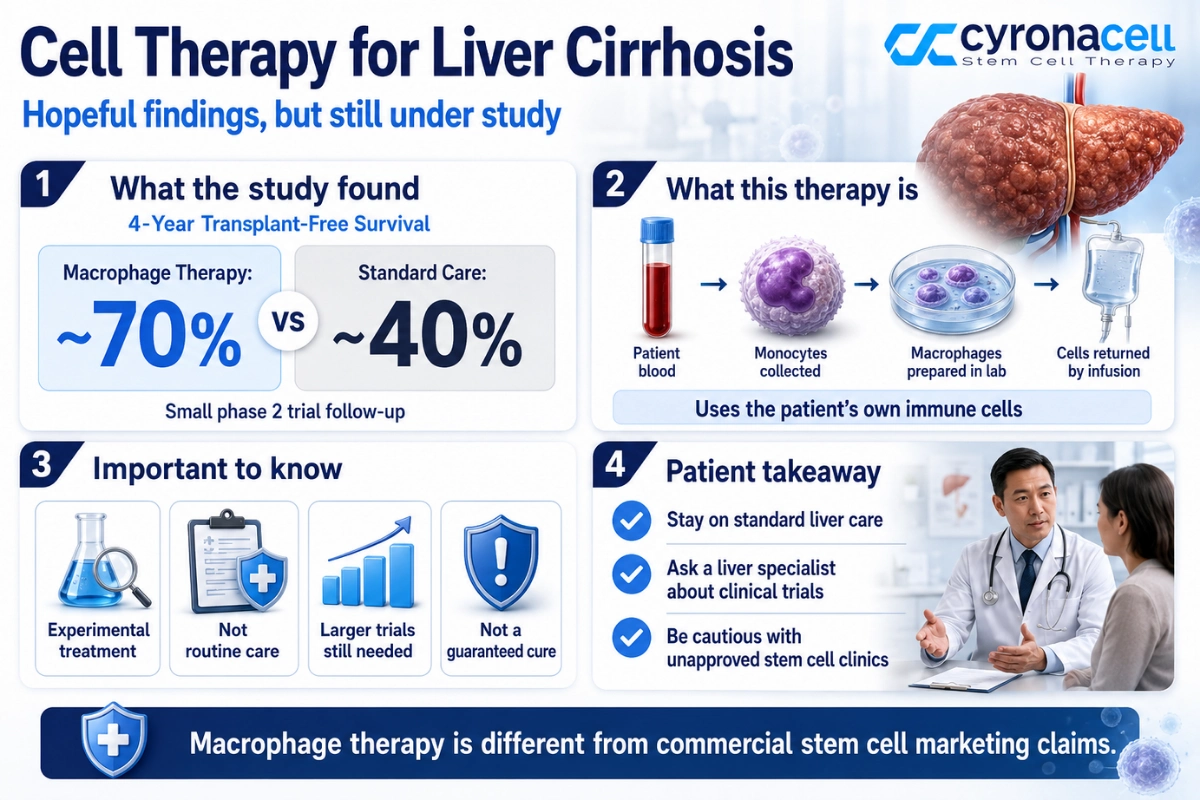
After four years, about 70% of patients who received macrophage therapy were alive without needing a liver transplant. The University of Edinburgh reported a lower rate in the standard-care group. About 40% of those patients were alive without needing a transplant. The Cell Stem Cell abstract also found a lower risk of death or transplant. The rate was 30.8% in the treated group and 58.3% in the standard-care group.
That matters because liver transplant remains the only curative option for many people with end-stage cirrhosis. Yet a transplant is not available or suitable for every patient. Donor organs are limited, surgery carries risk, and people who receive a transplant need lifelong medical follow-up.
Because of these limits, researchers have long searched for a safe alternative to liver transplantation. They also want to find ways to delay transplant for people whose liver disease continues to worsen.
This Is Macrophage Therapy, Not Standard Stem Cell Therapy
Many patients connect “cell therapy” with mesenchymal stem cell therapy, stem cell treatments, or stem cell transplantation. However, this new research focuses on a different type of treatment.
The MATCH trial studied macrophages. Macrophages are immune cells that help the body clear damaged cells, control inflammation, and support tissue repair. In this therapy, doctors collect certain blood cells from the patient. Then they grow those cells into macrophages in a lab and return them to the patient via infusion.
This distinction matters. Macrophage therapy belongs to a wider group of cell based therapies under study for liver disease. However, doctors should not describe it as a simple stem cell treatment. Doctors and researchers more accurately refer to this approach as autologous macrophage therapy, immune-cell therapy, or repair-focused macrophage therapy.
The goal is not to replace the liver. Instead, researchers hope that prepared macrophages can reach damaged liver tissue. They may reduce harmful inflammation, help break down scar tissue, and support liver regeneration.
Why Cirrhosis Is So Difficult to Treat
Cirrhosis develops when long-term injury causes scar tissue to replace healthy liver tissue. Common causes include viral hepatitis, alcohol-related liver disease, and fatty liver disease linked to metabolic problems. Over time, scar tissue can block blood flow, reduce liver function, and raise the risk of serious complications.
Some patients live for years with compensated cirrhosis, which means the liver still performs many key jobs. However, cirrhosis can progress into a more severe stage. At that stage, patients may develop fluid buildup, internal bleeding, jaundice, infections, kidney problems, or hepatic encephalopathy. This condition can cause confusion, changes in sleep, and problems with thinking.
Doctors can often treat the cause of liver injury and manage complications. Approved therapies can treat some viral causes of liver disease. Stopping alcohol can reduce further injury. Lifestyle changes may also help some people with metabolic liver disease.
Even so, once scarring becomes severe, doctors have few approved medicines that directly reverse cirrhosis itself. That is why regenerative medicine has drawn so much attention. A treatment that could slow disease progression, reduce inflammation, and help repair the liver would fill a major gap in care.
How the Macrophage Treatment Works
The therapy begins with the patient’s own blood. Researchers collect monocytes, which are early immune cells that can develop into macrophages. Then, researchers mature these cells in a lab. After preparation, doctors infuse the macrophages back into the patient.
Because the cells come from the same person, the treatment avoids some immune-matching problems linked with donor cells. However, the process still requires careful medical control. It involves cell collection, lab processing, quality checks, and close monitoring.
Macrophages can behave in different ways depending on their environment. Some drive inflammation, while others help resolve injury and support repair. Researchers must prepare the right types of cells in the right way. They also need to give them to the right patients at the right stage of disease.
In theory, these cells may help improve liver function by reducing inflammation signals and encouraging repair. However, researchers still need to clearly demonstrate that effect in larger patient groups.

What Makes the 2026 Data Important?
The original 2025 phase 2 MATCH trial gave researchers mixed but promising results. The study did not meet its primary endpoint, which looked at the change in MELD score after 90 days. MELD is a scoring system that helps estimate the severity of liver disease and the need for a liver transplant.
However, the same trial showed encouraging safety and clinical-event signals. Researchers followed patients for one year. During that time, they reported no liver-related serious adverse events or liver-related deaths in the macrophage-treated group. In contrast, the standard-care group had serious liver-related events and deaths, according to the phase 2 MATCH trial.
The 2026 follow-up matters because it looked beyond a short-term lab score. It focused on outcomes that patients clearly understand: survival and the need for a transplant. The stronger long term signal suggests that early changes after therapy may not tell the whole story.
Still, these findings do not prove the treatment is ready for everyday medical use. The study used an open-label design, so patients and researchers knew who received the therapy. The trial was also small. In addition, the study narrowly missed its original primary endpoint. Those limits mean larger studies need to confirm the results.
What Patients Should Take From the Research
Patients should not ignore this news. It may represent an important step in cirrhosis care. At the same time, patients should not see it as proof that a new treatment is already available.
The main takeaway is clear: macrophage therapy now shows a stronger long term clinical signal. This progress may be important for future research on cirrhosis. However, the treatment remains experimental.
A few points are especially important:
- The therapy studied in MATCH used patients’ own macrophages.
- Researchers tested the therapy in a small phase 2 trial.
- The 2026 data suggest better transplant-free survival over a four-year period.
- Regulators have not approved this therapy as a routine treatment for cirrhosis.
- Larger studies must confirm safety, benefit, timing, and patient selection.
This balanced view protects patients from both false hope and unnecessary pessimism.
| Topic | MATCH Trial Macrophage Therapy | Typical Commercial Cell Therapy Claims |
|---|---|---|
| Cell Type | Autologous macrophages derived from the patient’s own blood cells | Often described broadly as stem cells, exosomes, or regenerative cells |
| Research Status | Investigational Phase 2 clinical research | May be offered commercially without strong clinical evidence |
| Primary Goal | Reduce inflammation, support tissue repair, and improve transplant-free survival | Often marketed as broad liver regeneration or disease reversal |
| Regulatory Status | Not approved as standard treatment for cirrhosis | Many offerings are not FDA-approved for cirrhosis |
| Evidence Available | Published clinical trial data with long-term follow-up | Evidence quality varies widely between providers |
| Patient Cost | Provided within a regulated clinical trial setting | Often requires substantial out-of-pocket payment |
| Current Recommendation | Await larger trials and specialist guidance | Use caution and verify safety, oversight, and clinical evidence |
How This Differs From Commercial Stem Cell Clinics
The new findings may also confuse patients. Many private clinics already advertise cell or stem cell therapies for liver disease. Patients should be careful.
The U.S. Food and Drug Administration warns patients about unapproved cell-based products. These include products marketed as stem cells, exosomes, or other human cell products. The FDA says that approved stem cell products in the United States are indicated for specific blood disorders, not cirrhosis. Patients can review the agency’s unapproved cell therapy warning before considering any advertised therapy.
That warning matters because unapproved clinics may use terms like “natural,” “repair-focused,” or “personalized” without strong evidence. Some may also charge high fees for treatments that lack proper safety testing.
Before considering any cell-based treatment, patients should ask key safety questions. Patients should ask whether the therapy is part of a registered clinical trial. Patients should ask whether an ethics board has reviewed it. Patients should ask what safety data support the treatment. Patients should also ask who monitors side effects. Patients should be cautious if a clinic makes promises that sound too certain.
If the answers are unclear, patients should speak with a liver specialist before moving forward.
What About Engineered Macrophage Therapy?
The research field is already moving beyond the original macrophage approach. Scientists are now studying engineered macrophage therapy. They want to know whether prepared immune cells can work more consistently and effectively.
These newer approaches still use a patient’s own macrophages. However, researchers modify the cells in the lab to support anti-inflammatory and anti-fibrotic activity. The goal is to make macrophage therapy more targeted while still using the patient’s own cells.
Engineered macrophage therapy also remains experimental. Early human testing primarily focuses on safety and early signs of benefit. Researchers need more studies before doctors can compare engineered macrophages with non-engineered macrophages or standard care.
Where Do Mesenchymal Stem Cells Fit In?
Researchers have also studied mesenchymal stem cell therapy for liver disease for many years. These cells can release signals that may reduce inflammation and support repair. Some early clinical studies have reported potential benefits in liver function or symptoms, but results have varied.
That is why patients should not treat all cell therapies the same way. Macrophage therapy, mesenchymal stem cells, blood-forming stem cells, and other cell based therapies are not the same. They use different cell sources, lab steps, effects, and risks.
For patients with chronic liver disease, the most important question is not whether a treatment sounds advanced. The better question is whether it has strong clinical evidence, careful safety monitoring, and a clear path toward approval.
Right now, macrophage therapy has encouraging long-term data, but it still needs larger trials. Mesenchymal stem cell approaches also remain under investigation for many liver conditions. Patients should not view either approach as a guaranteed cure.
What Patients Can Do Now
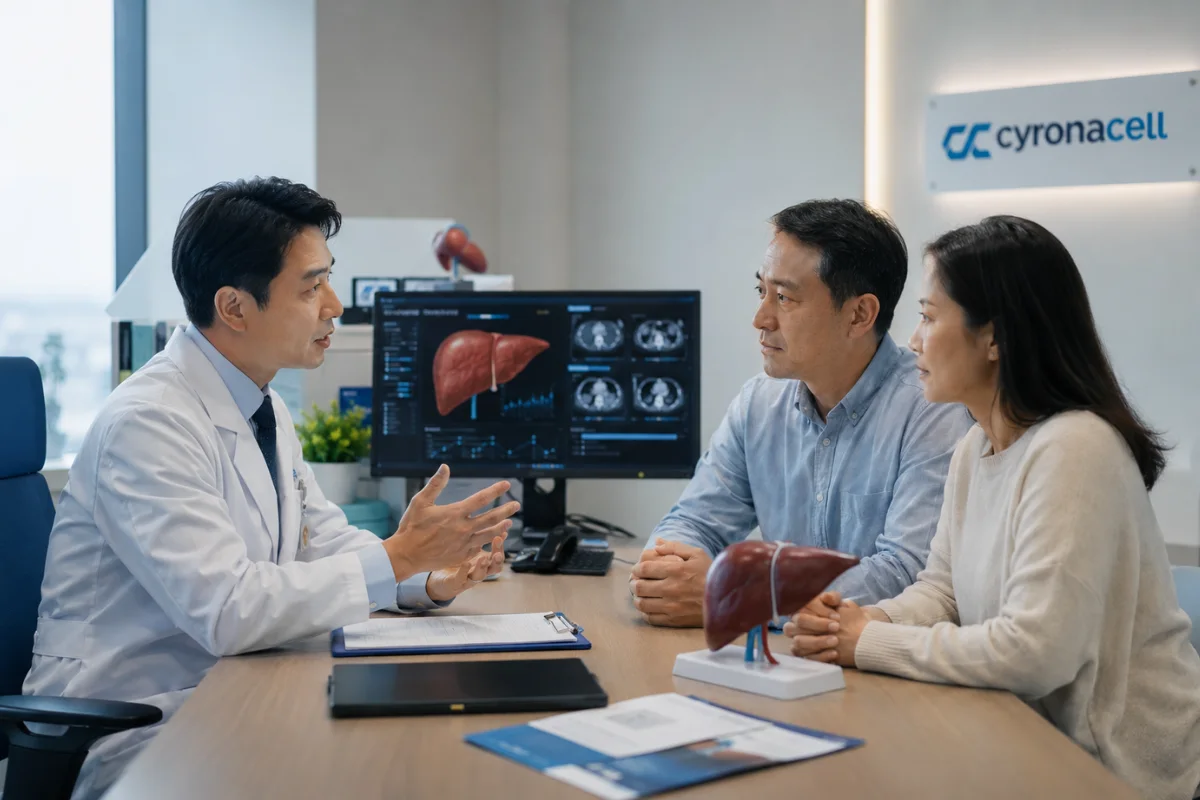
Patients with cirrhosis should not delay standard care while waiting for future therapies. The best current plan is to work with a liver specialist. Patients should also treat the cause of liver injury, attend regular checkups, and manage complications early.
Patients can also ask their doctor whether any legitimate clinical trials are available. A liver specialist can review trial criteria, possible risks, and the patient’s disease stage.
This point matters because cirrhosis is not one single condition. A patient with stable compensated cirrhosis may need one plan. A patient with recent bleeding, fluid buildup, infection, or hepatic encephalopathy may need another. A trial that fits one patient may not fit another.
As research advances, doctors need answers to key questions. Doctors still need to identify which patients benefit most. Researchers still need to define when treatment should begin. Researchers also need to learn how many doses patients may need. Could the treatment work better with other therapies?
A Hopeful Step Toward Better Cirrhosis Care
The 2026 macrophage therapy findings matter because future cirrhosis care may do more than manage complications. Larger trials need to confirm the results. If they do, immune cell therapy could help doctors target scarring and inflammation and repair in new ways.
Patients also need clear and careful information. This approach differs from commercial stem cell treatments. Researchers have studied this experimental therapy carefully, and the long-term results look promising, although clear limits remain.
For now, the message is clear: autologous macrophage therapy may help some people with cirrhosis live longer without transplant. However, doctors need larger trials before they can use it as a standard treatment.
Speak With a Liver Specialist Before Considering Any Cell Therapy
Patients should discuss new cell-based treatments with a liver specialist. They should do this before seeking any unapproved therapy. A specialist can explain whether the science applies to the patient. They can also review whether a trial makes sense and how to avoid unsafe treatments.
Macrophage therapy may become an important future option for cirrhosis. Until then, the safest path is evidence-based care, careful monitoring, and informed conversations with qualified liver experts.