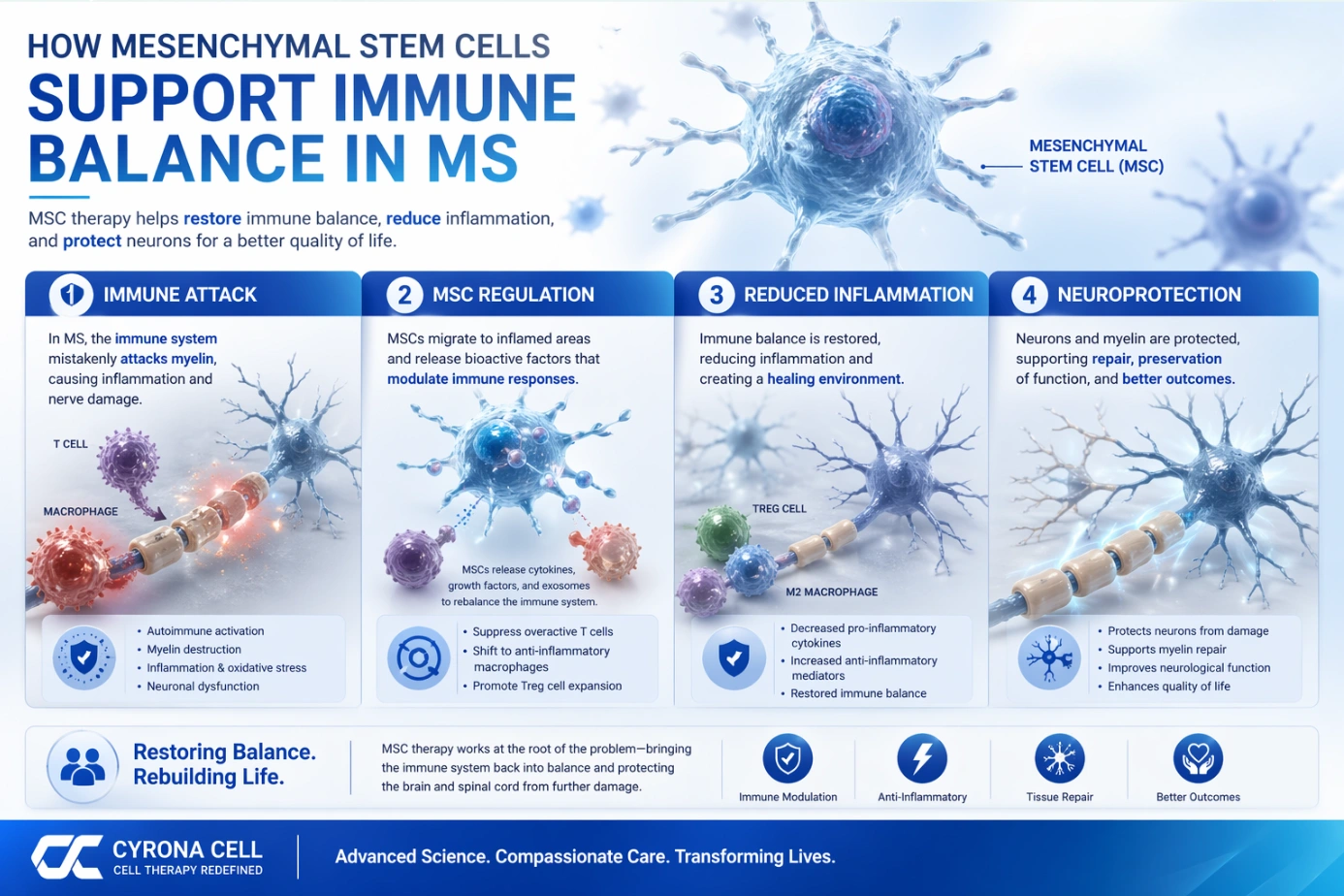
Quick SummaryMesenchymal stem cells (MSCs) help regulate immune responses in relapsing-remitting MS by interacting with immune cells, reducing inflammation, and providing neuroprotective effects. Unlike traditional immunosuppressive treatments, MSCs promote balanced immune modulation and may offer long-term stability with a favorable safety profile.
Estimated read: 7 min
Keywords: mesenchymal stem cells, MSCs, relapsing-remitting MS, immune modulation, regenerative medicine, reduced inflammation
Learn how mesenchymal stem cells help regulate immune balance in relapsing-remitting MS. Discover the science behind immune modulation, reduced inflammation, and neuroprotection.
mesenchymal-stem-cells-immune-balance-ms
|
A science-based approach to immune modulation and long term stability in MS patients
Relapsing-remitting multiple sclerosis is one of the most common forms of multiple sclerosis MS. It affects how immune cells behave and often leads to unpredictable flare-ups. Because of this, many researchers now explore advanced options in regenerative medicine. One key topic gaining attention is How Mesenchymal Stem Cells May Help Immune Balance in Relapsing-Remitting MS, especially for improving immune responses and reducing disease activity.
Mesenchymal stem cells MSCs are widely studied for their ability to support immune modulation. Unlike traditional treatments, they do not simply suppress the immune system. Instead, they help regulate immune responses in a more balanced way. As a result, they may offer reduced inflammation and a more stable long term outcome for MS patients.
Understanding Multiple Sclerosis MS and Its Immune Impact
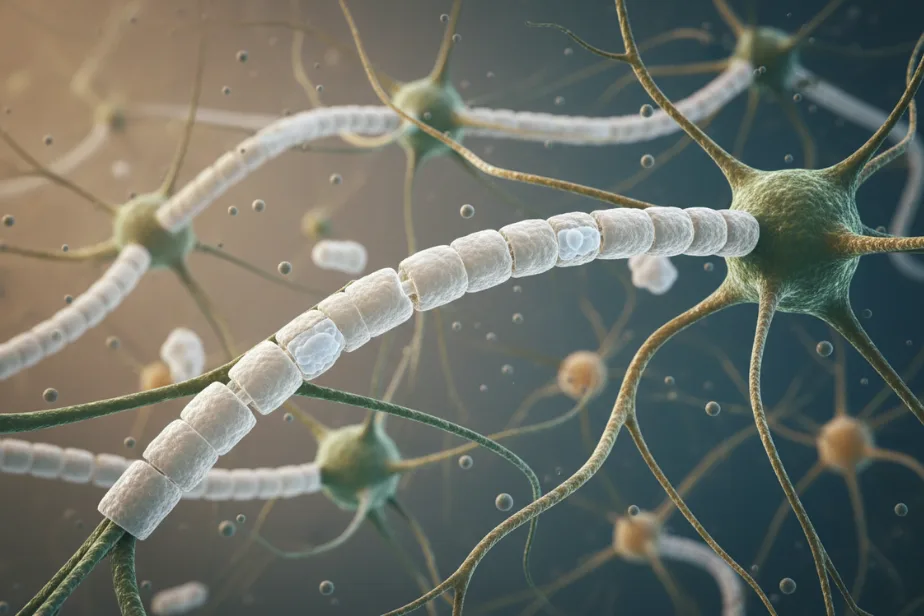
Multiple sclerosis MS is an autoimmune disease where the immune system attacks the protective layer of nerve fibers. This leads to communication problems between the brain and body. Over time, this damage can worsen, especially in conditions like secondary progressive multiple sc.
Relapsing-remitting MS involves cycles of relapse and recovery. During relapse, immune cells become highly active and cause inflammation. During remission, symptoms improve, but the disease process often continues silently.
Because of this ongoing immune dysfunction, therapies that focus on immune modulation are essential.
What Are Mesenchymal Stem Cells MSCs?
Mesenchymal stem cells MSCs are adult stem cells found in bone marrow, fat tissue, and umbilical cord tissue. These cells play a key role in regenerative medicine due to their flexibility and healing properties.
A mesenchymal stem cell MSC has the ability to:
- Interact with immune cells
- Release growth factors
- Support tissue repair
- Promote reduced inflammation
Because of these properties, mesenchymal stem cell therapies are now being explored as a promising option for autoimmune diseases like MS.
How MSCs in MS Support Immune Balance
Researchers studying MSCs in MS focus on how these cells influence immune responses. Their effects go beyond symptom control and target the root cause of inflammation.
Immune Modulation and Regulation
MSCs directly interact with immune cells such as T cells and B cells. These cells drive inflammation in MS. However, MSCs help slow down harmful immune responses and promote balance.
As a result, immune modulation becomes more controlled and less aggressive.
Reduced Inflammation Through Biological Signals
MSCs release growth factors and signaling molecules that calm inflammation. These signals help reduce damage to nerve tissues.
Studies have shown that patients receiving MSC therapy often experience reduced inflammation markers over time.
Neuroprotective Effect on Nerve Cells
One of the most important benefits is the neuroprotective effect. MSCs create a supportive environment that helps protect nerve cells from further damage.
Although they do not replace neurons directly, they improve conditions for healing and stability.
| Aspect | Mesenchymal Stem Cells (MSCs) | Why It Matters for MS Patients |
|---|---|---|
| Immune Modulation | Interact with T cells and B cells to regulate immune response instead of suppressing it | Helps reduce relapses while maintaining immune balance |
| Inflammation Control | Release signaling molecules and growth factors that reduce inflammation | Protects nerve tissue and limits disease progression |
| Neuroprotection | Create a supportive environment for nerve cells and reduce damage | Helps preserve brain and spinal cord function |
| Treatment Approach | Focus on immune regulation rather than resetting the immune system | Less aggressive compared to other stem cell therapies |
| Safety Profile | Generally well tolerated with mild side effects like fatigue or fever | Offers a safer option for long term management |
| Research Status | Studied in ongoing clinical trials for safety and effectiveness | Shows promising results but still requires long term data |
Comparing MSC Therapy to Other Stem Cell Approaches
Several stem cell treatments exist for MS. One well-known method is hematopoietic stem cell transplantation. This approach resets the immune system but involves more intensive procedures.
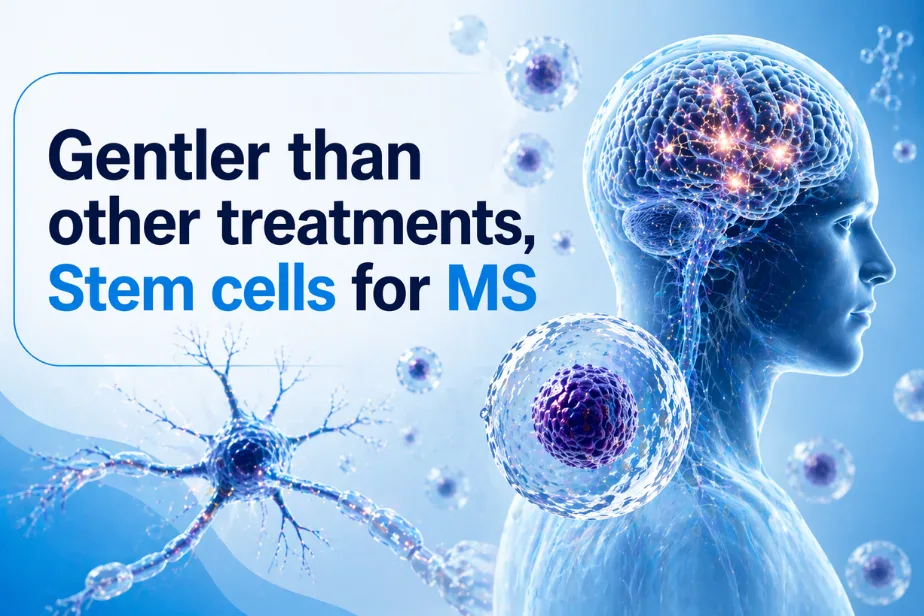
In contrast, mesenchymal stem cell therapies focus on regulation rather than replacement. Therefore, they offer a less aggressive and potentially safer alternative.
Both approaches have value, but MSCs stand out for their immune modulation capabilities and lower risk profile.
What Clinical Trials and Studies Have Shown
Clinical trials continue to explore the effectiveness of MSC therapy. Many results are encouraging, especially for relapsing-remitting MS.
A typical clinical study may evaluate:
- Changes in immune responses
- Levels of reduced inflammation
- Improvements in mobility and symptoms
Studies have shown that MSC therapy can improve stability in some MS patients. In addition, ongoing clinical trials aim to confirm long term safety and effectiveness.
Although results vary, the overall trend supports further research in this area.
Benefits of Mesenchymal Stem Cell Therapies
Mesenchymal stem cell therapies offer several advantages for MS patients seeking alternative care options.
Natural Immune Balance
Instead of shutting down the immune system, MSCs promote balanced immune responses. This reduces the risk of complications linked to immune suppression.
Multi-Level Healing
MSCs act on different levels. They regulate immune cells, release growth factors, and support tissue repair. Because of this, they provide a comprehensive approach.
Long Term Potential
Many researchers believe MSC therapy may offer long term benefits. While more data is needed, early findings are promising.
Considerations Before Choosing MSC Therapy
Although mesenchymal stem cell therapies show potential, patients should consider several factors.
- Availability depends on location
- Costs may vary
- Not all treatments are standardized
In addition, patients with advanced conditions like secondary progressive multiple sc may respond differently.
Therefore, medical consultation is essential before starting any therapy.
Who Are the Ideal Candidates?
MSCs may benefit individuals who:
- Have relapsing-remitting MS
- Seek alternatives to traditional treatments
- Want to explore regenerative medicine options
Each patient is different, so personalized evaluation is necessary.
Safety Profile and Research Insights
Most clinical trials report that MSC therapy is well tolerated. Side effects are usually mild and temporary.
These may include:
- Fatigue
- Mild fever
- Injection discomfort
Importantly, studies have shown a strong safety profile when treatments are performed in controlled environments.
The Future of MSCs in Autoimmune Diseases
The future of MSC therapy looks promising not only for MS but also for other autoimmune diseases. Researchers continue to refine techniques and improve outcomes.
Advancements may include:
- Better cell preparation methods
- Stronger neuroprotective effect
- More targeted immune modulation
As research grows, MSC therapy may become a standard option in regenerative medicine.
Move Toward Better Immune Balance Today
Managing MS requires a long term strategy that supports both symptom control and immune health. Understanding How Mesenchymal Stem Cells May Help Immune Balance in Relapsing-Remitting MS gives patients a clearer view of emerging treatment options.
If you are exploring advanced therapies, consult a qualified specialist. With the right guidance, MS patients can take steps toward improved stability, reduced inflammation, and better quality of life.
FAQ
What are mesenchymal stem cells MSCs and how do they help multiple sclerosis MS?
Mesenchymal stem cells MSCs are adult stem cells used in regenerative medicine to support healing and immune balance. In multiple sclerosis MS, these cells interact with immune cells and improve immune responses. As a result, they help reduce inflammation and support a more stable condition for MS patients. Studies have shown that MSCs may also provide a neuroprotective effect, which helps protect nerve cells from further damage.
Are mesenchymal stem cell therapies safe for MS patients?
Current clinical trials and each clinical study suggest that mesenchymal stem cell therapies are generally safe for MS patients when performed in controlled medical settings. Most side effects are mild and temporary. In addition, studies have shown that MSC therapy supports immune modulation without shutting down the immune system completely, which makes it a promising option for autoimmune diseases.
How do MSCs in MS compare to hematopoietic stem cell transplantation?
MSCs in MS focus on regulating immune responses and reducing inflammation, while hematopoietic stem cell transplantation aims to reset the immune system entirely. Because of this, mesenchymal stem cell therapies are often less aggressive and may offer a safer approach for some MS patients. Furthermore, ongoing clinical trials continue to explore the long term benefits and effectiveness of both treatments.