Key Takeaways
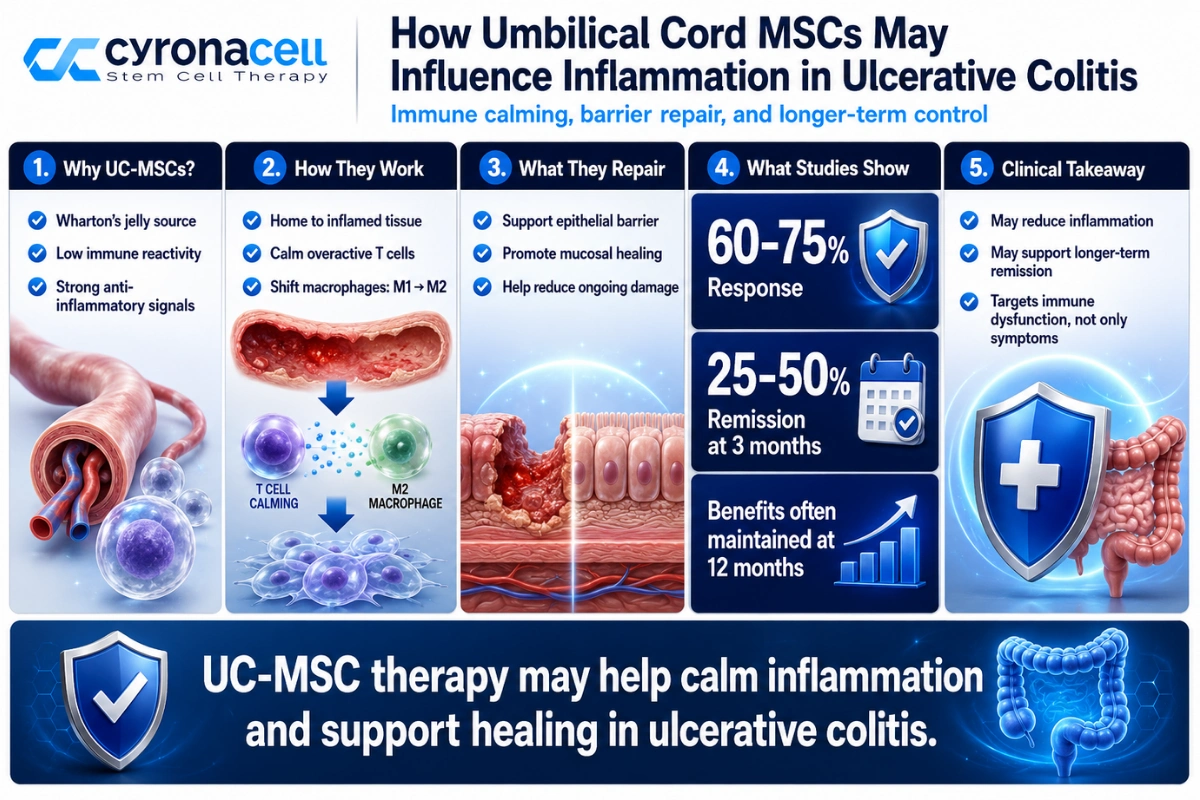
- Umbilical cord derived mesenchymal stem cells (UC-MSCs) are a well-studied source of MSC therapy for ulcerative colitis UC, with strong anti-inflammatory and tissue repair properties.
- UC-MSCs home to inflamed tissue, calm overactive immune cells, and promote macrophage repolarisation from a damaging M1 state to a healing M2 state.
- Published clinical trials and clinical studies report real drops in disease activity index DAI scores and mucosal healing in patients treated with UC-MSC therapy.
- The intestinal epithelial barrier, the first line of defence in the colonic mucosa, can be partly restored through MSC-derived growth factors and cytokine signalling.
- Long term efficacy data from clinical studies suggests durable immune rebalancing after UC-MSC treatment, with benefits extending well beyond the active treatment period.
Estimated read: 19 min
Understanding how umbilical cord MSCs may influence inflammation in ulcerative colitis starts with the biology. UC is not just a gut problem. It is an immune system problem that shows up in the gut. Umbilical cord derived mesenchymal stem cells work on the immune dysfunction at its source. This article explains the mechanisms in plain language. It covers what clinical trials and clinical studies show. It also explains how Cyrona uses this approach in practice.
What makes umbilical cord MSCs different
Not all mesenchymal stem cells MSCs are alike. Clinicians and researchers source them from bone marrow, fat tissue, the placenta, or the umbilical cord. Each source produces cells with different properties. Umbilical cord derived mesenchymal stem cells stand out for several reasons.
First, they come from newborn tissue. This means they are younger than cells from adult donors. Younger cells tend to be more active. They divide faster, secrete more growth factors, and keep stronger anti-inflammatory ability. Second, the collection process is non-invasive. Donors provide the umbilical cord after birth. There is no risk to the mother or the child. This keeps the process ethical.
Third, umbilical cord MSCs are low in immune reactivity. This is a key advantage. It means they are less likely to trigger an immune reaction in the recipient. This property means they can serve as an off-the-shelf treatment. They do not need the donor-recipient matching that bone marrow transplants require.
Why Wharton’s jelly is the preferred source
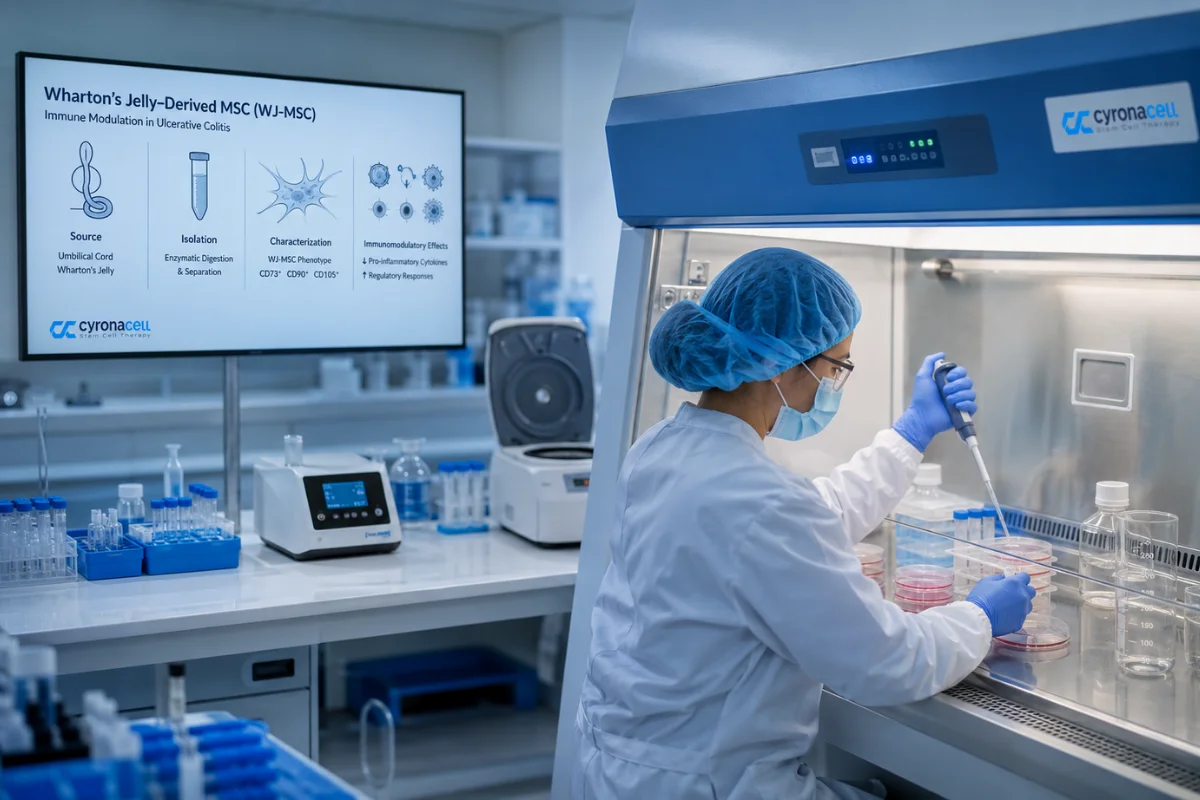
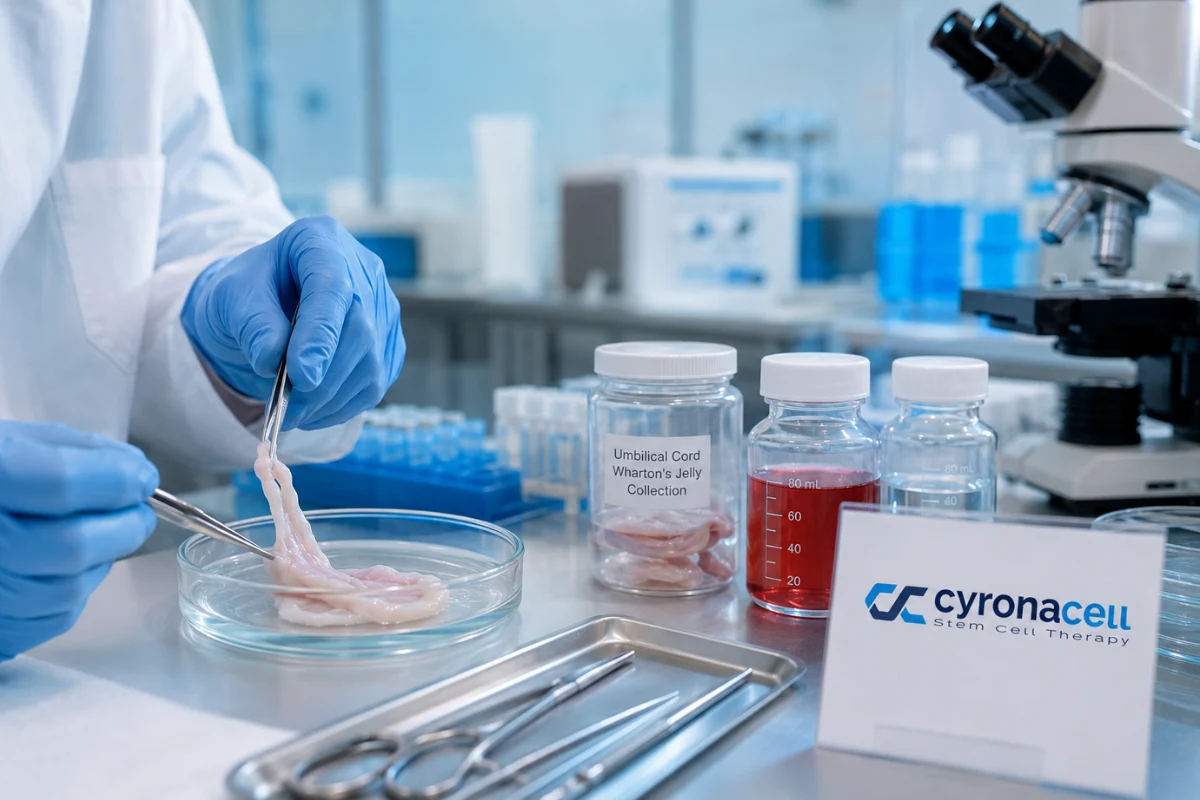
Within the umbilical cord, Wharton’s jelly is the main source for MSC extraction. Wharton’s jelly surrounds the blood vessels inside the cord. It holds a high density of stem cells.
Cord derived mesenchymal stem cells from Wharton’s jelly show strong immune-calming markers. A 2024 review in Stem Cell Research and Therapy found that these cells secrete a wide range of anti-inflammatory signals. This suits them well to conditions like ulcerative colitis UC. The immune attack there is ongoing, not just occasional.
Wharton’s jelly cells are easier to grow in the lab than bone marrow MSCs. This means teams can prepare larger, more steady batches for clinical use. Batch consistency matters for therapeutic effects. Patients need a reliable, set dose of active cells. Cyrona sources wjMSCs in particular from Wharton’s jelly for this reason.
How derived MSCs compare to other MSC sources
Bone marrow-derived MSCs were the first to be studied extensively. However, they have practical limitations. The collection procedure is invasive and painful. Donor age affects cell quality, older donors produce less active cells. And yield per procedure is often low.
Fat-derived MSCs are easier to collect. However, they show weaker immune-calming activity than cord derived mesenchymal stem cells. Placenta-derived MSCs have a similar profile to UC-MSCs. However, they are less well studied in IBD.
Overall, umbilical cord derived mesenchymal stem cells offer the best mix of range, quality, safety, and anti-inflammatory strength for treating ulcerative colitis UC. This is why they lead as the preferred cell source in newer MSC therapy trials.
How UC-MSCs find and reach inflamed tissue
One key feature of MSC therapy is the ability to home to areas of active damage. This is not random. Chemical signals released by inflamed tissue guide the process. This explains why giving cells through a drip can still produce effects in the gut.
When the immune system attacks the colon lining in UC, damaged cells release distress signals. These include cytokines, chemokines, and damage-associated molecules. Mesenchymal stem cells MSCs carry surface receptors that detect these signals. On encountering them, the cells migrate toward the source.
Once they arrive at the inflamed site, the cells do not need to take root permanently to have an effect. Most of their benefit comes from the signals they release. This is cell-to-cell signalling, not physical replacement of damaged tissue. This distinction matters for how we understand MSC therapy for chronic inflammatory conditions.
The homing mechanism explained
The homing of UC-MSCs to inflamed bowel tissue involves several surface molecules. MSCs carry a surface receptor called CXCR4. It responds to CXCL12 signals from sites of tissue damage. This pulls MSCs toward areas of active disease in the colonic mucosa.
Research from the Nature publication on umbilical cord-derived MSC extracts found that homing efficiency in systemic delivery can be low. This was one reason the study examined whether MSC-derived extracts rather than whole cells might deliver the same therapeutic effects more well. The study found that MSC extracts reduced the disease activity index DAI, lowered tissue damage scores, and restored body weight in a mouse model. These results were similar to those from whole-cell MSC therapy.
This line of research suggests the soluble factors that UC-MSCs secrete may carry much of the benefit. It also raises the idea of combining whole cells for initial immune modulation with soluble extracts to keep the anti-inflammatory signal going over time.
In simple terms, this is what happens when UC-MSCs enter the body. They sense where the damage is. The cells move toward it. Once there, they release calming and repair signals. Those signals do two things. They turn down the immune attack. They help the gut wall heal. The cells do not stay long. But their signals start a process that lasts. The immune system shifts. The gut begins to heal. That change can persist long after the cells have gone. This is the core of how MSC therapy works in UC.
| UC-MSC Mechanism | What Happens in Ulcerative Colitis | Potential Treatment Effect |
|---|---|---|
| Immune Modulation | Overactive immune cells attack the colonic mucosa | Helps calm the immune response and reduce inflammation |
| T Cell Rebalancing | Th1 and Th17 cells drive inflammatory cytokines | Supports regulatory T cells that control immune activity |
| Macrophage Repolarisation | Macrophages remain stuck in damaging M1 mode | Shifts macrophages toward healing M2 activity |
| Barrier Repair | The intestinal epithelial barrier becomes weak and leaky | Growth factors may support mucosal healing and barrier restoration |
| Inflammatory Marker Reduction | CRP, ESR, TNF-alpha, and IL-6 may rise during active flares | May lower inflammatory burden and disease activity |
| Long-Term Immune Rebalancing | UC can relapse when immune dysregulation continues | May support longer-lasting remission and fewer flares |
Calming the immune response in UC
The immune response in UC is a complex process. Several types of immune cells play a role. MSC therapy acts on multiple immune cell types at once. It does not target just one. This broad action is a key advantage over targeted biologics. Biologics typically block a single cytokine or receptor.
T cell modulation and regulatory T cells
T cells are central to the immune attack in UC. Pro-inflammatory T helper cells (Th1 and Th17) drive the release of cytokines that damage the colon wall. In UC, these cells are overactive. Regulatory T cells, which normally control and limit immune responses, are underactive.
UC-MSCs directly address this imbalance. They suppress Th1 and Th17 cells by releasing immune-calming molecules such as PGE2, TGF-beta, and IDO. They also actively expand the numbers of regulatory T cells. This two-part action shifts the immune system to a calmer, more controlled state.
The 2024 study in Stem Cell Research and Therapy described this T cell rebalancing as a core reason for the clinical gains seen in UC patients treated with umbilical cord MSCs. Patients showed drops in pro-inflammatory cytokine levels. Regulatory T cell counts rose. Both changes matched lower disease activity index DAI scores.
This immune rebalancing is also relevant to long term efficacy. Because MSCs expand the patient’s own numbers of regulatory T cells, the calming effect on the immune system can persist after the MSC cells themselves have cleared. The treatment retrains the patient’s immune system rather than just suppressing it temporarily.
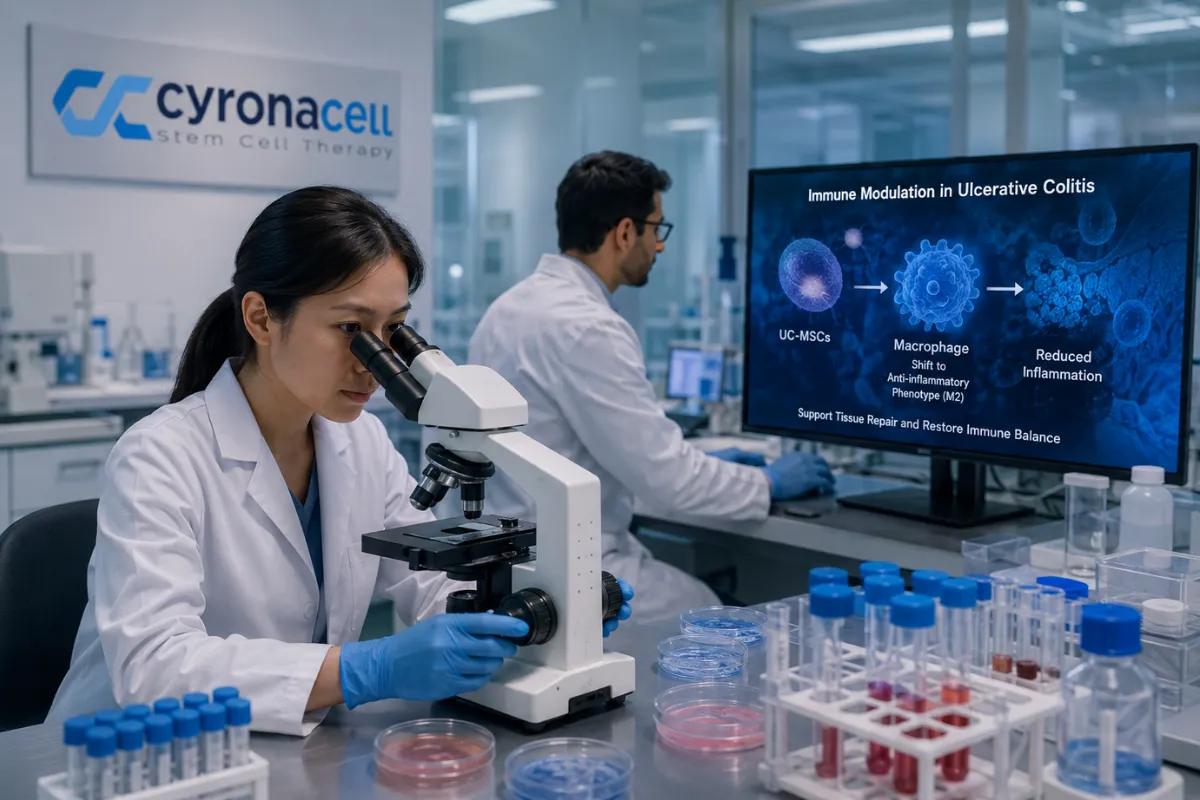
Macrophage repolarisation from M1 to M2
Macrophages are large immune cells that act as the gut’s first line of defence. In healthy tissue, they switch between two states. M1 is attack-mode and fights infection. M2 is healing-mode and promotes healing. In UC, this switch is stuck. Macrophages stay in the M1 state and keep releasing inflammatory signals that damage the colonic mucosa.
UC-MSCs produce a measurable shift in macrophage behaviour. The Nature Scientific Reports study found that MSC extracts shifted macrophages from M1 to M2. They did this by reducing M1 molecules (MCP-1, CXCL9, and iNOS) and boosting M2 signals (IL-10, CCL1, and Arg-1). This shift directly reduces the inflammatory environment in the colon.
IL-10 is especially key here. It is a strong anti-inflammatory cytokine. Higher IL-10 levels in the colon help suppress the cycle that drives repeated flares. The MSC-driven increase in IL-10 production by repolarised M2 macrophages is one of the clearest therapeutic effects documented in this line of research.
Macrophage repolarisation also supports tissue repair. M2 macrophages secrete growth factors that help rebuild the colonic mucosa. This happens after a period of active inflammation. This links the immune-calming effect of UC-MSC therapy to the mucosal healing outcomes reported in clinical trials.
It helps to think of macrophages as guards. When they are in M1 mode, they attack. They release signals that cause damage. They are suited to fighting short-term threats. But in UC, they stay in attack mode for too long. MSC therapy switches them to M2 mode. In M2 mode, guards become repairers. They help the gut wall rebuild. This switch is a key part of how UC-MSCs reduce disease activity and support long-term healing.
Protecting the colonic mucosa and intestinal epithelial barrier
The colonic mucosa is the inner lining of the colon. It consists of several layers. The outermost is the intestinal epithelial barrier, a single layer of tightly connected cells that separates the colon’s interior from the immune tissue beneath. In healthy gut, this barrier is intact. In UC, it breaks down.
How the epithelial barrier breaks down in UC
This breakdown happens in stages. First, ongoing inflammation loosens the tight junctions between epithelial cells. These junctions normally hold the cells together like bricks in a wall. When they loosen, gaps open up. Bacteria and other molecules cross through into the tissue beneath.
Once bacteria enter the sub-epithelial tissue, the immune system responds. This triggers more inflammation, which further damages the epithelial barrier, which allows more bacteria through. The cycle is self-reinforcing. Breaking it requires both calming the immune response and repairing the physical barrier.
Conventional drug therapies address the immune side of this cycle. They reduce inflammation. However, they do not directly drive repair of the epithelial cells. This structural gap in standard UC care is where MSC therapy can make a real difference.
MSC signals that restore the colonic mucosa
Umbilical cord derived mesenchymal stem cells release growth factors that directly support intestinal epithelial repair. These include HGF, EGF, and VEGF. Each of these stimulates different aspects of colonic mucosa restoration.
HGF promotes the proliferation and migration of epithelial cells across damaged areas. EGF stimulates the growth of new epithelial tissue. VEGF supports the formation of new blood vessels, which bring oxygen and nutrients to healing tissue. Combined, these signals help the intestinal epithelial barrier rebuild itself.
The Nature Scientific Reports study confirmed this in a lab setting. MSC extracts restored the epithelial barrier in Caco-2 cell cultures, a standard lab model of intestinal epithelium. The treated cells showed recovery of barrier integrity after it was experimentally disrupted. This provides a cellular-level explanation for the mucosal healing outcomes documented in clinical trials of MSC therapy in UC patients.
MSCs also support the mucin production, the substance that forms the protective mucus layer over the epithelial surface. Mucin is the first physical defence between gut bacteria and the colon wall. Restoring mucin production reduces the bacterial load on the epithelium, lowering the immune trigger that keeps the inflammatory cycle going.
What the disease activity index DAI shows in studies
The disease activity index DAI is the primary clinical measure used in UC research. It combines scores for stool consistency, blood in stools, weight loss, and colon appearance. A lower score means less disease activity. Improvements in DAI are the benchmark for judging whether a UC treatment is working.
Key findings from clinical trials and clinical studies
Clinical trials and clinical studies of UC-MSC therapy report reductions in disease activity index DAI scores following treatment. In the 2024 review published in Stem Cell Research and Therapy, the team reviewed multiple studies. The review found that umbilical cord MSCs reduced DAI scores in both animal models and human clinical trials.
In human clinical studies, response rates ranged from 60 to 75 percent. Remission rates at three months ranged from 25 to 50 percent, depending on disease severity and prior treatment history. Researchers documented mucosal healing, confirmed by endoscopy, in a large share of responders. These results are consistent across studies using different dosing and delivery methods.
The studies also looked at inflammatory markers. Patients who responded to UC-MSC therapy showed drops in CRP, ESR, and pro-inflammatory cytokines such as TNF-alpha and IL-6. These are the same markers that rise during active UC flares. Their drop matches the clinical gains patients report.
Notably, many of these trials included patients who had not responded to at least one prior treatment, such as biologics or immunosuppressants. This suggests UC-MSC therapy may be effective in patients whose disease has not responded to standard care. This is a clinically real finding for patients who have run out of conventional options.
For patients reading these numbers, the key takeaway is this. A 60 to 75 percent response rate means most people who try MSC therapy see a real benefit. A 25 to 50 percent remission rate at three months is not a full cure, but it is a real gain. And those gains hold. Studies show that patients who respond at three months tend to keep that response at twelve months. This is not a short-term drug effect. It is a change in how the immune system behaves.
Long term efficacy: what the data says
Long term results data is the key test for any UC treatment. Steroids can produce short-term remission. But patients need lasting remission: fewer flares, stable mucosal healing, and less reliance on medication.
Follow-up data from clinical trials of UC-MSC therapy is encouraging. In several studies, patients who responded to treatment kept their improvement at twelve months. Some studies report data at eighteen to twenty-four months. Clinical scores stayed stable or kept improving. The proportion of patients remaining in remission at one year after a single treatment course compares favourably with rates seen with standard maintenance therapies.
The mechanism behind this long term efficacy is the immune rebalancing described above. Because MSC therapy expands the patient’s own regulatory T cells and repolarises macrophages, the immune system is in a different state after treatment than it was before. It is not simply suppressed. MSC therapy guides it toward a calmer state. This explains why the benefits can persist after the MSC cells themselves are no longer present in the body.
Long term data also shows a good safety profile over time. Published clinical studies with follow-up of up to two years report no increase in serious adverse events, malignancy, or opportunistic infection. This distinguishes UC-MSC therapy from some standard immunosuppressants, which carry cumulative risk with long-term use.
UC-MSCs and Crohn’s disease: shared mechanisms
Ulcerative colitis and Crohn’s disease are both forms of chronic IBD. They share a common immune dysfunction, overactive T cells and stuck macrophages in the gut wall. However, Crohn’s disease affects the full thickness of the gut wall and can occur anywhere in the digestive tract, while UC stays within the colonic mucosa.
Despite these differences, MSC therapy targets largely the same immune mechanisms in both conditions. The same T cell rebalancing, macrophage repolarisation, and repair signals that help in UC are relevant in Crohn’s disease too. This is why teams are studying MSC therapy across the broader IBD category, not only in UC.
For patients with Crohn’s disease considering stem cell therapy, the mechanism is closely related to what is described in this article. The differences are in the target tissue and extent of damage, not in the core immune process. Cyrona reviews each patient to assess whether the effects seen in UC will apply to their specific IBD case.
Therapeutic effects beyond inflammation
The therapeutic effects of umbilical cord MSC therapy in UC go beyond calming the immune response. They include direct support for tissue repair, influence on the gut microbiome, and possible systemic benefits for patients whose UC is linked to outside the gut inflammation.
Tissue repair and gut microbiome support
The tissue repair effects of UC-MSCs in the colonic mucosa were described above. But there is a further dimension worth noting. MSC therapy may also affect the gut microbiome. This is the community of bacteria that live in the colon.
In UC, the gut microbiome is out of balance. Bacterial species shift toward harmful bacterial strains. This imbalance contributes to the inflammatory environment in the colon and may help sustain flares. Reducing inflammation through MSC therapy helps good bacteria re-establish. Some clinical studies have noted microbiome shifts after MSC treatment. This remains an active area of research.
MSC therapy may also benefit outside the gut symptoms of UC. Some UC patients experience joint pain, skin inflammation, or eye inflammation alongside their gut symptoms. The same immune activation that harms the gut also drives these symptoms. Systemic MSC infusion, which circulates through the whole body, may help calm this broader inflammatory state. Patients at Cyrona sometimes report improvement in outside the gut symptoms alongside their gut outcomes.
Finally, the tissue repair growth factors released by MSCs, HGF, EGF, and VEGF, are not gut-specific. They support repair in any tissue where they encounter damage signals. This means UC-MSC therapy may provide general systemic tissue support alongside its specific gut effects.
How Cyrona uses UC-MSCs for UC treatment
The science above can feel complex. So here is the short version. UC-MSCs calm the immune attack. They help the gut wall heal. Flares become less frequent. Long term remission becomes possible. Cyrona uses these cells to treat UC patients at its clinic in Cyberjaya, Malaysia. The process is safe. The results are real. And the treatment targets the root cause, not just the symptoms.
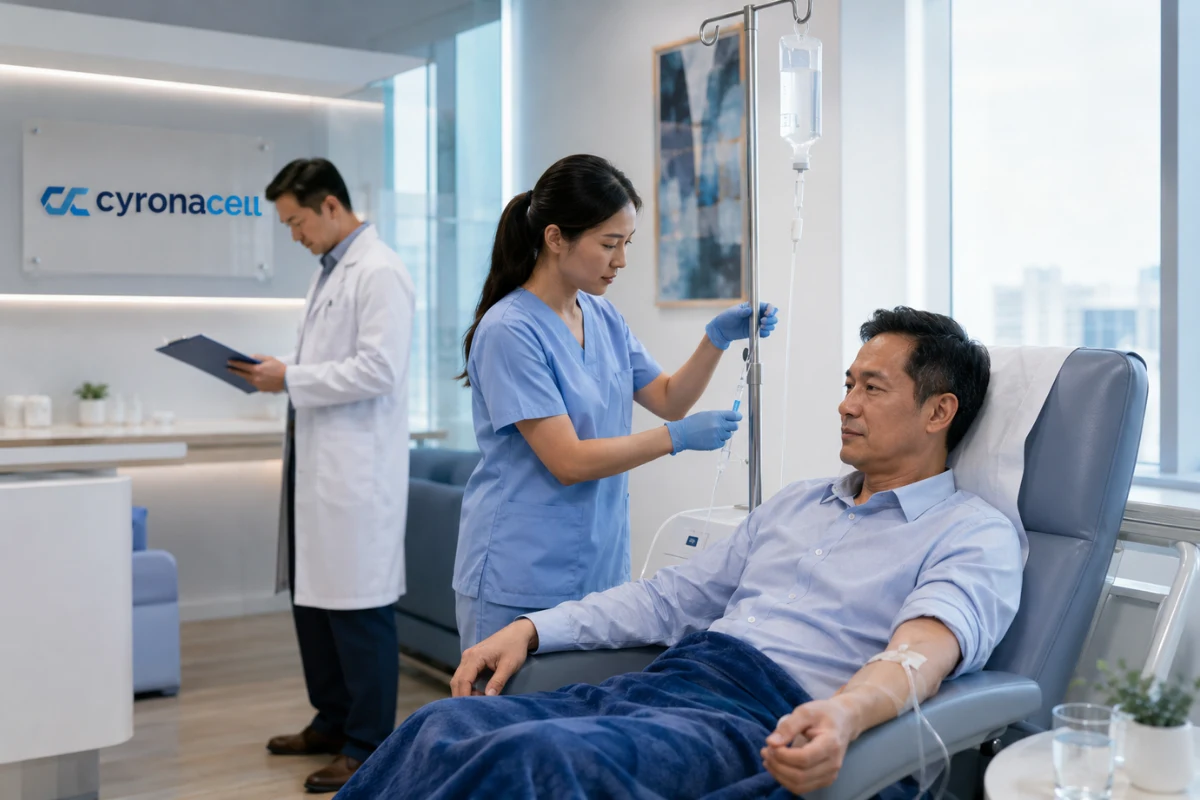
Cyrona uses Wharton’s jelly-derived mesenchymal stem cells, the cord derived mesenchymal stem cells described in this article. All cells undergo rigorous quality testing before use. Cyrona delivers the treatment through a drip, allowing cells to circulate and home to areas of active inflammation throughout the body, including the gut.
Every patient has a clinical assessment before treatment. This covers disease severity, current medications, prior treatment history, and inflammatory markers. The assessment confirms suitability and sets realistic expectations for therapeutic effects based on the patient’s specific case.
Cyrona’s team monitors patients after treatment. Follow-up includes review of symptoms, inflammatory markers, and where relevant, endoscopic assessment of the colonic mucosa. This tracks short-term response and long term efficacy. It also informs decisions about whether a second cycle is appropriate.
The assessment and treatment process
The process at Cyrona is straightforward. You apply online or by phone. The clinical team reviews your case. They look at your history, your current treatment, and your test results. If you are suitable, they explain what the treatment involves and what to expect. The treatment itself takes a few hours. You go home the same day. Follow-up checks track how you respond. If a second cycle is helpful, the team will advise you at the right time.
Read more about the UC stem cell treatment programme at Cyrona, or visit how it works for the full clinical process overview. For related reading on how MSC therapy fits into the broader IBD treatment landscape, see the article on stem cell therapy for IBD with biologics and steroids.
To begin your assessment, visit the start application page.
Frequently asked questions
What is the disease activity index DAI and why does it matter in UC research?
The disease activity index DAI is a composite score used in UC clinical trials to measure how active the disease is. It combines stool consistency, blood in stools, body weight change, and colon condition. A score of zero means no active disease. Higher scores mean more severe disease activity. It is the standard benchmark in clinical studies of UC treatments, including MSC therapy. Improvements in DAI scores in trials of umbilical cord MSC therapy are how researchers confirm the treatment is having a real clinical effect, not just changing a lab marker.
How do umbilical cord MSCs differ from bone marrow stem cells for treating UC?
Both are types of MSCs, but they differ in practical and biological ways. Doctors collect bone marrow MSCs through a painful procedure from adult donors. Cell quality declines with donor age. Teams collect umbilical cord derived mesenchymal stem cells non-invasively from donated tissue after birth. They are younger, more active, and produce higher levels of anti-inflammatory signals. They also have lower immune reactivity, meaning less risk of an immune reaction from the recipient. For chronic inflammatory conditions like UC, the stronger anti-inflammatory profile of cord derived MSCs gives them a clear clinical advantage.
Can UC-MSC therapy be combined with biologic treatment?
In most cases, yes. Many patients who receive MSC therapy are already on a biologic or immunosuppressant at the time. Clinical studies have included patients on stable background medication. The key consideration is whether any current drug could interfere with how MSCs work. High-dose steroids and active biologic infusions are the main factors to review. Cyrona’s clinical team checks all current medications during the pre-treatment assessment. The goal is to ensure MSC therapy can work as intended, and in some cases to plan a gradual reduction in medication as the patient’s inflammatory burden decreases.
What does long term efficacy mean in practice for UC patients?
Long term efficacy means staying in remission, fewer flares, stable mucosal healing, and reduced need for medication, over months or years after treatment. In clinical studies of UC-MSC therapy, many patients maintain their improvement at twelve months. Some studies show stable or improving scores at eighteen to twenty-four months. This is possible because MSC therapy does not just suppress the immune response short-term. It retrains the immune system by expanding regulatory T cells and repolarising macrophages. The patient’s immune system behaves differently after treatment. That change can be lasting.
Talk to Cyrona about UC-MSC treatment
If you have ulcerative colitis UC that is not fully controlled by current treatment, or if you want to understand how umbilical cord MSC therapy could help your specific situation, Cyrona’s clinical team in Cyberjaya, Malaysia is available to assess you.
WhatsApp or call: +6018 222 0032
Email: info@cyronacell.com