Key Takeaways
- Hypoxic brain injury is caused by reduced oxygen; anoxic brain injury by a complete stop. Both damage the same brain tissue but anoxic injuries tend to be more severe.
- Stem cell therapy supports recovery in both by releasing neurotrophic factors, reducing inflammation, and providing an environment for surviving neurons to rebuild function.
- Neural stem cells NSCs and glial cells are key targets in brain repair, stem cell therapy supports their regeneration and helps bridge damaged areas.
- Wharton’s jelly MSCs (wjMSCs), derived from the umbilical cord, are preferred over bone marrow and induced pluripotent stem cells iPSCs for their safety profile and anti-inflammatory potency.
- IV infusions are the primary delivery method at Cyrona, allowing cells to circulate and home toward areas of active brain injury.
Estimated read: 10 min
Hypoxic and anoxic brain injuries both involve oxygen loss. They are closely related. But they differ in severity. Both respond to stem cell therapy. The core mechanisms are the same. It explains how stem cells act on the injured brain. It covers what the evidence shows.
Hypoxic vs anoxic brain injury: the key difference
Hypoxic and anoxic both describe oxygen deprivation. They differ in degree. However, they differ in degree. Hypoxic brain injury means the brain gets some oxygen. But not enough. Anoxic brain injury occurs when oxygen supply stops completely.
| Feature | Hypoxic Brain Injury | Anoxic Brain Injury |
|---|---|---|
| Oxygen Supply | Reduced but not completely absent | Completely interrupted |
| Severity | Often less severe | Usually more severe |
| Brain Cell Survival | More neurons may survive the event | Greater neuron loss is common |
| Common Causes | Stroke, carbon monoxide exposure, respiratory failure | Cardiac arrest, drowning, suffocation |
| Recovery Potential | Generally better if treated early | Often more limited, depending on duration |
| Stem Cell Therapy Goal | Support surviving neurons and reduce secondary damage | Reduce inflammation and maximize remaining brain function |
Both are medical emergencies. The brain uses 20 percent of the body’s oxygen. But it is just 2 percent of body weight. When oxygen drops, brain cells begin to fail within minutes. When oxygen stops entirely, damage starts within four to five minutes.
According to the NIH StatPearls review on hypoxic brain injury, the most common cause is cardiac arrest. Other causes include near-drowning, stroke, and drug overdose. Traumatic brain injuries that affect blood flow can cause it too. The injury does not always come from a single dramatic event. Slow hypoxia from CO poisoning causes the same damage. It just builds more slowly.
What happens inside the injured brain
When oxygen drops, neurons cannot make enough energy. They begin to fail. Within seconds, cells begin to lose their electrical stability. Within minutes, calcium floods into neurons in toxic amounts. This triggers a damage cascade. It continues even after oxygen returns. Tissue only partly damaged at the time may die in the hours that follow. This is called secondary damage.
This secondary phase is where stem cell therapy matters most. Primary damage cannot be undone. But secondary damage can be partly addressed. It includes ongoing inflammation, cell death, and lost connections. The right intervention matters here.
Anoxic injuries cause wider primary damage. Oxygen stops entirely rather than just dropping. Hypoxic injuries may be more focal. Both produce a similar damage cascade. This is why the stem cell approach works for both.
Why the distinction matters for treatment
For stem cell therapy, this distinction matters. It affects two things. First, it affects timing. Patients with hypoxic injury from a short event tend to have more surviving neurons. This gives them more to work with in therapy.
Second, it affects expectations. Full recovery from severe anoxic injury is rare. This holds true with any treatment. Stem cell therapy is a supportive option, not a cure. It aims to reduce secondary damage. It also supports the brain’s own repair.
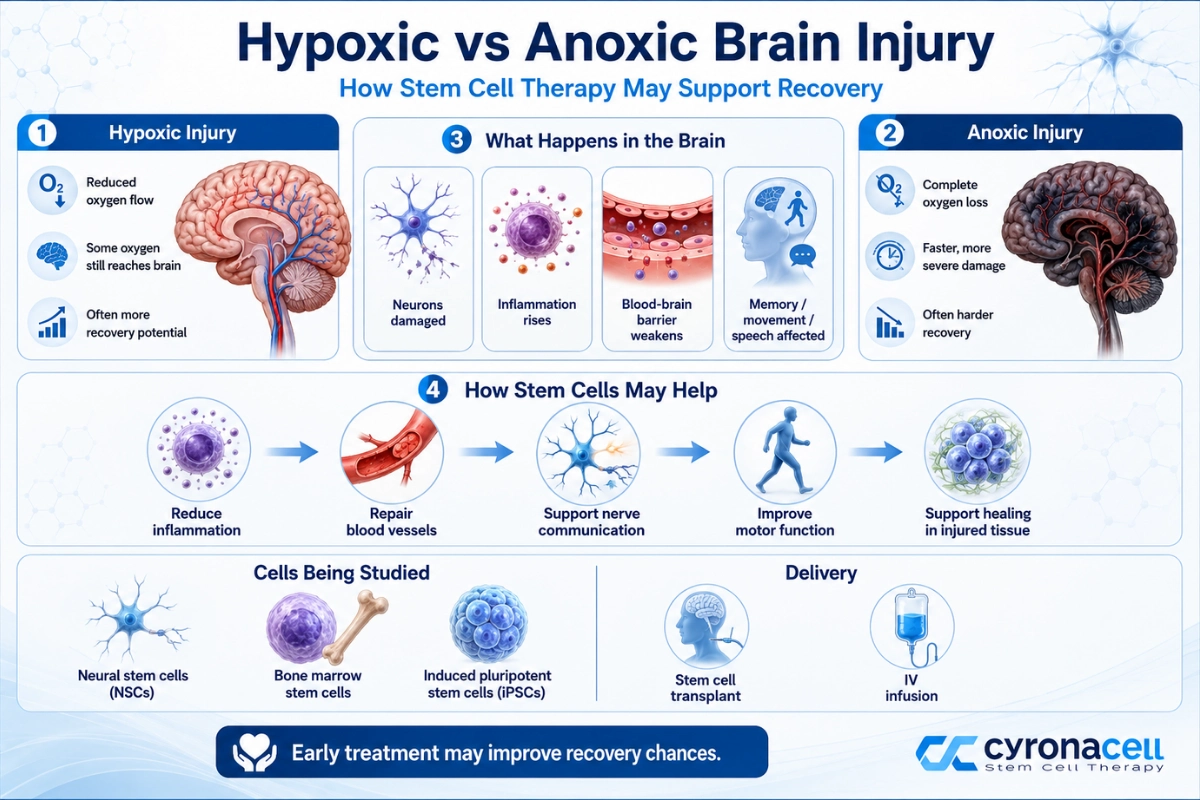
How stem cell therapy supports recovery in brain injury
Stem cell therapy does not replace dead neurons. What they can do is change the environment. Surviving neurons function better in this new setting. This supports function and reduces further loss.
When stem cells enter the body, they move toward damaged areas. There they release molecules. These reduce inflammation. They support surviving cells. Animal model data is strong. Early human data is catching up.
Neural stem cells NSCs and glial cells
Two cell types are especially important in brain injury recovery. Neural stem cells NSCs are the brain’s own repair cells. Under the right conditions, they can produce new neurons. They can also produce glial cells. But after injury, their activity stays limited. Most newly produced cells do not survive.
Glial cells are the support cells of the brain. They include astrocytes and myelin-making cells. Oligodendrocytes produce myelin, the protective coating around nerve fibers. In hypoxic brain injury, myelin often gets damaged. The neurons it protects suffer too. Supporting new myelin-making cells and protecting existing myelin both matter. This is one way stem cell therapy helps brain recovery.
Introduced MSCs do not become neurons themselves in real numbers. However, they support the brain’s own neural stem cells NSCs. They release signals. These help newly produced cells survive and integrate. They also adjust glial cell responses. This reduces scar tissue that can block recovery. It also improves the environment of the injured brain.
Nerve support signals and the recovery environment
The key mechanism is the release of neurotrophic factors. These are nerve support signals. The key ones are BDNF, NGF, and VEGF.
BDNF is especially important. It helps neurons survive and form new connections. enhances the formation of new connections, and supports the brain’s ability to reorganise around damaged areas, a process called brain repair. In hypoxic brain injury, BDNF levels drop sharply. MSC-released BDNF helps restore this signal. Surviving neurons get a better setting for recovery.
VEGF supports new blood vessel growth in the injured brain. This restores blood flow to poorly supplied areas. Surviving neurons need it. NGF supports neurons that are especially vulnerable to hypoxic injury. Memory and motor neurons benefit most.
A 2021 Translational Pediatrics review (PMC7944170) on stem cell therapy for ischemic brain injury covers these mechanisms. It documents clear findings across animal models and early trials.
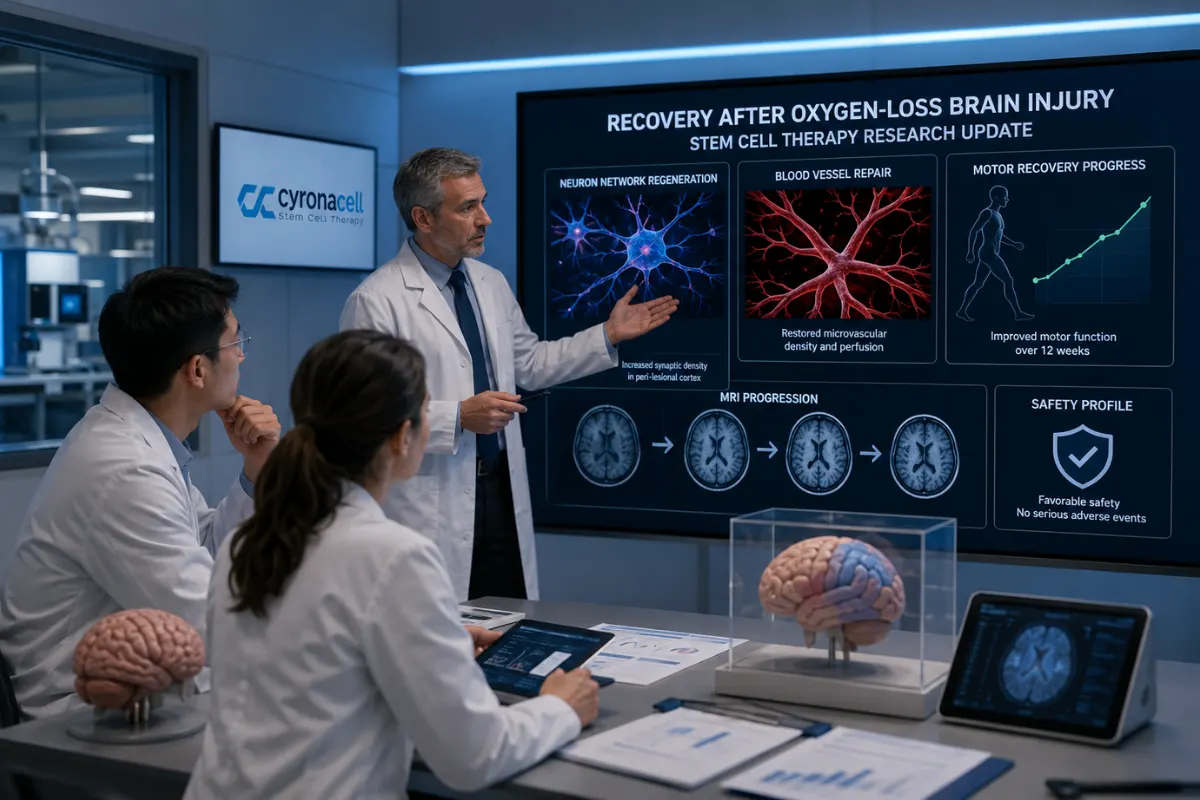
Types of stem cells used in brain injury treatment
Researchers have studied a few stem cell types. They differ in origin, safety profile, and how they work. Understanding which type of cells works best explains the clinical choices made today.
Bone marrow, iPSCs, and embryonic stem cells
Bone marrow stem cells were among the first studied for brain conditions. They are relatively well understood and have a reasonable safety record. However, collection is invasive, and cell quality declines with donor age. Their direct neurological effect is also more limited compared to cells sourced from newborn tissue.
Induced pluripotent stem cells iPSCs are adult cells converted into an embryo-like state. Researchers can direct them toward neural fates. However, they carry a small tumour risk and are not yet ready for routine clinical use. Embryonic stem cells carry ethical and immune rejection concerns that limit their use.
| Stem Cell Type | Advantages | Limitations |
|---|---|---|
| Wharton’s Jelly MSCs (wjMSCs) | Strong anti-inflammatory effects, low immune reaction, non-invasive collection | Do not directly replace neurons |
| Bone Marrow MSCs | Well studied with established safety record | Cell quality declines with age, invasive collection |
| Induced Pluripotent Stem Cells (iPSCs) | Can become many cell types | Potential tumor risk, not routine clinical use |
| Embryonic Stem Cells | Highly versatile | Ethical concerns and immune rejection risks |
Why wjMSCs are preferred in clinical use
Wharton’s jelly MSCs, derived from the umbilical cord, have emerged as the preferred clinical option for several reasons. These cells come from newborn tissue, so they are young, highly active, and capable of producing large amounts of nerve support signals and growth factors. Collection is non-invasive. Cord tissue is donated after birth. Ethical sourcing stays consistent.
Low immune reactivity is another advantage. No donor-recipient matching is needed. They do not carry the tumour formation risk associated with induced pluripotent stem cells iPSCs or embryonic stem cells. And their anti-inflammatory and neuroprotective properties are well documented in both in vitro and in vivo models of brain injury.
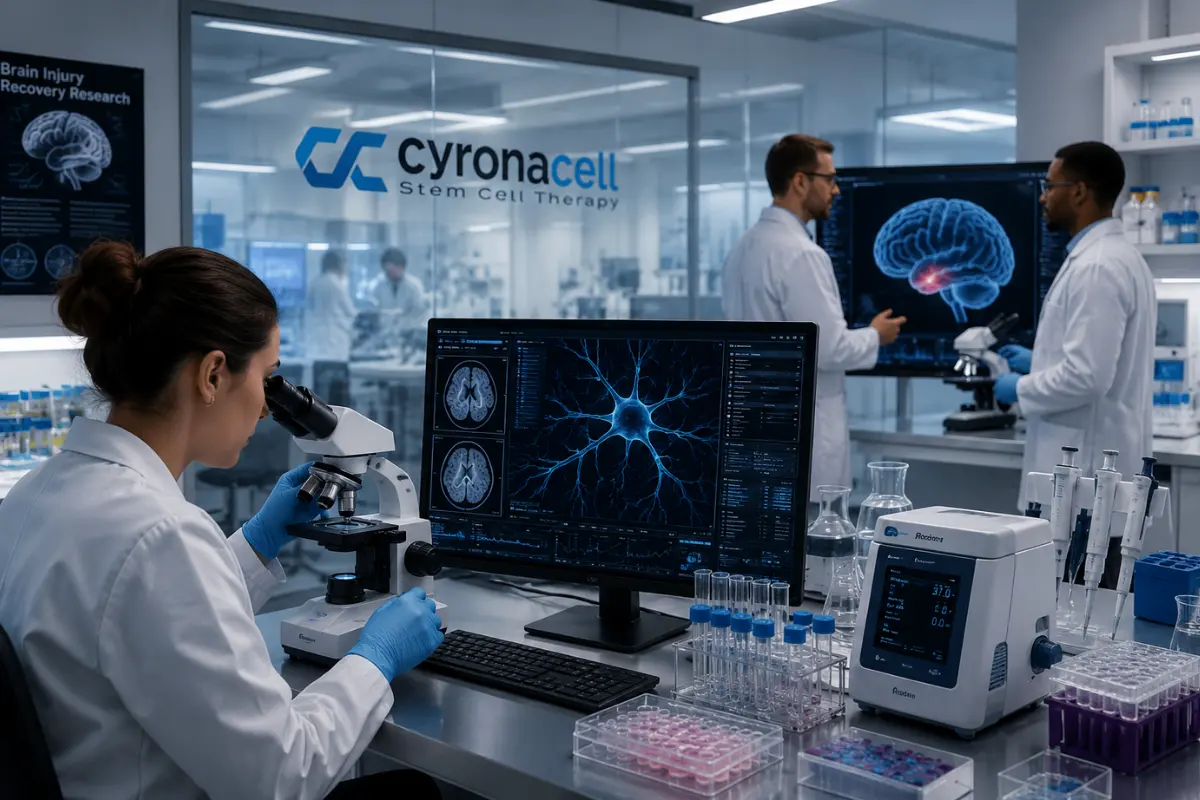
Cyrona uses wjMSCs from Wharton’s jelly. They are safe and well tested. These cells suit this type of brain injury work. Cyrona uses them for all its neurological applications, including as a stem cell transplant alternative that does not need the chemotherapy conditioning that bone marrow transplants require, including hypoxic and anoxic brain injury. Read more about Cyrona’s stem cell therapy for anoxic brain injury and the hypoxic brain injury treatment programme to understand what each assessment involves.
Delivery methods: IV infusions and other routes
Getting stem cells to the injured brain is one of the key practical challenges in this treatment area. Researchers have studied a few delivery methods. Each has different advantages depending on the patient’s condition.
Intravenous infusions
IV infusions are the simplest and safest delivery method. The clinician gives cells through a drip. They enter the bloodstream and home toward areas of active inflammation and damage. The brain injury causes signals that attract circulating MSCs. IV infusions are well tolerated. No surgery or anaesthesia is needed. This is the standard route at Cyrona.
Intrathecal and intranasal delivery
Intrathecal delivery places cells directly into the spinal fluid. This bypasses the brain barrier and places cells closer to the the nervous system. Some teams use it when IV delivery alone is not enough.
Research teams are studying intranasal delivery in lab settings. Cells given intranasally can travel along olfactory paths directly into the brain. This route avoids both the brain barrier and any surgical procedure. It remains experimental but is attracting research interest for its potential to give cells non-invasively to the injured brain.
The best delivery method depends on injury severity, clinical state, and the treatment goals. Visit how it works for an overview of Cyrona’s clinical protocol and assessment process.
What the evidence shows for brain injury and ischemic stroke
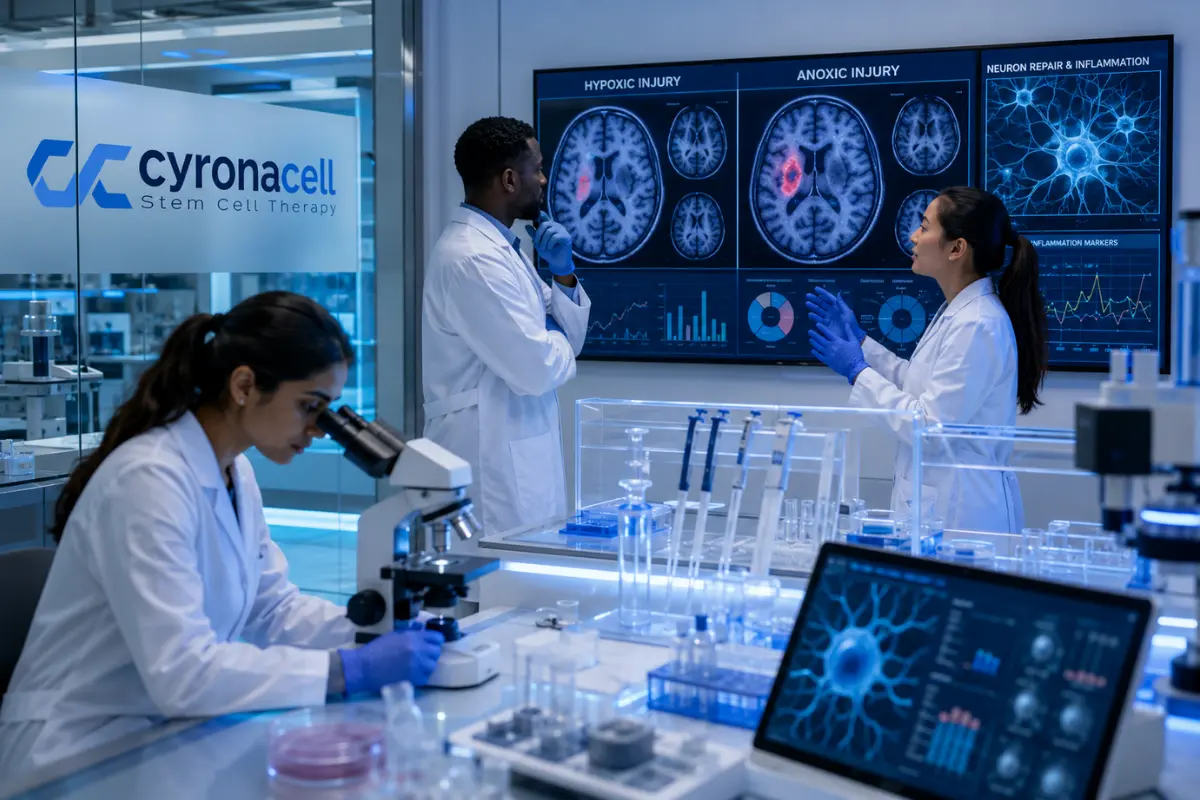
Stem cell evidence for hypoxic brain injury overlaps with ischemic stroke research. Both involve oxygen deprivation to brain tissue. The 2021 Translational Pediatrics review (PMC7944170) provides a full look at animal model and early clinical trial data.
Motor functions and neurological functions: what the evidence shows
In animal models, MSC treatment improves motor functions and brain functions. Control groups without MSCs show worse outcomes. Animals treated with MSCs show better balance and limb control. Brain areas affected by the injury show more activity. And they show less scar tissue formation in the weeks after treatment.
In early human trials, stroke patients given IV MSC infusions showed better stroke scale scores at three and six months. The gains were modest but consistent. MSC-treated patients also showed lower rates of serious side effects.
For hypoxic and anoxic brain injury in particular, the clinical evidence is still developing. Most published data comes from case series and small trials rather than large randomised controlled trials. However, the mechanistic rationale is strong, the safety data from related conditions is encouraging, and the unmet need is real. Many patients with hypoxic-anoxic brain injury have few real options beyond supportive care.
Long term recovery and treatment options
Long term recovery depends on many factors: how long oxygen was cut off, the patient’s age, how fast treatment started, and the brain’s own repair capacity.
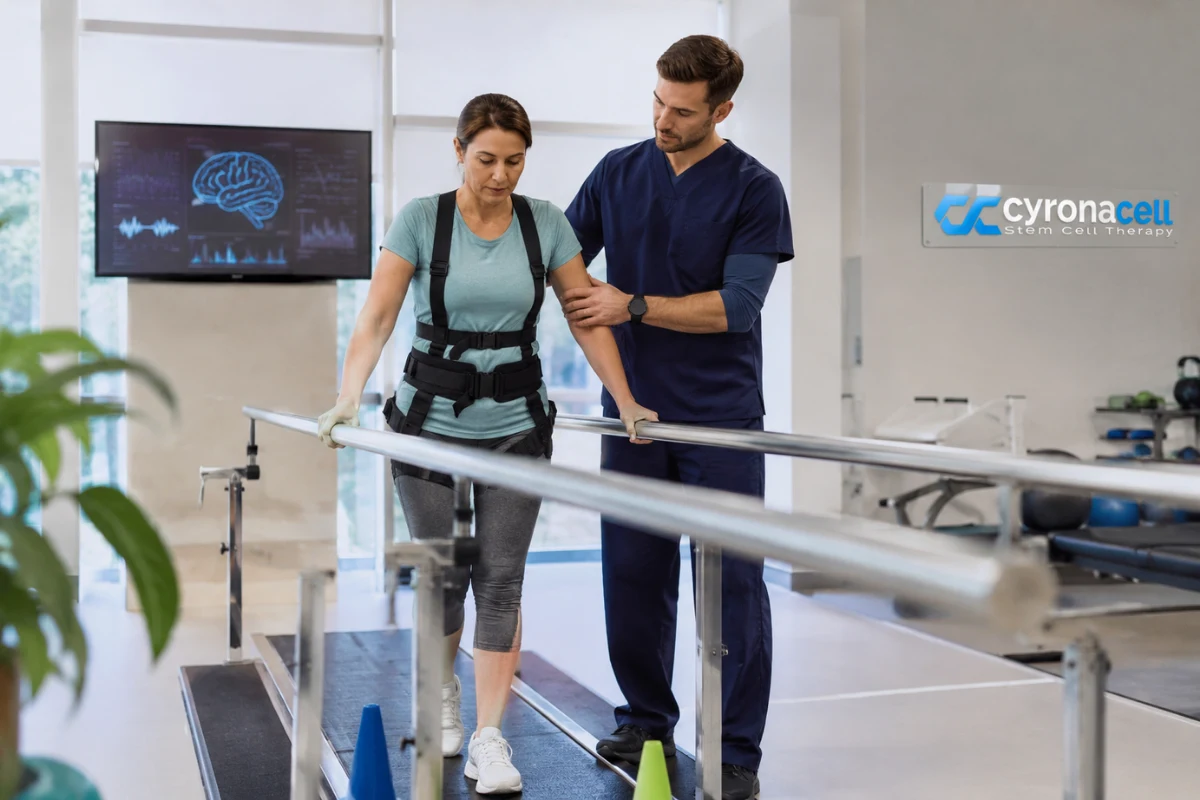
Stem cell therapy is one treatment option among several. It works best as part of a broader rehab programme that includes physical therapy, thinking rehab, and ongoing brain monitoring. Stem cells support the biology. Rehab gives the activity that drives brain repair.
The mix of cell-based support and structured rehab represents the best approach to long term outcomes. Cyrona’s team assesses each patient before making any recommendation.
Not sure if you qualify? That is what the assessment is for. Cyrona’s team will check your situation. They will give you a clear answer. And they will explain what the treatment can and cannot do for your case.
To begin an assessment, visit Cyrona’s start application page.
Frequently asked questions
Can you fully recover from anoxic brain injury?
Full recovery from severe anoxic brain injury is uncommon. The brain can recover some function, especially when the oxygen-free period was short and treatment was rapid. Neuroplasticity, the brain’s ability to reorganise and build new connections, allows meaningful gains over months and years. Stem cell therapy aims to support this process by reducing secondary damage and releasing nerve support signals that improve the environment for recovery. Outcomes vary widely depending on the severity and duration of the anoxic event.
Can stem cell therapy help with anoxic brain injury?
Yes, with important qualifications. Stem cell therapy cannot replace neurons that have already died. What it can do is reduce the secondary wave of damage that follows the initial injury, support surviving neurons through nerve support signals, promote new blood vessel growth in affected areas, and improve the conditions for brain repair. Clinical evidence is strongest in ischemic stroke, which shares many mechanisms with anoxic brain injury. Early data in anoxic and hypoxic brain injury is promising, with a good side effects profile.
What is the difference between anoxic and hypoxic brain injury?
Anoxic brain injury occurs when oxygen supply to the brain stops completely. Hypoxic brain injury occurs when supply drops but does not stop. Anoxic injuries tend to be more severe because the brain receives no oxygen at all. Hypoxic injuries may be more localised, depending on which areas were most vulnerable during the period of reduced supply. Both cause a similar cascade of secondary damage, and both can benefit from stem cell therapy through the same core mechanisms of neuroprotection and repair.
Talk to Cyrona about stem cell therapy for brain injury
If you or someone you care for is recovering from a hypoxic or anoxic brain injury and wants to explore whether stem cell therapy could support the recovery process, Cyrona’s clinical team in Cyberjaya, Malaysia is available to assess the case.
WhatsApp or call: +6018 222 0032
Email: info@cyronacell.com