
Key Takeaways
- A new randomized trial tested injecting mesenchymal stem cells into the spinal fluid of 18 people with progressive MS.
- The trial’s main measure of nerve repair did not improve. The result was not statistically significant.
- Some secondary signals looked promising at six months but faded by twelve months.
- Every participant who received the cells was watched closely for safety, and several developed spinal inflammation or nerve irritation.
- Stem cell therapy for MS remains investigational. Only one specific type, a bone marrow transplant called HSCT, has enough evidence for limited real-world use today.
Estimated read: 3 min
A closely watched clinical trial tested mesenchymal stem cell injections for progressive multiple sclerosis (MS). The trial did not meet its main goal. Neurology published the results in May 2026. The honest summary is more cautious than some earlier coverage of stem cells for MS might suggest.

What the trial involved
Norwegian researchers ran a small, randomized, placebo-controlled study. The trial involved 18 people with progressive MS, split into two groups. One group received a single injection of their own bone marrow-derived stem cells into the fluid around the spinal cord. The other received a placebo, then switched at six months so everyone eventually received the cells.
What the results actually showed
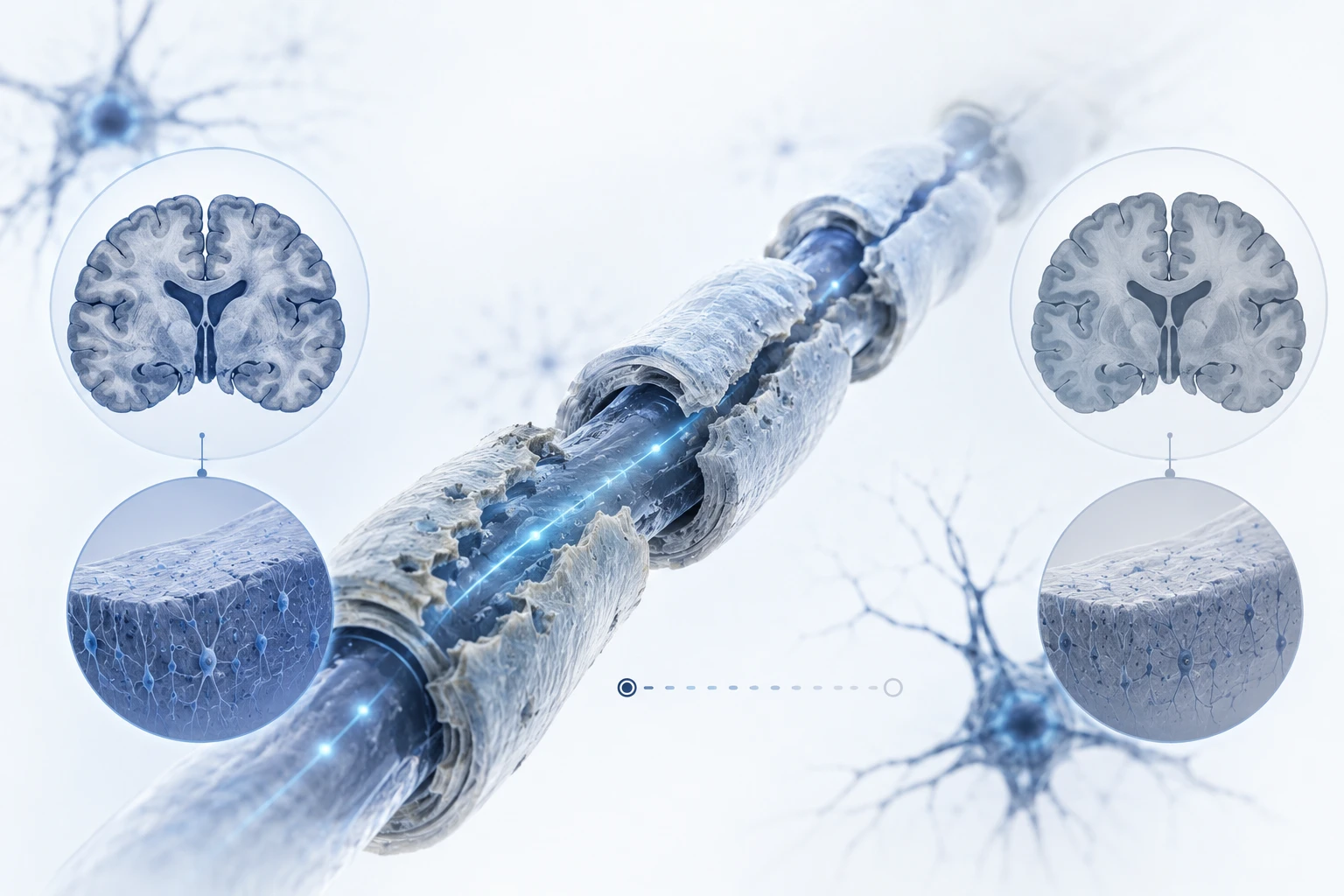
The main measure tracked how fast nerve signals traveled, a marker doctors use to judge whether damaged nerves are repairing. This did not improve enough to rule out chance. Brain scans showed less tissue loss at six months, but that signal disappeared by twelve months.
A blood marker of nerve damage moved in a favorable direction but just missed the threshold researchers set in advance. Researchers also tracked walking, hand function, and cognitive functions as secondary measures, without a clear signal either way.
None of this qualifies as significant improvements in disease progression. The researchers were careful to say so themselves.

The safety signal worth knowing about
Researchers found the treatment was not entirely safe and well tolerated. Fever and back pain were common in the days after the injection. Seven participants showed changes on spinal imaging months later, and one developed lasting nerve-related pain.
This pattern is now shaping how researchers design future trials. They are building in more caution around repeat dosing and closer imaging follow-up.

What this means for people with MS today
This result does not close the door on stem cell therapies for MS. It does mean this specific approach is not ready for wider use. Other research groups have tested different cell types in separate clinical trials.
These trials include work on neural stem cells and stem cell derived neural progenitors. Others use cells sourced from umbilical cord or cord blood tissue. Results across these smaller studies remain mixed.
According to the Multiple Sclerosis International Federation’s stem cell guidance, one approach stands apart. Doctors can already offer stem cell transplantation using a patient’s own blood-forming cells outside a formal trial. This only applies to specific, relapsing forms of MS.
Treating MS with mesenchymal or neuronal cells is still just a research question. Doctors do not yet offer it as an approved option.
Cyrona Cell has written related context on this topic. See its article on how mesenchymal stem cells may help immune balance in relapsing-remitting MS. That page focuses on a different, earlier stage of the disease.
Frequently Asked Questions
What is the success rate of stem cell therapy for MS?
Mesenchymal stem cell therapy for MS has no established success rate. No approach has yet passed a large, independent follow-up trial. This 2026 study found no significant benefit on its main measure.
How long does it take to see results from stem cell therapy?
In this trial, researchers checked at six and twelve months. Any early signals seen at six months had faded by the one-year mark. That fade is part of why researchers consider the results inconclusive.
Does secondary progressive MS ever stop progressing?
Secondary progressive MS can slow over time in some people, but it typically continues gradually. No treatment tested so far, including the stem cell approach here, stops progression entirely.
Can stem cells reverse MS damage?
Current evidence does not support this. This trial found no significant repair on its main nerve-function measure. Researchers describe stem cell therapy for MS as investigational, not a proven way to reverse existing damage.