Key Takeaways
- The realistic goals of stem cell therapy for MS are slowing disease activity, reducing fatigue, and improving mobility, not reversing all past damage.
- Mesenchymal stem cells (MSCs) calm the immune system and protect nerve fibers. Hematopoietic stem cell transplant (HSCT) goes further, aiming to reset the immune system from scratch.
- Most MS patients who receive cell therapy for MS see a drop in relapse rate and a reduction in disease activity.
- Stem cell treatments work best when MS is still in the active, inflammatory stage. Secondary progressive MS responds more modestly, but quality of life often improves.
- Cyrona uses wjMSCs, a type of mesenchymal stem cells, to reduce inflammation, protect nerve fibers, and support long-term stability in MS patients.
Estimated read: 10 min
If you have MS, you want to know one thing: what can treatment actually do? The realistic goals of stem cell therapy for MS are not a cure. However, they are more than just managing symptoms. This article covers what cell therapy for MS targets and what the science shows for fatigue, mobility, and relapse rate. It also explains what to expect based on your MS type.
What MS does to the brain and spinal cord
MS is a chronic disease of the central nervous system. The immune system attacks the myelin sheath around nerve fibers in the brain and spinal cord. Myelin is the protective coating that helps nerve signals travel quickly. When myelin gets damaged, nerve signals slow down or stop.
Over time, the nerve fibers themselves can break down. The location of the damage decides which function suffers. Damage near motor pathways affects movement. Sensory pathway damage causes numbness or pain. In the cerebellum, damage affects balance. Because lesions can form anywhere, no two MS patients have the same pattern of symptoms.
MS also has different phases. In relapsing-remitting MS (RRMS), the immune system attacks in episodes called relapses. Partial recovery follows each episode. In secondary progressive MS, the disease gets steadily worse over time, with fewer clear relapses. In primary progressive MS, there are no relapses at all. Instead, the disease declines from the start.
Why MS is more than a mobility problem
Mobility loss is the most visible sign of MS. However, fatigue is what patients most often say is the hardest to live with. MS fatigue is not normal tiredness. It comes from two sources. First, damaged nerve fibers need extra energy to send signals. Second, ongoing inflammation puts the whole body under constant strain.
MS also causes cognitive problems, bladder issues, pain, and low mood. These all come from the same underlying process: the immune system damaging the brain and spinal cord in many places at once. Any therapy for multiple sclerosis must address this wide range of effects. Consequently, treating only one symptom is not enough.

Realistic goals of stem cell therapy for MS
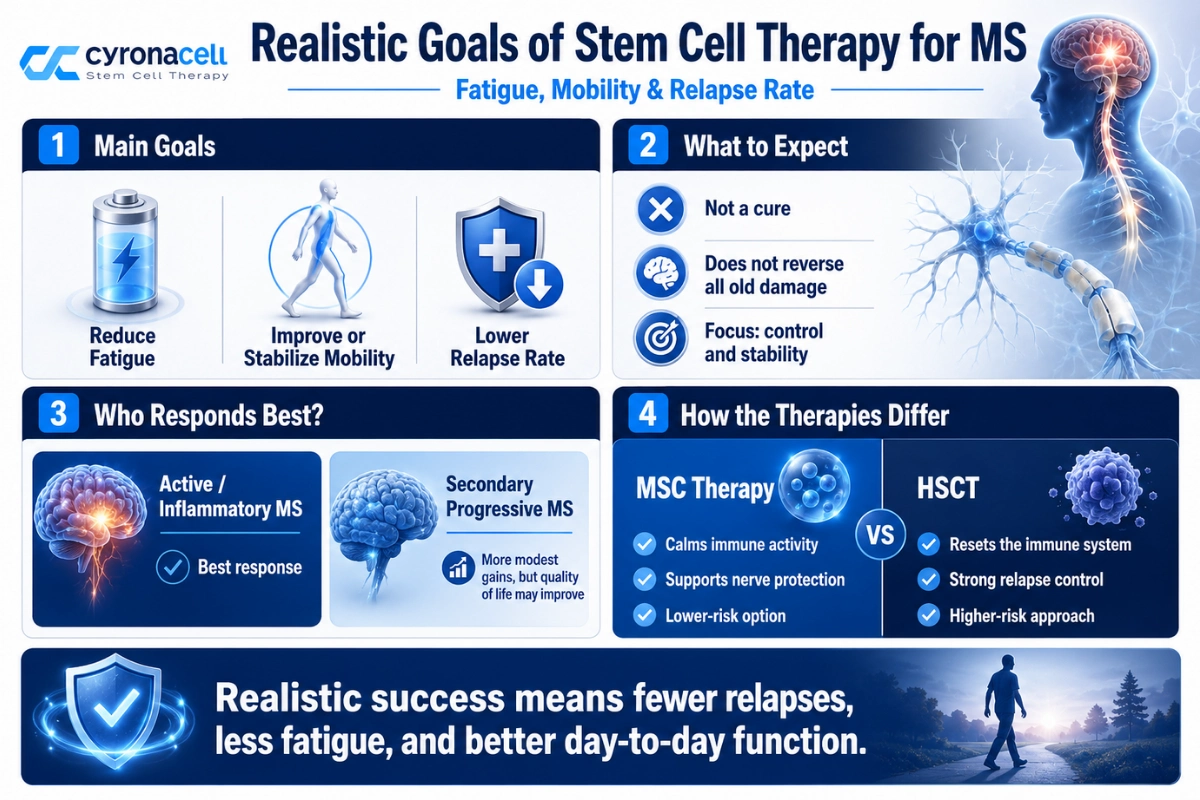
Stem cell treatments for MS do not undo years of past damage. Instead, they target the disease process itself. The aim is to reduce the immune attack that is causing new harm right now.
For most MS patients, the realistic goals of stem cell therapy for MS include:
- Fewer and less severe relapses
- Fewer new lesions forming in the brain and spinal cord
- Less fatigue from inflammation
- Stable or slightly improved mobility in active disease
- Better quality of life and day-to-day function
These outcomes are backed by clinical evidence from regenerative medicine research and published trials. They are meaningful goals for patients whose disease is still causing active harm right now.
| Treatment Goal | What Patients May Experience | Expected Timeline |
|---|---|---|
| Reduce Relapse Rate | Fewer relapses and less active disease | Months to years depending on disease activity |
| Lower Inflammation | Reduced immune system activity affecting myelin | Often begins within weeks to months |
| Improve Fatigue | Better energy levels and less neurological exhaustion | Commonly reported within weeks to months |
| Support Mobility | Improved walking, balance, or movement in some patients | Often observed over 3–6 months or longer |
| Protect Nerve Fibers | Slower progression of neurological damage | Long-term treatment goal |
| Improve Quality of Life | Better daily function, confidence, and symptom management | Gradual improvement over months |
What cell therapy for MS is not expected to do
It is important to be honest about the limits. Stem cell therapy for multiple sclerosis is unlikely to bring back function that was lost years ago. Nerve fibers that have fully broken down cannot be rebuilt with any current treatment. Patients with long-standing disability should not expect to return to how they were a decade ago.
Stem cell therapy is also not a permanent single-dose cure for MS. Therefore, the disease needs ongoing monitoring. Some patients do well with repeat treatment cycles. The goal is control and stability. For a progressive neurological disease, that is a real and life-changing result.
Fatigue: how stem cell treatments address it
MS fatigue has two main drivers. The first is the extra energy nerve fibers need to send signals through damaged myelin. The second is the body-wide strain of living with chronic inflammation. Stem cell treatments act directly on the second driver. They also help the first driver over time.
Mesenchymal stem cells MSCs release molecules that calm the overactive immune cells attacking myelin. As a result, inflammation drops throughout the body. Research published on stem cell therapies for progressive MS confirms this. Therefore, quieting immune activity reduces the load that causes deep neurological exhaustion. Patients often report that fatigue improves within weeks to months of treatment. Furthermore, this pattern appears across many MSC therapy trials.
The nerve fiber side of fatigue takes longer to improve. As fewer new lesions form, the total damage stops growing. MSCs also release growth factors that support partial remyelination. Over time, existing fibers can transmit signals more efficiently. For Cyrona’s patients, reduced fatigue is one of the most commonly reported early gains after cell therapy for MS.
Mobility: what stem cells can and cannot restore
Mobility in MS depends on motor pathways in the brain and spinal cord. If those pathways are demyelinated but the nerve fibers are still there, signals move slowly but may recover. If the nerve fibers have broken down completely, the loss is permanent with current treatments.
This difference matters a great deal. In patients where active inflammation drives the disability, reducing inflammation in those tissues helps fibers conduct signals better. Some patients see real improvements in walking speed, balance, and hand control within three to six months. In patients with longer disease duration, the goal shifts from improvement to stability. Stopping further decline is, therefore, a meaningful win. Without treatment, secondary progressive MS keeps getting worse.
The role of nerve fibers and remyelination
MSCs do not turn into myelin-producing cells directly. Instead, they create the right conditions for the brain and spinal cord to repair themselves. They reduce inflammation that was blocking the brain’s own repair cells from doing their job. They release growth factors that help those repair cells mature and produce new myelin.
Researchers are also studying neural stem cells in progressive MS. They work through a related but different path. They can migrate to areas of active damage and release protective signals exactly where the body needs them. MRI data from published trials on cell treatment for ms shows less new lesion activity in patients treated with MSC-based therapy. This supports the remyelination mechanism in practice.

Relapse rate: how cell therapy for MS affects disease activity
Reducing relapse rate is the most clearly documented benefit of stem cell therapy in MS. Furthermore, multiple studies confirm this. Both HSCT and MSC-based approaches reduce the annual relapse rate in patients with active disease. Clinical research on progressive MS stem cell therapies confirms these reductions.
In patients with severe RRMS, hematopoietic stem cell transplant produces the biggest drop in relapse rate. This is especially true for those who have not responded to disease modifying therapies DMTs. Some trials report that most carefully selected patients had no clinical relapses for five or more years after treatment. In patients with less aggressive disease, MSC therapy gives meaningful reductions in relapse rate with far fewer side effects.
The two approaches work differently. Hematopoietic stem cell transplant wipes out the immune system and then rebuilds it. The aim is to reset the immune system, removing the immune cells that attack myelin. By contrast, MSC therapy does not destroy the immune system. Instead, it shifts immune cells from an aggressive state to a calmer one. Both approaches reduce disease activity. However, they act at different levels and carry very different risks.
HSCT versus MSC therapy for multiple sclerosis
Hematopoietic stem cell transplant is the most powerful option for stopping relapses in severe, treatment-resistant RRMS. However, it requires chemotherapy, immune ablation, and weeks in hospital. There is a small but real risk of serious complications from the conditioning process.
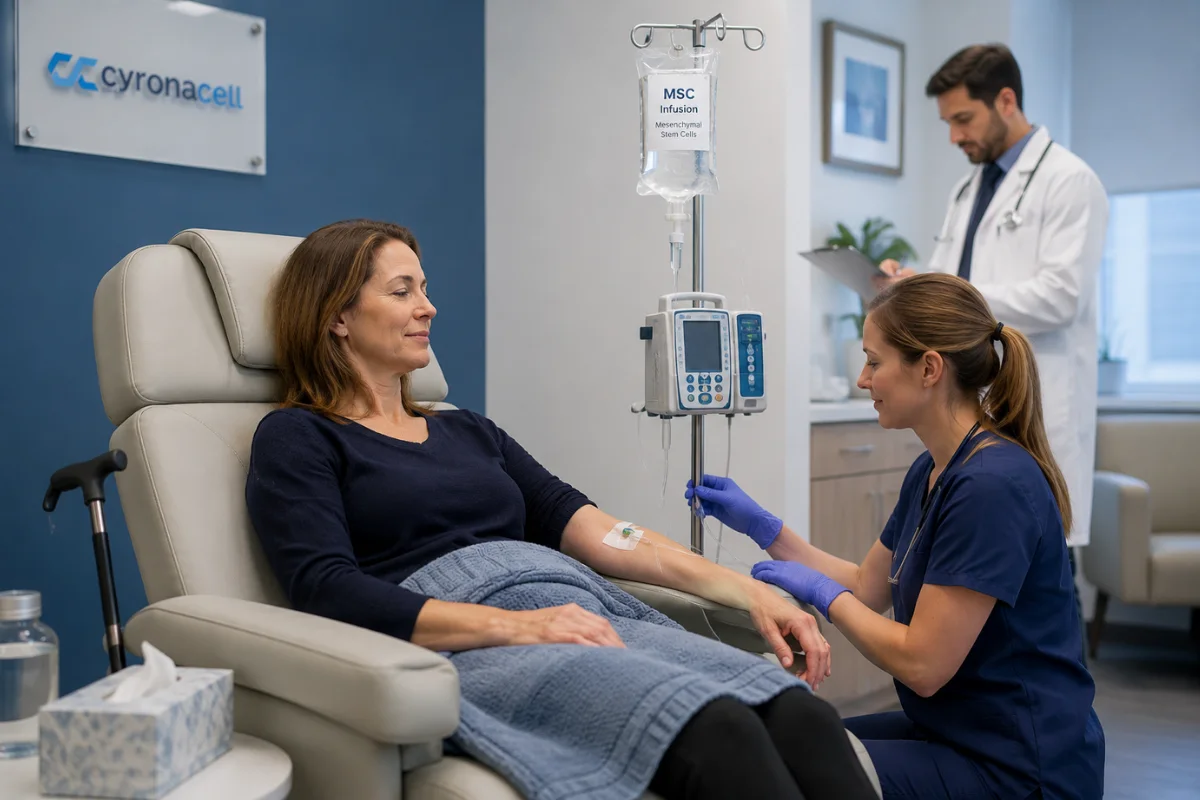
MSC therapy, including the wjMSC approach Cyrona uses, has a very different risk profile. Unlike HSCT, it does not need chemotherapy or immune ablation. Patients who want to reduce disease activity without the risks of HSCT have a real option. MSC-based cell treatment for MS offers a lower-risk path within regenerative medicine. The right choice depends on how severe the disease is. It also depends on which treatments the patient has already tried and how much risk they are willing to accept. Read more about Cyrona’s stem cell treatment for multiple sclerosis and what the assessment involves.
To find out which approach fits your disease profile, start your application with Cyrona.
Secondary progressive MS and quality of life
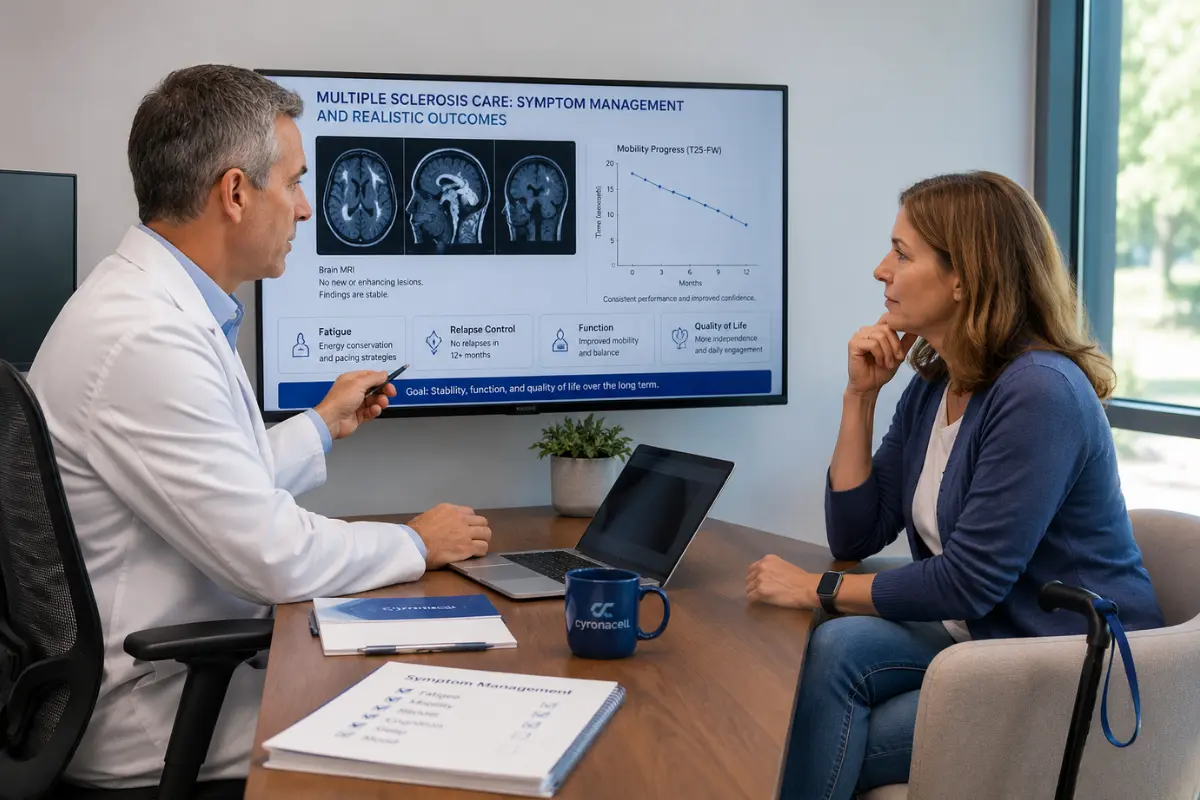
Secondary progressive MS is the hardest phase to treat. In SPMS, much of the disability comes from nerve fiber loss rather than active inflammation. Because of this, disease modifying therapies DMTs and stem cell treatments both have limited effect on neurological test scores.
However, some inflammation still continues in SPMS. However, MSC therapy directly targets this remaining inflammation. Reducing it matters for daily life. Ongoing inflammation contributes to fatigue, bladder problems, and the speed of decline, even when the main disability is already fixed.
The most commonly reported outcomes in SPMS patients include less fatigue, better bladder control, and a slowing of decline. Most SPMS patients in MSC trials report quality of life improvements. This holds true even when disability scores stay the same. For many patients, that stability is the best long term result any current therapy can offer. To learn about Cyrona’s protocol, visit how it works. Read more about the MS treatment programme for full treatment details.
Frequently asked questions
What is the success rate of stem cell therapy for MS?
Outcomes depend on MS type, disease stage, and the treatment chosen. In carefully selected RRMS patients treated with HSCT, most published trials show good results. Specifically, the majority had no clinical relapses at five years. MSC therapy trials consistently show lower relapse rates and better quality of life in most patients treated. Results are strongest in patients with earlier, more active disease. They are also better in patients who have not yet built up significant permanent disability.
Can stem cells repair MS damage already done?
Stem cells can support partial repair of demyelinated nerve fibers through the remyelination process. They cannot rebuild nerve fibers that have fully broken down. Patients whose active inflammation drives the disability tend to respond better than those with long-standing, fixed deficits. First and foremost, stopping new damage is the main goal. Any functional recovery depends on how much of the disability is still reversible.
How does stem cell therapy for MS differ from disease-modifying therapies (DMTs)?
Disease modifying therapies DMTs suppress parts of the immune response on an ongoing basis. Patients must take them continuously to maintain the effect. MSC stem cell treatments introduce cells that calm the immune environment and protect nerve tissue. Their effects can last beyond the treatment period. In contrast, HSCT reconstitutes the immune system entirely. It can produce lasting remission in the right patients without ongoing medication. However, it carries more risk than DMTs or MSC therapy.

Talk to Cyrona about your MS treatment options
If your current treatment is not controlling your MS, whether through ongoing relapses, worsening fatigue, or declining mobility, stem cell therapy may offer a real next step. Cyrona’s clinical team in Cyberjaya, Malaysia reviews each patient individually. They will give you an honest assessment of what is and is not achievable based on where your disease is now.
WhatsApp or call: +6018 222 0032
Email: info@cyronacell.com