Key Takeaways
- Stem cell therapy after spinal cord injury is studied for both traumatic and chronic cases, with different goals at each stage.
- A 2024 study found durable motor and sensory improvements in some patients five years after neural stem cell transplantation.
- A 2026 trial reported no serious safety concerns after transplanting stem cells directly into the injury site of patients with subacute injuries.
- Neural stem cells, cells derived from umbilical cords, and other cell types are each studied for their potential roles in spinal cord repair.
- No treatment can currently reverse a complete spinal cord injury, and results vary widely between patients.
Estimated read: 8 min
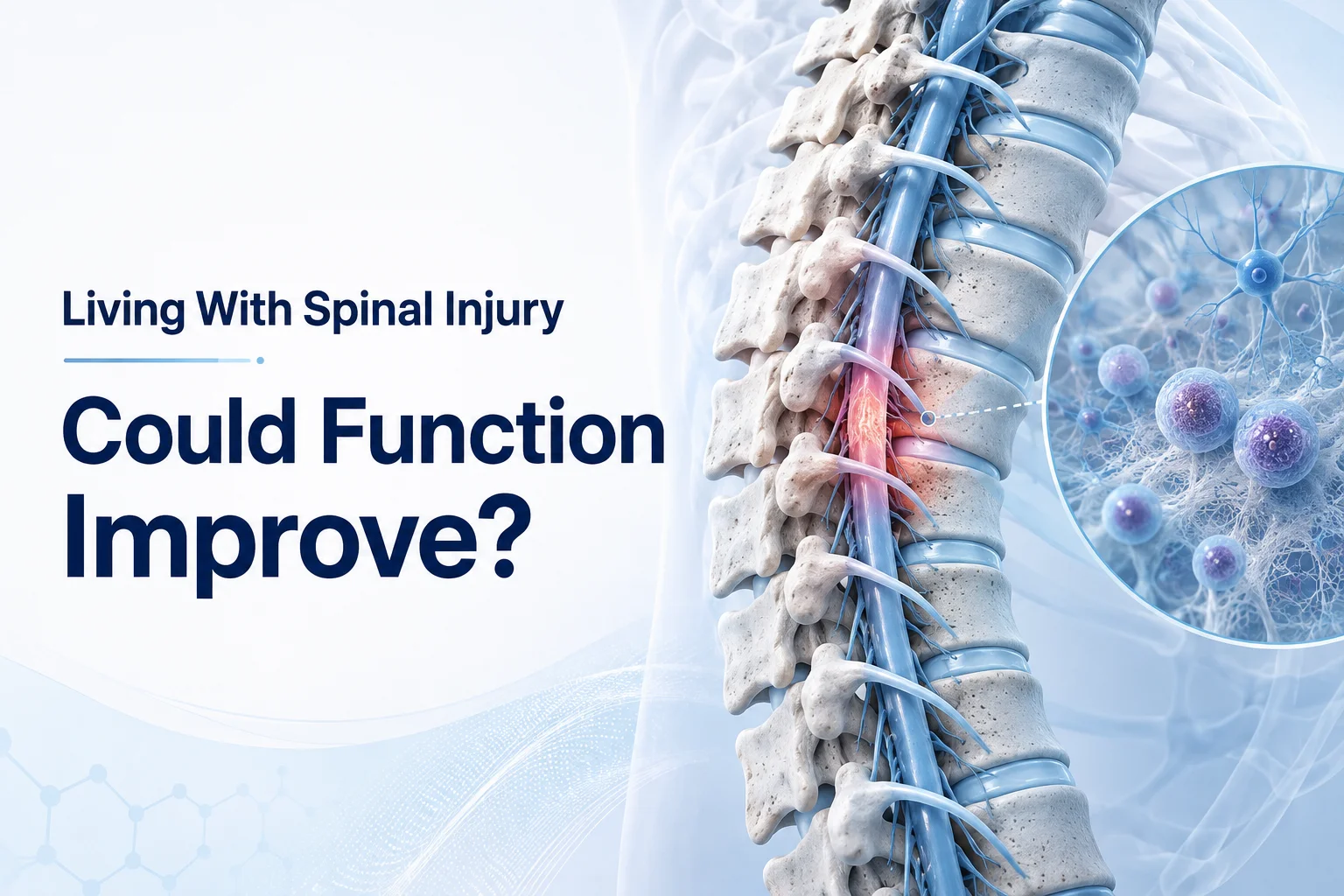
Stem cell therapy after spinal cord injury raises real hope, but also real questions. This guide explains what current research supports. It also covers what a realistic timeline looks like and what treatment cannot yet promise.
What Stem Cell Therapy After Spinal Cord Injury Involves
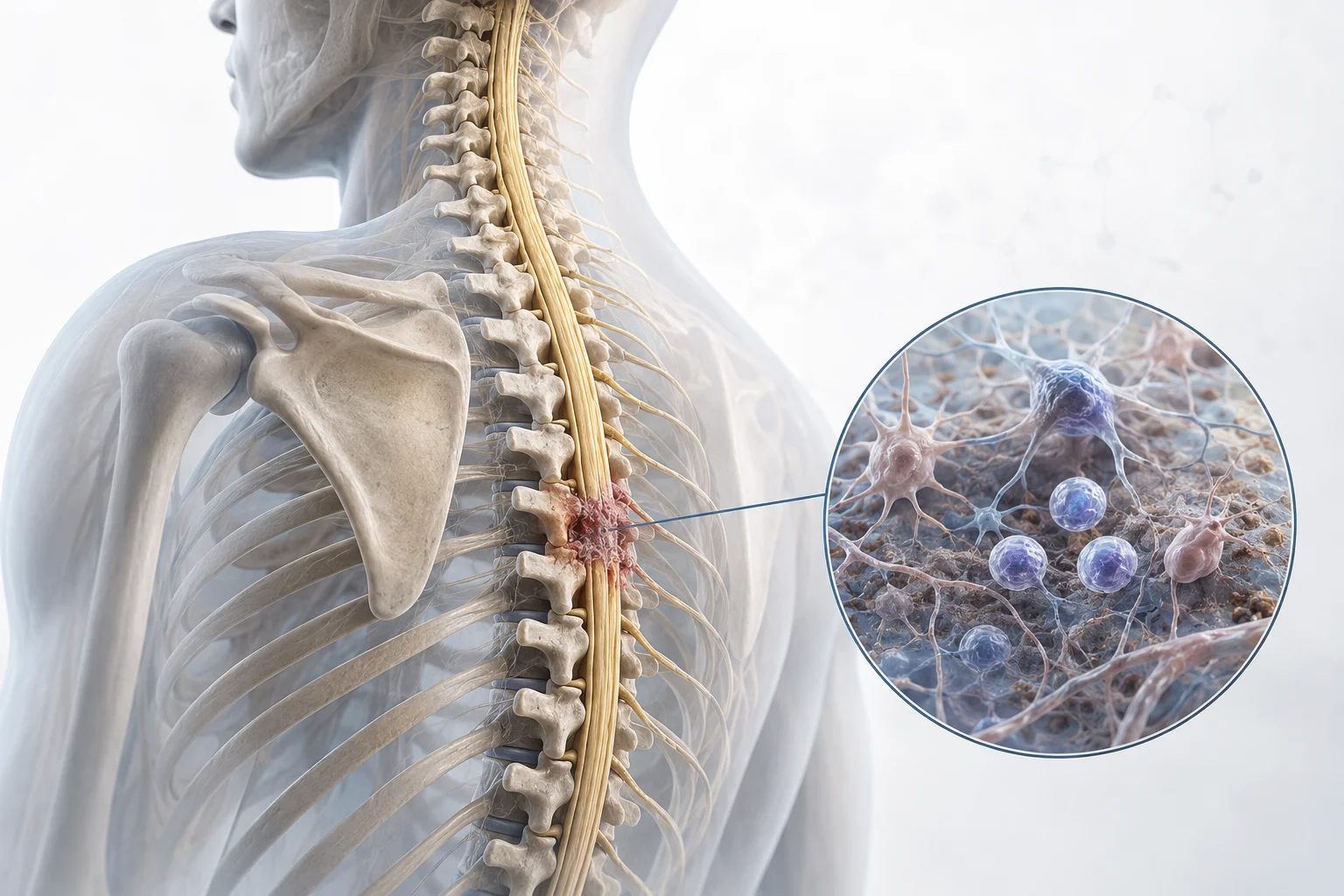
A spinal cord injury disrupts the signals that move between the brain and the body. Depending on where and how severe the damage is, this can affect movement, sensation, or both.
Doctors classify a spinal cord injury (SCI) in a few ways. The first is timing. Acute injuries are recent, while a chronic spinal cord injury has stayed stable for months or years.
Another way doctors classify SCI is completeness. A complete SCI also means that no signal passes below the level of injury. An incomplete injury still allows some signal to pass, which often significantly changes both prognosis and treatment goals.
Doctors discuss our stem cell therapy for spinal cord injury program differently for each patient. Timing and completeness both shape what a realistic conversation looks like.

Why These Categories Matter So Much
- Timing affects which trials a patient may qualify for, since many require a stable, chronic injury.
- Completeness affects how researchers measure success and what counts as meaningful improvement.
- Injury level, whether cervical, thoracic, or lower, changes which functions are affected
- Overall health and stability influence whether a patient can safely undergo any procedure at all.
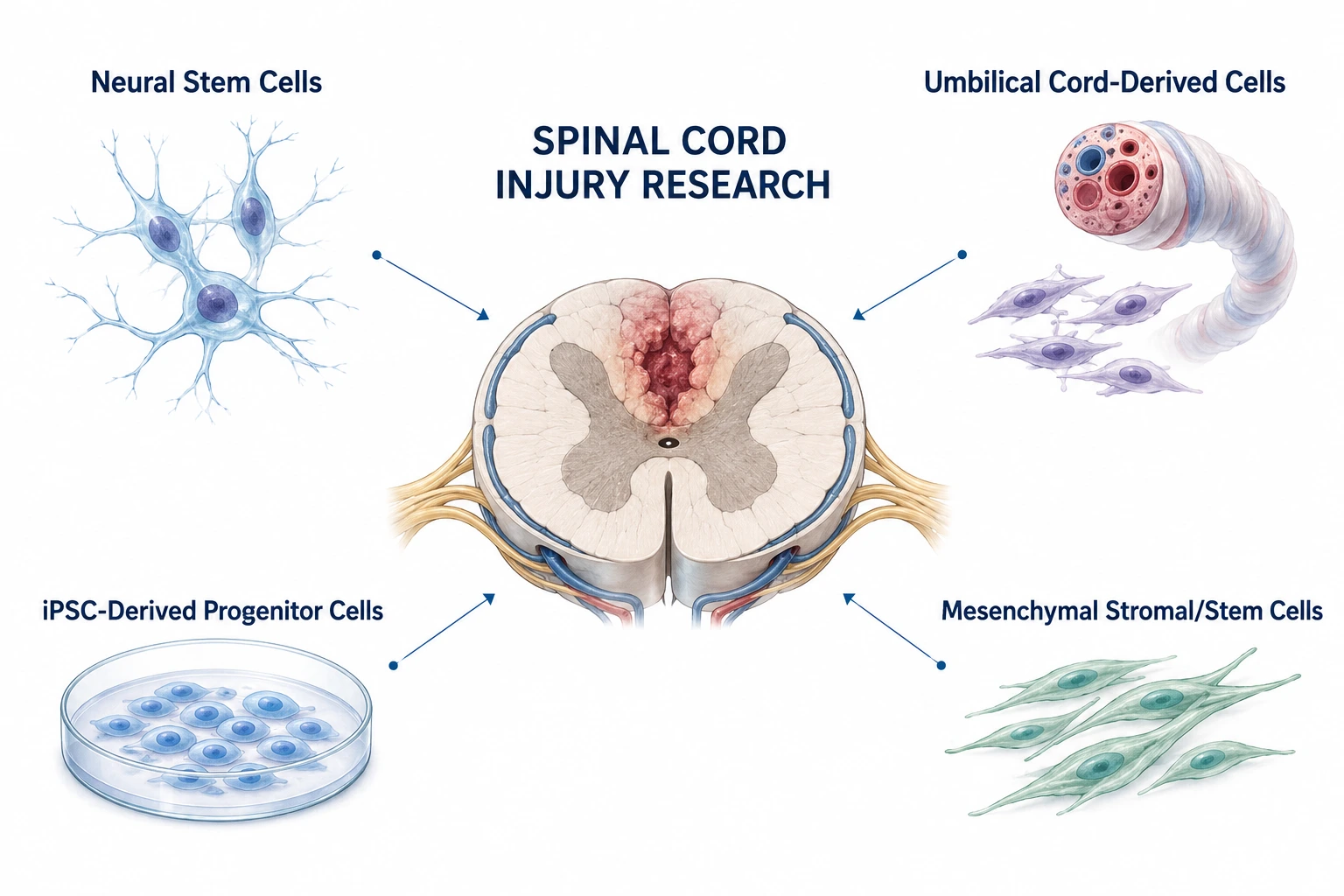
Which Cells Are Used and Why
Researchers study several cell types for spinal repair. Neural stem cells are one option. These cells can develop into the specific support cells the nervous system needs.
Cells derived from umbilical cords are another source researchers study. This source also avoids the need to take cells from the patient’s own body or brain tissue.
Each cell type behaves a little differently once transplanted. Researchers are still working out which combinations, doses, and delivery methods help most for a given injury pattern.
Cell transplantation itself also varies widely. Some trials inject cells directly into the injury site itself. Others deliver them elsewhere in the body and let them migrate toward the damage over time.
Common Cell Sources Studied
- Neural stem cells, which can develop into support cells for damaged nerve tissue
- Cells derived from umbilical cords, sourced from consenting donors after birth
- Induced pluripotent stem cell-derived progenitor cells, created from adult cells in a lab
- Mesenchymal stem cells, sometimes sourced from the patient’s own body
How Delivery Method Can Affect Outcomes
- Direct injection targets the injury site precisely, but is more invasive
- Intrathecal delivery places cells in the fluid around the spinal cord
- Intravenous delivery is least invasive, though fewer cells may reach the target area
- Each method carries its own trade-offs between precision, risk, and ease of use

What the Research Shows
A 2024 five-year follow-up study in Cell Reports Medicine followed four patients with chronic thoracic SCI. All four received neural stem cell transplantation and tolerated the procedure well.
Two of the four patients showed durable, measurable improvements. These included gains in motor function and sensory scores. Notably, these gains held up over the full five-year follow-up period, not just in the short term.
A separate 2026 trial in Nature Medicine testing lab-grown neural progenitor cells studied a different approach entirely. Researchers placed these cells directly into the injury site of patients with subacute, complete SCI.
The trial met its main safety goal. Researchers found no tumors or other serious complications linked to the transplanted cells. Imaging also showed no signs of abnormal growth at the graft site.
Beyond safety, some patients also showed measurable gains in motor score during follow-up. Researchers still consider this an early finding that needs further confirmation, not a proven treatment effect.
What This Research Does and Does Not Show
- Supports the safety of several cell transplantation approaches studied so far
- Shows measurable, though modest, gains in some patients, not all
- Comes from small trials, often four to ten participants, not large studies
- Does not yet support stem cells as a cure for complete spinal cord injury
What to Expect: Motor Function, Sensation and Quality of Life
Realistic expectations matter here more than almost anywhere else in regenerative medicine. Anyone researching stem cell therapy after spinal cord injury should start with this mindset. Current research points to modest, gradual gains for some patients, not a full reversal of injury.
Improvements reported so far often involve motor and sensory scores. This does not always mean independent walking or full hand function returns. Even modest gains, though, can meaningfully affect quality of life for someone living with an SCI.
Results build slowly over the long term. Most studies track patients for one to five years. Nerve-level change simply takes time to appear on standard scoring systems.
Signs of Progress Researchers Track
- Small improvements in muscle strength below the injury level
- Return of sensation in previously numb areas
- Better scores on standardized neurological exams
- Reduced neuropathic pain, reported in some patients
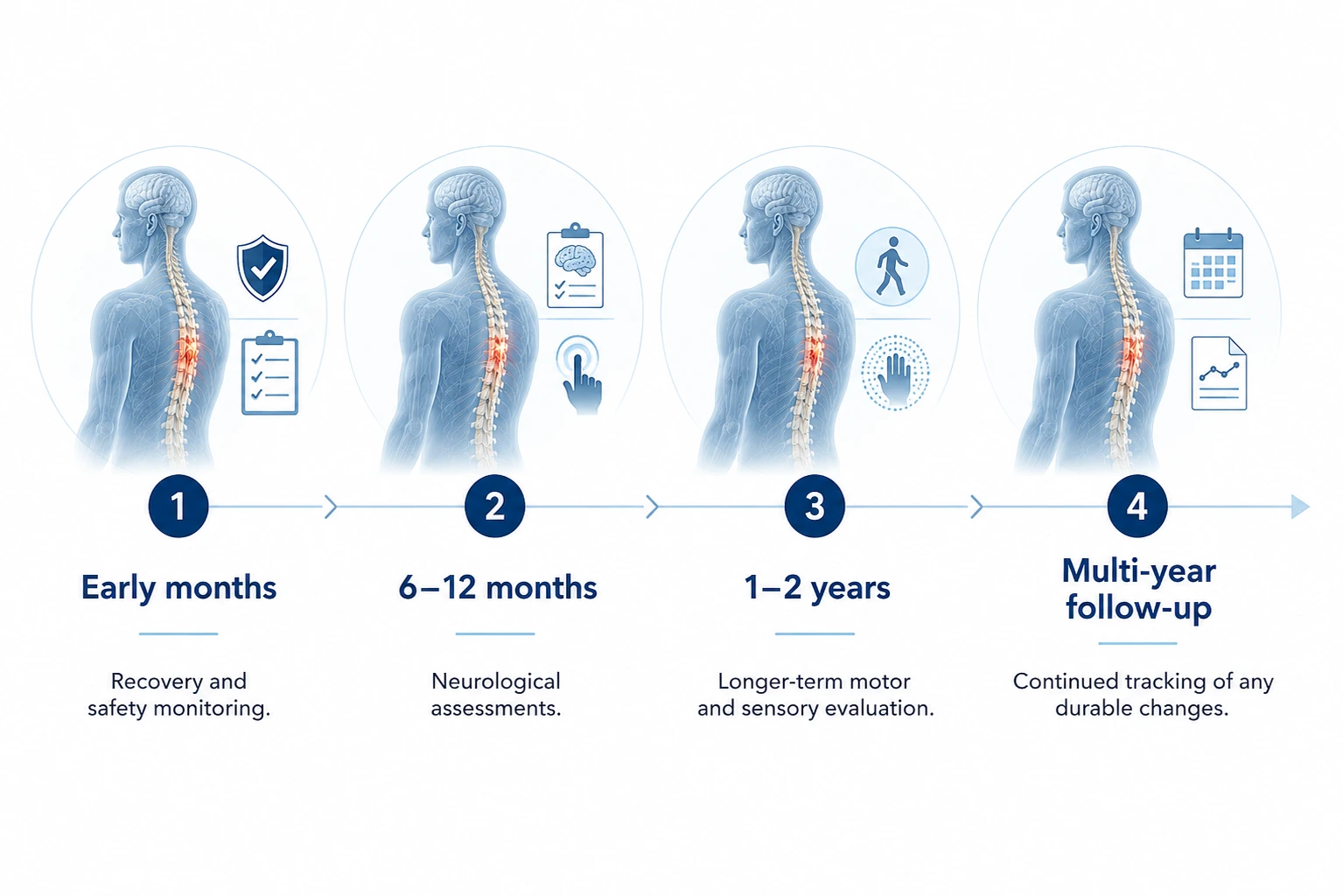
What a Realistic Timeline Often Looks Like
- Early months focus on procedure recovery and initial safety monitoring
- Six to twelve months often bring the first measurable neurological assessments
- One to two years is when many published studies report their main results
- Some gains, when they occur, continue to be tracked for several years afterward
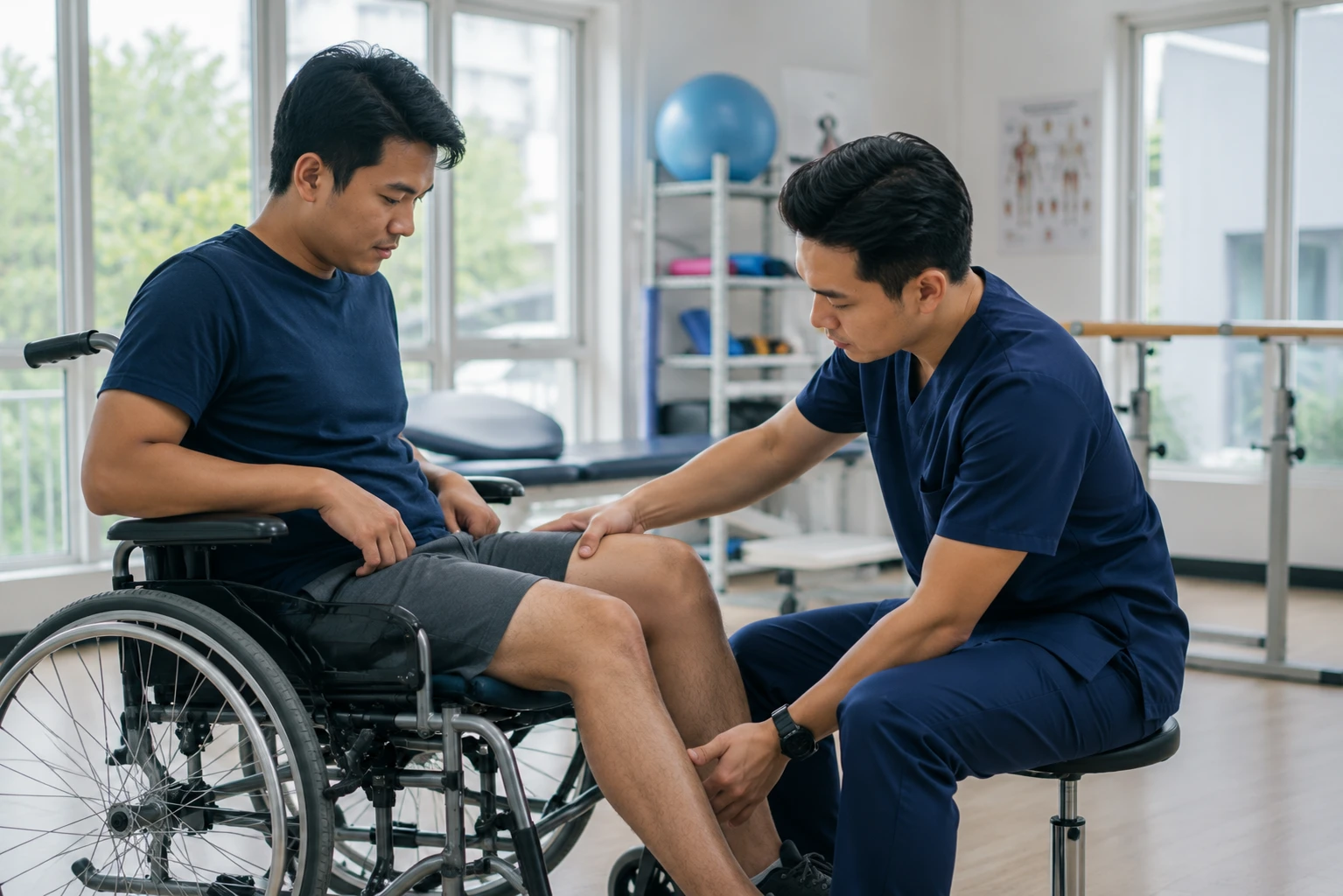
Beyond Motor Function: Spasticity and Other Symptoms
Spinal cord injury affects more than movement and sensation alone. Many patients also deal with spasticity, muscle stiffness that can interfere with daily tasks and comfort.
Some research on stem cell approaches has also tracked changes in spasticity and neuropathic pain. These sit alongside the more commonly reported motor and sensory scores. Results here remain even more preliminary than the motor findings discussed above.
This is an active area of ongoing research, not yet a settled part of standard treatment. Patients interested in this angle specifically should ask their provider what evidence exists for their particular situation.
Why Quality of Life Extends Beyond Motor Scores
- Reduced spasticity can make daily transfers and positioning easier, even without new movement.
- Better sensation can lower the risk of unnoticed skin injuries
- Less neuropathic pain can improve sleep and overall daily function
- Small gains in bladder or bowel control can meaningfully change independence
Side Effects and Safety
Every procedure carries potential side effects. In the trials reviewed here, these mostly related to the surgical delivery itself. Headache was one commonly reported example, rather than a reaction to the cells.
Researchers still need larger clinical trials to confirm these safety patterns hold at scale. Small trials are a first step, not the final word on safety.
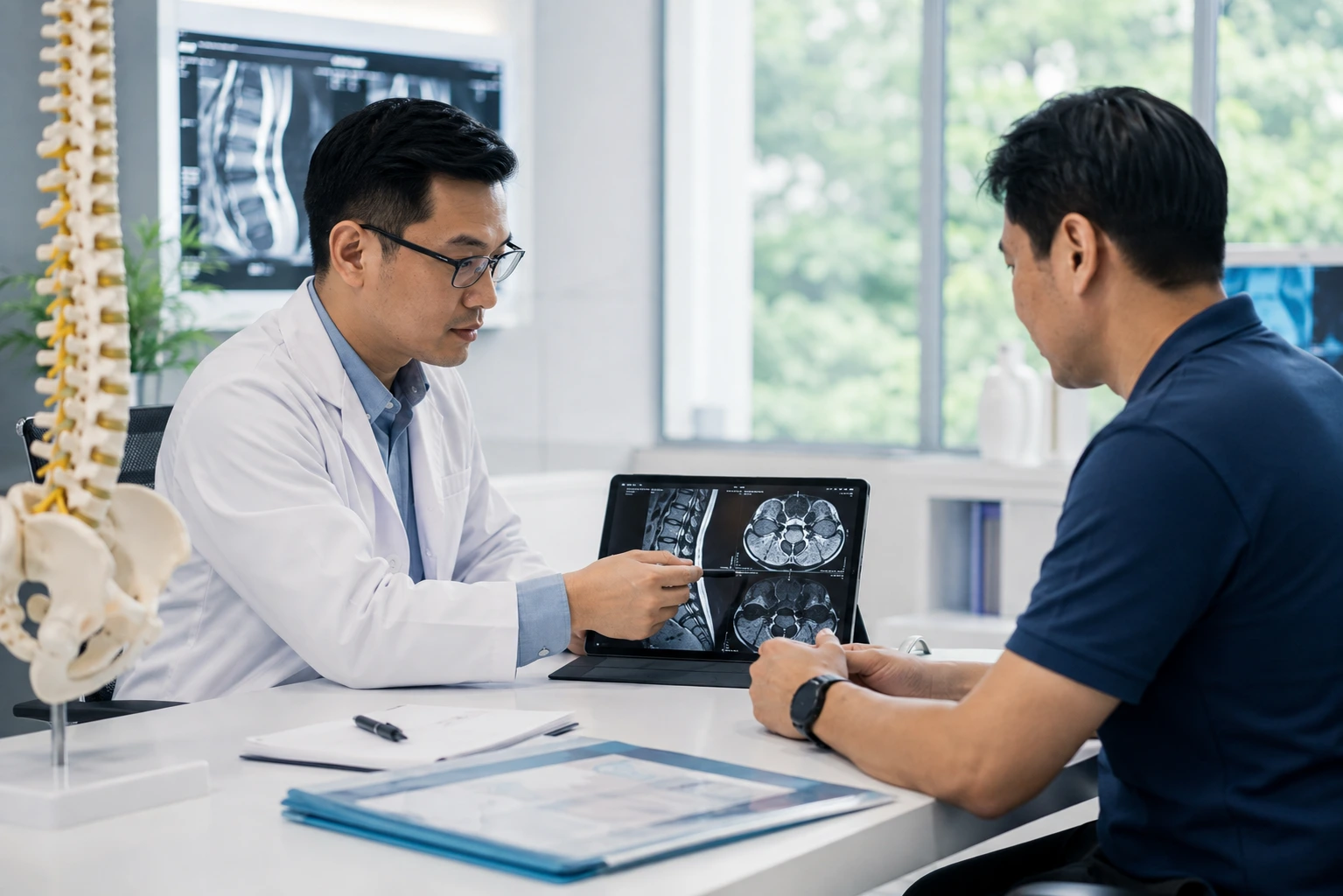
A qualified provider should review your full medical history before recommending any procedure. This matters even more for a condition as complex as spinal cord injury.
Questions Worth Asking Before Starting Treatment
- Which specific cell type is being used, and where does it come from
- What safety data exists for that exact approach, not just stem cells in general
- How many patients have been treated with this protocol so far
- What happens if the treatment does not produce the hoped-for improvement
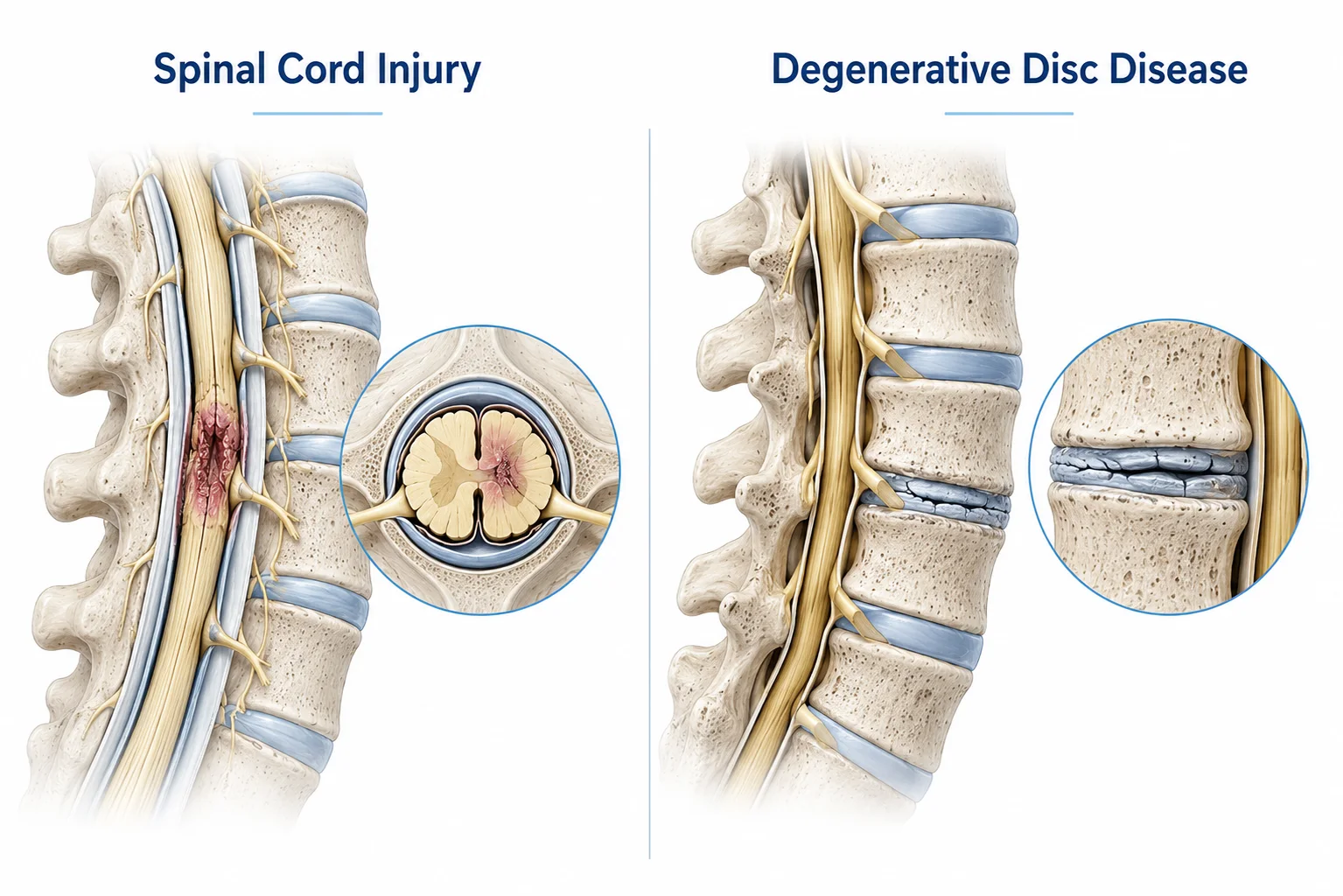
How This Differs From Spine Surgery for Other Conditions
Not every spine issue is a spinal cord injury. It helps to know the difference before researching stem cell therapy after spinal cord injury any further. Our article on stem cell therapy vs spinal surgery for degenerative disc disease covers a related but different condition.
That condition involves gradual wear, not a traumatic or acute injury event. As a result, the biology, goals, and treatment timelines differ substantially from what this article covers.
If you are unsure which situation applies to you, a specialist can help. Imaging and a clinical exam can usually clarify this quickly. Getting the right diagnosis first shapes every decision that follows.
Who This Is For
Both traumatic spinal cord injury and chronic cases are studied, though the goals differ. Trials for recent injuries often focus on limiting further damage. Chronic-case trials, meanwhile, focus more on recovering lost function.
SCI patients considering these cell treatments should have a confirmed diagnosis. Stable medical status matters too, along with realistic expectations set in advance. A specialist can help determine where you fall across these categories.
Questions to Discuss With a Specialist First
- Whether your injury is classified as complete or incomplete, and what that means for you
- How long ago your injury occurred, and whether your condition has stabilized
- What rehabilitation and standard care you have already tried
- What outcomes would feel meaningful to you personally, even if modest
Curious whether stem cell therapy after spinal cord injury could be relevant for your situation? Start your application and our care team will review your history and discuss realistic options with you.
Frequently Asked Questions
How effective is stem cell therapy for spinal cord injury?
Current research shows modest, measurable improvements in some patients, not all, and not a cure. Trials remain small, and results vary based on injury type, timing, and the specific approach studied.
What is the goal of stem cell therapy?
The general goal is to support the nervous system’s own repair processes and calm inflammation. It may also help replace or support damaged cells. However, instant reversal of existing damage is not the goal.
What is the goal of treatment for spinal cord injuries?
Standard treatment focuses on stabilizing the injury and preventing further damage. It also aims to maximize function through rehabilitation. Researchers study stem cell therapy as a possible addition to this, not a replacement for it.
Can stem cell treatment be used to treat spinal degeneration?
Spinal degeneration, such as disc disease, differs from a spinal cord injury. However, researchers study some regenerative approaches for both conditions. Our related article above explains how the two differ and how doctors approach each one.
Ready to Learn More About Stem Cell Therapy After Spinal Cord Injury?
Call or WhatsApp us at +6018 222 0032, or email info@cyronacell.com to discuss your situation with our team.