Key Takeaways
- Stem cell therapy can slow cellular aging by targeting the immune system dysfunction and chronic inflammation that drive the aging process at the cellular level.
- Growth factors released by mesenchymal stem cells (MSCs) support boosting collagen, repairing damaged tissue, and improving skin quality from within.
- Findings show improvements in skin glow, energy, and recovery after stem cell therapy, outcomes linked to cellular repair rather than surface-level treatment.
- Cognitive function and overall health can also benefit, as MSCs act on multiple systems at once rather than targeting a single sign of aging.
- Cyrona uses wjMSCs to support patients seeking an anti-aging approach that works at the cellular level, not just on the surface.
Estimated read: 8 min
Can stem cell therapy slow cellular aging? The science behind skin glow, energy, and recovery points to a real answer. Aging does not happen overnight. It builds at the cellular level over years. Stem cell therapy targets this process at its source. This article explains how it works. It covers what the evidence shows for skin, energy, and recovery. And it explains what patients can expect.
What cellular aging actually is
Most people think of aging as something they see in the mirror. Fine lines, dull skin, slower recovery after exercise. But these signs of aging are symptoms. The cause is deeper. Aging happens at the cellular level. It occurs in the DNA, the mitochondria, and the tissue repair systems the body needs to run.
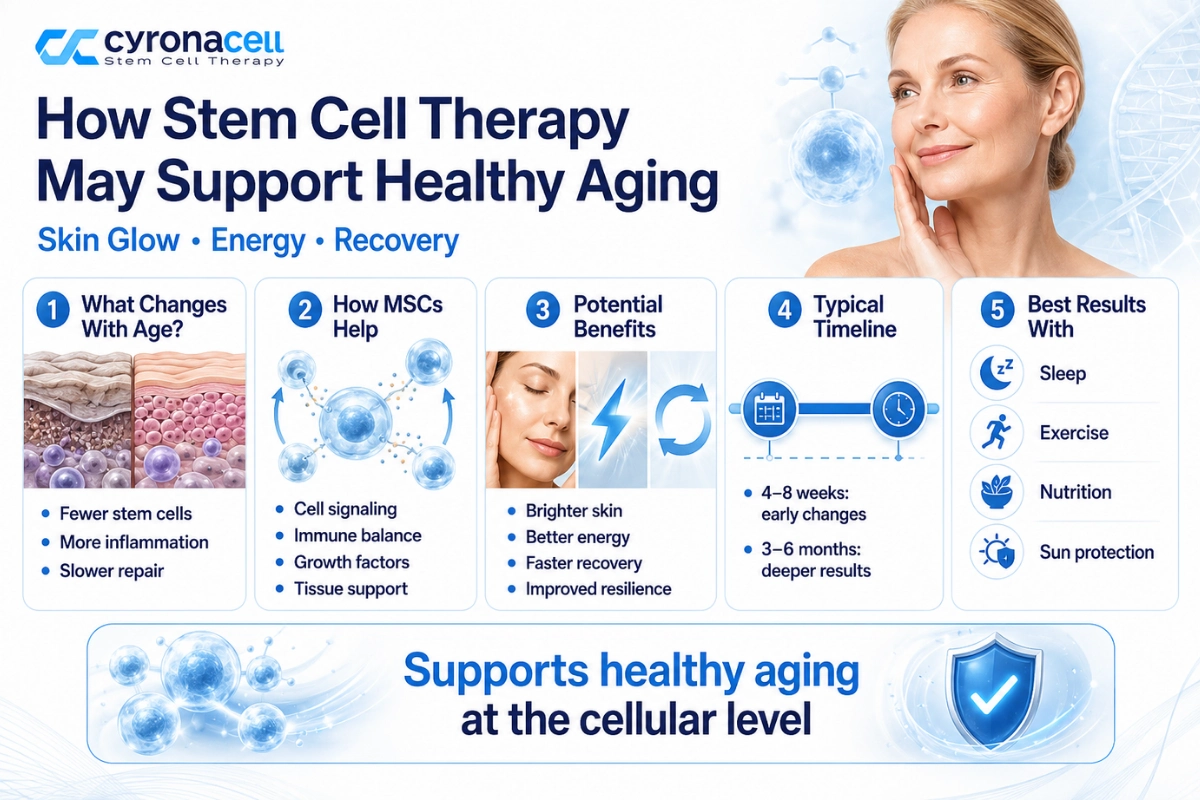
Three core changes drive the aging process. First, stem cell reserves shrink. The body uses stem cells to replace damaged or aged cells throughout life. When those reserves drop, repair slows everywhere. Second, chronic inflammation builds. Low-grade immune system activation circulates over years. It breaks down tissue and disrupts normal cell function. Third, the immune system loses precision. It stops distinguishing clearly between damaged cells and healthy ones. Chronic inflammation accelerates aging as a result.

Why the aging process accelerates
Once these three changes take hold, they reinforce each other. Fewer stem cells means slower repair. Slower repair means more damaged tissue. More damaged tissue drives more chronic inflammation. More inflammation depletes the immune system further. This cycle accelerates aging. It is why a 60-year-old with metabolic disease can look and feel much older than one with good metabolic health.
Stem cell therapy works by interrupting this cycle. It does not stop aging. But it can slow the rate at which these processes build. It gives the body better tools to repair, renew, and recover.
How stem cell therapy works at the cellular level
Stem cell therapy is a key branch of regenerative medicine. It works at the cellular level by introducing mesenchymal stem cells MSCs into the bloodstream. These cells do not replace every damaged cell in the body. Their main action is paracrine: they release signals that tell existing cells to behave differently.
Those signals do several things at once. They support boosting collagen in the skin. Chronic inflammation in the tissues where it is most active drops. Cellular repair resumes in organs and systems that have built-up damage. And they interact with the immune system to regain some of the precision lost with age.
This broad, simultaneous action is what makes stem cell therapy different from most anti-aging treatments. A cream or supplement acts through one path. MSCs act on multiple systems at once. The effects on skin glow, energy, and recovery all come from this repair process. It is multi-system, not targeted at one area.
| Cellular Aging Factor | What Happens With Age | How MSCs May Help |
|---|---|---|
| Stem Cell Decline | The body repairs tissue more slowly | Supports cellular repair and tissue renewal signals |
| Chronic Inflammation | Low-grade inflammation damages tissue over time | Releases anti-inflammatory signals that calm immune activity |
| Collagen Loss | Skin becomes dull, thinner, and less firm | Growth factors may stimulate fibroblasts and collagen production |
| Mitochondrial Wear | Cells produce energy less efficiently | May support better cellular energy and recovery |
| Immune Dysregulation | The immune system becomes less precise | Helps rebalance immune signaling and reduce unnecessary inflammation |
Growth factors and boosting collagen
One of the key mechanisms is the release of growth factors. When MSCs detect signs of aging in surrounding tissue, they release growth factors. These include HGF growth factor, VEGF, and TGF-beta. These signals drive cellular repair in the tissue that receives them.
In the skin, this means stimulating fibroblasts, the cells that produce collagen and elastin. Boosting collagen production from within the dermis improves skin texture, firmness, and glow. Surface-level products cannot match this. This is not a superficial effect. It is the skin responding to real biological signals from within its own tissue.
Reducing chronic inflammation
Chronic inflammation is one of the biggest drivers of visible aging. It degrades collagen and impairs muscle repair. It also disrupts sleep and reduces how well nearly every organ. MSCs directly reduce chronic inflammation by releasing anti inflammatory molecules that calm overactive immune cells.
This anti inflammatory effect is systemic. MSCs circulate through the bloodstream and respond to inflammatory signals wherever they find them. This is why patients often report improvements across multiple areas after treatment. Not just one sign of aging shifts.

Skin glow and improving skin quality
Improving skin quality is one of the most reported outcomes after stem cell therapy. Patients describe a glow and clarity that skincare products have not achieved. The reason is straightforward. The skin is responding to internal biological signals, not external application.
Fine lines and cellular repair in the dermis
Fine lines form when the dermis loses collagen, elastin, and hydration. This happens because the fibroblast cells that produce these proteins become less active with age. MSC-derived growth factors directly stimulate fibroblast activity. Clinical findings show improvements in fine lines, skin firmness, and hydration in patients treated with MSC therapy. These results hold across studies, consistent with the documented paracrine mechanism of MSC therapy in regenerative medicine research.
MSCs also support repairing damaged tissue in the dermis at a structural level. They help the skin rebuild its architecture. Topical treatments can only influence this from the outside. Patients at Cyrona typically report early changes in skin texture and glow within four to eight weeks of treatment. These results develop further over three to six months as the repair process continues.
For a deeper comparison between MSC anti-aging therapy and conventional approaches, the article on anti-aging stem cell treatment versus traditional anti-ageing explains what changes inside the cells.
Energy and recovery
Reduced energy and slow recovery are signs of aging that most people accept as inevitable. But the science says otherwise. These are not fixed features of getting older. They are symptoms of damage that can be partly addressed. They are not. Both reflect what is happening at the cellular level. The cause is mitochondrial wear and reduced muscle repair capacity.
MSCs support mitochondrial repair. As mitochondria work better, the cells they power produce energy more reliably. Patients experience this as better stamina and a shorter recovery window after physical activity. MSCs also reactivate satellite cells, the local repair cells in muscle tissue. As satellite cell activity declines with age, muscle recovery slows. MSC signalling helps restore this activity.
You might wonder what this looks like in practice. A patient in their 50s may notice they sleep better. They wake up with more energy. Exercise recovery feels faster. Their skin looks clearer. These are not separate benefits. They all come from the same repair process working on multiple systems at once. The body is not being tricked. It is being given the tools it needs to do what it was always designed to do.
Cyrona’s patients reliably report fatigue reduction as one of the earliest noticeable benefits after treatment. This reflects the anti inflammatory mechanism working first. It reduces the body-wide load that drains energy day to day. The deeper mitochondrial and muscle repair benefits build more gradually over the following months.
Read more about the anti-aging stem cell treatment programme at Cyrona and what to expect from the assessment and treatment process.
Cognitive function and overall health
Cognitive function often declines with age for the same reasons the rest of the body does: chronic inflammation, reduced blood flow, and slower cellular repair. MSC therapy acts on all three of these pathways. Some patients in anti-aging stem cell programmes report improvements in mental clarity, focus, and sleep quality alongside their physical improvements.
In fact, these cognitive gains reflect overall health gains rather than a direct brain effect. When chronic inflammation drops, the brain functions better. When sleep quality improves, cognitive recovery also improves too. And when the immune system becomes better regulated, overall health tends to improve across the board. This is quality of life gain at the cellular level, not a single symptom fix.
| Reported Benefit | Possible Cellular Mechanism | Typical Timeline |
|---|---|---|
| Skin Glow | Improved dermal repair and collagen-supporting signals | Often noticed within 4–8 weeks |
| Improved Skin Texture | Growth factors support fibroblast activity and tissue repair | Develops over 3–6 months |
| More Energy | Reduced inflammation and better mitochondrial function | May begin within weeks |
| Faster Recovery | Muscle repair support and lower inflammatory load | Gradual improvement over months |
| Mental Clarity | Lower systemic inflammation and improved sleep quality | Varies by patient |
Does stem cell therapy replace a treatment plan?
No. Stem cell therapy works best as part of a broader approach to anti-aging and longevity. Good nutrition, regular exercise, adequate sleep, and sun protection all support and extend the results of treatment. MSC therapy addresses the cellular mechanisms that these habits cannot reach fully on their own. But it does not replace them.
Cyrona’s clinical team designs a treatment plan based on each patient’s current health status, goals, and medical history. The plan considers which cellular repair outcomes are most relevant for that patient and what follow-up schedule will best support the results over time. To begin, visit Cyrona’s start application page.
Frequently asked questions
Can stem cell therapy reverse aging?
Stem cell therapy cannot reverse aging completely. But it can slow the processes that drive it. By reducing chronic inflammation, supporting cellular repair, and restoring some of the immune system precision lost with age, MSC therapy helps the body function more like a younger version of itself. Clinical findings show improvements in skin quality, energy, and recovery that reflect genuine biological change at the cellular level, not just a surface effect.
What is the Japanese secret to anti-aging?
Japanese longevity research emphasises cellular repair, immune system health, and reducing chronic inflammation through diet, movement, and stress management. Stem cell therapy shares this cellular focus but acts more directly. MSCs support the same repair and renewal pathways that lifestyle habits promote, but from within the tissue itself. Patients seeking an evidence-based cellular repair approach to anti-aging can combine both strategies for better overall health and quality of life outcomes.
How long does it take to see anti-aging results from stem cell therapy?
Most patients notice early changes in skin glow and energy within four to eight weeks of treatment. Fine lines, skin firmness, and improving skin texture develop more gradually over three to six months. Deeper benefits, such as improved cognitive function and recovery, often build alongside these visible signs. The timeline reflects the nature of cellular repair: it takes time to rebuild what years of aging have changed. Read about how it works for the full timeline.
Talk to Cyrona about your anti-aging goals
If declining energy, skin changes, or slower recovery are affecting your quality of life, the cause may be cellular. Cyrona’s clinical team in Cyberjaya, Malaysia is available to assess your suitability and explain what stem cell therapy can realistically achieve for you.
WhatsApp or call: +6018 222 0032
Email: info@cyronacell.com