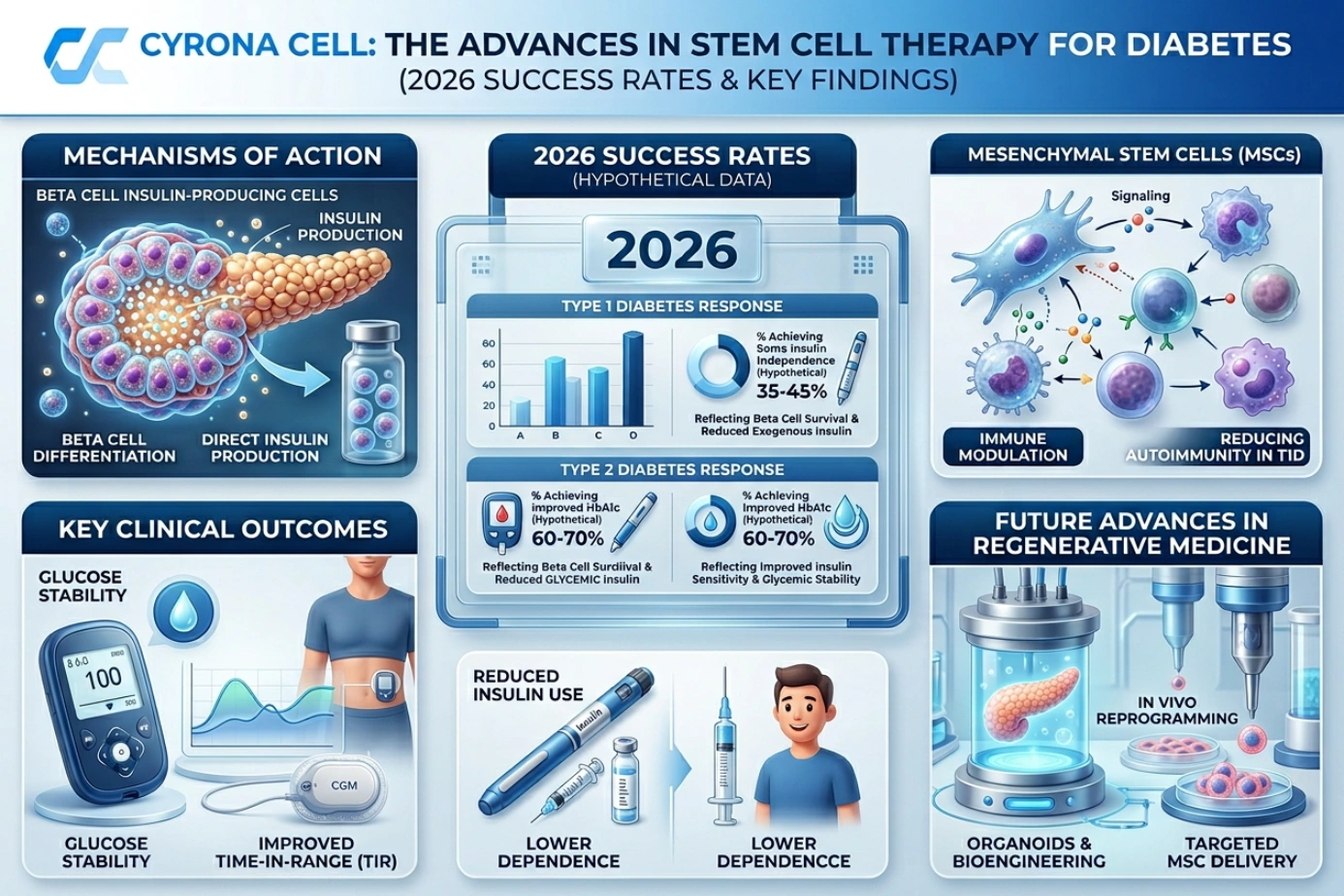
Quick SummaryIn 2026, stem cell therapy for diabetes shows measurable improvement in 60-80% of patients, including better blood sugar control, reduced insulin use, and improved insulin resistance. Type 2 diabetes patients often respond better than type 1. However, full remission remains uncommon, and results depend on disease duration, treatment protocol, and overall health.
Estimated read: 6 min
Keywords: stem cell therapy for diabetes, success rate, mesenchymal stem cells, type 2 diabetes, regenerative medicine
|
What to expect from modern regenerative treatments and real clinical outcomes
The topic of stem cell therapy for diabetes success rate in 2026 is gaining strong attention as more diabetes patients explore advanced treatment options. In recent years, regenerative medicine has moved from theory to real clinical trial results, offering new hope for both type 1 diabetes mellitus and type 2 diabetes.
While this therapy is not yet a guaranteed cure, it shows promising long term improvements in blood sugar control, insulin resistance, and overall metabolic health.
Understanding how stem cell therapy works for diabetes
Stem cell therapy focuses on repairing or replacing damaged cells in the body. In diabetes, the goal is to restore insulin producing beta cells or improve how the body uses insulin. Scientists often use mesenchymal stem cells mscs, adult stem cells, or lab-modified cells in cell therapy for diabetes.
Current success rates and what data shows in 2026
The success rate of stem cell therapy varies based on several factors, including patient condition, type of diabetes, and treatment protocol. Based on recent clinical trial data in regenerative medicine, many studies report:
- Improved insulin sensitivity in type 2 diabetes patients
- Reduced insulin use in some individuals
- Better blood glucose stability over time
- Partial regeneration of insulin producing beta cells
In 2026, early data suggests that 60 to 80 percent of diabetes patients experience measurable improvement after cell treatment for diabetes. However, full remission remains less common and depends on early intervention and overall health.
Researchers also highlight the role of growth factor release from stem cells, which helps repair tissues and improve pancreas function. This is one reason why results continue to improve year after year.
| Factor | Impact on Success Rate | Best Outcome Scenario | Challenges |
|---|---|---|---|
| Type of Diabetes | Type 2 diabetes often responds better than type 1 | Remaining insulin production improves treatment response | Type 1 requires immune regulation and beta cell protection |
| Disease Duration | Earlier treatment usually leads to better results | Less long-term pancreatic damage | Advanced diabetes may limit recovery potential |
| Stem Cell Type | MSCs and adult stem cells support regeneration | Improved insulin sensitivity and tissue repair | Protocols differ between clinics and studies |
| Overall Health | Healthy lifestyle improves outcomes | Better metabolic stability and energy levels | Poor diet and chronic inflammation reduce effectiveness |
| Treatment Protocol | Personalized care increases success potential | Better glucose control and reduced insulin use | Experimental methods may have inconsistent results |
Key factors that influence treatment outcomes
Not all patients will have the same results. Several important factors affect the success rate:
Type of diabetes
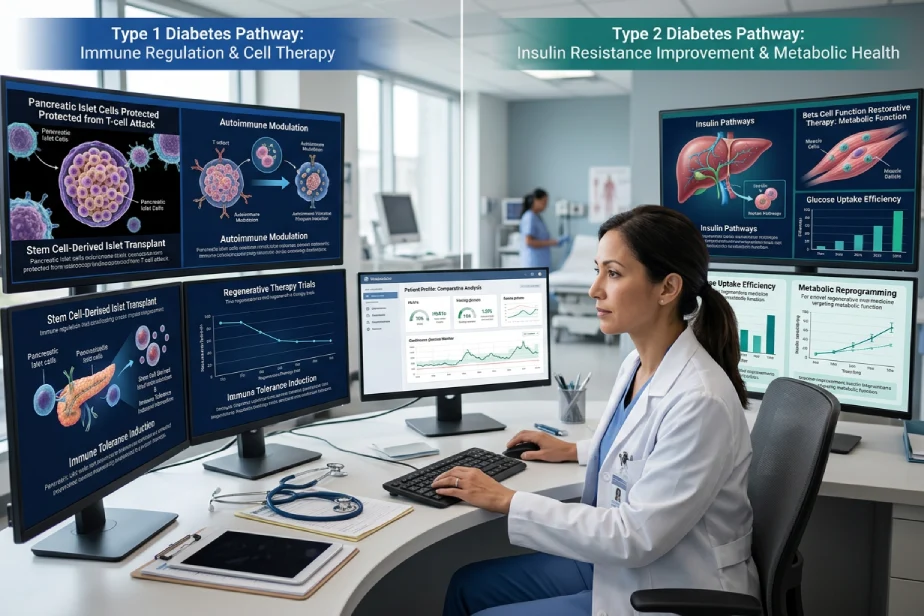
Patients with type 2 diabetes often respond better due to remaining insulin production. In contrast, therapy for type 1 diabetes focuses more on immune regulation.
Disease duration
Patients diagnosed earlier usually see better results. Long term damage can limit how much recovery is possible.
Treatment protocol
Different clinics use different cell sources and methods. The quality of stem cell treatment plays a major role in outcomes.
Overall health
Lifestyle, diet, and metabolic health impact how well the body responds to regenerative medicine.
Because of these variables, doctors often recommend personalized treatment plans for each patient.
Benefits beyond blood sugar control
Stem cell therapy does more than regulate glucose levels. Many diabetes patients report:
- Increased energy levels
- Reduced inflammation in the body
- Improved circulation
- Better organ function
These benefits are especially important for people with long term diabetes complications. By improving the body at a cellular level, regenerative medicine supports overall wellness optimization.
Risks and limitations to consider
Despite promising results, stem cell therapy is still evolving. Patients should understand the limitations:
- It is not yet a guaranteed stem cell therapy cure
- Results can vary widely
- Some treatments are still in experimental stages
- Costs may be high and not always covered by insurance
That said, safety data from recent clinical trial studies shows that mesenchymal stem cells mscs are generally well tolerated when used in controlled settings.
The future of diabetes care with regenerative medicine
Looking ahead, the future of cell therapy for diabetes appears strong. Researchers continue to improve techniques, including:
- Lab-grown insulin producing beta cells
- Combination therapies with medication
- Advanced immune response control for type 1 diabetes mellitus
As these innovations develop, the success rate is expected to rise. Many experts believe that a functional cure may become possible in the coming decades.
Realistic expectations for patients in 2026
Patients should approach stem cell treatment with informed expectations. While it offers real hope, it is best viewed as part of a broader treatment strategy.
Combining stem cell therapy with healthy lifestyle changes can enhance results. Regular monitoring, balanced nutrition, and medical guidance remain essential.
What patients should ask before treatment
Before choosing a clinic, patients should ask:
- Is the treatment backed by clinical trial evidence?
- What type of stem cells are used?
- What results have previous diabetes patients achieved?
- Are there safety protocols in place?
These questions help ensure a safe and effective experience.
Final thoughts on stem cell therapy advancements
As we review the progress of stem cell therapy for diabetes success rate in 2026, it is clear that this field is transforming how we approach chronic disease. While not a complete cure yet, it offers a powerful treatment option that can improve quality of life for many diabetes patients.
With continued research, better protocols, and growing clinical trial success, regenerative medicine is shaping the future of diabetes care in a meaningful way.
FAQ
What is the success rate of stem cell therapy for type 2 diabetes?
In 2026, many clinical trial results show that stem cell therapy for diabetes can improve insulin resistance and reduce insulin use in type 2 diabetes patients. Success rates vary, but many individuals see meaningful metabolic improvement when combining stem cell treatment with lifestyle care.
What is the new treatment for type 2 diabetes 2026?
New treatment options include advanced cell therapy for diabetes using mesenchymal stem cells mscs, along with improved drug therapies. Regenerative medicine is becoming a key part of modern diabetes care.
Will there be a permanent cure for diabetes in the future?
While there is no confirmed permanent cure yet, ongoing research in regenerative medicine and stem cell therapy shows strong potential. Scientists are working to fully restore insulin producing beta cells and control immune response long term.
Is stem cell therapy safe for diabetes patients?
Yes, most clinical trial data shows that stem cell therapy using mesenchymal stem cells mscs is generally safe when performed in regulated medical settings. It can help reduce inflammation, support immune response balance, and improve outcomes for diabetes patients, especially when combined with proper medical care.
How long do results from stem cell treatment for diabetes last?
Results can vary, but many patients experience long term benefits such as improved insulin sensitivity and reduced insulin use. Ongoing regenerative medicine research suggests that repeated treatments may enhance and maintain results over time.