Key Takeaways
- Stem cell therapy for joint pain is often considered after PRP injections and physio have not given lasting relief.
- Stem cells and PRP work differently. PRP concentrates your own platelets, while stem cells can directly support tissue regeneration.
- A 2025 meta-analysis of 8 trials found stem cell injections improved pain and function in knee osteoarthritis at 6 and 12 months.
- Some patients explore PRP and stem cell therapy together, though evidence on combining them is still developing.
- Always talk to a qualified provider about your activity level, joint condition, and realistic treatment options before starting any treatment.
Estimated read: 7 min
Have PRP injections and physio failed to fix your joint pain? Stem cell therapy for joint pain is often the next option people ask about. This guide explains how stem cell therapy works. It also covers how it compares with PRP and what the research shows.

Why Consider Stem Cell Therapy for Joint Pain After PRP and Physio
Physio builds strength and mobility. PRP injections use your own concentrated platelets to release growth factors that support healing. These steps bring real relief for many people.
For others, joint pain continues once those options run out. At that stage, stem cell therapy for joint pain typically comes up in the conversation. It sits within the wider field of regenerative medicine.
Stem cells work differently than PRP, though. PRP relies on platelets already in your blood.
Stem cells can support tissue regeneration and help reduce inflammation driving ongoing pain. Patients typically start our stem cell for joint pain program once they have already tried physio and PRP.
How Stem Cell Therapy Differs From PRP
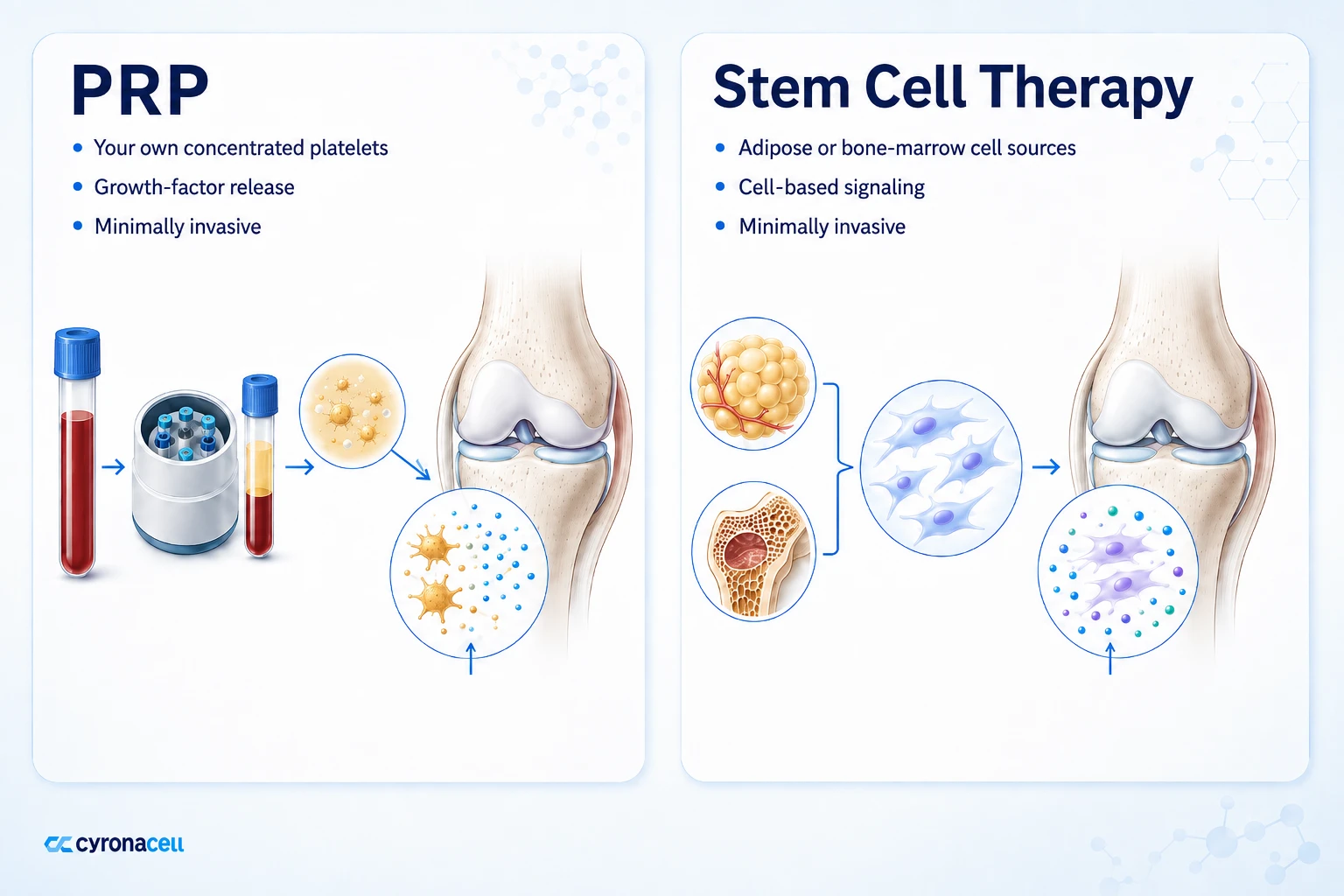
Platelet rich plasma PRP therapy takes a sample of your blood and spins it down. This concentrates platelets and growth factors, which have an anti-inflammatory effect in the joint. Even so, PRP is a well established, minimally invasive option.
However, a 2021 randomized trial published in JAMA found something worth knowing. PRP injections performed no better than a placebo for pain or cartilage volume in knee osteoarthritis.
Stem cell therapy works differently. Cells may come from adipose tissue or bone marrow stem cells, depending on the source. Different cell types behave differently once injected into a joint.
PRP typically delivers a short burst of growth factors. Stem cells, by contrast, can settle into the joint and keep signaling for longer. This is part of why doctors consider them when PRP alone has not been enough.

Key Differences at a Glance
- PRP uses your own blood; stem cells usually come from adipose tissue or bone marrow
- PRP gives a short signal burst; stem cells can signal for weeks or months
- PRP suits earlier, milder joint pain; stem cells are considered for cases that persist
- Both are minimally invasive, with similar day-to-day recovery
What the Research Says About Stem Cell Therapy for Joint Pain
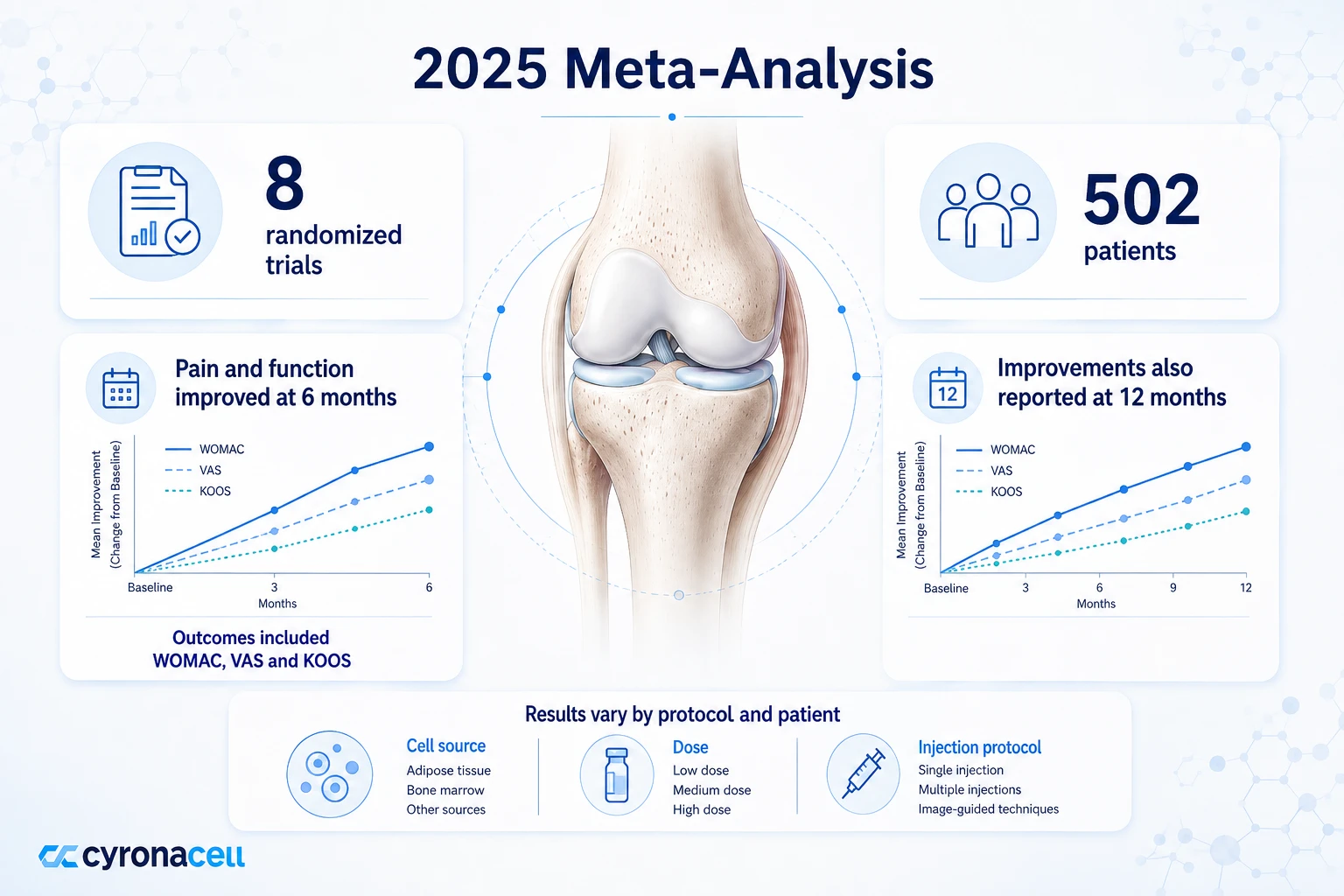
A 2025 review in Stem Cell Research and Therapy pooled 8 randomized trials. Together, these covered 502 patients with knee osteoarthritis.
The review found that stem cell injections led to better pain and function scores. That held true at both 6 and 12 months, compared with control groups.
Even so, this review is a useful benchmark, though not the final word. Each trial included was still a small sample by clinical research standards. Cell source, dose, and injection technique also varied between studies.
For a closer look at the biology, read our article on how mesenchymal stem cells support damaged joint tissues. It also explains what is actually happening inside the joint.
Combining PRP and Stem Cell Therapy
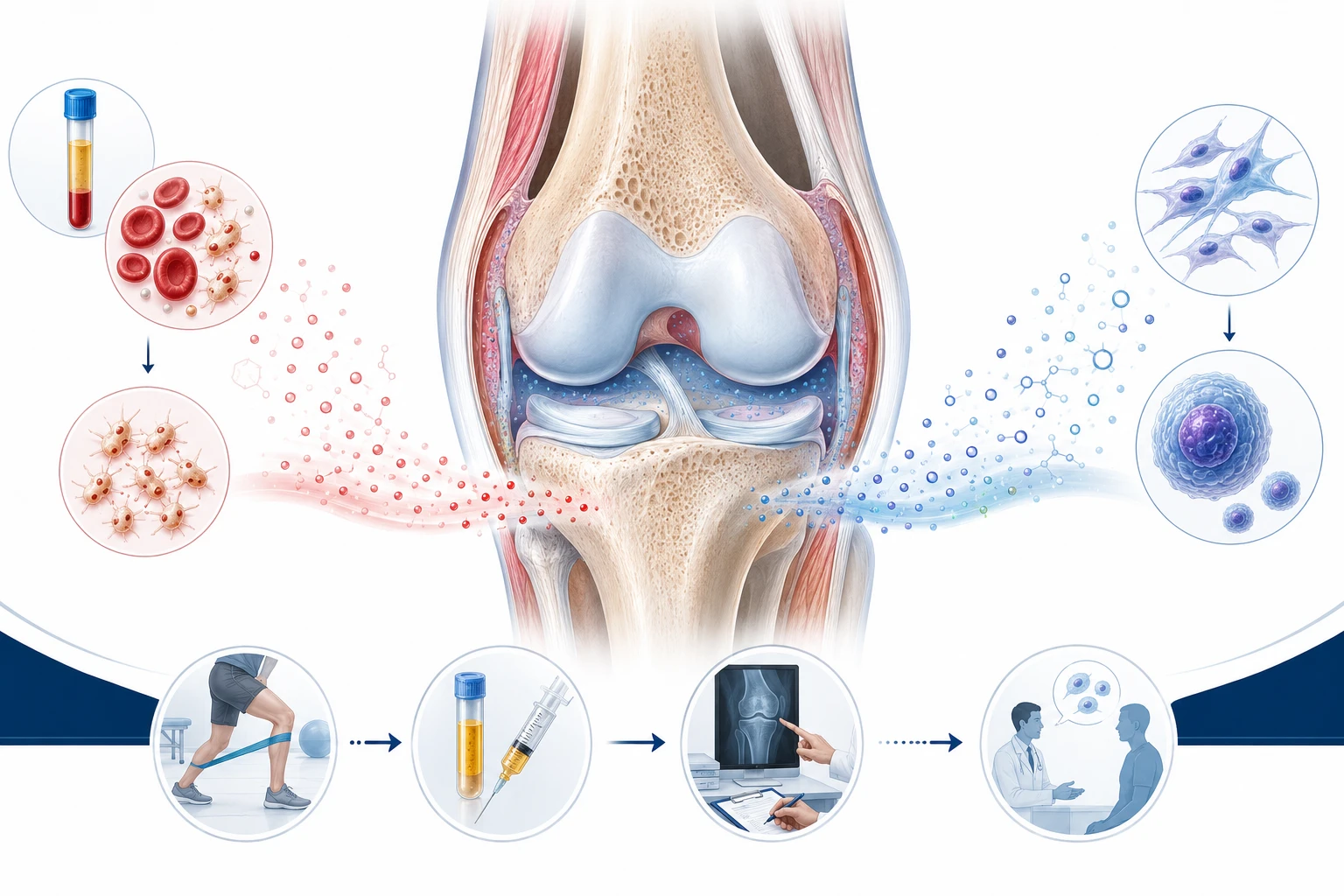
A common question is whether PRP and stem cell therapy work together. Some clinics do combine them. The idea is that PRP’s growth factors and stem cells’ signaling may support each other.
However, evidence for combined protocols remains limited. It does not yet match the evidence behind either treatment studied alone.
For most patients, sequencing matters more than combining. Say you have already tried physio and PRP, but joint pain remains. In that case, stem cell therapy is one of the treatment options worth discussing, rather than starting over with a mixed protocol that has less research behind it.
What to Expect: Recovery, Activity and Long-Term Outlook
Stem cell therapy for joint pain is generally well tolerated. Like any injection-based procedure, though, it carries potential side effects. These can include temporary swelling or discomfort at the injection site.
Results build gradually over weeks, not overnight. Most people also slowly ease back into their normal activity level, guided by their provider.
| Factor | PRP Therapy | Stem Cell Therapy |
|---|---|---|
| Source | Your own concentrated platelets | Adipose tissue or bone marrow stem cells |
| Mechanism | Short burst of growth factors | Ongoing signaling and tissue regeneration |
| Best fit | Milder, earlier-stage joint pain | Pain that continues after PRP and physio |
Recovery Tips After a Stem Cell Injection
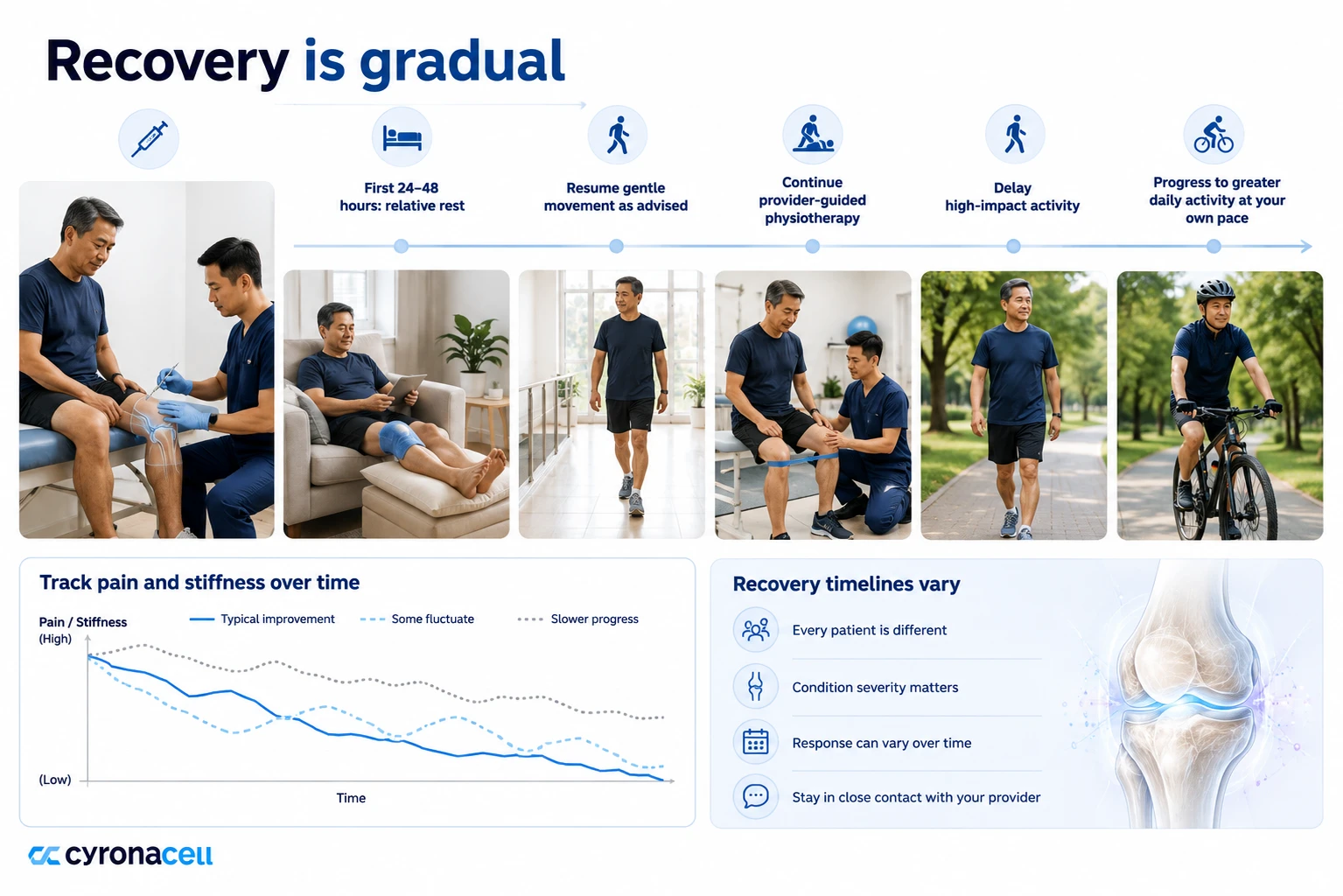
- Rest the joint for the first 24 to 48 hours, then resume light movement
- Keep up gentle physiotherapy exercises unless your provider says otherwise
- Avoid high-impact activity, like running or jumping sports, for several weeks
- Track pain and stiffness week to week so your provider can adjust your plan
Long term outcomes vary by individual, joint condition, and how the procedure is performed. So, no two recovery timelines look exactly alike.
Who Should Consider This After PRP and Physiotherapy
First, this approach tends to suit people who have completed a formal physio course. In addition, it suits those who have tried at least one round of PRP injections and still have joint pain limiting daily activity.
Signs Physio and PRP May Not Be Enough
- Joint pain returns within weeks of finishing a PRP course
- Stiffness or swelling limits daily tasks despite consistent physiotherapy
- You are trying to delay or avoid joint replacement surgery
- Your provider has confirmed there is no urgent structural issue needing surgery first
Also worth reviewing: our page on stem cell therapy for osteoarthritis. Many patients considering this path have that same underlying diagnosis.
Providers do not usually offer this option as a first-line choice. Instead, it works best as part of a plan that still includes movement, weight management, and realistic goals.

Safety and Realistic Expectations
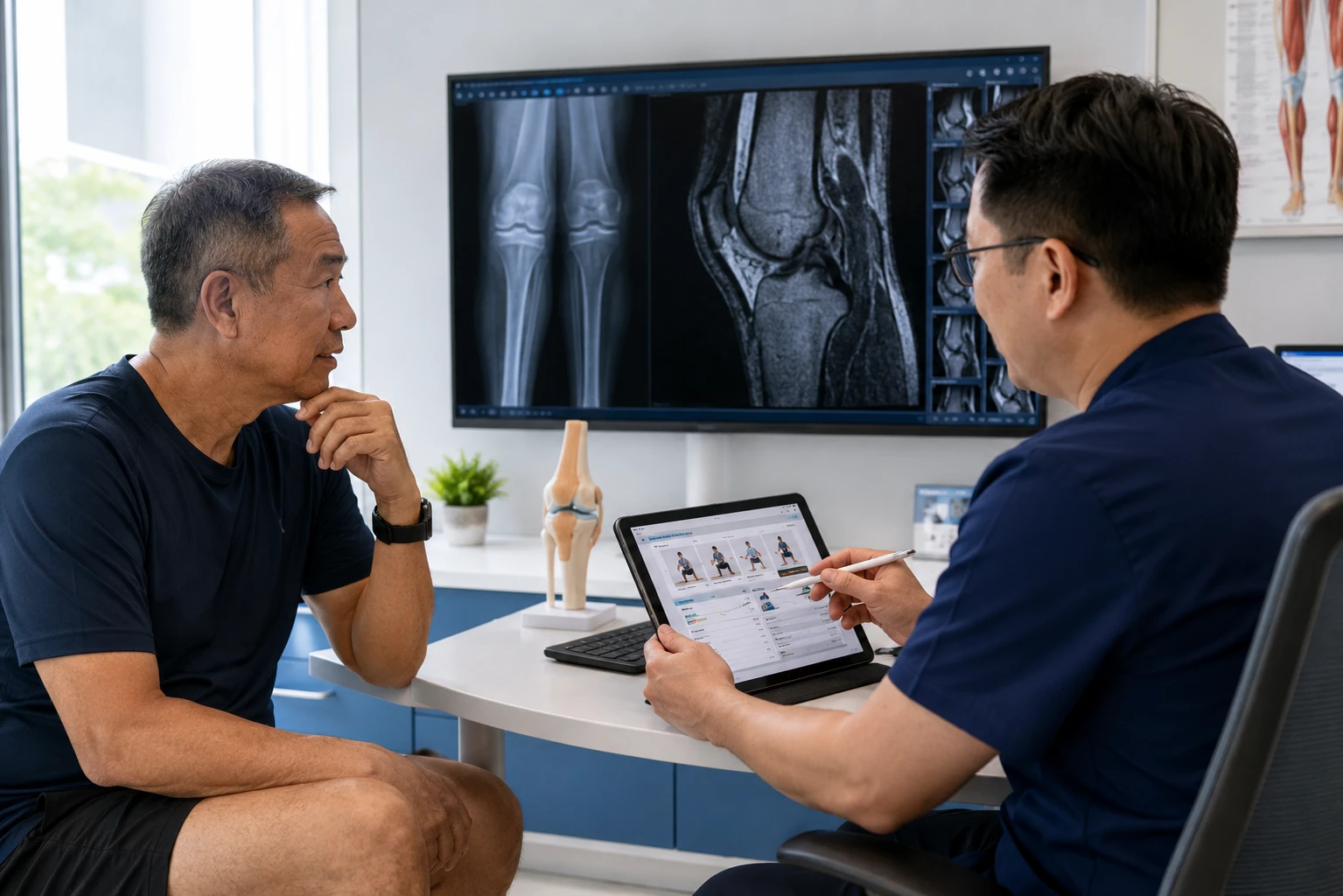
Stem cell therapy supports your body’s natural healing process. It still does not replace that process. Your provider should first review your joint imaging, medical history, and prior treatments.
This includes your PRP injections and physio records. No treatment like this can guarantee a specific result, and outcomes differ from person to person.
What Your Consultation Should Cover
- A review of your joint imaging and diagnosis
- Your history with PRP, physiotherapy, and any other treatments tried
- A discussion of realistic goals for pain relief and activity level
- An honest conversation about side effects and expected timelines
A short consultation is usually the clearest way to learn one thing. Does stem cell therapy fit your specific joint condition?
Curious whether stem cell therapy could be the right next step after PRP and physio? Start your application and our care team will review your history and talk through realistic options with you.
Frequently Asked Questions
Can you do PRP and stem cells together?
Some clinics offer combined PRP and stem cell protocols. The research supporting this combination is still limited, though, compared with either treatment studied on its own. Most providers treat them as sequential options rather than a routine combination.
Can stem cell therapy help with joint pain?
Research backs this up. A 2025 review of 8 trials found that stem cell injections improved pain and function scores in knee osteoarthritis. These improvements held at 6 and 12 months, though results vary by individual.
Which is better, PRP or stem cell therapy?
Neither option is universally better. Providers often try PRP first for milder or earlier-stage joint pain.
Stem cell therapy tends to come up when PRP and physio have not given lasting relief. In that case, your provider can help match the option to your specific joint condition.
How long does stiffness last after PRP?
Mild stiffness or soreness after a PRP injection typically settles within a few days to about a week. If stiffness continues well beyond that, it may be worth discussing next treatment options with your provider.
Ready to Explore Your Next Option for Joint Pain?
Call or WhatsApp us at +6018 222 0032, or email us to discuss whether stem cell therapy is right for you.