
Quick Read SummaryResearch Findings
Clinical trials show that mesenchymal stem cells, kidney stem cells, and stem cell derived therapies may support kidney repair. Early results indicate slower progression of CKD, reduced inflammation, and improved kidney function. Results vary depending on stem cell type, dosage, and delivery method.
Key Points for Patients
Estimated read: 6 min
Keywords: stem cell therapy for kidney disease, chronic kidney disease, CKD, glomerular filtration rate, GFR, kidney repair, mesenchymal stem cells, kidney stem cells, inflammation reduction, clinical trials
Stem Cell Therapy For Kidney Disease: Can It Help Slow Chronic Kidney Decline? Learn what clinical trials reveal about kidney repair, GFR improvement, and inflammation reduction.
stem-cell-therapy-kidney-disease-ckd
|
Exploring regenerative research and potential kidney benefits
Kidney disease affects millions worldwide. Many patients and families ask, Stem Cell Therapy For Kidney Disease: Can It Help Slow Chronic Kidney Decline? This question matters because chronic kidney disease CKD can lead to kidney failure, dialysis, or kidney transplant. Families want to know if new therapies can restore kidney function, slow damage, and improve kidney health.
In this article, we explain how stem cell treatments work, what clinical trials show, and what researchers are still studying. Our goal is to help readers understand therapy for kidney disease and make informed decisions.
Understanding Chronic Kidney Disease
Chronic kidney disease CKD happens when damaged kidney tissues cannot filter blood properly. Patients may feel tired, notice swelling, have high blood pressure, or see changes in urine output. CKD can range from mild to severe, and untreated CKD may lead to kidney failure.
Doctors often recommend diet changes, lifestyle adjustments, and blood pressure control to slow disease. In advanced cases, dialysis or kidney transplant may be necessary. Meanwhile, stem cell therapy may offer a way to repair kidney cells and slow chronic decline.
What Is Stem Cell Therapy for Kidney Disease?
Stem cell therapy uses special cells that can develop into different kidney cell types. Researchers focus on kidney stem cells and mesenchymal stem cells, which may help repair damaged kidney tissues and restore kidney function.
These cells may release growth factors, reduce inflammation, and support kidney tissue repair. Scientists also study stem cell derived therapies to maintain long term kidney health. In addition, stem cell therapy may slow CKD progression and improve kidney function over time.
What Clinical Trials Show
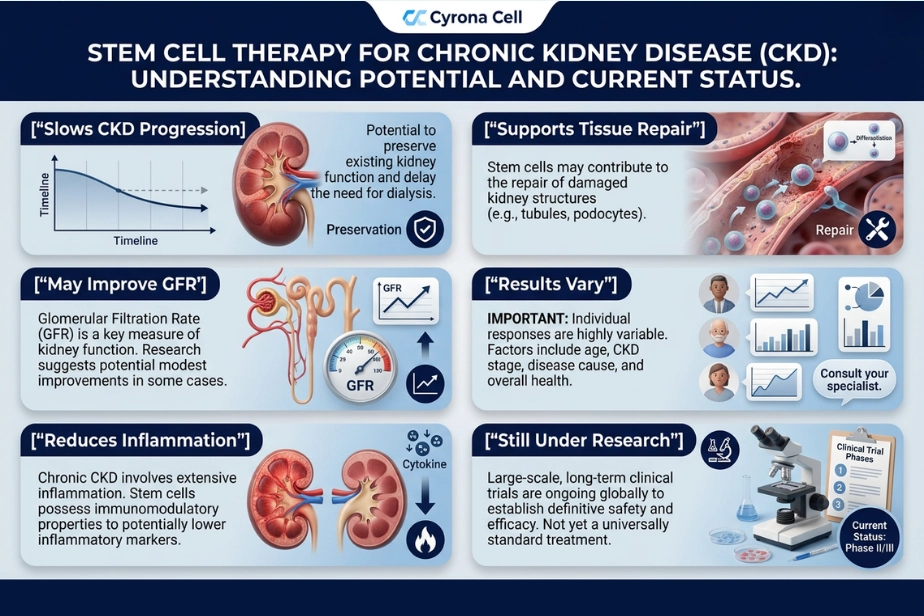
Clinical trials have tested stem cell therapy in patients with CKD and other kidney diseases. Early studies show promise. Some patients experienced better kidney function and increased glomerular filtration rate (GFR). Researchers also observed reduced inflammation and repair in damaged kidney tissues.
However, most studies are small. Results vary depending on the type of stem cells used, the dose, and the delivery method. Scientists continue testing to see how effective stem cell therapy is and how long the effects last.

How Stem Cells May Help Kidneys
Stem cells may help repair damaged kidney tissues and improve kidney cell function. They can release growth factors, reduce inflammation, and encourage kidney cell regeneration. In addition, stem cells may strengthen the immune system to protect kidneys. These effects may slow chronic kidney decline and improve kidney health over time.
Types of Stem Cells Used in Kidney Therapy
Doctors and researchers use different stem cells to support kidney repair. Mesenchymal stem cells from bone marrow and kidney stem cells from healthy tissues can help damaged kidney cells recover. In addition, stem cell derived therapies may restore kidney cell function. Studying these types helps scientists find the most effective therapy for kidney disease.
How Stem Cells Work in the Kidneys
Stem cells release growth factors, reduce inflammation, and repair kidney tissue. They may help damaged kidney cells survive and function better. Moreover, stem cells may support immune system protection for the kidneys. Combining stem cell therapy with regular care may improve long term kidney outcomes.

Benefits Observed in Research
Early clinical trials show stem cell therapy may slow chronic kidney decline. Patients sometimes experience improved GFR, reduced inflammation, and repair in damaged kidney tissues. In addition, stem cell therapy may support kidney function alongside diet, exercise, and lifestyle changes. Researchers continue exploring how strong and lasting these benefits are.
Risks and Safety Considerations
Stem cell therapy is generally safe in clinical trials. Some patients may have mild fever, temporary discomfort, or inflammation. Because therapy is still experimental, doctors recommend only approved clinical trials. Families should carefully review the evidence, ask questions, and set realistic expectations before starting treatment.
Potential Long Term Impact
Stem cell therapy may slow kidney decline and improve kidney function over time. Patients may maintain better kidney health and reduce the risk of dialysis or transplant. In addition, ongoing research may reveal new ways to repair damaged kidney tissues in the future.

Cost and Accessibility
Stem cell therapy is expensive and not widely available. Costs depend on the type of stem cells, number of treatments, and follow up care. Patients should plan for long term monitoring and discuss financial considerations with their healthcare provider.
Lifestyle and Supportive Care
Even with stem cell therapy, lifestyle changes remain important. Eating a kidney-friendly diet, staying active, managing blood pressure, and having regular checkups help protect kidney function. Families should combine supportive care with research therapies for the best outcomes.

| Research Area | Key Findings | Clinical Impact | Limitations |
|---|---|---|---|
| Kidney Function (GFR) | Some patients showed improved glomerular filtration rate (GFR) | Indicates better kidney performance and filtration capacity | Results vary between patients and study conditions |
| Inflammation Reduction | Reduced inflammation observed in kidney tissues | May slow progression of chronic kidney disease (CKD) | Long term effects are still being studied |
| Tissue Repair | Evidence of repair in damaged kidney cells and tissues | Supports regeneration and improved kidney structure | Not consistent across all trials |
| Immune Modulation | Stem cells may help regulate immune system responses | Protects kidneys from further damage | Mechanisms still under investigation |
| Overall Clinical Trials | Early trials show promising but variable results | Potential new treatment pathway for CKD patients | Most studies are small and not yet definitive |
FAQ
Can stem cell therapy help chronic kidney disease?
Yes, early clinical trials suggest stem cell treatments may repair kidney tissues, reduce inflammation, and slow chronic kidney decline. Researchers continue studying long term effects.
Is kidney function reversible?
Usually, chronic kidney disease cannot be reversed. However, stem cell therapy, diet, and lifestyle changes may slow progression and support kidney health.
What are the treatment options for kidney failure?
Advanced kidney failure may require dialysis, kidney transplant, or supportive care. Stem cell therapy is experimental and may help kidney function but is not a replacement for standard treatments.
Can stem cells increase GFR?
Some studies show modest improvement in glomerular filtration rate (GFR). Stem cell therapy may help kidneys function better and slow long term decline.