
Key Takeaways
- Mesenchymal stem cells MSCs are the main type of stem cell studied for chronic obstructive pulmonary disease (COPD) and pulmonary fibrosis.
- The largest controlled trial found stem cell infusions safe and effective to receive, but did not show clear improving lung function results overall.
- A smaller trial using umbilical cord derived mesenchymal stem cells found improved quality of life scores, though lung function itself changed little.
- Major health bodies caution against unproven stem cell treatments sold without regulatory oversight.
- MSC therapy may work best as a possible addition to pulmonary rehabilitation, not a replacement for it.
Estimated read: 10 min
Breathlessness changes daily life in ways that are hard to explain to someone who has not felt it. For people with obstructive pulmonary disease (COPD) or pulmonary fibrosis, even simple tasks can become exhausting. Climbing stairs or carrying groceries can feel like real effort.
Stem cell therapy for lungs keeps coming up as families search for something beyond inhalers and oxygen therapy. The honest answer sits between hope and caution, and both deserve equal weight.
Why COPD and Pulmonary Fibrosis Are Hard to Treat
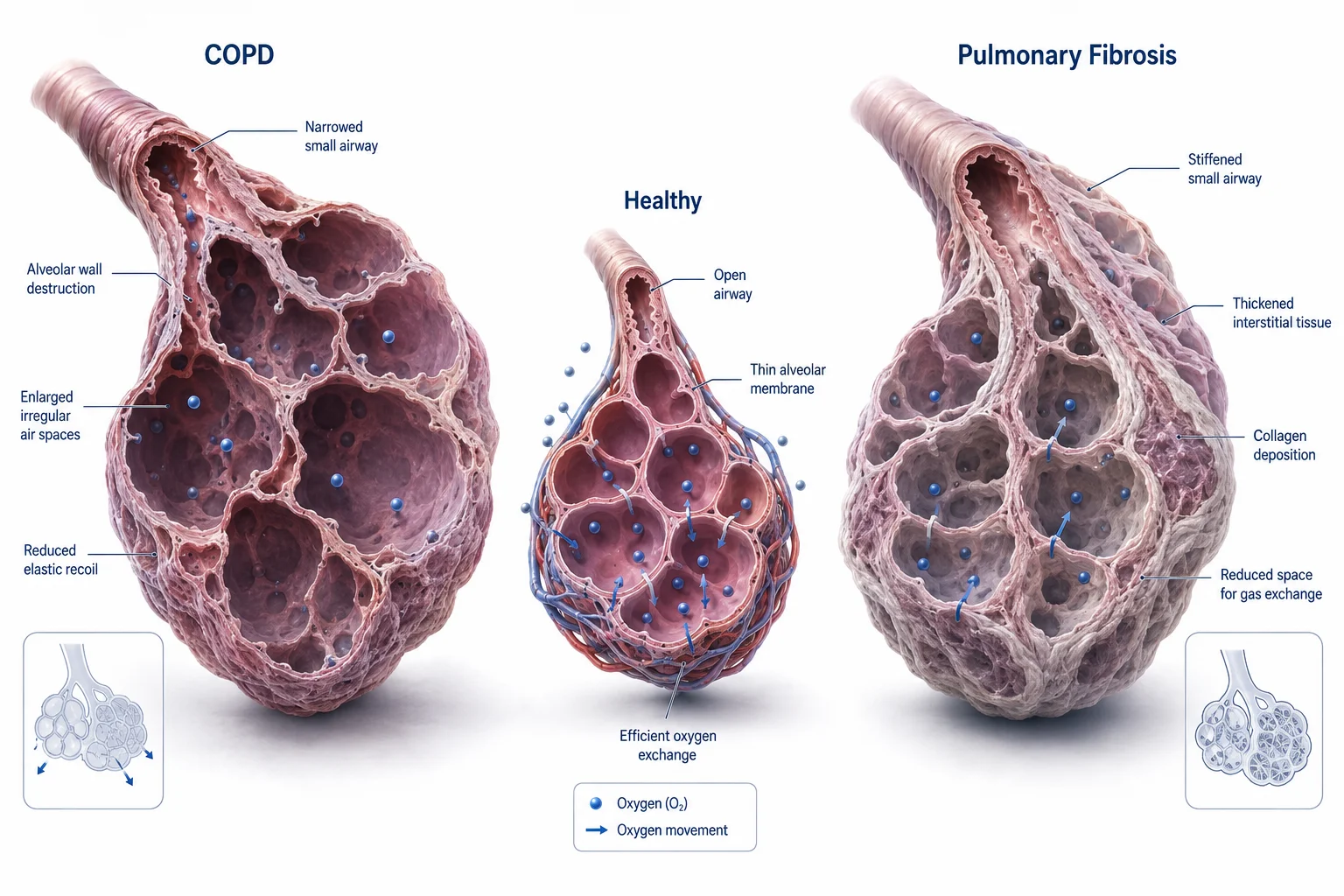
COPD, known in full as chronic obstructive pulmonary disease, damages the lungs differently than pulmonary fibrosis does. Specifically, this obstructive pulmonary disease, COPD, narrows airways and destroys the air sacs. Doctors call these air sacs alveoli, and they transfer oxygen into the blood.
Pulmonary fibrosis instead causes scarring in lung tissue, and this scarring stiffens the lungs over time. Each breath then requires more effort, and this effort tends to increase gradually rather than all at once.
Both conditions share one frustrating trait, however. Lung damage in either disease tends to be permanent. Damaged lung cells do not regenerate the way skin or liver tissue does.
Standard treatment focuses on slowing this damage rather than reversing it. Inhalers, oxygen therapy, and pulmonary rehabilitation remain the foundation of care for both conditions.
Doctors also monitor disease progression closely using breathing tests and imaging. Catching decline early, therefore, allows treatment adjustments before symptoms worsen significantly. This can meaningfully extend a patient’s functional years.
These monitoring tools also help doctors decide when to escalate care. This might mean adding oxygen support or referring a patient for transplant evaluation. Regular monitoring shapes nearly every major treatment decision along the way.
What Is Stem Cell Therapy for Lung Disease?
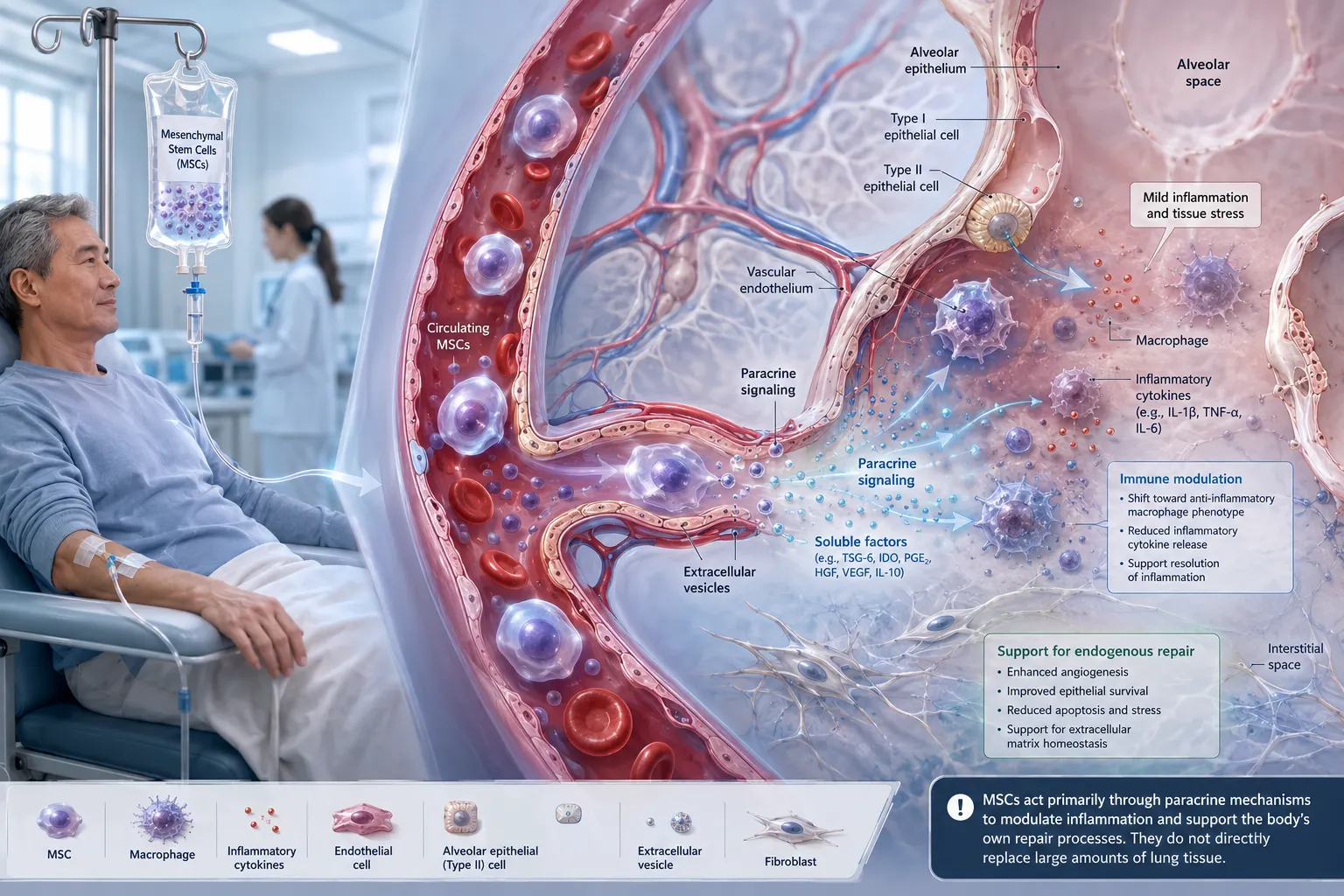
Most current research relies on mesenchymal stem cells MSCs. This is a specific type of stem cell favored for its safety record. These cells typically come from bone marrow or umbilical cord tissue.
MSCs do not grow new lung tissue directly in most current protocols. Instead, they release signals aimed at reducing inflammation in damaged airways and surrounding tissue.
These signals include growth factors that may support the body’s own repair processes. Specifically, this differs from a lung transplant, which replaces damaged tissue entirely rather than supporting what remains.
Researchers describe several therapies, including intravenous infusion and, in rarer cases, direct delivery into the airways. Ongoing research continues to compare these approaches head-to-head.
Most clinics offering stem cell therapy for lungs favor intravenous infusion. Doing so avoids the added risk of an invasive airway procedure. This delivery method also lets the cells circulate throughout the body, not just the lungs.
What the Largest Controlled Trial Actually Showed
Much of the public conversation about stem cells and COPD relies on small, uncontrolled reports. One notable exception, published as a placebo-controlled randomized trial, offers a genuine comparison group.
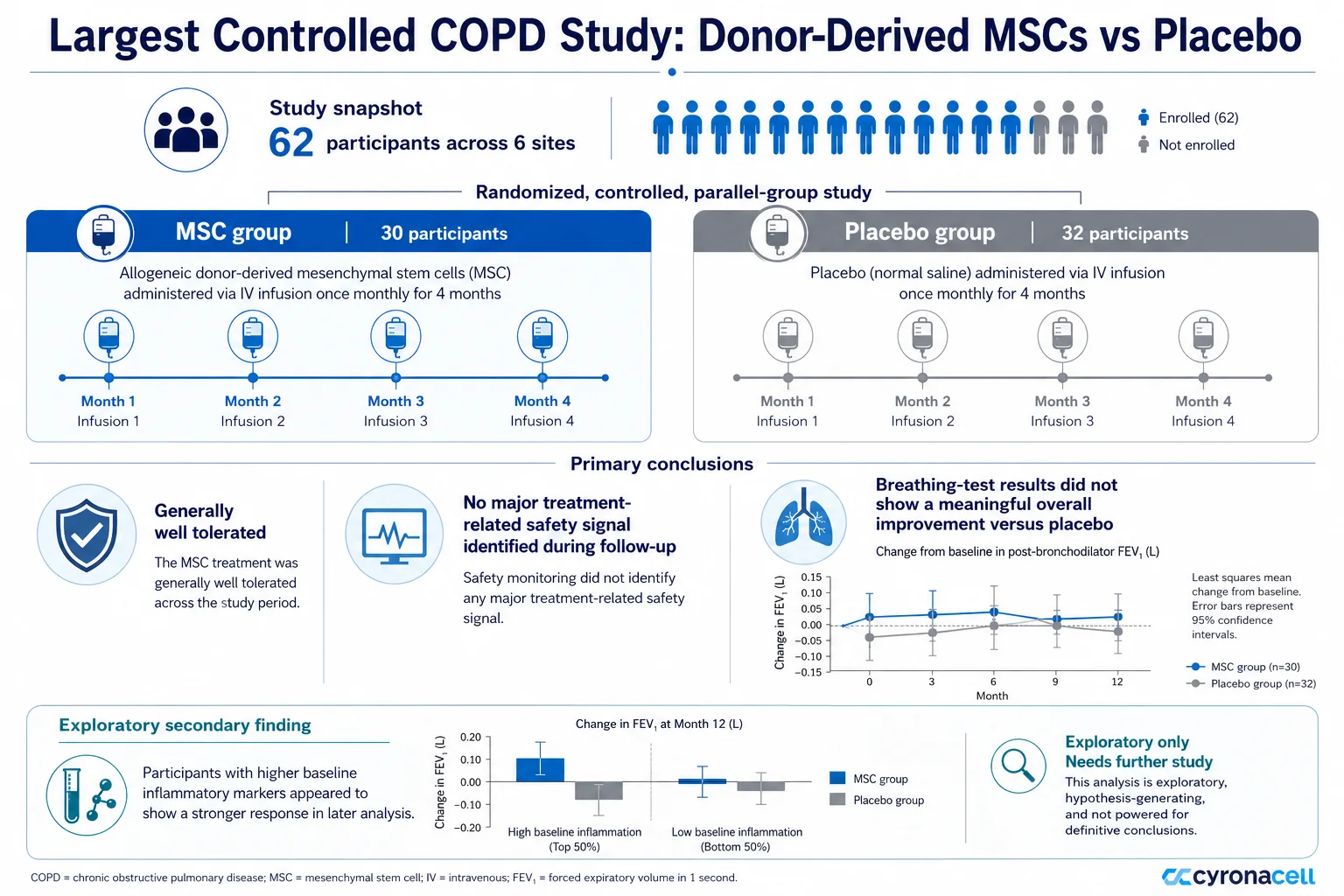
Researchers enrolled 62 patients with moderate to severe COPD across six sites. Thirty received four monthly infusions of donor-derived MSCs, while 32 received a placebo infusion instead.
The trial found the treatment safe and effective in terms of how well patients handled it. No significant safety concerns emerged over the following years of follow-up. This itself is a meaningful finding for a new therapy.
On lung function itself, however, the results were disappointing. Researchers did not observe meaningful improvement in breathing tests between the treated and placebo groups.
A later follow-up review of the data revealed an interesting detail, though. Patients with higher baseline inflammation markers showed more improvement than those with lower inflammation levels.
This suggests that the level of inflammation may help identify who responds best to MSC therapy. It does not change the trial’s main, disappointing result for the average patient.
Researchers describe this as an important lead worth investigating further. This does not prove that inflammation testing should guide treatment decisions today. The finding came from a secondary look at the data, not the trial’s original design.
Evidence From Umbilical Cord-Derived Cells
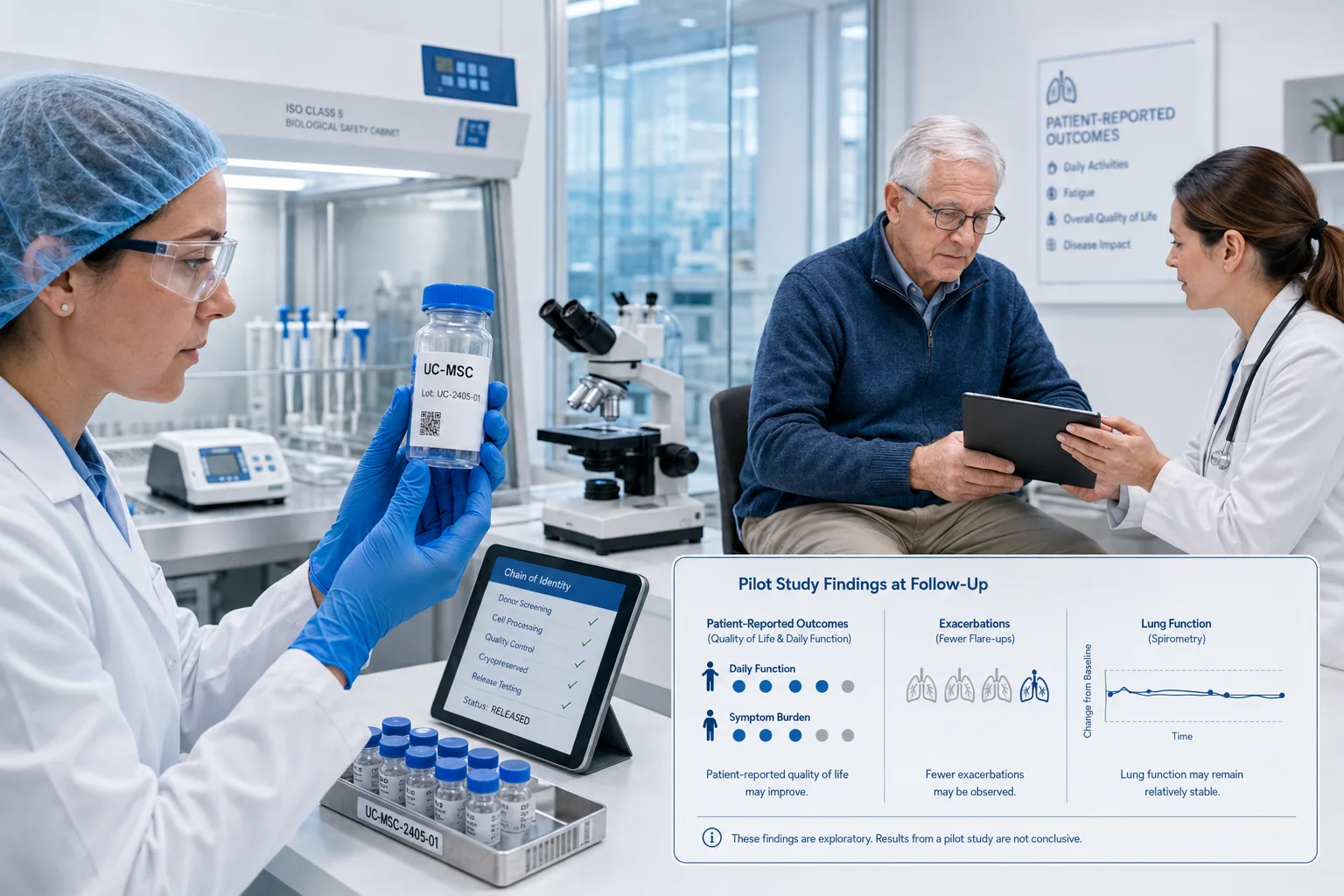
A separate pilot study used umbilical cord derived mesenchymal stem cells instead of bone marrow cells. Researchers in Vietnam published this pilot COPD trial. For instance, twenty patients with moderate to severe COPD received a single infusion.
Researchers followed these patients for six months afterward. No serious treatment-related side effects appeared during this period. This matched the safety pattern seen in the larger trial.
Quality of life scores and symptom scores improved meaningfully, notably more than in the earlier bone marrow trial. Improving lung function was not the clearest benefit here either, though flare-up frequency also decreased compared to before treatment began.
Lung function tests themselves, though, showed little measurable change. This pattern echoes the larger COPD trial closely, despite the different cell source used.
Quality of life often improves more clearly than lung cells function on paper. This distinction, therefore, matters when patients and families set expectations before starting treatment.
To see how Cyrona Cell approaches lung-specific protocols, review stem cell therapy for lungs at Cyrona Cell.
What About Pulmonary Fibrosis Specifically?
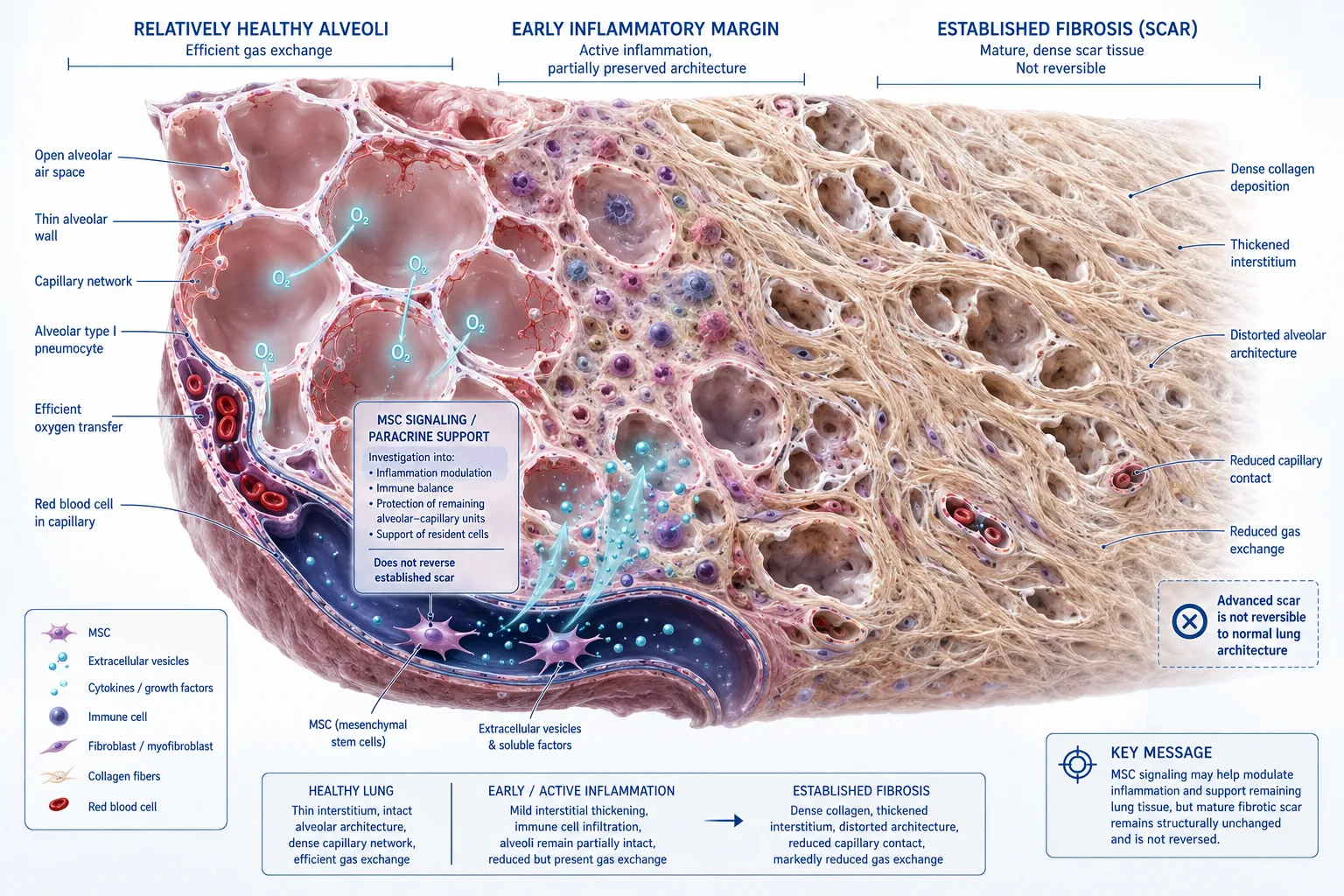
Research on pulmonary fibrosis remains in its early stages compared with research on COPD. Most published evidence comes from small trials and individual case reports rather than large controlled studies.
Some case reports describe reduced oxygen dependency after treatment.
A single case, however, cannot prove a treatment works for everyone with this diagnosis. Individual responses vary widely, and reporting bias favors success stories over less encouraging ones.
Scarred lung tissue in advanced fibrosis is particularly difficult to reverse. Once collagen deposits replace healthy tissue, that structural change tends to be permanent, regardless of any treatment attempted afterward.
Current evidence supports cautious optimism about slowing symptoms. It does not yet support claims of restoring lost lung capacity in advanced disease. Patients should be wary of any clinic suggesting otherwise.
One severe subtype, where the cause is unknown, carries a particularly serious prognosis. Many patients do not initially realize how serious it can be.
This makes honest expectation-setting especially important for this specific diagnosis. Hope alone, therefore, should never substitute for a clear-eyed view of the evidence.
Curious whether your case aligns with current evidence supporting stem cell therapy? Submit your case for a free medical review.

Why Major Health Bodies Urge Caution
Respected lung health organizations have warned about stem cell clinics that operate outside regulation. This includes a formal advisory from a major lung health association. Their concern centers on programs making bold claims without solid clinical trials support behind them.
Regulatory bodies in several countries have also issued similar warnings. Many advertised treatments, they note, have never gone through formal safety review at all. That gap between marketing claims and actual evidence is exactly what these advisories aim to address.
This caution does not mean all research is worthless, however. It means patients should scrutinize any clinic’s claims before proceeding with treatment.
A responsible clinic discusses realistic outcomes upfront. It also explains cell sourcing, safety testing, and what published research actually supports that specific approach. Vague marketing language is not an acceptable substitute.
Independent, published data should always outweigh success stories on a clinic’s own website. Such stories, however compelling, are not a substitute for peer-reviewed evidence.
Patients should be especially cautious of clinics that promise guaranteed results or that avoid direct questions about their evidence base entirely. Not all stem cell treatments carry the same level of published support. Vague answers to specific questions are themselves a warning sign worth taking seriously.

Realistic Expectations for Patients
No current stem cell therapy reverses COPD or pulmonary fibrosis completely. The strongest available trial data shows safety, alongside modest and inconsistent effects on lung function itself.
Quality of life improvements appear more consistently across clinical studies than lung function changes do. This distinction matters greatly when setting expectations before treatment begins, since patients often hope for both equally.
MSC therapy works best as a supportive addition to standard care, not a replacement for it. Pulmonary rehabilitation, medication, and oxygen support remain essential regardless of any cell-based therapy pursued.
Patients considering this option should discuss it openly with their lung specialist first. Pursuing it in isolation from an existing care team is not advisable. Coordinated care generally produces better outcomes than fragmented decision-making.
Age, disease severity, and overall health also influence how realistic any benefit might be. Because of this, a thorough medical review before starting treatment helps set expectations that match each patient’s actual situation.
Patients earlier in their disease course tend to tolerate treatment more easily. They typically have better baseline lung function and fewer complications.
This does not guarantee a better outcome. It typically means a lower-risk starting point instead.
Smoking status also plays an important role in outcomes. Patients who continue smoking generally see less benefit from any lung-directed treatment, stem cell therapy included. Ongoing damage can outpace whatever support the treatment provides.
Frequently Asked Questions
How do you treat COPD and pulmonary fibrosis?
Standard treatment includes inhalers, oxygen therapy, pulmonary rehabilitation, and, in advanced cases, evaluation for a lung transplant. Stem cell therapy, instead, remains an investigational, supportive option. It does not substitute for any of these standard approaches.
How much does stem cell therapy cost for COPD?
Several factors affect cost, including cell source, dosing, and clinic location. Prices depend on disease stage and the recommended protocol. Accurate figures generally require a personalized case assessment, since treatment plans differ from patient to patient.
Can your lungs recover from pulmonary fibrosis?
Established scarring generally does not reverse. Treatment goals, instead, typically focus on slowing further scarring and supporting remaining healthy tissue. Restoring lung capacity already lost is not a realistic goal.
Can you regain lung capacity with COPD?
Significant lung capacity lost to COPD rarely returns fully. Pulmonary rehabilitation, however, can improve how efficiently the body uses remaining lung function.
This often feels like meaningful improvement even without capacity fully returning. Day-to-day breathlessness can ease even when test numbers change little.
A Careful, Evidence-Based Conversation
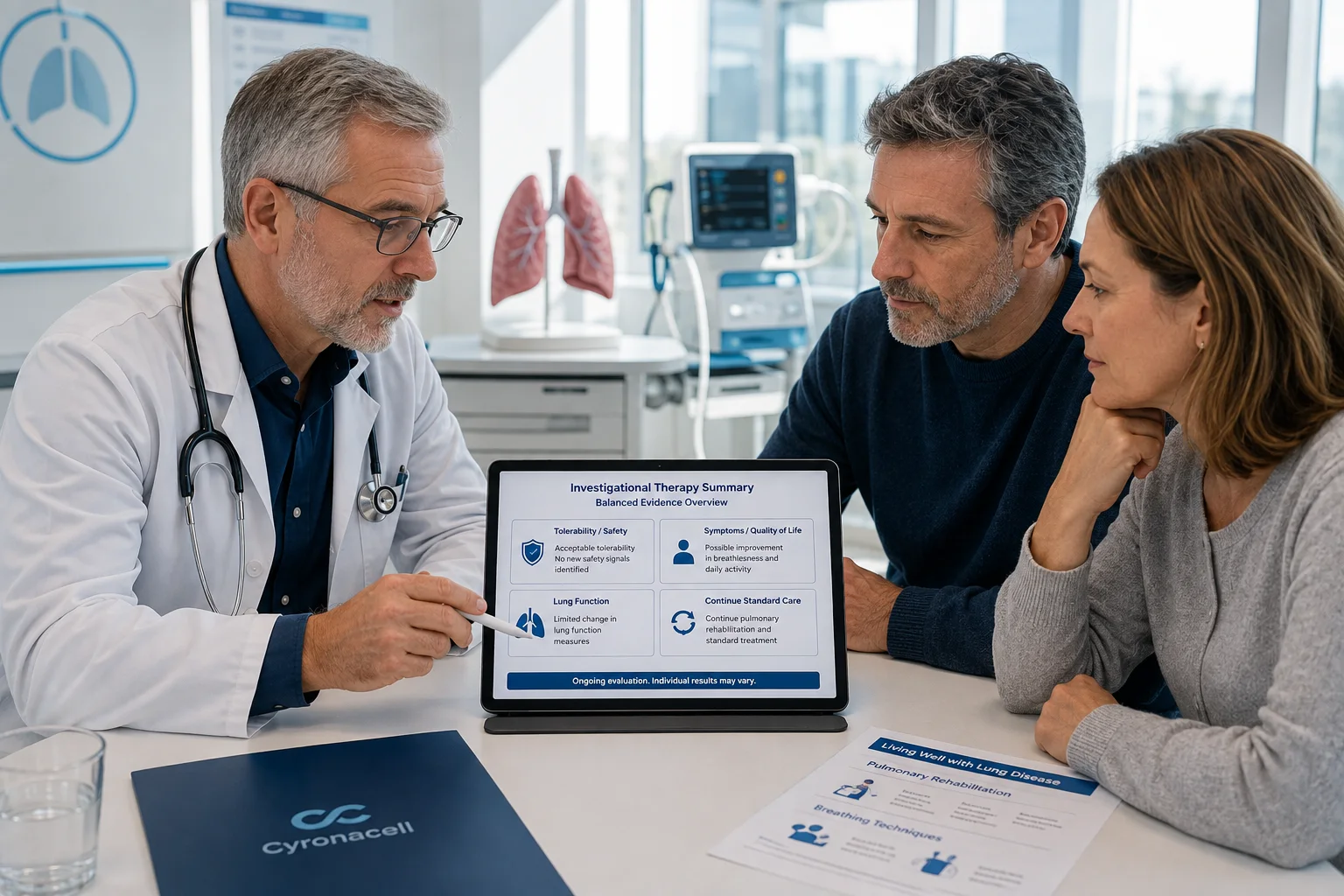
Stem cell therapy for lungs is not a settled question, and no responsible clinic should present it as one. The strongest available evidence shows safety and quality-of-life benefits alongside limited lung function change.
Both halves of that picture deserve honest attention before any decision. Families weighing this option benefit most from a care team willing to discuss the promise and the limits together. Emphasizing only one side rarely serves patients well.
Want to discuss whether your case fits current evidence? Message the Cyrona Cell team on WhatsApp.