Key Takeaways
- Knee osteoarthritis wears down articular cartilage, causing pain and stiffness that worsens over time.
- A 2025 systematic review and meta-analysis of 502 patients found stem cell injections significantly improved pain and function scores versus controls.
- Cell source mattered in that analysis. Adipose-derived cells showed clearer benefit than bone marrow-derived cells.
- Separate long-term data spanning 15 years found that injection technique affected how many patients eventually needed total knee replacement.
- Stem cell therapy works best alongside physical therapy, not as a replacement for it.
Estimated read: 10 min
Osteoarthritis is the leading reason people eventually consider total joint replacements. Surgery works well for many patients, often restoring years of pain-free movement.
It remains a major step, though. Plenty of patients want to explore other options first, especially earlier in the disease course.
Stem cell therapy for osteoarthritis keeps coming up in these conversations. The evidence is more specific than most headlines suggest, and the details genuinely matter.
How Osteoarthritis Damages the Joint
Healthy articular cartilage lets bones glide smoothly against each other. Osteoarthritis, however, breaks this cartilage down gradually. Raw bone eventually becomes exposed underneath, changing how the joint moves entirely.
This process causes pain, stiffness, and swelling. Simple movements, like climbing stairs or standing up from a chair, become harder over time. Cartilage loss, meanwhile, continues gradually across months and years.
Doctors grade severity using imaging and physical exams. Early knee osteoarthritis often responds well to conservative care. Advanced cases may eventually require hip and knee arthroplasty instead.
Standard treatment includes weight management, physical therapy, and anti-inflammatory medication. These remain the foundation of care, regardless of what other options a patient considers alongside them.
Genetics, prior injury, and joint alignment also influence how quickly osteoarthritis progresses in any individual patient. This variability is part of why treatment plans differ so much between people.


What Is Stem Cell Therapy for Osteoarthritis?
Most current research uses mesenchymal stem cells, typically sourced from bone marrow, fat tissue, or umbilical cord tissue. Rather than physically rebuilding cartilage from scratch, these cells release signals instead.
Those signals can calm joint inflammation and support the body’s own repair processes. This differs meaningfully from orthopedic surgery, which physically alters or replaces joint structures rather than supporting what remains.
Researchers continue debating exactly how much cartilage regeneration these signals actually produce, as opposed to simply reducing inflammation and pain. Regardless, both mechanisms likely contribute to the outcomes patients experience.
Doctors typically deliver these cells through direct injection into the joint. Some newer protocols also explore delivery into the bone just beneath the cartilage surface.
Each delivery route carries different practical considerations. Joint injection is simpler and less invasive, while bone-based delivery requires more specialized technique and equipment.
What a Recent Meta-Analysis Shows
Individual osteoarthritis studies vary widely in size and quality. A pooled systematic review and meta-analysis, therefore, helps make sense of this scattered evidence.
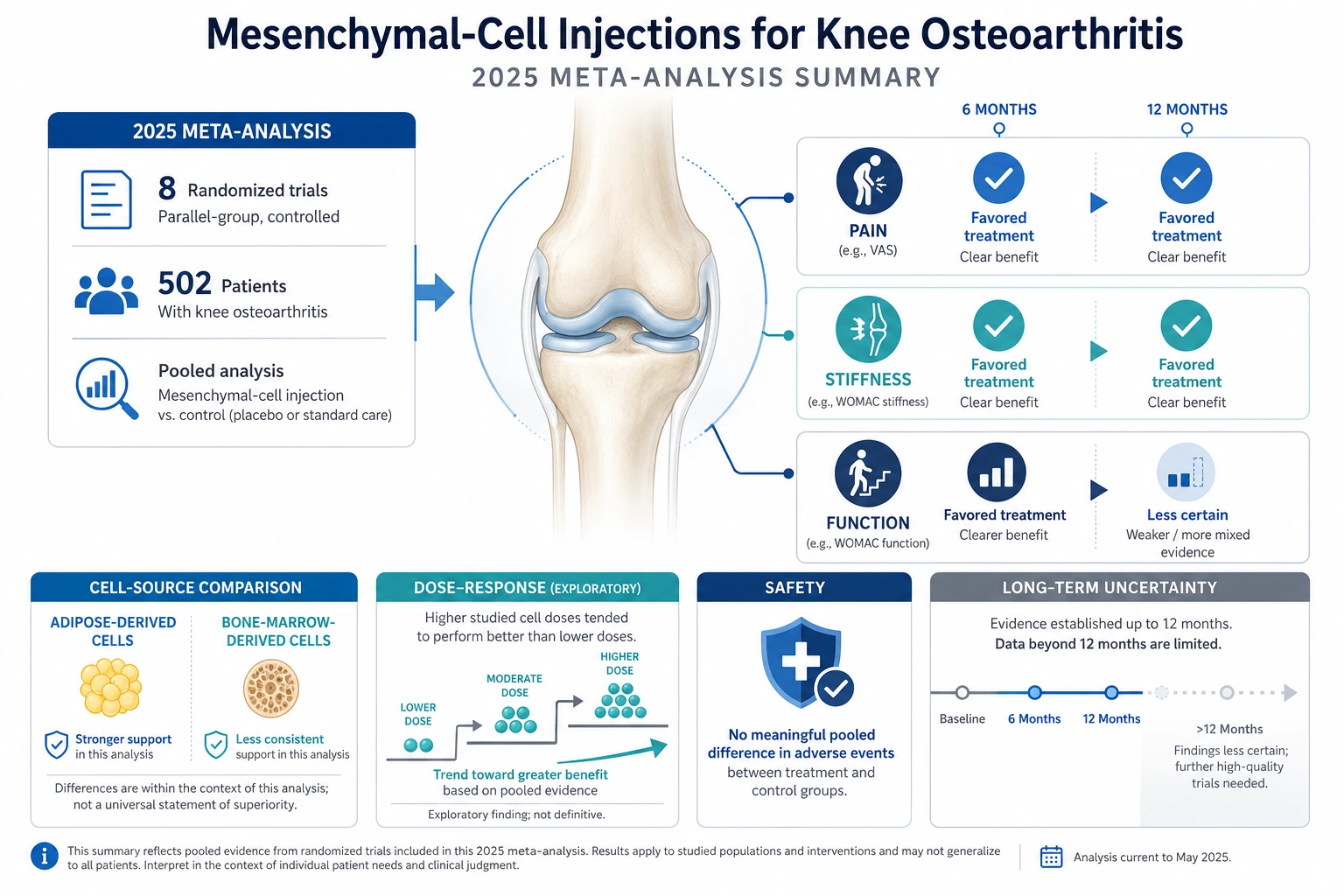
One recent review and meta analysis pooled data from 8 randomized trials. In total, 502 patients were included, and the full meta-analysis on MSCs for knee OA is available online.
Researchers published it in 2025 as an open access paper under a creative commons attribution license, viewable at creativecommons.org licenses by/4.0. Notably, the full paper remains freely available through its https doi.org link for anyone who wants the complete methodology behind stem cell therapy for osteoarthritis.
This review specifically excluded studies that mixed stem cells with other treatments, such as platelet-rich plasma or surgical procedures. That strict inclusion criteria makes the pooled results easier to interpret cleanly.
Compared with control treatments, stem cell injections produced significantly better pain and stiffness scores at both 6 and 12 months. Function scores improved at 6 months too, though this specific gain did not hold at 12 months.
Higher doses of cells generally outperformed lower doses across the pooled studies. Specifically, this dose-dependent pattern appeared consistently enough that researchers highlighted it as a meaningful finding worth further study.
Patients report meaningfully better pain scores on a separate scale as well. This improvement remained visible a full year after treatment. Consistency across two different scoring systems strengthens the finding.
Cell source mattered considerably in this analysis. Adipose-derived cells showed clear, statistically significant benefit, while bone marrow-derived cells did not reach significance in the same comparison.
Patient reported outcomes formed the backbone of this analysis, reflecting what patients actually notice day to day. Adverse events showed no significant difference between treated and control groups.
The review’s authors were candid about limitations too. Most included trials followed patients for less than a year. Long term durability remains genuinely unclear from this data alone.
Can Stem Cell Therapy Delay Total Knee Replacement?
This specific question has unusually strong long-term data behind it. One research group followed patients for fifteen years using an elegant study design, which is rare for this field.
Patients undergoing planned bilateral knee replacement received surgery on one knee. The other knee received a stem cell injection into the bone beneath the cartilage, during the same anesthesia session.
This design let each patient compare their own two knees directly over time. It removes many confounding factors that make other studies harder to interpret. Age, weight, and activity level stay identical between the two knees.
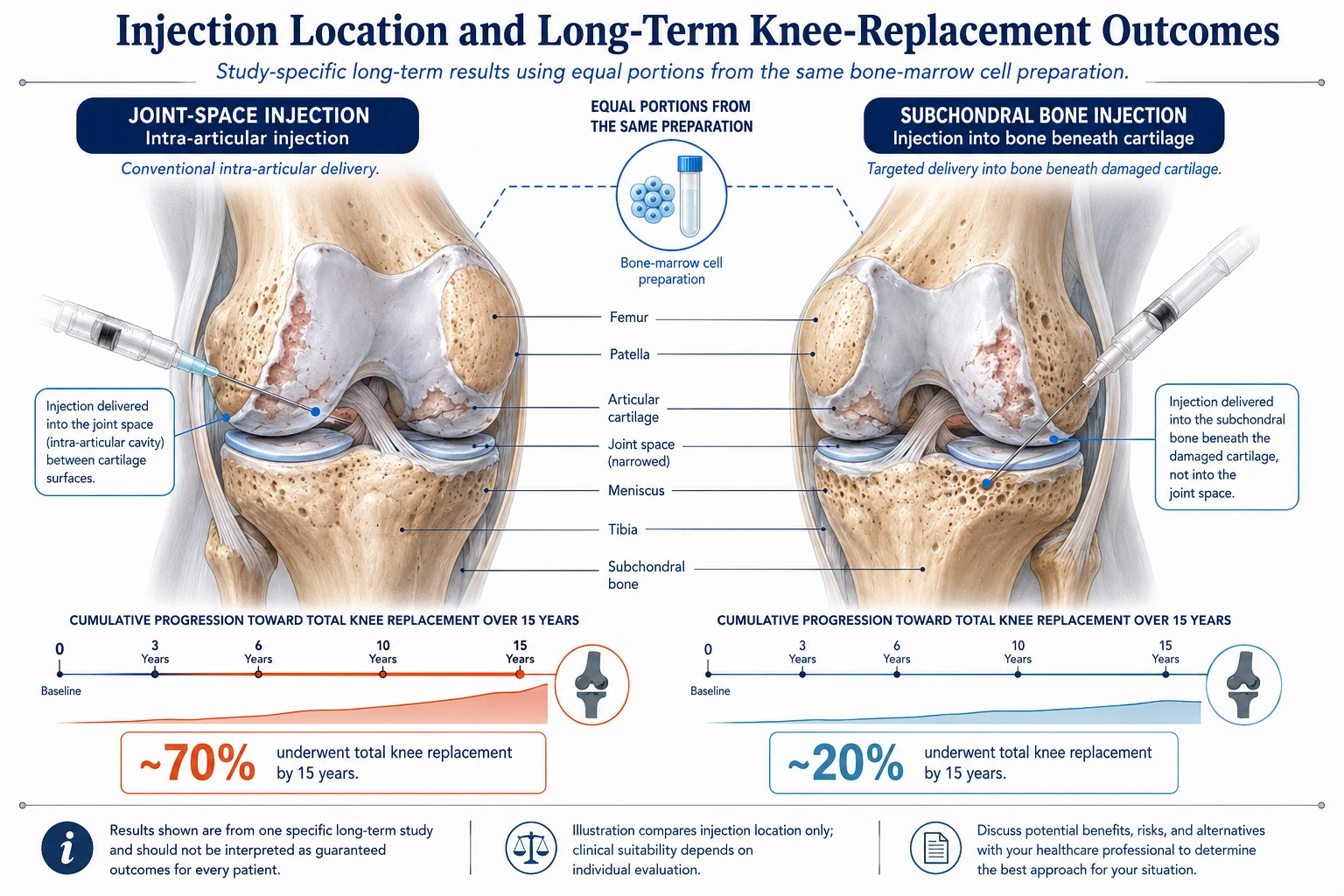
A related study by the same group compared two different injection techniques instead, rather than comparing injection against surgery. Researchers placed stem cells either directly into the joint space or into the bone just beneath the cartilage.
Both techniques used cells from the same bone marrow harvest, split into two equal portions. This design isolated the effect of injection location specifically, without introducing other variables like cell dose or source.
At fifteen years, only 20% of knees that received the bone-based injection eventually needed total knee replacement. By comparison, 70% of knees that received the simpler joint-space injection eventually needed replacement.
This is a striking difference for a single technique change. It suggests where exactly the cells go may matter as much as the cells themselves. This finding carries real practical implications for how clinics deliver treatment.
Among patients who avoided surgery entirely on both sides, nearly all preferred the injected knee when asked directly. This subjective preference echoed the objective imaging findings.
A separate, larger real-world study followed 329 patients with knee osteoarthritis for two years. All had received adipose-derived stem cell therapy specifically.
Results held consistent across mild, moderate, and severe cases alike. Researchers described the treatment as safe, effective, and potentially able to delay total joint replacements.
To see how Cyrona Cell approaches joint-specific protocols, review stem cell therapy for joint pain at Cyrona Cell.
Stem Cell Therapy vs PRP
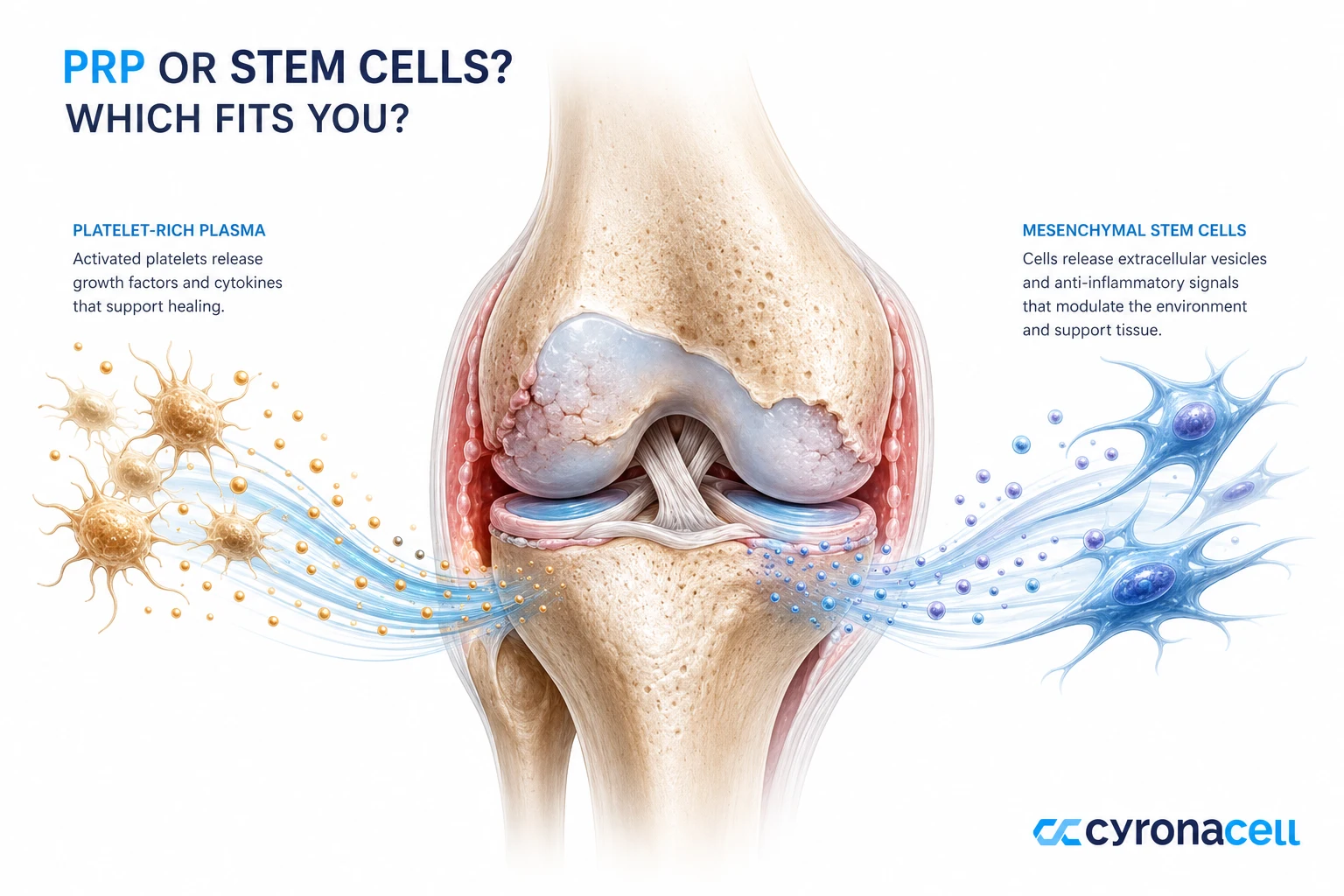
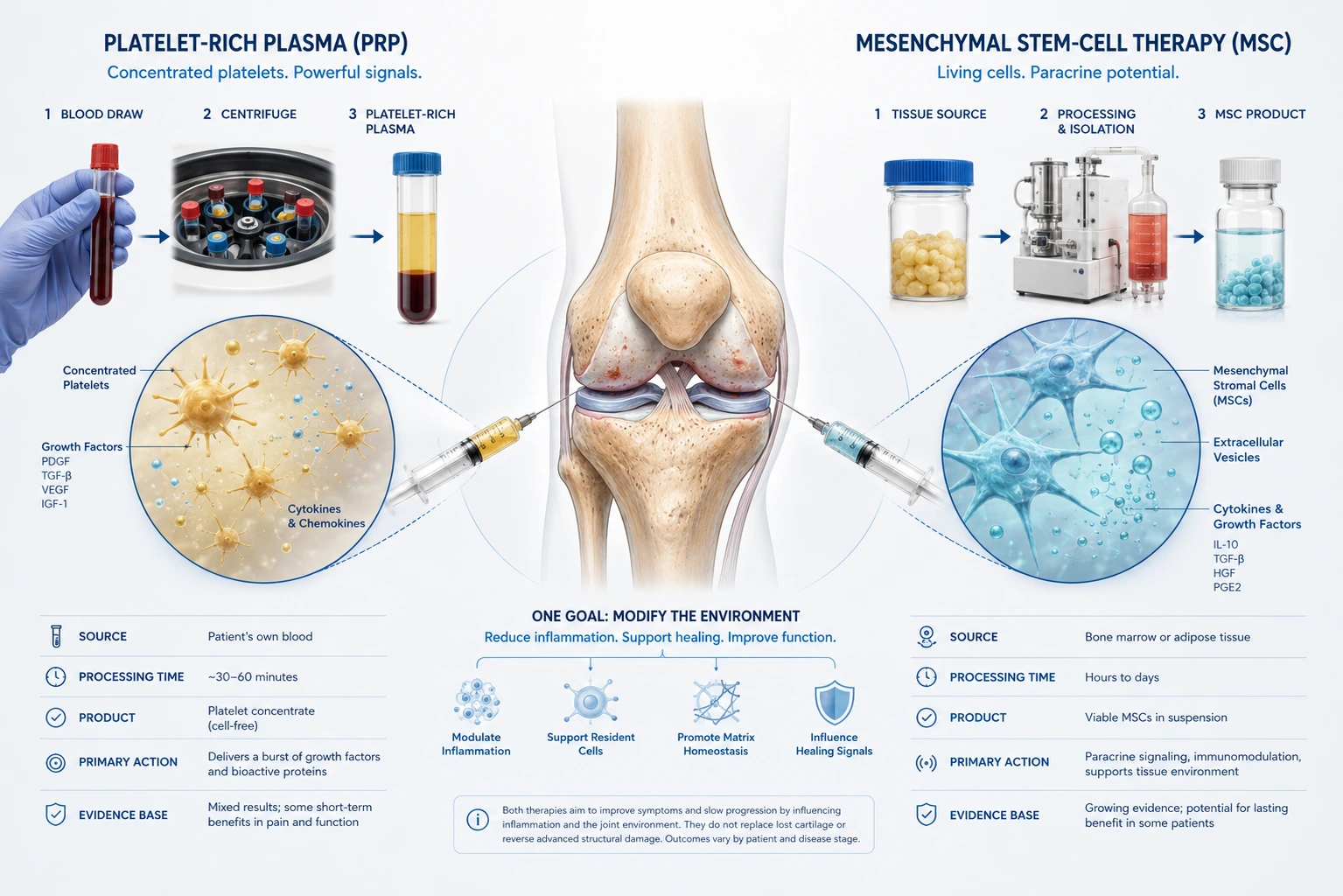
Platelet-rich plasma, or PRP, is another biologic option patients often compare against stem cell therapy. Both aim to calm inflammation and support joint healing, and both come from the patient’s own body in most protocols.
PRP uses concentrated platelets from a patient’s own blood. Stem cell therapy uses actual mesenchymal cells instead. The two approaches work through somewhat different mechanisms, even though both fall under the broader umbrella of biologic orthopedic treatments.
Cost also differs meaningfully between the two options, with PRP generally less expensive due to its simpler processing requirements. This cost difference matters for patients weighing value against expected benefit.
Direct head-to-head comparisons remain limited in the current evidence base. A focused comparison of stem cells against PRP and hyaluronic acid deserves its own dedicated discussion beyond this overview.
Curious whether your case fits current evidence for stem cell support? Submit your case for a free medical review.
Safety and Side Effects
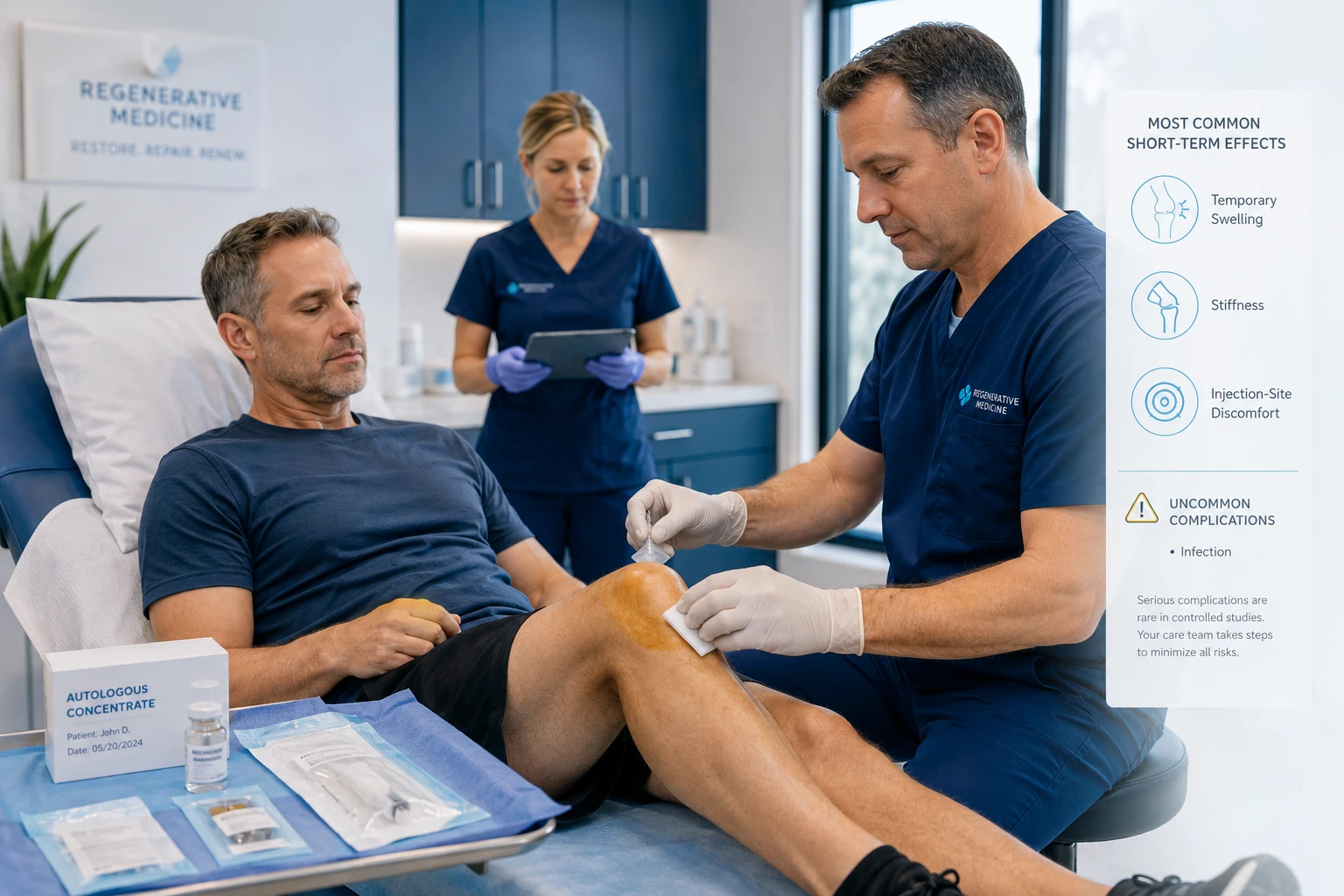
Reported adverse events across most osteoarthritis stem cell trials have been mild. These typically include temporary swelling, joint stiffness, or discomfort at the injection site.
Serious complications, however, appear uncommon in the controlled trials discussed above. Most reactions resolve within days post operatively, without requiring additional treatment or a return visit to the clinic.
Infection risk, while rare, remains a genuine consideration with any injection procedure. Clinics should follow strict sterile technique regardless of how minor the procedure may seem to patients or staff.
Patients on blood thinners or with active infections elsewhere in the body may, for example, need special precautions before proceeding. A thorough medical history review should happen before any injection is scheduled.
Long term safety data, however, remains more limited than for well-established surgical procedures like joint replacement. Decades of tracked surgical outcomes simply do not yet exist for stem cell injections.
Patients should ask any clinic several direct questions. Which cell source does the clinic use? How are cells delivered, and what safety monitoring is in place?

Realistic Expectations
No current stem cell therapy reverses osteoarthritis completely or regrows lost cartilage entirely. The strongest available evidence supports pain relief and functional improvement, not full structural cartilage regeneration.
Results vary considerably based on disease severity, cell source, and injection technique. Patients with earlier-stage disease generally have more cartilage remaining to work with, which often means a better starting point.
Weight also plays a meaningful role in outcomes. Carrying excess weight increases mechanical stress on the joint. This added stress can offset some of the benefit a stem cell injection might otherwise provide.
Stem cell therapy works best as a supportive option alongside standard care. Physical therapy, weight management, and activity modification remain essential regardless of any injection pursued.
Patients should discuss a realistic timeline with their doctor before starting. Assuming immediate or dramatic results, however, rarely matches how these treatments actually unfold in practice.
Frequently Asked Questions
Can stem cell therapy cure osteoarthritis?
No current stem cell therapy cures osteoarthritis. Research shows pain relief and functional improvement in many patients. Established cartilage loss, however, does not fully reverse, regardless of cell source or dose used.
Which is better, PRP or stem cell therapy?
Neither option is universally better. Both, instead, show supportive evidence for pain and function. The right choice depends on disease stage, cost, and what a specific clinic’s evidence base actually supports.
What are the negative side effects of stem cell therapy?
Most reported side effects are mild, including temporary swelling, stiffness, or injection site discomfort. Serious complications appear uncommon in controlled trials, though long-term safety data remains more limited than for standard surgery.
How long does stem cell therapy last for arthritis?
Duration varies by injection technique and disease severity. Long-term data on bone-based injection suggests benefit can last well beyond a decade in selected patients. Results, though, are not guaranteed for everyone.

A Careful, Evidence-Based Option
Stem cell therapy for osteoarthritis raises three real questions. Does it relieve pain? Does it improve function? Can it delay joint replacement? Current evidence speaks to all three, with genuine nuance attached to each.
No responsible clinic should present this as a cure. Cell source, dose, and delivery location, instead, all appear to influence outcomes meaningfully. The evidence reviewed throughout this article supports that conclusion.
The strongest available evidence supports genuine pain relief and functional benefit, alongside real limitations in cartilage regeneration. Both halves of that picture deserve honest attention before any decision.
Want to discuss whether your case fits current evidence? Message the Cyrona Cell team on WhatsApp.