Key Takeaways
- Stem cell treatment for congestive heart failure targets the weak heart muscle directly, rather than just managing symptoms.
- Mesenchymal stem cells MSCs release growth factors that support cardiac repair, reduce inflammation, and may promote the growth of new blood vessels in the heart.
- Clinical trials and clinical studies consistently report improvements in cardiac function, exercise capacity, and quality of life in patients treated with MSC-based cell therapy for heart failure.
- Delivery methods include IV infusion, direct injection into the heart muscle, and catheter-based delivery, each suited to different patient profiles.
- Cyrona uses wjMSCs to support patients with heart disease who want a regenerative medicine approach alongside their standard care.
Estimated read: 7 min
Congestive heart failure affects millions of people worldwide. The heart muscle becomes too weak to pump blood effectively. Standard treatments manage the symptoms but cannot repair the damage. Stem cell treatment for congestive heart failure takes a different approach. It targets the weak heart muscle at the cellular level. This article explains how it works, what the evidence shows, and who it may help.
What congestive heart failure does to the heart
The heart is a muscle. Like all muscles, it can be damaged. In congestive heart failure, the damage comes from several sources. Coronary artery disease narrows the blood vessels that feed the heart. Heart attacks kill sections of the heart muscle directly. High blood pressure makes the heart work harder over time until it wears out. Each of these leads to the same result: a heart that cannot pump enough blood to meet the body’s needs.
The body responds to this shortfall by retaining fluid. Fluid builds up in the lungs, the legs, and the abdomen. This is the “congestive” part of congestive heart failure. Patients feel breathless, tired, and swollen. Their ability to exercise drops. Their quality of life falls sharply.
Why the heart muscle weakens over time
The heart muscle has very limited ability to repair itself. When heart cells die, they are replaced by scar tissue. Scar tissue is stiff. It cannot contract. This means the heart gets weaker with each episode of damage. Standard treatments slow this process. They cannot reverse it. This is why heart transplantation remains the only cure for end-stage heart failure. And because donor hearts are scarce, most patients never get one.
Regenerative medicine is working to fill this gap. Stem cell therapy for heart failure aims to do what the heart cannot do on its own: repair the damaged muscle, reduce scar tissue, and restore some degree of cardiac function.
How stem cell treatment for congestive heart failure works
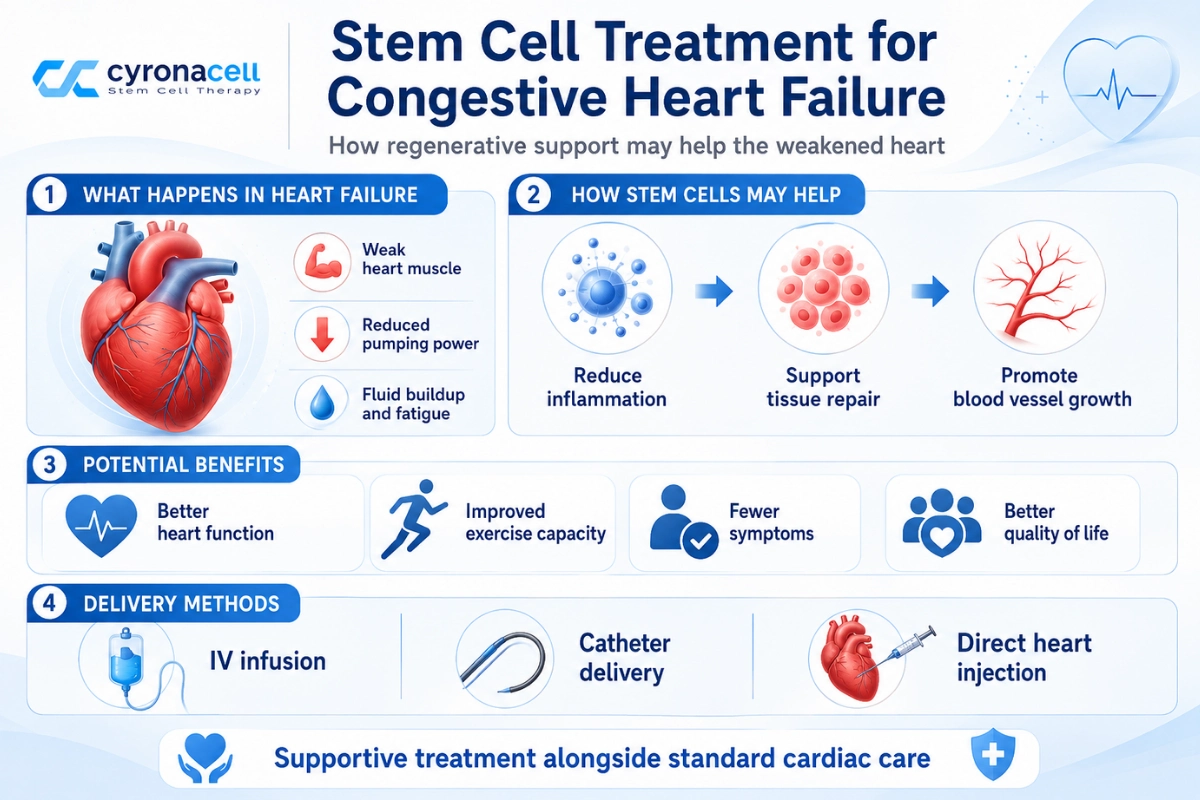
Stem cell treatment for congestive heart failure does not replace the heart. It supports it. The goal is to slow the decline, improve pump function, and reduce symptoms. How cells achieve this depends on which type of stem cell is used and how they are delivered.
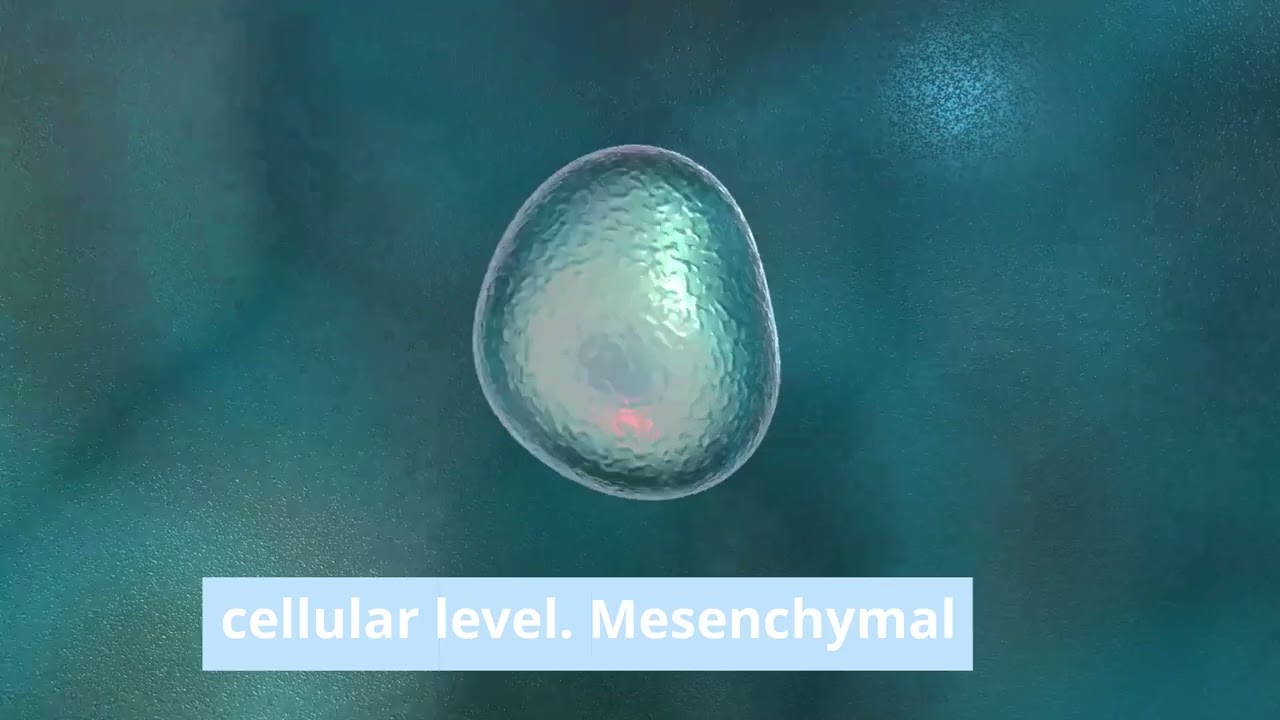
Most current clinical studies use mesenchymal stem cells MSCs. These cells do not directly become heart muscle cells in large numbers. Their main effect is paracrine: they release signals that tell the body to repair itself. These signals reduce inflammation in the damaged heart wall, promote the growth of new blood vessels, and may help surviving heart cells work more efficiently.
The role of mesenchymal stem cells MSCs in cardiac repair
When MSCs reach the damaged heart tissue, they release growth factors including hepatocyte growth factor and vascular endothelial growth factor. These signals do several things. Growth factor signals promote new blood vessel formation in areas of the heart that are poorly supplied. They also reduce the inflammatory environment that worsens cardiac damage after a heart attack. Surviving heart muscle cells become more active, helping the heart pump more effectively despite the underlying damage.
MSCs may also reduce the expansion of scar tissue. In clinical trials, patients treated with MSC therapy show less fibrosis on imaging compared to control groups. Less fibrosis means a more flexible heart wall, which translates to better pump function and reduced symptoms.
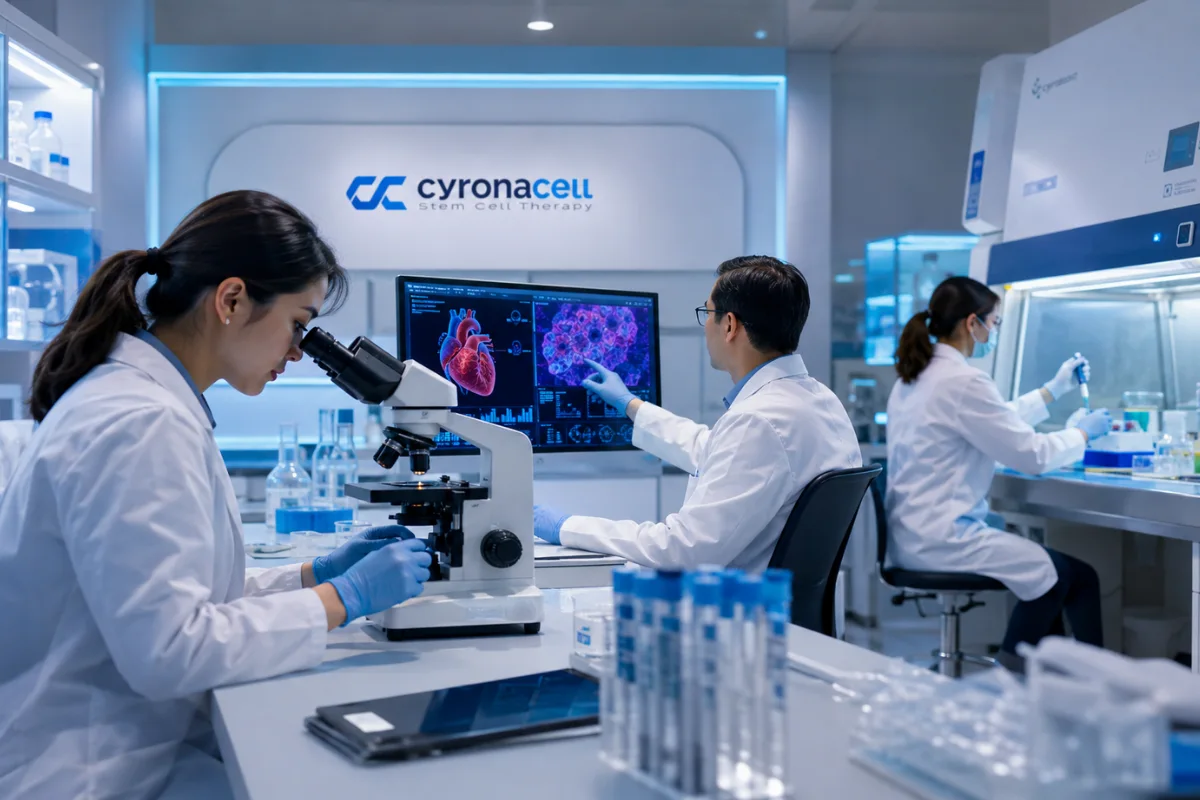
Cyrona uses wjMSCs sourced from Wharton’s jelly, the same cell type discussed throughout cardiac research for their anti-inflammatory and tissue support properties. Read more about Cyrona’s treatment for congestive heart failure and the assessment process.
Delivery methods: how stem cells reach the heart
One of the key challenges in stem cell therapy for heart disease is getting the cells to the right place. Delivery methods matter because different routes produce different concentrations of cells in the heart tissue.
| Delivery Method | How It Works | Main Advantage | Typical Use |
|---|---|---|---|
| IV Infusion | Stem cells are delivered through a vein and circulate throughout the body | Minimally invasive and requires no surgery | Standard MSC therapy and outpatient treatment |
| Intramyocardial Injection | Cells are injected directly into damaged heart muscle | Highest concentration reaches the target area | Cardiac surgery or specialized clinical trials |
| Intracoronary Delivery | Cells are delivered through coronary arteries using a catheter | Targets damaged tissue without open-heart surgery | Patients after heart attack or catheter-based procedures |
The main delivery methods in use
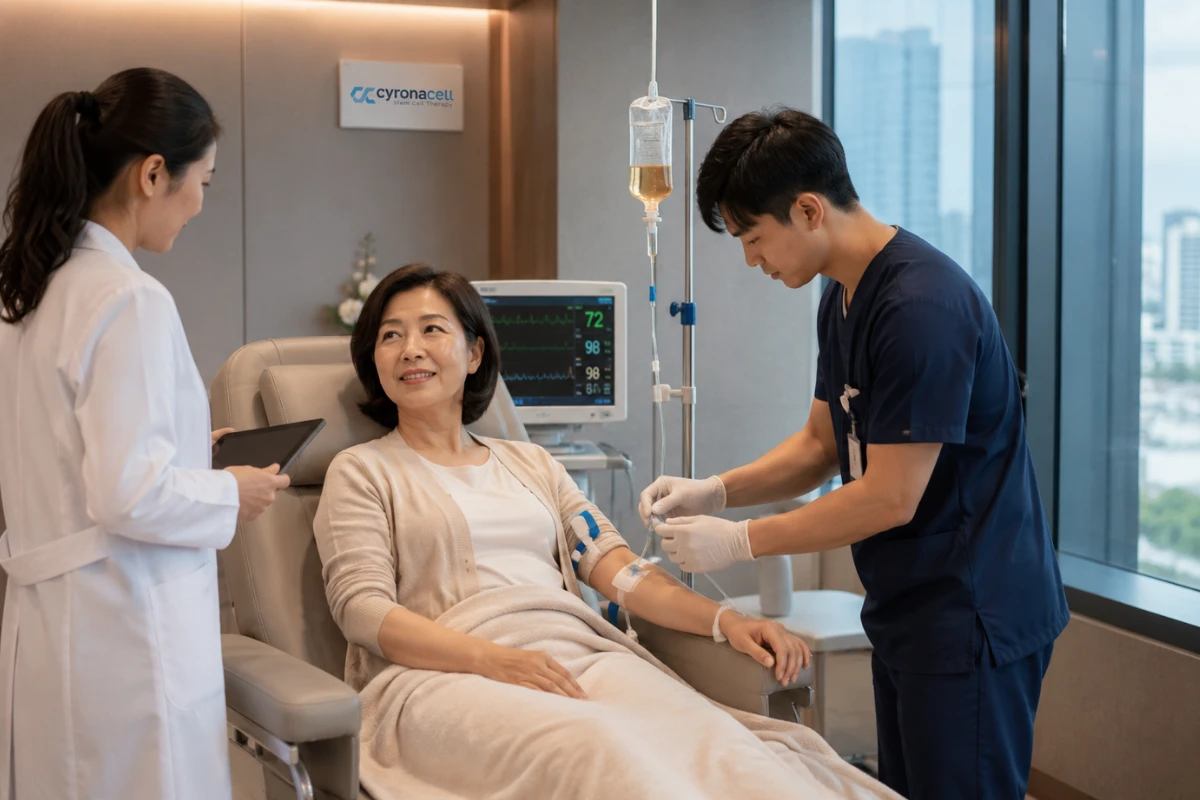
IV infusion is the simplest delivery method. Cells are given through a drip. They circulate and home toward areas of inflammation and damage. This route does not require surgery. Cyrona uses IV infusion as its standard delivery route for MSC therapy.
Direct injection into the heart muscle, known as intramyocardial injection, places cells exactly where the damage is. It is used during open heart surgery or through catheter-based procedures. This route delivers a higher concentration of cells to the target tissue. It is used in patients undergoing planned cardiac surgery or in specialist catheter-based clinical trials.
Intracoronary delivery threads cells through the arteries that supply the heart. It is used in patients who have had a recent heart attack and are already having a catheter procedure.
What clinical trials and clinical studies show
The evidence base for stem cell therapy in heart failure has grown over the past two decades. Multiple clinical trials and clinical studies have tested different cell types, delivery methods, and patient populations. The results are not uniform, but certain patterns appear consistently.
Cardiac function and quality of life improvements
Across published clinical studies, MSC-treated patients show improvements in ejection fraction, the key measure of how well the heart pumps blood. In several trials, ejection fraction improved by three to five percentage points above the gains seen in control groups. This is a modest but meaningful change. For a patient with heart failure, even small improvements in cardiac function can translate to better exercise tolerance, fewer hospital stays, and reduced symptoms.
Patients in cell therapy for heart trials also report improved quality of life scores. They feel less breathless. Walking distance improves. Emergency admissions drop. These functional gains are consistent across trials using different cell types and delivery methods, which suggests the benefit is real rather than placebo-driven.
A National Institutes of Health review on stem cell therapy for heart failure (referenced in the screenshot as a top search result) summarises the current state of evidence, noting consistent signals of benefit in cardiac function and safety across MSC-based trials.
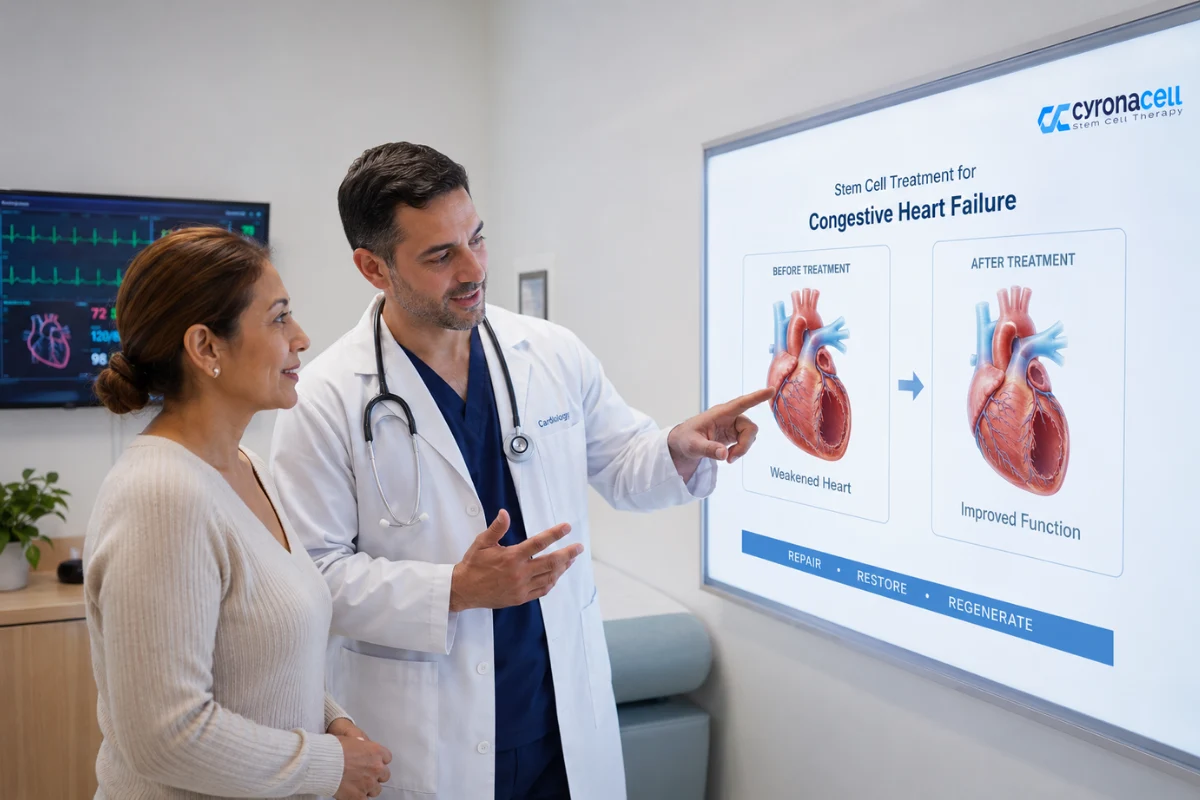
To be clear: stem cell treatment for congestive heart failure is not a cure. It is a supportive option for a weak heart muscle. The treatment does not replace standard medications or cardiac care. It works alongside existing treatment to support cardiac repair where standard care alone falls short.
Who responds best to stem cell therapy for heart failure?
Not every patient with heart failure is a good candidate for stem cell therapy. The patients who tend to benefit most share certain features. They have stable heart failure, not an acute emergency. Their ejection fraction is reduced but not at end-stage. They are on optimal medical therapy but still have symptoms. They have not had a very recent heart attack within the last four to six weeks. And they are well enough to undergo the assessment and treatment process safely.
Patients with end-stage heart failure who are awaiting heart transplantation are a separate consideration. For them, stem cell therapy is not a replacement for transplantation. It may, however, help stabilise cardiac function while they wait. Each case is reviewed individually by Cyrona’s clinical team before any recommendation is made.
Visit Cyrona’s start application page to begin your assessment, or read about how it works for the full protocol overview.
Frequently asked questions
Can stem cells repair damaged heart muscle?
Stem cells do not fully replace dead heart muscle cells, but they can support cardiac repair. MSCs release growth factors that reduce inflammation, promote new blood vessel growth, and help surviving heart cells work more efficiently. Clinical trials show that MSC therapy reduces scar tissue formation and improves pump function in patients with heart failure. The result is a heart that works better, even if the underlying damage cannot be completely reversed.
Can stem cells treat congestive heart failure?
Yes, with important caveats. Stem cell therapy is a supportive treatment for congestive heart failure, not a cure. It targets the weak heart muscle and aims to improve cardiac function, reduce symptoms, and support quality of life. Clinical studies consistently report modest but meaningful improvements in ejection fraction and exercise capacity. It works best alongside standard medications and cardiac care, not as a replacement for them.
What is the treatment for a weakened heart muscle?
Standard treatments for a weakened heart muscle include ACE inhibitors, beta-blockers, diuretics, and device therapies such as pacemakers or defibrillators. These manage symptoms and slow progression. Stem cell therapy offers an additional layer of support by targeting cardiac repair at the cellular level. For patients who have not achieved adequate symptom control on standard treatment, stem cell therapy may offer a meaningful next step. A full clinical review is always needed before recommending it.

Ask Cyrona about stem cell treatment for heart failure
If you or someone you care for has congestive heart failure that is not fully controlled with standard treatment, Cyrona’s clinical team in Cyberjaya, Malaysia can assess whether stem cell therapy is appropriate.
WhatsApp or call: +6018 222 0032
Email: info@cyronacell.com