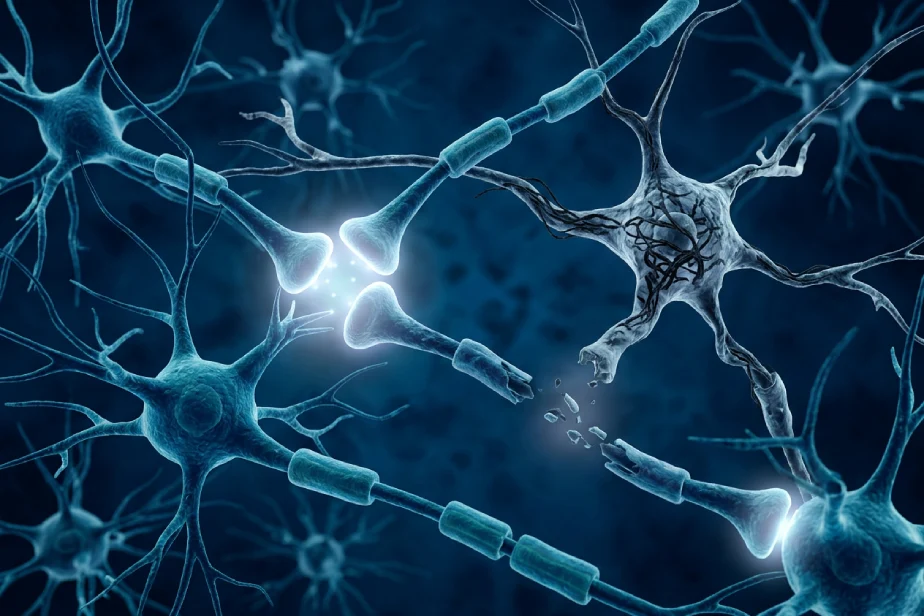
Alzheimer’s disease and stem cell therapy explained

A clear guide to brain repair memory support and future treatments

Quick Summary

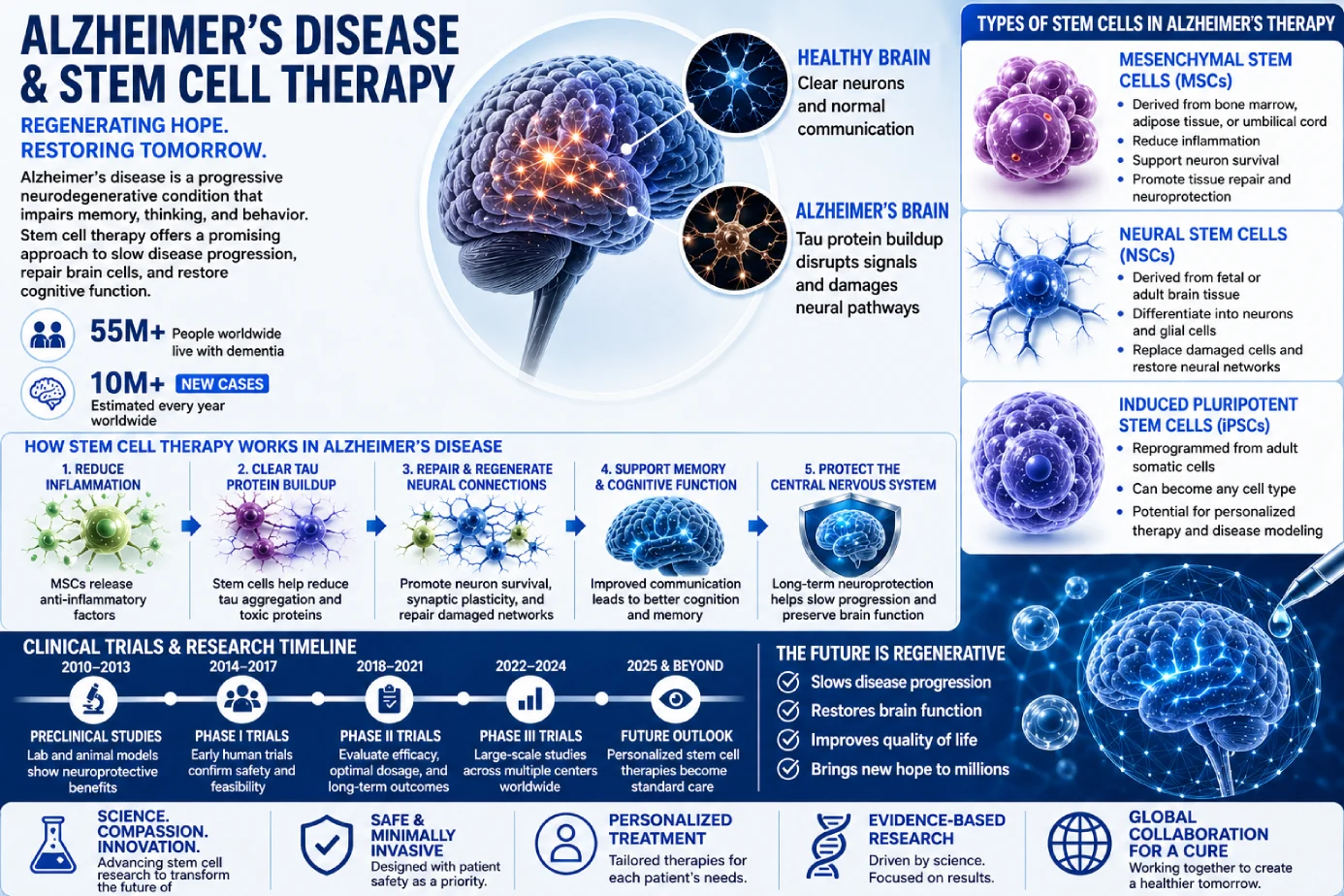
Stem cell therapy for Alzheimer's uses mesenchymal stem cells (MSCs), neural stem cells (NSCs), or induced pluripotent stem cells (iPSCs) to repair damaged brain cells, reduce inflammation, and support the central nervous system. Early-stage patients may see improved memory and slower decline, but treatment is not yet a cure and results vary based on disease progression and cell type used.
  • Cell types: MSCs (anti-inflammatory, growth factors), NSCs (become nerve cells), iPSCs (transform into many cell types)
  • How it works: Repairs brain cells, reduces tau protein buildup, supports nerve cell communication
  • Key benefits: May improve memory and cognitive function, protects central nervous system, reduces brain inflammation
  • Best candidates: Early-stage Alzheimer's patients benefit most; advanced cases have limited improvement
  • Limitations: Not a cure, results vary, still in clinical trials, long-term outcomes unknown
  • Research status: Promising results in mouse models and early human trials; more data needed
Estimated read: 6 min
Keywords: Alzheimer's disease, stem cell therapy, mesenchymal stem cells, neural stem cells, induced pluripotent stem cells

A clear guide to brain repair, memory support, and future treatments

The topic of alzheimer’s disease and stem cell therapy explained is becoming more important as families search for better ways to manage memory loss and brain decline. Today, stem cell research offers new hope through advanced therapeutic approaches that aim to repair brain cells and support the central nervous system. While these treatments are still developing, many early findings show promise, especially in the early stages of the disease.

What is Alzheimer’s disease and how it affects the brain

Alzheimer’s disease is a progressive condition that damages brain cells over time. It affects memory, thinking, and behavior. One key factor is the buildup of tau protein and other harmful changes in nerve cells. As a result, communication between brain cells breaks down.

Over time, the loss of nerve cells leads to shrinkage in parts of the brain. This process affects the central nervous system and makes daily tasks harder for patients. Therefore, finding ways to protect or restore these cells is a major focus in modern medicine.

How stem cell therapy works for Alzheimer’s

How stem cell therapy works for Alzheimer’s

Stem cell treatments aim to repair or replace damaged brain cells. Scientists use different cell types, including mesenchymal stem cells mscs, neural stem cells nscs, and induced pluripotent stem cells. These cells can develop into new nerve cells and support healing.

Stem Cell TypeMain FunctionPotential BenefitsKey Limitation
Mesenchymal Stem Cells (MSCs)Reduce inflammation and release growth factorsSupports healing and protects brain cellsResults may vary between patients
Neural Stem Cells (NSCs)Develop into nerve cellsDirectly supports brain repair and nerve communicationStill under clinical research
Induced Pluripotent Stem Cells (iPSCs)Transform into multiple cell typesUseful for advanced regenerative treatmentsLong-term safety and outcomes still being studied

For example, pluripotent stem cells ipscs can turn into many types of cells. This makes them useful in creating new brain cells. In addition, mesenchymal stem cells mscs can release growth factors that help reduce inflammation and support cell survival.

Doctors may collect cells from bone marrow or other sources. Then they prepare them for use in targeted therapy. These therapeutic approaches aim to improve brain function and slow disease progression.

What current research and clinical trials show

What current research and clinical trials show

Recent clinical trials and studies in stem cell research show encouraging results. Many tests begin in mouse models before moving to human trials. These studies help scientists understand safety and effectiveness.

So far, results suggest that stem cell treatments may help with:

  • Improving memory and cognitive function
  • Supporting the repair of damaged brain cells
  • Reducing harmful protein buildup like tau protein
  • Enhancing communication between nerve cells

Although results are promising, more long term data is needed. Researchers continue to study how different type of stem cell options affect outcomes.

Types of stem cells used in treatment

Different cell types offer unique benefits. Choosing the right type of stem cell depends on the patient’s condition and treatment goals.

Mesenchymal stem cells mscs

These cells are widely used because they are safe and help reduce inflammation. They also release growth factors that support healing.

Neural stem cells nscs

These cells are more specialized. They can become nerve cells and directly support brain repair.

Induced pluripotent stem cells

Also called pluripotent stem cells ipscs, these cells can transform into many cell types. They are powerful tools in advanced stem cell research.

Each option plays a role in developing better stem cell treatments for Alzheimer’s.

Benefits and limitations of stem cell therapy

Benefits and limitations of stem cell therapy

Stem cell therapy offers several potential benefits:

  • Supports repair of brain cells
  • May improve memory and thinking
  • Helps protect the central nervous system
  • Reduces inflammation in the brain

However, there are also limitations:

  • Not yet a complete cure
  • Results vary between patients
  • Still under study in clinical trials
  • Long term outcomes are still being evaluated

Because of this, patients should view these treatments as part of a broader care plan.

Who may benefit from this therapy

Patients in the early stages of Alzheimer’s may see the most benefit. Early treatment allows doctors to protect existing brain cells before severe damage occurs.

In contrast, advanced cases may have limited improvement due to significant loss of nerve cells. Therefore, early diagnosis and intervention are very important.

Future outlook for Alzheimer’s treatment

Future outlook for Alzheimer’s treatment

The future of stem cell research looks promising. Scientists are working to improve therapeutic approaches and develop safer, more effective treatments.

New advances include:

  • Better delivery methods to target brain cells
  • Combination therapies with medication
  • Enhanced use of induced pluripotent stem cells

As research grows, these innovations may lead to better long term outcomes for patients.

Key insights for patients and families

Understanding treatment options helps families make informed decisions. Stem cell therapy is not a cure yet, but it offers hope through science and innovation.

Patients should always consult qualified medical professionals and review clinical trials before starting treatment. This ensures safety and realistic expectations.

About Cyrona Cell in Malaysia Safe Stem Cell Care

About Cyrona Cell in Malaysia, Safe Stem Cell Care

As we explore alzheimer’s disease and stem cell therapy explained, it is important to choose a trusted medical provider.

Cyrona Cell Sdn. Bhd. is a doctor-led regenerative medicine centre in Kuala Lumpur, Malaysia. The clinic focuses on safe, ethical stem cell therapy with strict quality standards like cGMP and ISO 9001.

Treatments are minimally invasive and medically supervised, supporting conditions such as neurological disorders, autoimmune diseases, and metabolic issues. Cyrona works with both local and international patients, offering clear guidance, honest expectations, and structured care.

FAQ

How does stem cell therapy work for Alzheimer's?

Stem cell treatments use cell types like mesenchymal stem cells mscs and neural stem cells nscs to repair brain cells, reduce inflammation, and support the central nervous system. These therapeutic approaches aim at improving memory and slowing disease progression.

While there is no confirmed cure yet, ongoing stem cell research and clinical trials show progress. Scientists are exploring pluripotent stem cells ipscs and other advanced methods to restore nerve cells and improve long term outcomes.

Yes, some clinical trials and stem cell research suggest that stem cell treatments may help in improving memory by supporting brain cells and repairing damaged nerve cells. Growth factors released by mesenchymal stem cells mscs and neural stem cells nscs can enhance brain function, especially in early stages of the disease.

Different cell types are used depending on the therapeutic approaches. Mesenchymal stem cells mscs are widely used for their anti inflammatory effects, while neural stem cells nscs and induced pluripotent stem cells offer potential to regenerate brain cells and support the central nervous system in Alzheimer’s patients.

Alzheimer’s mainly affects brain cells in areas linked to memory and thinking. However, as the disease progresses, it can impact other parts of the central nervous system, including regions that control basic functions.

Author

Leave a Reply

Your email address will not be published. Required fields are marked *