Key Takeaways
- Stem cell treatment for cerebral palsy is still experimental, and a 2025 review found no published late-stage trials.
- A 2021 trial of 72 children reported significantly better motor improvements with cord tissue cells than with a sham procedure.
- Every child in that trial kept doing rehab, so the cells were tested as an add-on to therapy.
- Parents can track six things: motor skills, stiffness, daily tasks, comfort and sleep, side effects, and the therapy schedule.
- Reported side effects included fever, headache, back pain and vomiting, and effects beyond 12 to 24 months remain unknown.
Estimated read: 8 min
Parents weighing cerebral palsy stem cells often ask what to measure. A hopeful claim from a clinic carries little weight without a written record. This guide shows what trials measured and six changes you can track, so any result is easier to judge.

What Is Stem Cell Treatment for Cerebral Palsy?
Stem cell treatment for cerebral palsy is an experimental approach that gives donor cells to a child. Researchers hope the cells may improve motor skills such as sitting, standing and walking. However, doctors do not use the approach as routine standard care.
Most trials have tested mesenchymal stem cells (MSCs). Doctors can collect these cells from umbilical cord tissue and other sources. In a 2025 review of 30 published reports and 10 registered trials, 75% of the 1,292 people received cord tissue MSCs.
The 2025 review described two main routes:
- Spinal fluid route: doctors inject cells into the fluid around the spinal cord (40% of people in the 2025 review).
- Vein route: doctors give cells through a vein (38% of people in the 2025 review).
Cerebral palsy is a group of lifelong conditions that affect movement, muscle tone and coordination. Because it varies from child to child, your child’s starting point matters more than any claim. A shorter guide to cell therapy and movement in children gives the general picture.

What Do Trials of Cerebral Palsy Stem Cells Show?
Trials of cerebral palsy stem cells have reported gains in motor skills, mostly in children who kept doing rehab. The strongest evidence is one 2021 sham-controlled trial of 72 children and a 2025 review of 1,292 people. No published late-stage trial has confirmed these results yet.
What Did the 2021 Sham-Controlled Trial Find?
A 2021 sham-controlled cord tissue trial reported that motor scores significantly improved in the cell group. The trial enrolled 72 children aged 4 to 14 with spastic cerebral palsy, meaning stiff muscles. Three hospitals in Iran took part.
Neither families nor staff knew who received cells, because chance assigned each child to a group. The cells came from unrelated donors, while the sham group had only a small needle prick in the lower back.
At 12 months, scores rose 10.65 points in the cell group and 1.23 in the sham group. The gap was about 8 points, and the authors also reported less muscle stiffness. However, they used one fixed dose and said the gains appeared temporary.
What Did the 2025 Review of Cell Trials Find?
A 2025 review of mesenchymal cell studies reported pooled gains in motor function at 3, 6, and 12 months compared with control groups. It combined 30 published reports and 10 registered trials of cells for cerebral palsy.
However, results varied widely between studies, and the authors could not confirm whether dose, route or cell source changed the outcome. In addition, 31% of people in the 2025 review received cells through compassionate access, meaning outside a controlled trial. Most reports followed children for only 12 to 24 months.
How Do the Main Studies Compare?
Compared side by side, the 2021 trial tested one dose against a sham procedure. In contrast, the 2025 review pooled many designs, so it’s stronger but narrower.
| Study | Who took part | What happened | What it means |
|---|---|---|---|
| 2021 sham-controlled trial | 72 children aged 4 to 14 | Cell group gained about 8 points more at 12 months | One dose, one country |
| 2025 review of cell studies | 1,292 people | Pooled gains reported at 3, 6 and 12 months | Designs and doses varied |
Because neither source shows that cells replace therapy, tracking your child’s own progress matters.
Why Can Motor Scores Rise Even Without Cells?
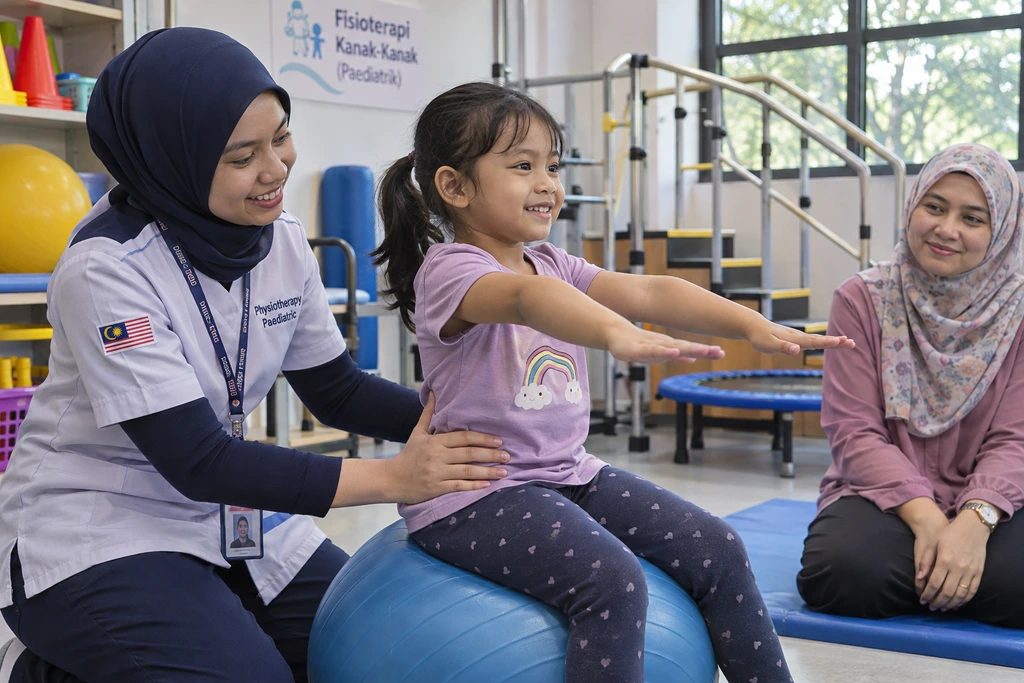
Motor scores can rise without cells, because the sham group in the 2021 trial still gained 1.23 points on average. Those children also continued their rehab sessions. That background gain is why a single pair of scores cannot show what caused a change.
Rehab itself builds skills, and children keep growing and learning during a 12-month follow-up. However, the 2021 authors noted that their children were older than those in earlier studies. Age may have reduced responses.
Three habits make a record more useful:
- Record the same measures at the same intervals.
- Note any change in therapy, medicines or school routine.
- Ask the therapist to use the same test each time.
What Should Parents Track With Cerebral Palsy Stem Cells?
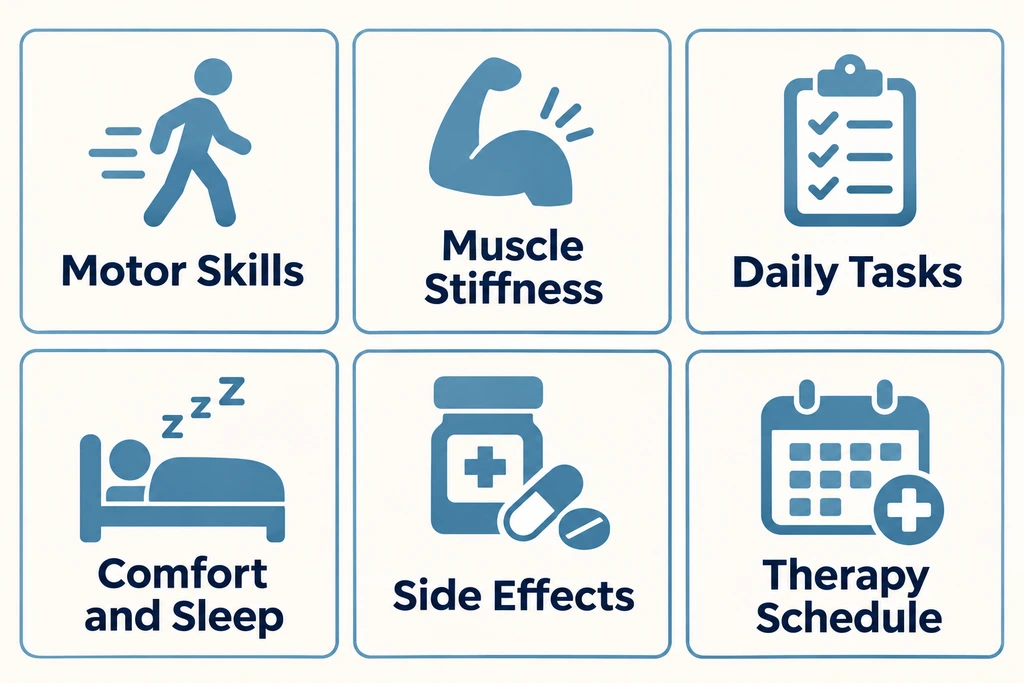
Parents can track six things: motor skills, muscle stiffness, daily tasks, comfort and sleep, side effects, and the therapy schedule. Together, they show whether anything changed and whether the cells or rehab deserves the credit.
The first, second and fifth items mirror what the 2021 trial measured: motor function, stiffness and side effects. A therapist records the first two, while parents can log the rest at home.
- Motor skills: ask the therapist for a standard gross motor test, which scores lying, sitting, crawling, standing and walking. The Cerebral Palsy Alliance explains it in a guide to the gross motor test.
- Muscle stiffness: ask the therapist to rate it and write the rating down. The 2021 authors noted that their stiffness rating has reliability limits.
- Daily tasks: for example, note dressing, feeding and transfers each month, because these show whether changes matter at home.
- Comfort and sleep: write a short weekly note on pain, sleep and mood, since small changes are easy to forget.
- Side effects: note the date of any fever, headache, back pain, vomiting or fussiness. The 2021 trial reported these after injection.
- Therapy schedule: log weekly rehab hours and any medicine changes. Then you can distinguish gains from rehab from gains linked to cells.
When Should Parents Record Each Measure?
Parents should record a baseline before treatment. Then repeat the measures at 3, 6, and 12 months, because the trials reported results at those points. Ask the therapist to give you the baseline in writing.
Use the same therapist and similar conditions each time when possible. That way, a difference reflects your child, not a change in the test setting.
What Does a Simple Tracking Log Look Like?
A simple tracking log lists each measure in a row and each check-up point in a column. Every later entry then sits beside its baseline.
| Measure | Who records it | Baseline | 3 months | 6 months | 12 months |
|---|---|---|---|---|---|
| Motor skills test | Therapist | Score | Score | Score | Score |
| Stiffness rating | Therapist | Rating | Rating | Rating | Rating |
| Daily tasks, comfort and sleep | Parent | Notes | Notes | Notes | Notes |
| Side effects, therapy hours, medicines | Parent | Dated list | Dated list | Dated list | Dated list |
Bring the completed log to each review, so the child’s own doctor can compare it with the baseline.
How Do Rehab and Standard Care Fit With Tracking?
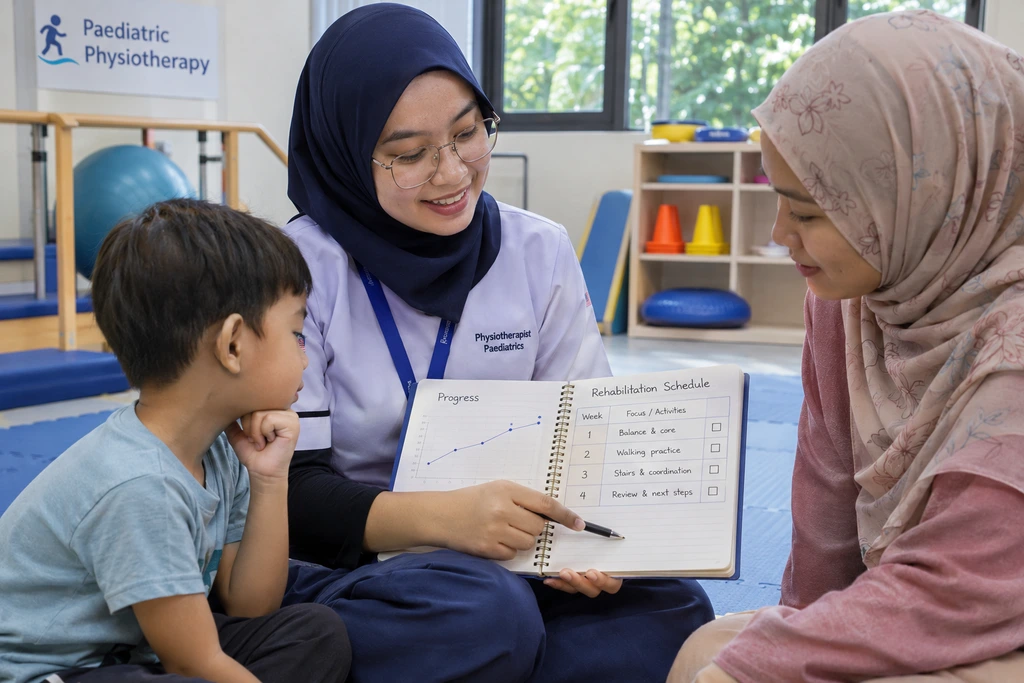
In trials, rehab continues alongside cell treatment: every child in the 2021 trial attended 75-minute sessions three times weekly. The trial therefore compared cells plus rehab against rehab alone. A separate guide covers how rehab fits alongside cell therapy in more detail.
Nobody should stop or change medicines or therapy without their own doctor’s advice. Cyrona Cell’s website describes cell therapy as a rehab supplement. Your records also help the doctor judge whether a change goes beyond what therapy alone would bring.

What Are the Risks and Unknowns of Cerebral Palsy Stem Cells?
The main reported risks are short-term reactions after injection, and the biggest unknowns are dose, route and cell source. In the 2021 trial, fever, fussiness, headache, low back pain, and vomiting appeared after injection. The authors reported no serious adverse events.
The 2025 review also reported no serious adverse events. However, seven of its 30 published reports had no safety data, and newer reports may differ from these figures. The main unknowns are listed below:
- Dose: the 2021 trial used a single fixed dose, and the 2025 review could not confirm any dose effect.
- Duration: the 2021 authors said gains appeared temporary, and most reports followed children for only 12 to 24 months.
- Evidence quality: no published late-stage trial exists, and the 2025 review included unpublished and lower-quality evidence.
Anyone considering stem cell treatment should ask the provider for papers on the cell product and its regulatory status.
Families can review the Cyrona Cell enquiry process to see how a first conversation about cell treatment works.
Cerebral Palsy Stem Cells FAQ
Can Stem Cells Reverse Cerebral Palsy?
No study has shown that stem cells reverse cerebral palsy, and researchers know of no treatment that cures it. Trials reported motor gains, mostly alongside ongoing rehab, and the 2021 authors said the gains appeared temporary.
Can Stem Cells Be Used Between Siblings?
No study reviewed here shows that stem cells from a sibling work better than other donor cells. The 2021 trial used cord tissue cells from unrelated donors. However, the 2025 review could not confirm any difference between cell sources.
How Long Should Parents Track Changes After Stem Cell Treatment?
Parents can track changes for at least 12 months after stem cell treatment. The trials reported results at 3, 6 and 12 months, so that window matches the evidence. However, most reports followed children for only 12 to 24 months, so later changes are less well studied.
Should Therapy Stop During Stem Cell Treatment?
Therapy should continue, because every child in the 2021 trial kept doing rehab. Nobody should stop therapy or medicines without their own doctor’s advice.

Talk With the Cyrona Cell Team About Cerebral Palsy Stem Cells
Families can ask the Cyrona Cell team about cell treatment. Treatment takes place at a partner facility in Kuala Lumpur. The team can review how a child’s records might fit.
Share your child’s medical reports and baseline measures so the team can say whether treatment may be suitable. Contact the team by phone on +60 18-222 0032 or through a WhatsApp message.
This article is for information and does not replace advice from your child’s own doctor.